
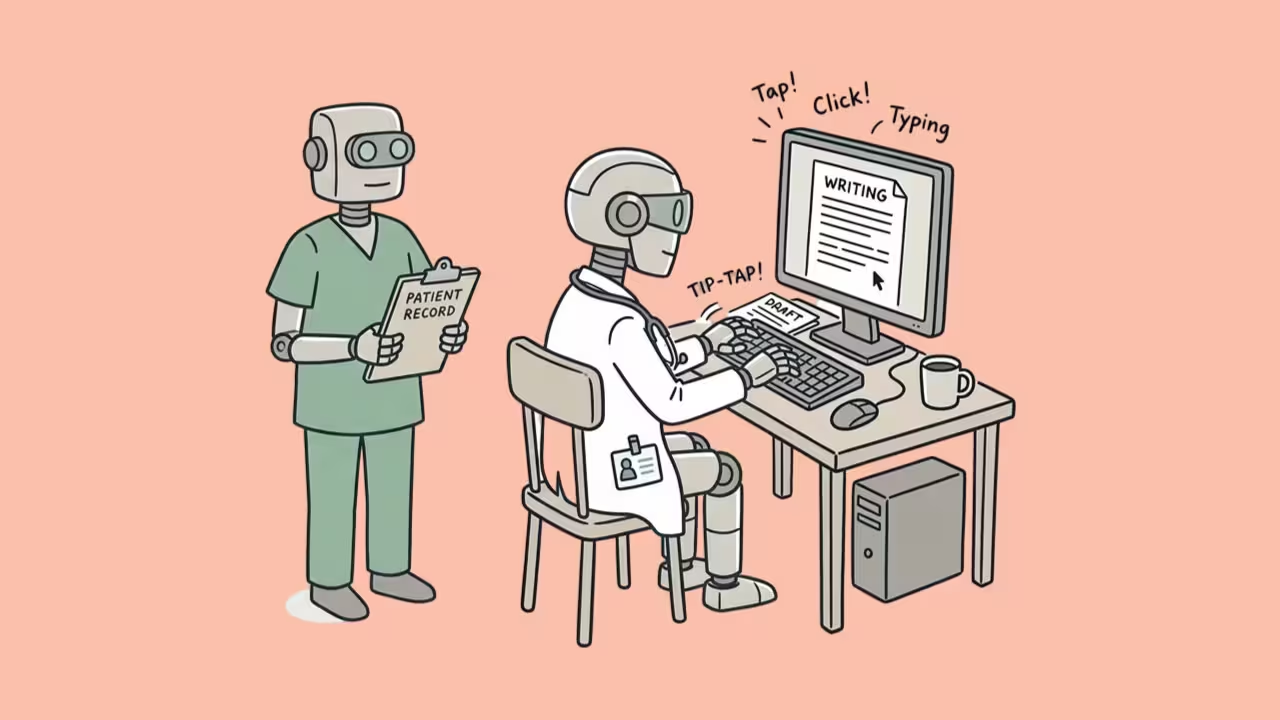

Even though clinicians often warn patients, “Don’t Google your symptoms,” people still look online when faced with health concerns. Very few people immediately visit a doctor at the first sign of a symptom; this creates an obvious need for easily accessible and accurate medical information.
In 2026, that need is being met by AI health tools. These are dedicated and provide evidence-based medical guidance, structured symptom assessments, and clinically informed answers to complex health questions.
In this article, we compile the best AI tools for medical questions, selected using four key gold-standard criteria: clinical guardrails, regulatory oversight, HIPAA-compliant data practices, and a deep rooting in medical science.
1. Amazon Health AI
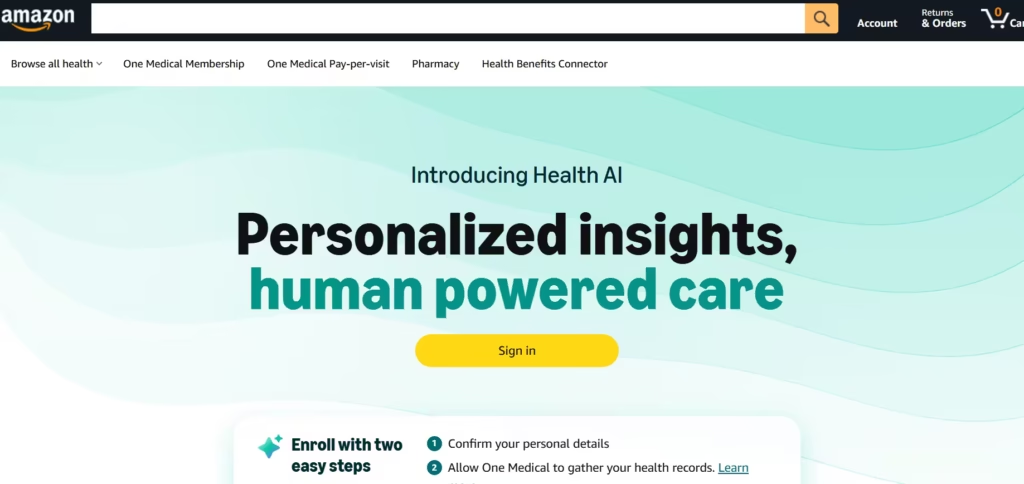
Amazon Health AI is a personal health assistant and conversational AI with access to real patient data and services. It responds to medical inquiries, interprets lab results, understands diagnoses, and gives guidance tailored to health profiles.
With permission, Amazon Health analyses medical records, medications, and medical history for context-based responses. It acts like a health navigator with adequate knowledge of the user’s medical background. Comsequently, Amazon Health can escalate issues to human clinicians.
Features
- Personal health insights stemming from users’ medical history and health records.
- Lab result interpretation and medication information support.
- Integration with telehealth and healthcare provider networks.
- Conversational interface designed for natural health consultations.
Pros
- Provides personalised responses based on real health data.
- Connects users directly to healthcare services and clinicians
- Integrates with Amazon health platforms and devices.
- Can interpret complex medical records and lab reports.
- Provides a unified experience for health information and care navigation.
Cons
- Availability may be limited to specific regions or services.
- Requires sharing personal health data for full personalisation.
- Not designed to replace professional medical diagnosis.
- Some features may depend on Amazon Healthcare subscriptions.
- Integration works best within Amazon’s ecosystem.
2. Ada Health
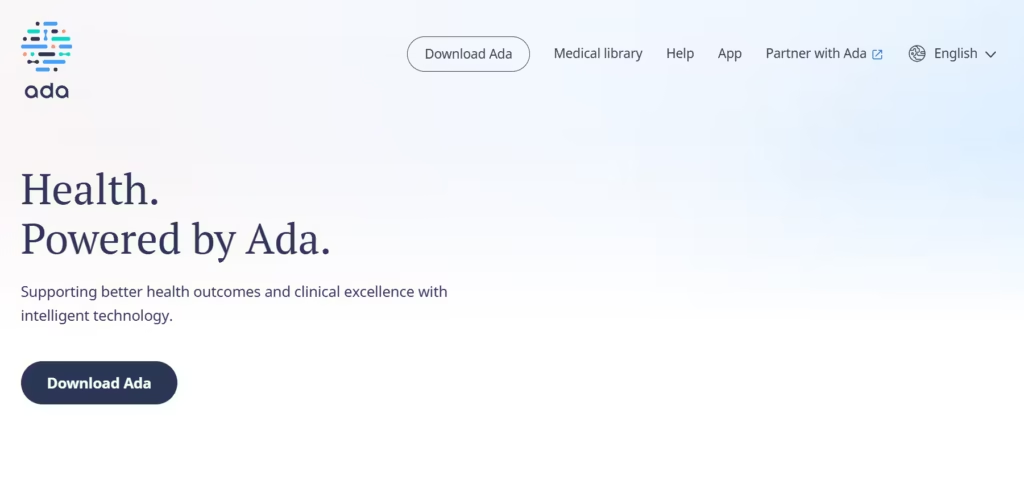
Ada Health is one of the most established AI symptom tools with a clinically structured diagnostic interview system. It pulls from its deep medical knowledge to ask a sequence of questions that adapt to previous answers. The interview was made to replicate the exploratory logic of a real medical consultation rather than a strict symptom form.
Based on the dialogue, the clinically validated reasoning model generates a list of potential conditions ranked by probability. It then guides users on whether they should seek urgent care, consult a doctor, or manage symptoms at home.
Features
- An AI conversational symptom checker that asks exploratory medical questions.
- Large clinical knowledge base covering thousands of diseases and symptoms.
- Tailored health assessments based on user responses.
- Recommendations that range from self-care to emergency care.
- Exportable health reports that can be shared with healthcare providers.
Pros
- High assessment quality through its highly structured clinical reasoning model.
- Widely trusted and used globally for symptom checking.
- Easy-to-use interface that simulates a medical interview.
- Provides clear next-step recommendations for care.
- Available via mobile apps and web platforms.
Cons
- Accuracy depends heavily on the accuracy of user-reported symptoms.
- Cannot provide an official medical diagnosis.
- Some advanced features require a premium plan.
- Limited ability to analyse medical imaging or test results.
- May not fully account for complex or rare conditions.
3. Wysa
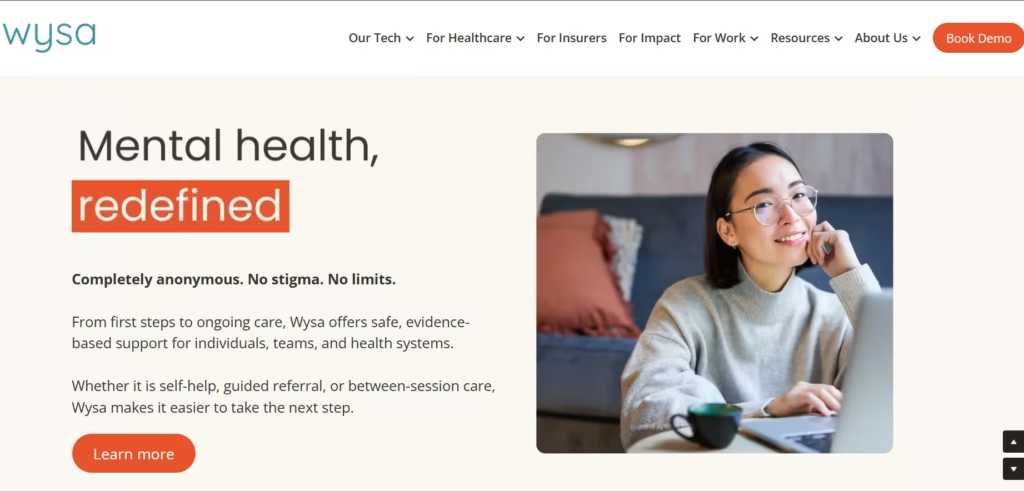
Wysa is an emotionally supportive mental health app that employs evidence-based psychological techniques. Wysa is a dedicated tool for mental wellness; it guides users through structured conversations about stress, anxiety, and emotional challenges.
Through its AI therapy tools, it walks users through coping strategies, journaling prompts, and interactive exercises. All its efforts are rooted in cognitive behavioural therapy (CBT) and mindfulness practices.
Features
- A dedicated mental health support and emotional well-being chatbot.
- Guided exercises based on cognitive behavioural therapy (CBT).
- Mood tracking and journaling features for emotional monitoring.
- Optional access to human mental health coaches.
- Anonymous conversations designed to reduce stigma.
Pros
- Provides accessible mental health support anytime.
- Uses evidence-based therapy techniques such as CBT.
- Anonymous design encourages users to seek help comfortably.
- Combines AI support with optional human therapy.
- Demonstrated improvements in mental health outcomes in studies.
Cons
- Its services are narrowed down to mental health.
- Not intended to handle severe mental health crises.
- Some advanced support features require paid plans.
- AI responses may feel scripted in complex situations.
- Does not replace licensed mental health professionals.
4. OpenEvidence
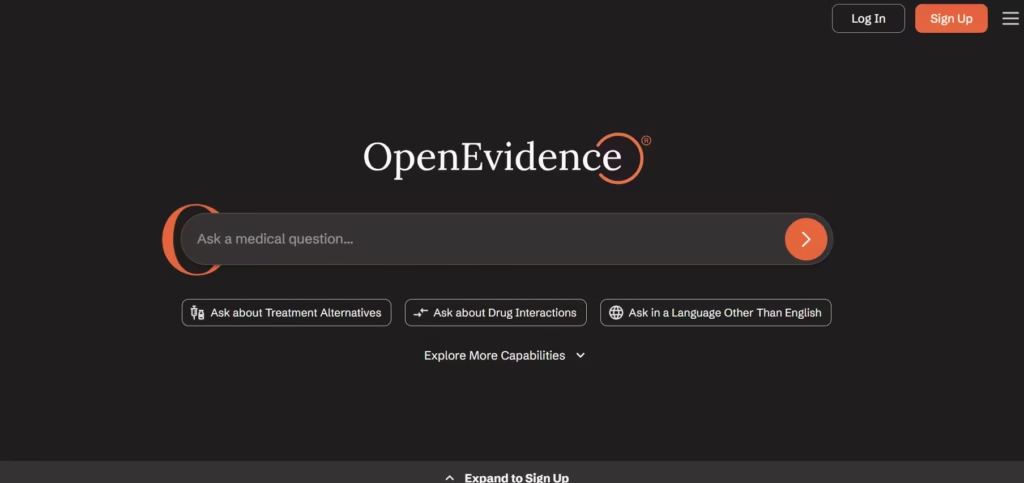
OpenEvidence retrieves medical research and synthesizes evidence-based medical answers grounded in peer-reviewed scientific literature. It was created for clinicians and also anyone who needs scientific answers to medical questions. Responses are extracted from biomedical databases and scholarly resources with reference to credible academic publications.
Features
- An AI medical research assistant for answering complex health questions.
- Responses are based on peer-reviewed medical literature and clinical guidelines.
- Ability to summarise and explain medical studies.
- Natural language interface for asking research questions.
- Focus on evidence-based explanations rather than symptom triage.
Pros
- Provides scientifically backed medical information.
- Excellent for understanding medical research and treatment options.
- Offers deeper explanations than typical symptom checkers.
- Useful for patients researching medical conditions.
- Helps users prepare informed questions for doctors.
Cons
- It’s not personalised.
- Requires users to interpret medical information responsibly.
- May present complex research terminology.
- Not designed to provide immediate triage decisions.
- Still depends on external clinical consultation for diagnosis.
5. Florence AI
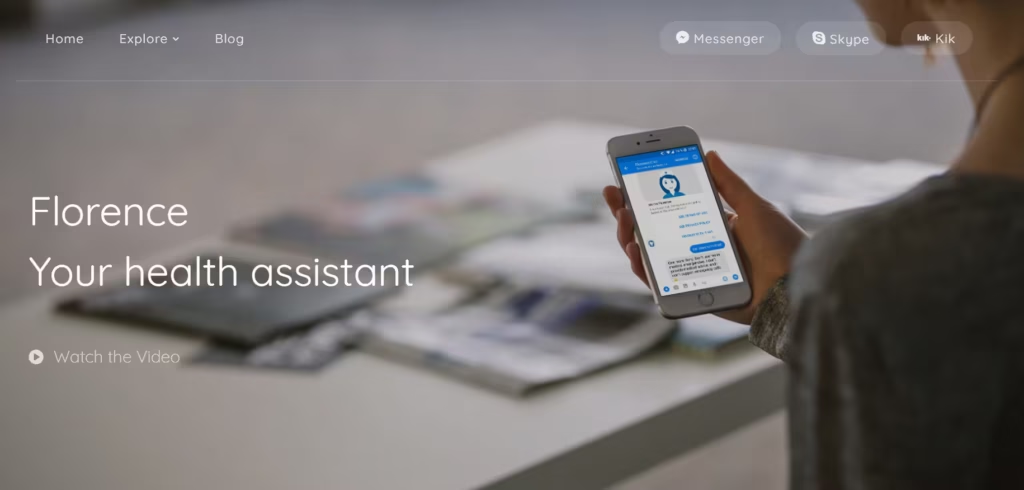
Florence AI delivers automated medical reminders, medication guidance, and health education through chat. This helps patients stay on track with pharmacological treatments. Users can get inquisitive and ask questions about medications, symptoms, and general health topics. Florence AI is ideal for anyone managing chronic conditions and complex medication routines.
Features
- Florence guides established treatment plans through medication management and reminders.
- Chat interface for asking health and medication questions.
- Medication adherence tracking and scheduling tools.
- Information on drug usage, side effects, and interactions.
- Provides health tips and education.
Pros
- Helps patients stay consistent with medication schedules.
- Provides quick explanations for common drug questions.
- Useful for managing chronic conditions requiring regular treatment.
- Simple conversational interface for everyday health guidance.
- Supports patient self-management of treatments.
Cons
- Limited diagnostic or symptom-checking capabilities.
- Primarily focused on medication management.
- Does not analyse complex medical records.
- Not suitable for urgent medical triage.
- Information should still be verified with healthcare professionals.
Also read: Best AI Chatbots for Mental Health in 2025 (Ranked & Tested)
6. Buoy Health
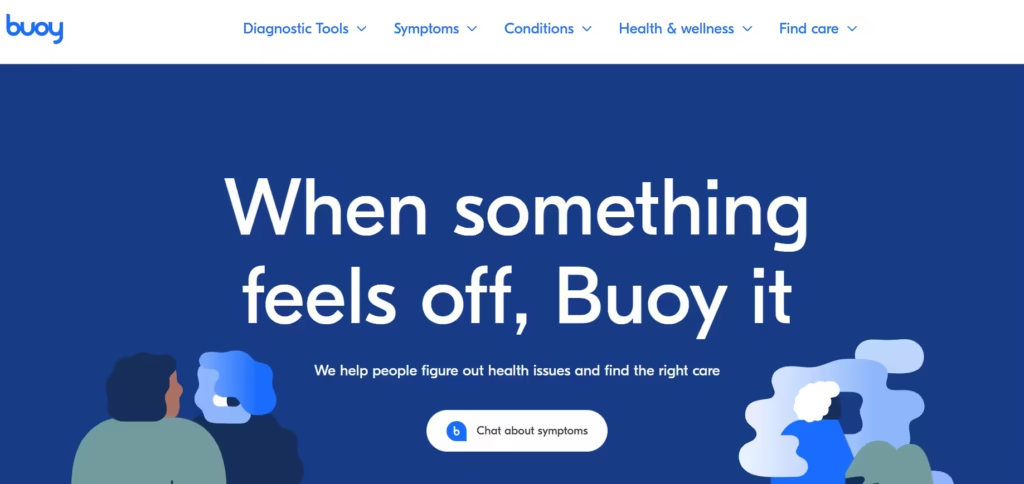
Buoy Health was created to help users navigate healthcare decisions by analysing presenting symptoms. It converses with users about symptoms, medical history, and lifestyle factors to identify potential causes and suggest appropriate care pathways. Recommendations typically include home treatment, telehealth consultations, and urgent care visits.
Features
- A symptom analyser that asks tailored follow-up questions.
- Provides potential condition suggestions based on symptoms.
- Triage guidance recommending appropriate healthcare options.
- Care navigation, including telehealth and provider suggestions.
- Conversational chatbot interface for symptom evaluation.
Pros
- Helps users determine when to seek medical care.
- Conversational design improves user engagement.
- Delivers guidance on healthcare pathways.
- Provides educational information about possible conditions.
- Reduces unnecessary clinic visits by recommending self-care when appropriate.
Cons
- Diagnostic suggestions are not definitive medical diagnoses.
- Accuracy depends on detailed symptom descriptions.
- Limited integration with personal medical records.
- Some recommendations may be general rather than personal
- Requires internet access to function.
7. Symptomate
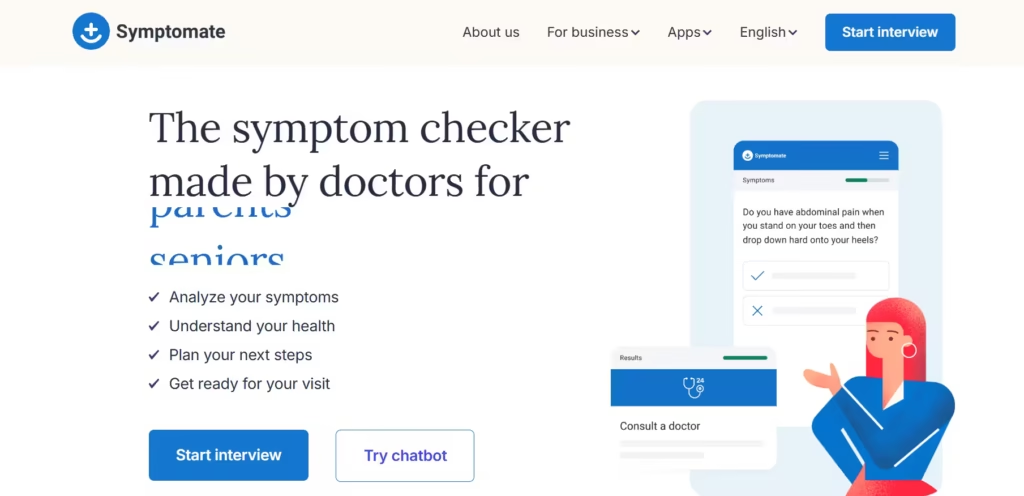
Symptomate is a symptom checker developed by Infermedica. It involves the users in interactive health assessments, whereby they answer a series of guided questions about symptoms. The system evaluates potential conditions along with recommended next steps. Symptomate can converse in multiple languages and integrates with voice assistants such as Alexa and Google Assistant.
Features
- Converses in multiple global languages.
- Integration with voice assistants and telehealth platforms.
- Provides condition suggestions and care recommendations.
- Designed for both consumer use and healthcare system integration.
Pros
- Highly scalable platform used by healthcare organisations.
- Supports multiple languages and digital health systems.
- Provides structured medical triage recommendations.
- Easy-to-use interface for symptom assessments.
- Backed by medical algorithms developed by health experts.
Cons
- Does not replace medical consultation or diagnosis.
- Accuracy depends on the completeness of symptom input.
- Limited contextual understanding of complex medical history.
- Some integrations may only be available to enterprise clients.
- May not address rare or highly complex conditions.
8. Sensely
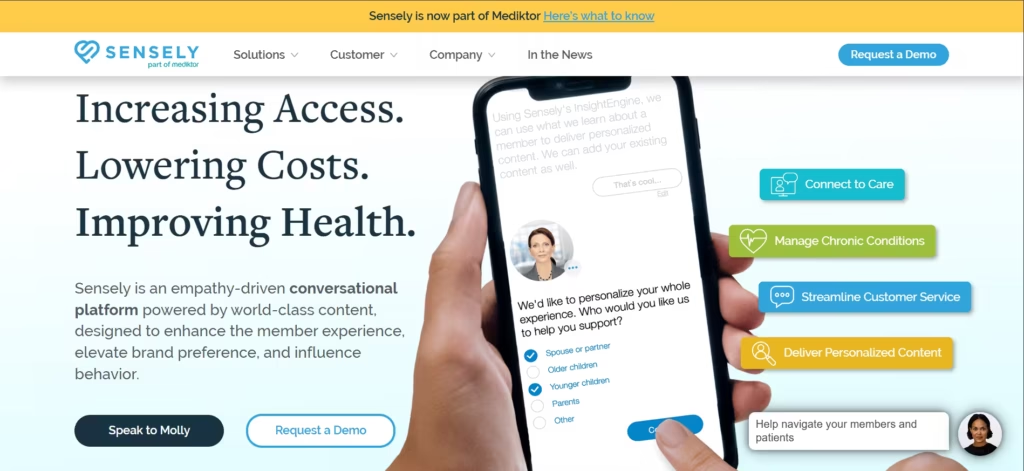
Sensely is a virtual nurse, one who follows the classic stereotype with years of experience. It walks users through the whole digital triage: symptom assessment, care navigation, and health monitoring. Sensely is often deployed in healthcare and insurance spaces to help patients triage symptoms, schedule appointments, and access healthcare services.
Features
- Virtual AI nurse assistant avatars.
- Symptom triage and healthcare navigation tools.
- Appointment scheduling and care coordination capabilities.
- Integration with healthcare providers and insurance systems.
- Patient engagement tools for remote monitoring.
Pros
- Human-like virtual nurse interface improves patient engagement.
- Strong integration with healthcare organisations.
- Helps patients navigate complex healthcare systems.
- Supports remote patient monitoring and digital triage.
- Useful for insurers and healthcare providers managing patient populations.
Cons
- Consumer access may be limited depending on provider partnerships.
- Less focused on open-ended medical research questions.
- Effectiveness depends on healthcare system integration.
- Some features are designed primarily for enterprise deployments.
- May require integration with provider systems to unlock full functionality.
9. Symptoma
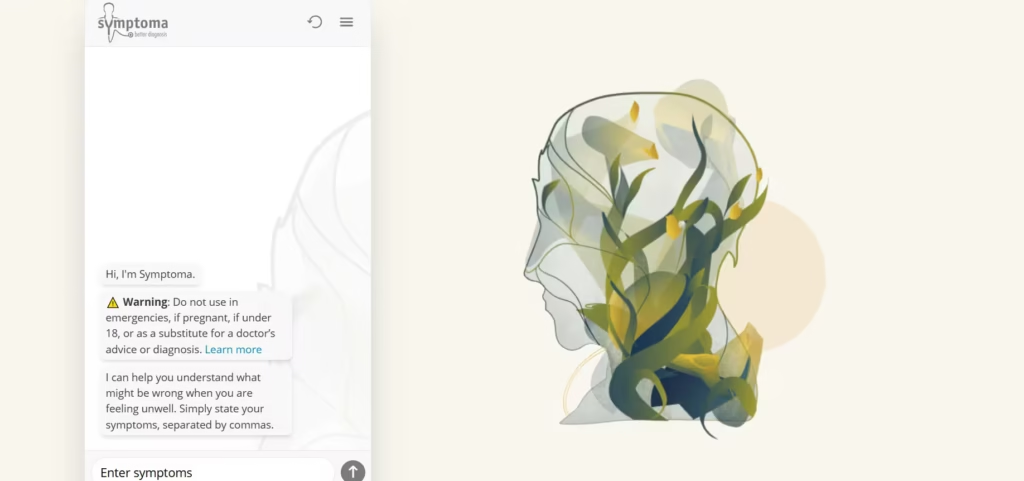
Symptoma is a search-engine-style diagnostic model that processes millions of symptom-disease correlations. It can interpret complex symptom descriptions and correlate them with rare or uncommon diseases. Therefore, diagnostic suggestions are highly precise and stem from a vast database of diseases and clinical knowledge.
Features
- A diagnostic engine that analyses thousands of diseases.
- Natural language symptom input for flexible medical searches.
- Multilingual platform supporting many global languages.
- Ability to analyse medical reports and health documents.
- High-precision disease matching based on symptom patterns.
Pros
- Handles complex symptom combinations effectively.
- Supports a large global database of diseases and conditions.
- Allows natural language descriptions of symptoms.
- Useful for both consumers and medical professionals.
- Strong multilingual capabilities for global accessibility.
Cons
- May generate complex diagnostic suggestions that require interpretation.
- Less focused on care navigation or healthcare scheduling.
- Accuracy depends on detailed symptom input.
- Some advanced capabilities may be limited in the free version.
- Still requires professional medical confirmation.
10. Verily Me
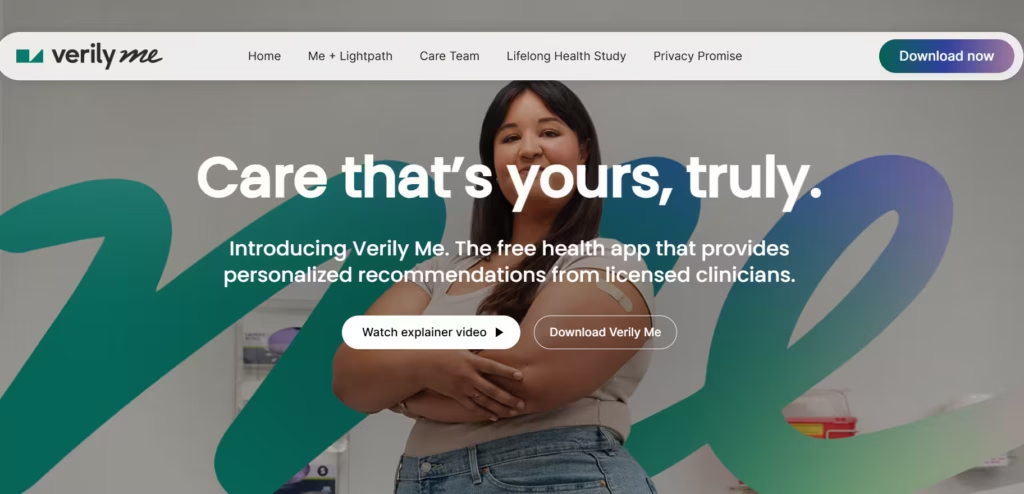
Verily Me collects information from health records, lifestyle inputs, and potentially wearable devices. Through advanced health data interpretation and predictive analysis, it then helps users understand trends in their health and possible outcomes. Verily Me also provides tailored wellness recommendations.
Features
- Delivers health insights and wellness tracking.
- Integration with health records, wearables, and lifestyle data.
- Data-driven health trend analysis and recommendations.
- AI assistance for interpreting personal health metrics.
- Preventive health monitoring based on longitudinal data.
Pros
- Strong focus on personalised health analytics.
- Integrates multiple health data sources for insights.
- Encourages preventive health management.
- Useful for long-term health monitoring.
- AI can detect patterns and trends in user health data.
Cons
- Less focused on answering immediate medical questions.
- Requires significant user data for meaningful insights.
- Some features may depend on connected devices.
- Not intended for emergency medical guidance.
- May require participation in specific health programs.
Can AI Be Your Doctor?
AI’s ability to match symptoms and diseases, and streamline diagnoses and treatment options, is unquestioned. However, it is worth noting that each of these tools either has a human expert in the loop or provides a channel of communicating with one.
That is very telling of a reality where AI, robots, and automated systems are far from single-handedly bringing about desirable health outcomes. A human clinician is always needed to tend to the disparities that exist between individual body systems.