

Most people talk about AI without truly understanding it.
What exactly is AI capable of? Where is it heading? And how do we, as humans, fit into this picture?
That’s where reading comes in. The right books can open your eyes to the real story behind the headlines, helping you see both the promise and the challenges of artificial intelligence.
In this article, we’ll explore 5 of the best books on AI that everyone should read, from groundbreaking textbooks to thought-provoking bestsellers.
By the end, you’ll know exactly which one fits your curiosity, goals, and reading style.
Let’s jump right in and discover the stories and ideas shaping the AI revolution.
| Book Title | Author(s) | Description & Focus |
| Artificial Intelligence: A Modern Approach | Peter Norvig & Stuart Russell | Recognized as the standard AI textbook, this book covers foundational AI principles, algorithms, and practical applications. Ideal for beginners to advanced learners seeking a deep theoretical and practical understanding. |
| The Singularity Is Nearer: When We Merge with AI | Ray Kurzweil | A visionary exploration of the upcoming AI singularity and human-AI integration, focusing on future technological transformations. Appeals to futurists and AI enthusiasts. |
| The Alignment Problem: Machine Learning and Human Values | Brian Christian | Investigates ethical challenges in aligning AI systems with human values, crucial for AI safety and responsible development. Perfect for ethics-focused readers and researchers. |
| Supremacy: AI, ChatGPT, and the Race that Will Change the World | Parmy Olson | Examines the competitive race in AI development, including breakthroughs like ChatGPT, offering insights into the tech landscape and its global impact. Suitable for a general audience interested in current AI trends. |
| Nexus: A Brief History of Information Networks from the Stone Age to AI | Yuval Noah Harari | Provides a historical context linking human information networks with the evolution of AI, offering a broad perspective on technological progress. Great for readers interested in the history and philosophy of AI. |
1. Artificial Intelligence: A Modern Approach – Peter Norvig & Stuart Russell
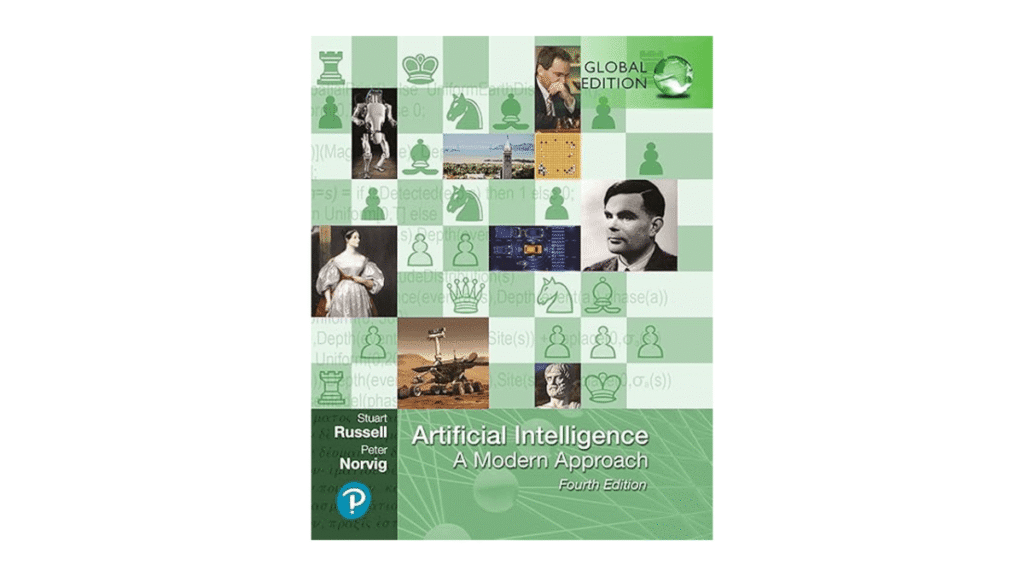
If there was a single book that defines the foundation of AI, this would be it.
Artificial Intelligence: A Modern Approach isn’t just another tech manual, it’s the bible of AI.
Written by Peter Norvig and Stuart Russell, two of the most respected minds in computer science, this book has been shaping how AI is taught and understood for more than two decades.
So, what makes this book so special?
For one, it doesn’t just tell you what AI is, it shows you how it thinks.
The book takes a deep dive into the logic, mathematics, and problem-solving methods that power intelligent systems.
Despite its technical depth, it remains surprisingly readable. Russell and Norvig have a gift for explaining complex ideas in a way that feels clear and approachable.
This book covers almost everything, from search algorithms and neural networks to robotics and natural language processing. But what really sets it apart is its balance between theory and real-world application.
In short, Artificial Intelligence: A Modern Approach is for readers who want to go beyond buzzwords and truly understand the mechanics of intelligence.
It’s the book that built the bridge between imagination and implementation, and even today, no serious list of the best books on AI would be complete without it.
2. The Singularity Is Nearer: When We Merge with AI – Ray Kurzweil
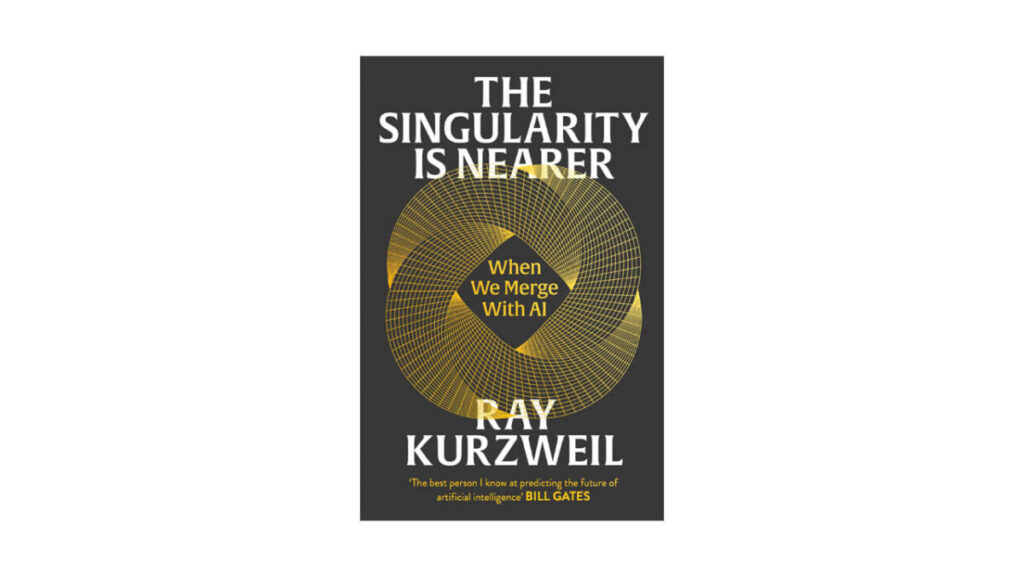
Ray Kurzweil’s The Singularity Is Nearer explores where AI is taking us.
Kurzweil isn’t just an author, he’s one of the most visionary futurists of our time, known for predicting technological revolutions long before they happened.
What exactly is the singularity about?
It’s the idea that one day, AI will surpass human intelligence, blurring the line between man and machine.
What makes this book one of the best books on AI is Kurzweil’s ability to take complex, even intimidating concepts, like neural networks, brain mapping, and nanotechnology, and explain them in a way that feels personal and fascinating.
He mixes scientific research with hopeful storytelling, making readers wonder: what would it feel like to have an AI-enhanced brain? Could machines ever share human emotions or creativity?
While some critics call his predictions too optimistic, Kurzweil’s ideas spark meaningful conversations about what it means to be human in an age of intelligent machines.
If you love bold predictions, mind-bending ideas, and glimpses into a future where science fiction becomes reality, this book will absolutely captivate you. It’s not just a read, it’s an experience that challenges your imagination and your comfort zone.
In essence, The Singularity Is Nearer reminds us that the future isn’t something that happens to us, it’s something we’re creating, one algorithm at a time.
3. The Alignment Problem: Machine Learning and Human Values — Brian Christian

If there’s one question that keeps AI researchers up at night, it’s this: how do we make sure intelligent machines reflect human values?
That’s the heart of The Alignment Problem by Brian Christian.
This is a book that brings the ethics of AI to life in a way that feels urgent, human, and deeply personal.
Christian isn’t a computer scientist, and that’s part of what makes this book so powerful. He’s a storyteller with a rare gift: translating the complex moral dilemmas of AI into everyday terms anyone can understand.
He explores what happens when machines start learning from us: biases, mistakes, emotions, and all, and what it means when those systems begin making decisions that affect real lives.
From self-driving cars that must choose between two impossible options to algorithms that determine who gets a loan or a job, The Alignment Problem takes you behind the curtain of machine learning.
You’ll meet researchers trying to “teach” AI empathy, fairness, and judgment, and you’ll see just how messy that process can be.
Christian connects the dots between philosophy, psychology, and technology, showing that the biggest challenge in AI isn’t building smarter machines, but ensuring those machines make good choices.
By the end, you’ll probably find yourself questioning not just what AI is learning, but what it’s learning from us.
Because if our data reflects our flaws, can AI ever truly be fair?
4. Supremacy: AI, ChatGPT, and the Race that Will Change the World – Parmy Olson
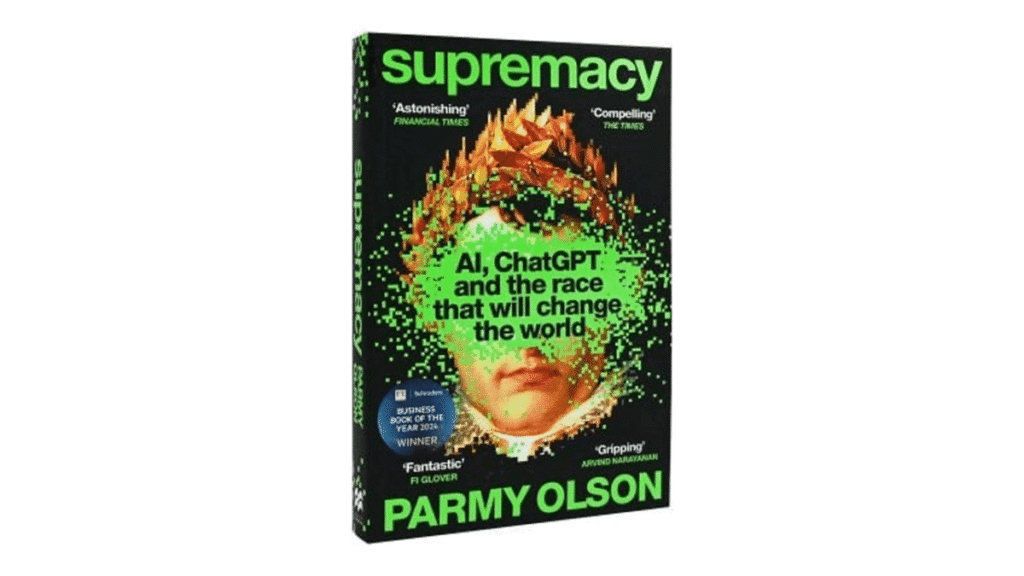
If you’ve ever wondered what’s really happening behind the AI boom, the breakthroughs, the rivalries, and the race for dominance, Supremacy by Parmy Olson is your backstage pass.
Unlike the more technical or philosophical books on this list, this one reads like a high-stakes tech thriller, except everything in it is true.
Olson, a veteran tech journalist, takes readers deep into the modern AI revolution. She explores how tools like ChatGPT went from obscure lab projects to global phenomena, and how companies like OpenAI, Google, and Anthropic are battling for control over what could be the most powerful technology ever created.
What makes Supremacy one of the best books on AI is how real it feels. You’re not just reading about technology, you’re watching history unfold in real time.
Olson has a sharp eye for detail and a journalist’s instinct for storytelling. She captures the human drama behind the algorithms, the ambition, competition, and ethical tension among the people building AI’s future.
The book also digs into critical questions: What happens when AI becomes smarter than the people who made it? Can regulation ever keep up with innovation? And who decides how far we go?
Olson doesn’t give easy answers, but she paints a vivid picture of an industry moving faster than anyone expected and the world struggling to keep up.
Reading Supremacy feels like standing on the edge of a new era, one filled with promise, power, and uncertainty. It’s fast-paced, insightful, and refreshingly grounded in reality.
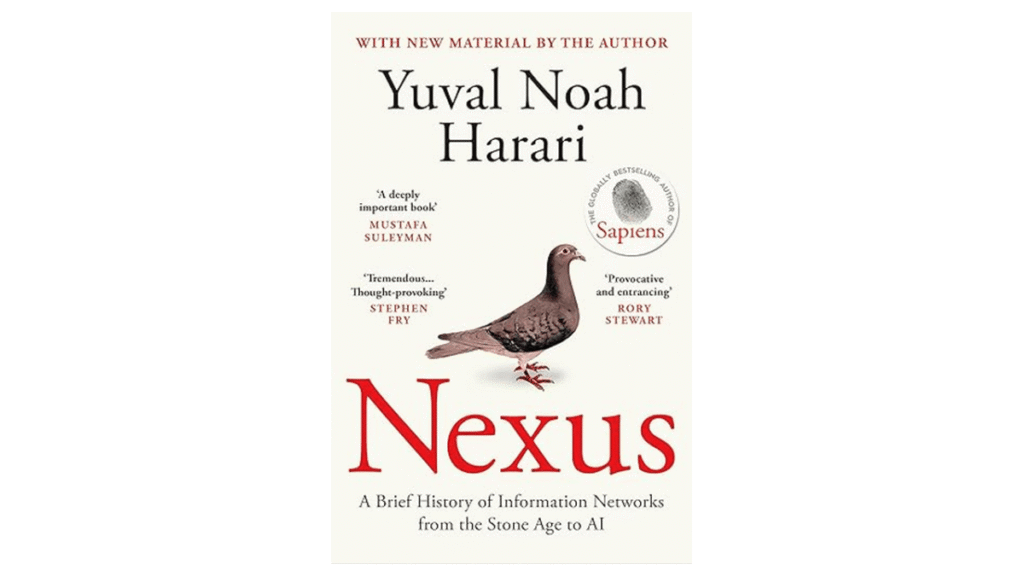
5. Nexus: A Brief History of Information Networks from the Stone Age to AI – Yuval Noah Harari
When most people think about AI, they imagine something futuristic, glowing screens, talking robots, or digital assistants that know what you want before you do.
But Yuval Noah Harari takes a step back and asks a bigger question: how did we even get here?
In Nexus: A Brief History of Information Networks from the Stone Age to AI, Harari connects the dots between humanity’s earliest communication systems and today’s intelligent machines.
He argues that every major leap in human progress, from language and writing to the internet and AI, has been built on one simple idea: our ability to share and process information.
If his name sounds familiar, it’s because Harari is the bestselling author of Sapiens and Homo Deus, and he brings the same sweeping historical insight and storytelling flair to this book.
Nexus doesn’t just tell the story of AI, it puts it in context, showing how it’s part of a much longer human journey.
What makes this one of the best books on AI is its perspective.
Instead of diving into code or technical jargon, Harari looks at the cultural and moral implications of intelligent systems.
He asks the questions we often forget to ask in our rush toward the future: What happens to human identity when machines start thinking for us? How will AI change how we learn, connect, and define truth?
Harari’s writing is smooth, witty, and deeply thought-provoking. You’ll find yourself nodding, questioning, and maybe even pausing mid-page to reflect on how intertwined technology and humanity have always been.
This book is perfect for readers who want to understand not just what AI is, but what it means. It’s history, philosophy, and technology all rolled into one beautifully written narrative.
Bottom Line
In 2025 and beyond, the people who understand AI, its power, limits, and potential, will be the ones best prepared for the world ahead.
The best books on AI do more than explain machines. They help us see ourselves more clearly.
So, don’t just scroll through endless articles or social media debates about AI, pick up a book that truly deepens your understanding. Find the one that matches your curiosity.
The truth is, the AI journey is just beginning. And as it unfolds, the more we learn, the more prepared we’ll be to shape it wisely.