
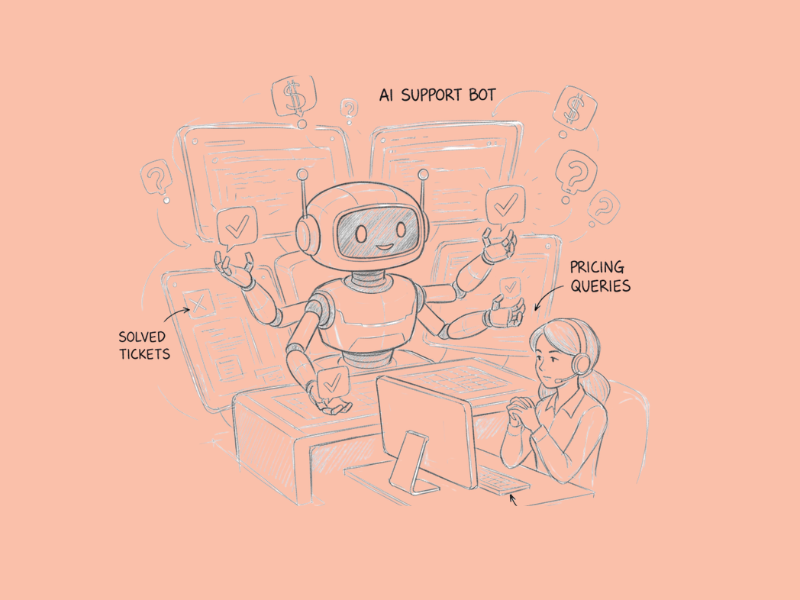

You know that moment when a customer service bot tells you to “check the FAQ” for the fifth time?
Yeah, that.
Traditional AI chatbots have been about as helpful as a chocolate teapot when it comes to solving real problems.
But there’s a new company that’s making some pretty bold claims about fixing customer support – Lorikeet AI.
But here’s the thing: when something sounds too good to be true, it usually is.
So let’s dig into what Lorikeet actually does, and more importantly, what they’re not telling you in their fancy marketing materials.
What Even Is Lorikeet?

Unlike those frustrating bots that just throw help articles at you, Lorikeet claims it can solve real problems, the complicated stuff that usually requires talking to an actual person.
Started in 2023 by two guys named Steve Hind and Jamie Hall in Sydney, Australia, this company has been making waves. They’ve raised over $75 million in just 10 months and are now valued at over $200 million. Not too shabby for a startup that’s barely two years old.
Companies like Airwallex, Linktree, and Eucalyptus are actually using Lorikeet to handle their customer support. We’re talking about real businesses trusting this thing with their customers.
That’s either really brave or really smart. Maybe both.
How Lorikeet Works
So what makes Lorikeet different from every other bot that’s ever annoyed you?
Instead of just reading help articles and repeating them back at customers, Lorikeet follows the same process your best support person would use, step by step.
Need to reschedule an appointment? It actually goes into the system and does it. Lost your debit card? It can check your account, see if you qualify for a replacement, update your address, and order you a new card, all without a human getting involved.
Here’s the breakdown of what Lorikeet can handle:
Simple Stuff:
- Answering basic questions
- Checking account information
- Looking up order status
- Sharing policy information
Complex Stuff:
- Processing refunds in payment systems
- Replacing lost or stolen cards
- Changing medication delivery dates
- Managing crypto transactions
- Dealing with delayed orders
The system works across chat, email, and phone.
And when it doesn’t know how to handle something? It passes the ticket to a real person with all the legwork already done.
The Numbers That Matter
Companies using Lorikeet have reported some impressive stats:
- Response times dropped from 30 minutes to under 1 minute
- Customer satisfaction scores match (or sometimes beat) real people
- 40% of complex support tickets get handled without human help
- Magic Eden saw satisfaction scores jump from 45% to 75%
Those numbers sound amazing.
But remember, results vary, and what works for a crypto company might not work for your local coffee shop.
Lorikeet AI Pricing
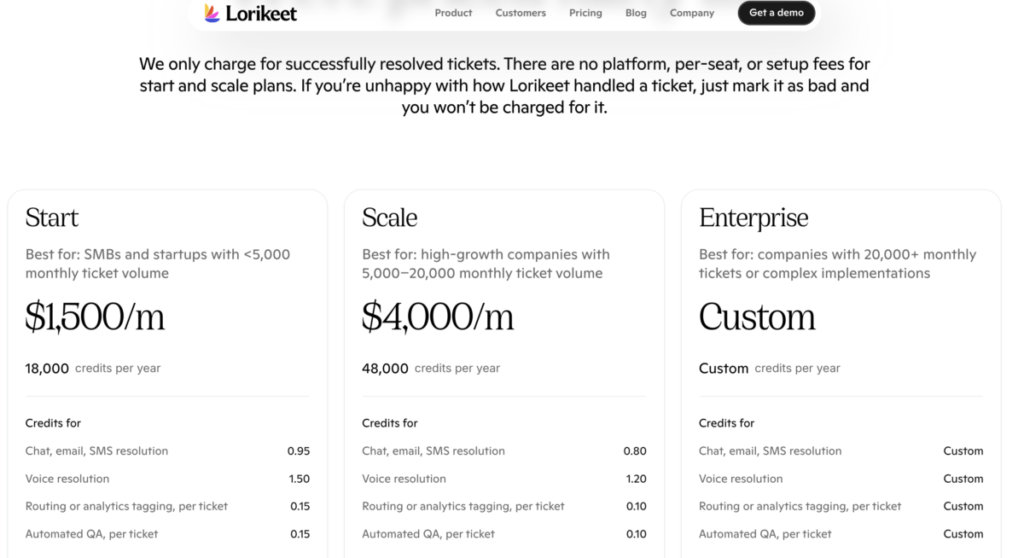
Unlike most software that charges a flat monthly fee, Lorikeet uses a credit-based system. They only charge for “successfully resolved tickets.”
Sounds fair, right? Well, hold that thought.
The Credit System Explained
| Action Type | Start Plan Credits | Scale Plan Credits |
|---|---|---|
| Chat/Email/SMS Resolution | 0.95 credits | 0.80 credits |
| Voice Resolution | 1.50 credits | 1.20 credits |
| Routing/Tagging per ticket | 0.15 credits | 0.10 credits |
| Automated Quality Check | 0.15 credits | 0.10 credits |
Here’s the tricky part: If you use up your monthly credits, you’ll need to pay for overages. And during a busy month, like the holidays or a product launch, those credits can disappear fast.
A company on the Start plan gets 1,500 credits per month. If most tickets are voice resolutions at 1.50 credits each, that’s only 1,000 tickets. Go over that? You’re paying extra.
No Test Drive Available
Want to try before you buy? Too bad. Lorikeet doesn’t offer a self-serve trial. You need to book a demo and talk to their sales team. For a small business owner who just wants to see if it works? That’s a dealbreaker.
What Lorikeet Does Really Well
1. It Actually Solves Problems
Most automated helpers are glorified search engines. They find information but can’t act on it. Lorikeet actually logs into your systems and gets things done.
2. Built for Tricky Industries
Lorikeet was made specifically for complicated fields like banking, healthcare, and cryptocurrency. These sectors have strict rules and high-stakes situations. The system includes security features that matter in these fields.
3. Safety Rules Built In
Unlike some systems that can go rogue (remember that Air Canada bot that promised a refund the company didn’t want to honor?), Lorikeet uses strict permissions. It can only do what you explicitly allow it to do. That means no surprise refunds or unauthorized account changes.
4. Smart Handoffs
When Lorikeet encounters something it can’t handle, it doesn’t just give up. It passes the ticket to a real person with all the context and investigation already done. Your team can jump straight to solving the problem instead of starting from scratch.
The Real Catches You Need to Know
Here are the actual downsides that their marketing team won’t highlight:
1. Unpredictable Costs
I’ve already talked about this, but it bears repeating. Pricing based on usage is risky. You could budget $5,000 for customer support and end up with a $12,000 bill during a busy month.
2. It’s Built for Big Players
Tbh, Lorikeet is designed for unicorns and established companies. If you’re a small business or startup, the pricing structure, setup complexity, and lack of clear costs will probably scare you off. And that might be by design.
3. Setup Isn’t Simple
Getting Lorikeet up and running requires serious work. You need to connect it to your existing systems, define how it should handle things, set permissions, and train it on your specific processes.
4. The “Black Box” Problem
How does Lorikeet decide if a ticket is complex or simple? How does it determine when to escalate? The company hasn’t published detailed info about these decisions. That lack of transparency can be concerning when you’re trusting it with your customers.
5. Limited Track Record
Lorikeet only launched publicly in late 2024. While their growth has been impressive, they don’t have years of proven reliability. What happens if they change their pricing? Adjust their features? Get bought out? You’re betting on a very young company.
6. Integration Questions
Information about which systems Lorikeet connects with isn’t readily available. If you use specific software for managing customers or internal tools, you might find yourself stuck. Always verify compatibility before committing.
Who Should Actually Use Lorikeet?
Good Fit If You:
- Run a finance, health, or crypto company
- Handle hundreds or thousands of support tickets daily
- Deal with complex tasks that follow predictable patterns
- Have tech people for setup and integration
- Can handle bills that change month to month
- Need 24/7 support coverage
Bad Fit If You:
- Run a small business with limited support volume
- Need to know exactly what you’ll spend each month
- Lack technical help for setup
- Handle mostly unique, one-off customer issues
- Think human connection is important in customer service
- Want to try before you buy
The Future of Lorikeet
Looks like Lorikeet isn’t going anywhere soon. They’re spending on:
- Expanding voice support capabilities
- Adding more features for specific industries
- Improving how well it works
- Growing into more countries
But here’s the question: Will they address the pricing concerns? Will they make it easier for smaller businesses to use? Only time will tell.
The Bottom Line
Lorikeet represents real progress in automated customer support. It can solve problems that traditional bots can’t touch. The technology is impressive, the backing is solid, and early results from major companies look promising.
But – and this is a big but – it comes with catches that could sink smaller businesses. The pricing rewards low, steady ticket volumes and punishes growth.
The complexity means you need serious help to set it up properly. And the lack of a trial means you’re buying somewhat blind.
So do your homework, ask tough questions, and don’t let impressive funding rounds or slick demos cloud your judgment. Your customers deserve great support, but your business deserves economics that make sense.
And hey, if you do decide to go with Lorikeet, make sure you’ve got a good relationship with your CFO. They’re going to want to keep a close eye on those monthly bills.
