
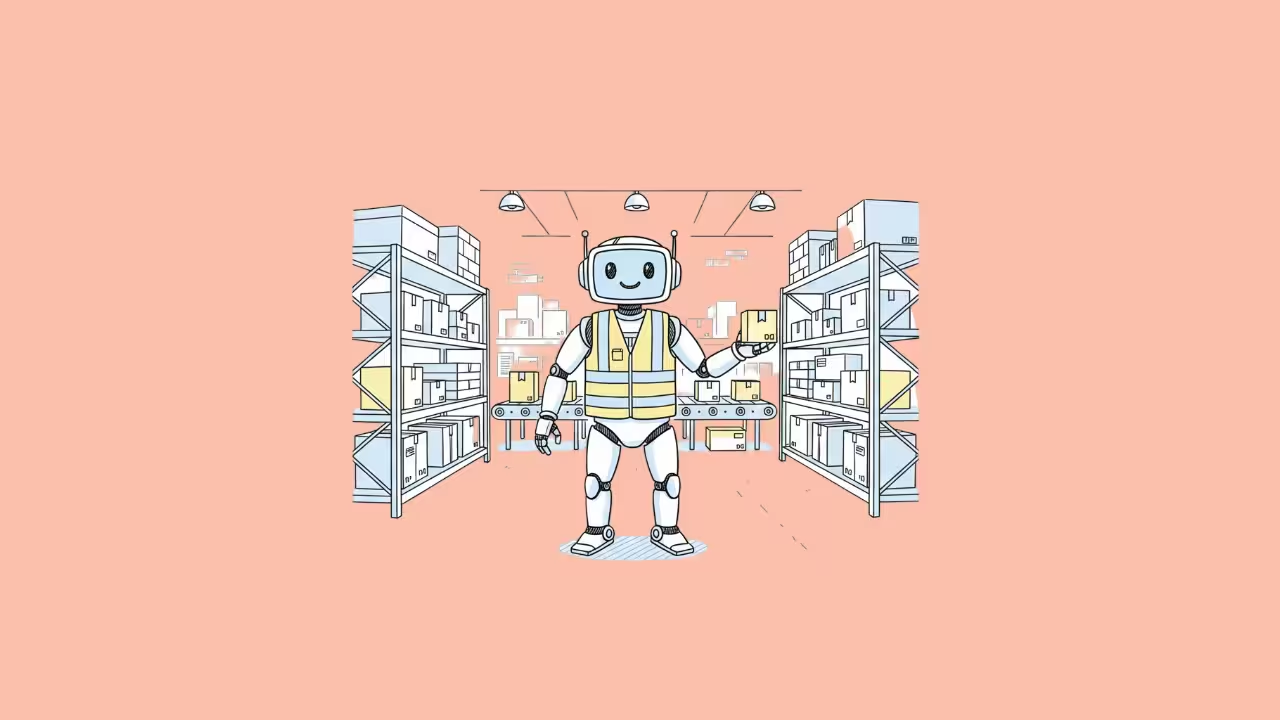

Amazon has stopped its Blue Jay warehouse robotics project less than six months after unveiling the system.
The development was first reported by Business Insider and later confirmed by TechCrunch.
This proves that not every robotics initiative succeeds, even at a company that operates more than one million robots.
Blue Jay
Amazon introduced Blue Jay in October as a multi-armed robot capable of sorting and moving packages.
It was designed for same-day delivery facilities, where speed and precision are critical.
At the time of its unveiling, Amazon tested the robot at a facility in South Carolina. The company emphasized how quickly it developed the system.
Blue Jay took about one year to build, significantly shorter timeline than the development cycles for earlier warehouse robots.
Amazon credited advances in AI for that faster pace. Improved AI tools allowed engineers to design, test, and refine the system more quickly.
However, the project did not move beyond its early phase.
Also read: Top 10 Humanoid Robots of 2025
A Prototype
According to Amazon spokesperson Terrence Clark, Blue Jay launched as a prototype. That detail had not been clearly stated in the original press materials.
Clark confirmed that the company halted the project. However, he also explained that Amazon plans to reuse Blue Jay’s core technology in other robotics “manipulation programs.”
Importantly, employees who worked on Blue Jay have transitioned to other internal robotics units. Amazon has not indicated workforce reductions tied specifically to the project’s halt.
Clark stated that Amazon continues to experiment with new ways to improve customer experience and make warehouse work safer, more efficient, and more engaging. In this case, he said the company is accelerating the use of the underlying technology developed for Blue Jay. Nearly all of its core systems will carry over to support employees across Amazon’s network.
In short, the standalone project has ended, but the underlying technology remains in active development.
Vulcan
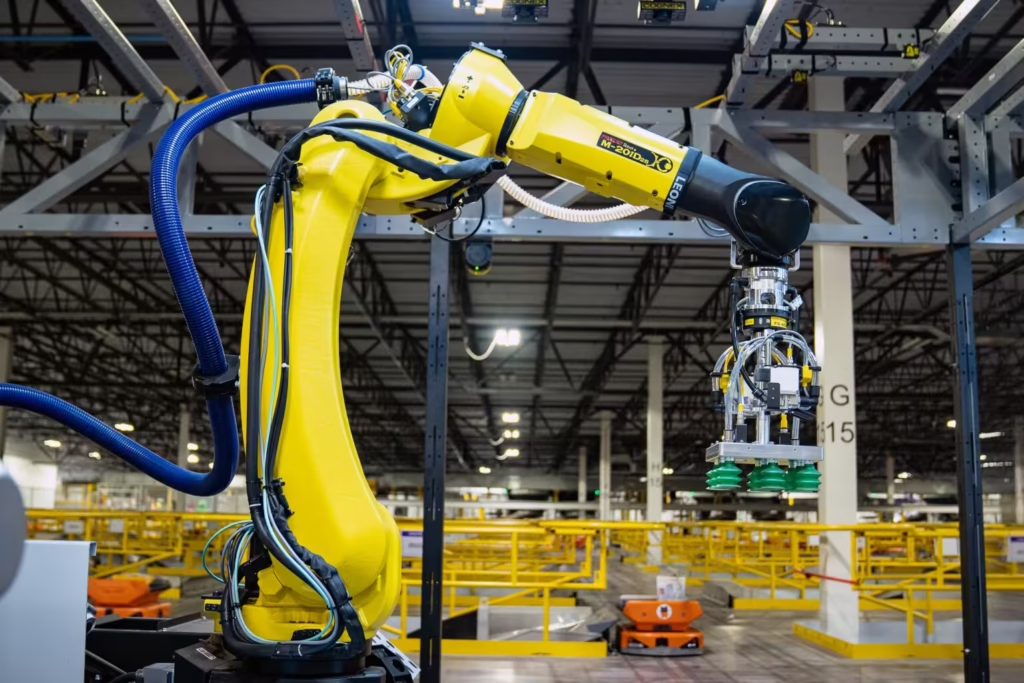
Blue Jay is not Amazon’s only robotics initiative. Last year, the company unveiled Vulcan, which is also actively deployed in warehouse storage compartments.
Vulcan features two arms; one arm rearranges and moves items within storage bins. The second arm includes a camera and suction cups designed to grab goods.
Amazon has stated that Vulcan can “feel” the objects it touches. The robot was trained using data gathered from real-world interactions.
This tactile capability allows Vulcan to handle varied shapes and materials.
2012 Robotics
Amazon’s automation strategy stretches back more than a decade; in 2012, the company acquired Kiva Systems. That purchase transformed its fulfillment operations.
Kiva’s mobile robots became the backbone of Amazon’s warehouse automation system. Since then, the company has steadily expanded its robotics footprint.
In July 2025, Amazon surpassed one million robots operating across its global warehouse network. That milestone reflects the scale of its investment in automation.
Against that backdrop, Blue Jay appeared as one experimental initiative within a much larger robotics ecosystem.
