

Animation in 2026 feels different. It’s not just about drawing frames or polishing render quality anymore. It’s about how quickly a story can become a world. From global fans buzzing over best anime 2026 contenders to filmmakers exploring story to video AI tools, the animation landscape is experiencing a renaissance powered by artificial intelligence. In this article, we explore how this creative boom is reshaping traditional workflows, and how cutting-edge tools like Novi AI video generator, ai story animation platforms, and image to video AI engines are enabling creators to produce animated story videos with ease and consistency.
The 2026 Animation Craze Is Redefining Creativity
The world is witnessing an extraordinary surge in animated content, with both mainstream studios and independent creators expanding the boundaries of visual storytelling. Major 2026 animated films are already generating tremendous excitement. Japanese cinemas and global streaming services are championing new releases like Cosmic Princess Kaguya!—a reimagined musical fantasy adventure that debuted on Netflix in January 2026 and blends classic folklore with modern, immersive storytelling.
Meanwhile, Hollywood and global studios are gearing up for 2026 releases such as Hexed, a brand-new animated fantasy from Walt Disney Animation Studios. These big-budget features sit alongside acclaimed indie works that propelled animation forward in 2025. For instance, influential festivals like the 2025 Annecy International Animation Film Festival highlighted cutting-edge animated projects that pushed narrative and stylistic boundaries.
The industry’s creative momentum is mirrored in awards recognition. The 53rd Annie Awards (2026) honored animated films and series from 2025, with high nominations for titles like Elio and K-Pop Demon Hunters—signaling broad appreciation for storytelling quality and innovation.
Animation fans today are not only excited about standalone features but also hungry for episodic worlds and long-form narratives that feel rich, dynamic, and emotionally engaging. Yet creating such content remains an intensive task—especially when trying to maintain cohesive character design and story pacing.
The Challenge of Long-Form Animation Creation
Producing high-quality, long-form animation has traditionally been a labor of love—and a resource-heavy one at that. Studios must balance intricate character designs, consistent visual styles, and narrative arcs that captivate audiences from start to finish. From pre-production storyboarding to final rendering, the process can take months or even years.
The core hurdles include:
- Character Consistency: Keeping character appearances, movements, and personalities coherent over multiple scenes is time-consuming and critical for brand integrity.
- Story Pacing: Long-form narratives require careful script development, nuanced timing, and thoughtful transitions that feel natural to viewers.
- Visual Quality: High resolution, lighting, motion dynamics, and emotional expressiveness demand meticulous handcrafting—especially in traditional animation.
Even with significant creative teams, these challenges escalate with the scale of the project. That’s where newer AI tools—especially those built for turning full scripts into video—are starting to make a real difference. These tools reduce manual workload while preserving artistic intent.
AI Story-to-Video Is Changing the Game
Unlike traditional text-to-video tools that generate individual scenes from prompts, structured story to video AI platforms approach animation as a connected narrative.
One example of this shift is Novi AI. Rather than focusing solely on clip output, the Novi AI video generator begins with structured story input. A creator can paste a script, draft an episode outline, or expand a simple concept into a segmented storyboard within the platform.
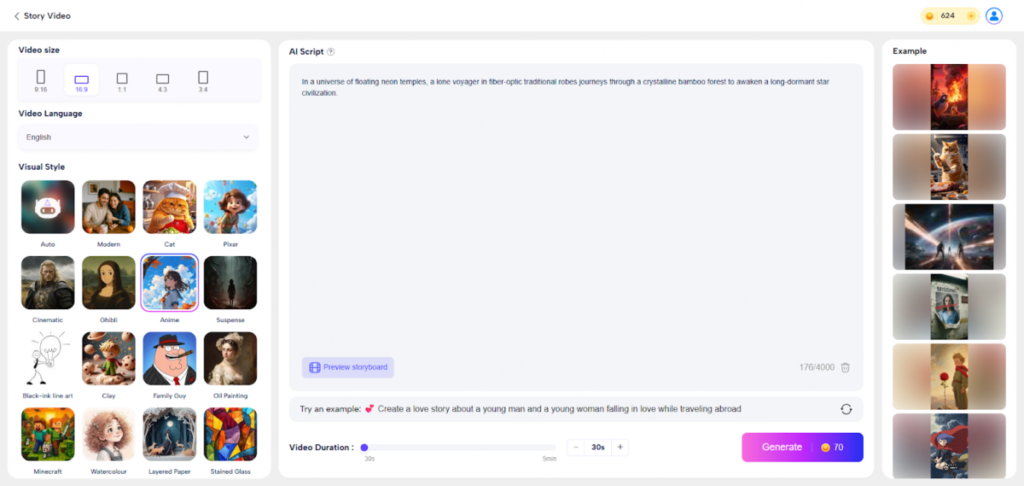
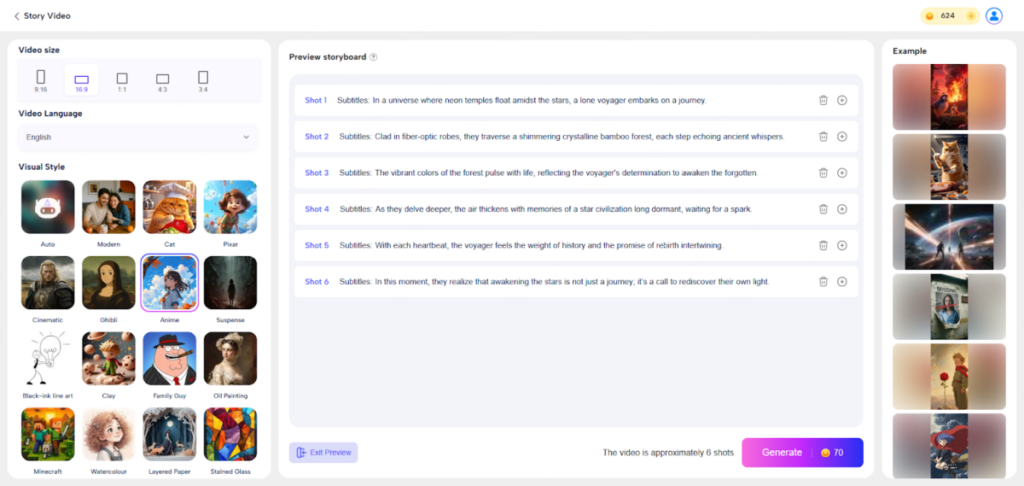
The system organizes the narrative into editable scenes before rendering begins.
By establishing story structure upfront, creators can review pacing, refine dialogue, and clarify character descriptions before generating the final animated sequence. It mirrors traditional animation pre-production—storyboarding first, animating second—but compresses the timeline significantly.
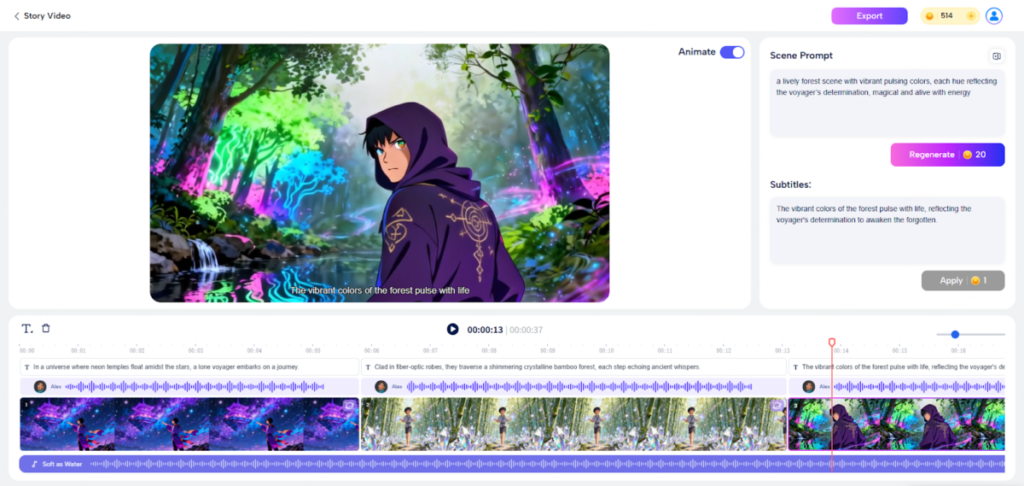
Because the workflow is storyboard-driven, style and character consistency are easier to maintain across scenes compared to standalone image to video AI pipelines. Instead of prompting each scene independently, narrative context carries forward.
In other words, AI stops acting like a scene machine and starts behaving more like a storytelling partner.
For creators working on episodic content or educational explainers, that structural continuity becomes the foundation for sustainable production.
Turning Ideas into Animated Series
As audience expectations shift toward serialized storytelling, structured AI tools are lowering the barrier to entry for long-form animation.
An independent creator might begin with a short fantasy outline. Using a story to video AI workflow, the outline becomes a segmented storyboard. Scenes are refined, pacing adjusted, and visual direction defined. The resulting animated story video can serve as a pilot episode.
Educators can convert lesson narratives into animated explainers without assembling a full production team. Marketing teams can test serialized branded narratives, adjusting tone and structure iteratively before scaling.
Because the workflow is editable, iteration does not require rebuilding from scratch. Templates can be reused. Characters can persist across episodes. Tone remains stable.
This shift does not eliminate creative craftsmanship. Instead, it reallocates effort—from technical troubleshooting to narrative development.
As hybrid production pipelines continue to mature, AI story animation is becoming less about generating spectacle and more about enabling structure.
Try It Now: Your Toolkit for 2026 Animation
The creative surge surrounding best anime 2026 and the recognition highlighted during the anime awards 2025 underscore a broader shift: audiences increasingly expect depth, consistency, and world-building.
Short-form AI video generation is now widely accessible, whether through an AI animation video generator, an image to video AI tool, or emerging platforms often compared to systems like the Sora AI video generator.
The next step is structured storytelling.
If you are exploring how to produce long-form animated content, you can:
- Try a story to video AI workflow to transform scripts into storyboard-driven animation.
- Experiment with an AI animation video generator built for narrative continuity.
- Design characters using the Seedream AI image generator before integrating them into episodic projects.
As AI story animation continues to mature, the defining difference will not be the ability to generate clips—but the ability to sustain stories.
In 2026, generating a beautiful scene is no longer impressive. What matters is whether you can keep that world alive for ten more minutes—and then another episode.
