


The AI race just got a lot more interesting.
Google dropped Gemini Pro 3.1 on Thursday, and the tech world is buzzing.
This isn’t just some incremental update, it’s a massive leap forward that’s making competitors sweat.
The best part? It’s smashing benchmark tests left and right.
What Makes Gemini Pro 3.1 Special?
Google’s latest model is currently available as a preview.
A full public release is coming soon, but early access users are already seeing impressive results.
Here’s the thing: Gemini 3 was already really good when it launched back in November. People in the AI community considered it a seriously capable tool.
But 3.1 is on another level entirely.
The Numbers Don’t Lie
Google shared results from several independent benchmark tests on Thursday.
One particularly tough test, called Humanity’s Last Exam, showed dramatic improvements over the previous version.
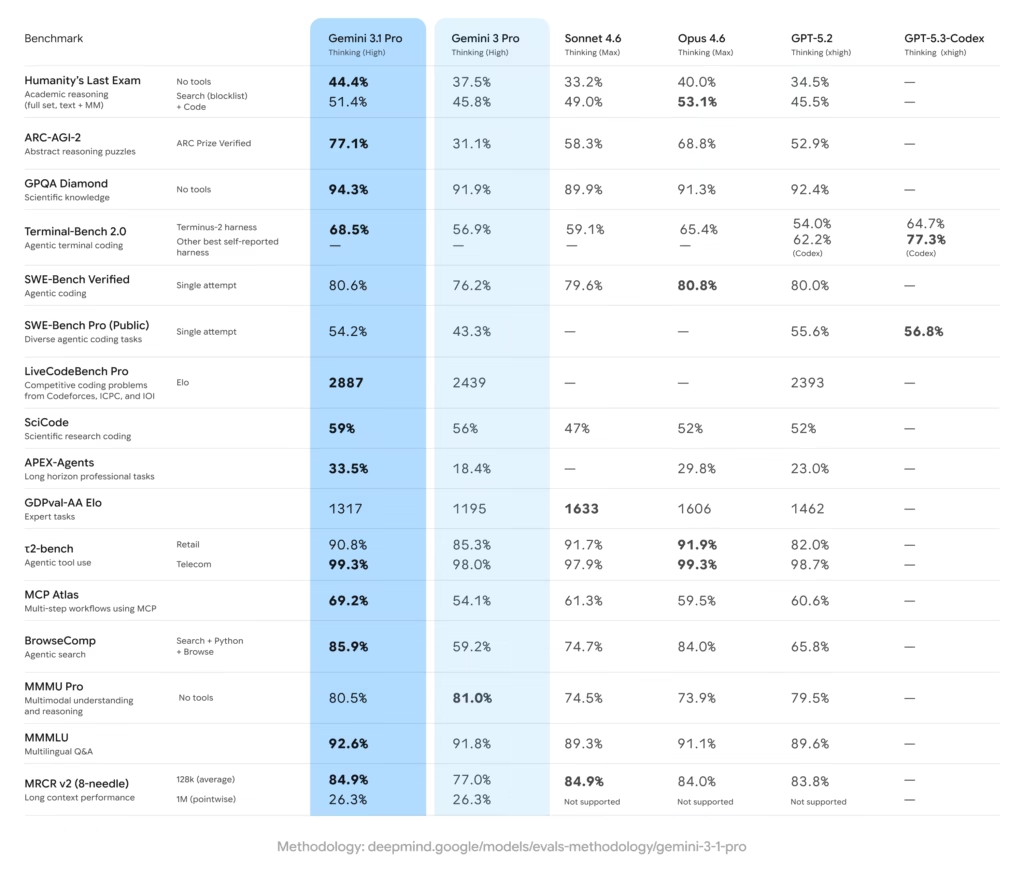
Clearly, Gemini Pro 3.1 is acing these benchmarks.
Real-World Performance That Actually Matters
Benchmarks are great, but how does it perform on actual work?
Brendan Foody has some thoughts on that. He’s the CEO of Mercor, an AI startup that built a benchmarking system called APEX.
Unlike traditional tests, APEX measures how well AI models handle real professional tasks, the kind of work actual humans get paid to do.
His verdict? Gemini Pro 3.1 now sits at the top of the APEX-Agents leaderboard.
Foody shared his excitement on social media, noting that the results show “how quickly agents are improving at real knowledge work.”
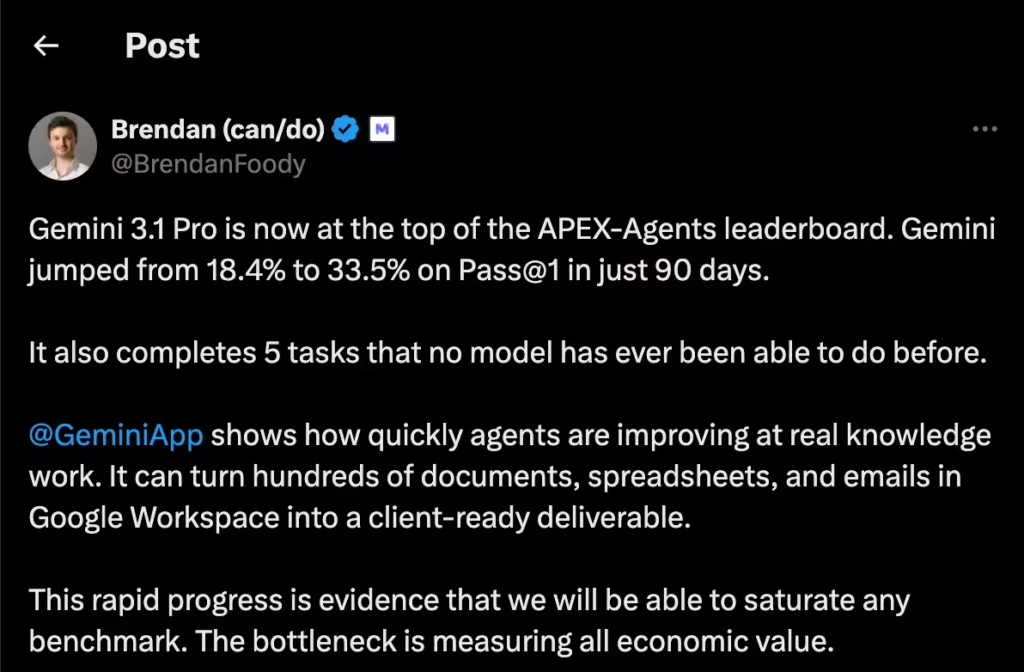
Translation: This AI can tackle serious, complex work tasks better than almost anything else out there.
What Can Gemini Pro 3.1 Actually Do?
1. Multi-Step Reasoning
Ever try to explain something complicated to someone, and they just… get it? That’s what we’re talking about here.
Gemini Pro 3.1 excels at tasks that require multiple steps of thinking. It doesn’t just spit out quick answers. It works through problems systematically.
2. Agentic Work
This is tech-speak for AI that can act more independently.
Think of it like this:
| Old AI Models | Gemini Pro 3.1 |
|---|---|
| “Tell me what to do next” | “I’ll figure out the steps and get it done” |
| Needs constant guidance | Can work more autonomously |
| Single-task focused | Handles complex workflows |
It’s not just answering questions anymore. It’s completing entire projects.
Who’s This Really For?
You might be wondering: “Cool, but what does this mean for regular people?”
Fair question. Here’s who benefits most:
- Businesses that need AI for complex analysis and decision-making
- Developers building AI-powered applications
- Professionals looking to automate repetitive knowledge work
- Researchers who need advanced reasoning capabilities
But honestly? As these models improve and become more accessible, they’ll eventually touch everyone’s daily work.
Is Gemini Pro 3.1 Available Right Now?
Sort of.
Gemini Pro 3.1 is in preview mode. That means select users can test it out, but it’s not fully released to the general public yet.
Google says a broader release is coming soon. No exact date yet, but “soon” in tech-time usually means weeks, not months (or so I think?)
What This Means for the AI Industry
Every few months, someone releases a new “most powerful AI model ever.” It can feel like hype overload.
But here’s why this one matters:
The improvements aren’t just marginal. They’re substantial. When an AI model tops independent benchmarks and performs better on real-world professional tasks, that’s meaningful progress.
Plus, it signals where the industry is headed. We’re moving from AI that answers questions to AI that completes work. That’s a big shift.
Obviously goes without saying that the AI wars are heating up.
OpenAI and Anthropic also both dropped powerful new models recently. Each company is pushing to build the smartest, most capable AI on the market.
Should You Care About Benchmark Scores?
Maybe. Maybe not.
Benchmark scores are useful for comparing models side-by-side. They give us objective measurements of capability.
But they don’t tell the whole story.
A model can ace tests and still struggle with practical applications. That’s why Foody’s APEX system – which tests real work scenarios – matters so much.
The sweet spot is when a model does well on both traditional benchmarks and real-world tasks. That’s exactly what Gemini Pro 3.1 appears to be doing.
What Happens Next?
The AI model wars aren’t slowing down anytime soon. If anything, they’re accelerating.
OpenAI will respond. Anthropic will release something new. Then Google will counter. And the cycle continues.
For those of us watching from the sidelines? It’s fascinating. We’re living through a genuine technological revolution, happening in real time.
