


OpenAI reports that people aged 18 to 24 account for nearly 50% of all messages sent to ChatGPT in India. In addition, users under 30 contribute about 80% of total usage.
Indian users primarily rely on ChatGPT for professional tasks. About 35% of all messages in the country focus on work. Globally, this figure stands at 30%.
It shows that Indian users are more focused on productivity.
Coding Tools

OpenAI reports that its coding assistant, Codex, is used three times more in India than the global median.
Its weekly usage has increased fourfold since the release of its Mac app just two weeks ago.
In addition, Indian users ask three times more coding-related questions compared to global averages.
This aligns with findings from Anthropic. The company recently stated that 45.2% of tasks on its AI model, Claude, in India relate to software-related use cases.
Beyond Work
Work use makes up the majority of use cases, but there are other use cases. 35% of messages request guidance or advice.
20% focus on general information and 20% involve writing or content creation. Therefore, users rely on AI not only for work but also for learning and communication.
OpenAI’s Second-Largest Market
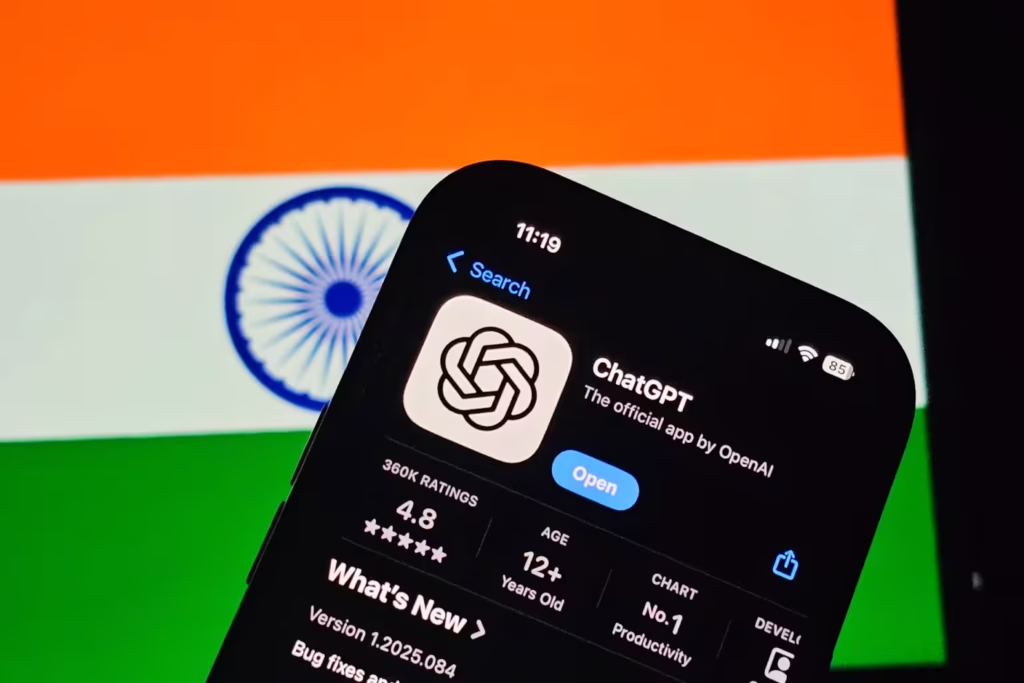
India is now OpenAI’s second-largest market and has crossed 100 million weekly users in the country.
As a result, the company is expanding aggressively. OpenAI already has an office in Delhi and plans to open others in Mumbai and Bengaluru this year.
Also read: OpenAI Makes ChatGPT Go Free for One Year in India
At the same time, it has signed a major partnership with Tata Group. This deal secures 100 megawatts of AI compute capacity.
It also supports the distribution of ChatGPT Enterprise through Tata Consultancy Services (TCS).
Also read: OpenAI Introduces ChatGPT Go Plan in India at $5/Month
Partnerships
OpenAI is also building strong local partnerships and has signed agreements with Pine Labs, Ixigo, MakeMyTrip, and Eternal.
These partnerships aim to integrate AI into fintech, travel, and food delivery services. OpenAI is working with educational institutions.
It plans to provide its tools to more than 100,000 students over the next six years. Together, these partnerships will establish its long-term presence in India.
