

Uber CEO Dara Khosrowshahi recently dropped a fascinating detail on Steven Bartlett’s podcast, The Diary of a CEO.
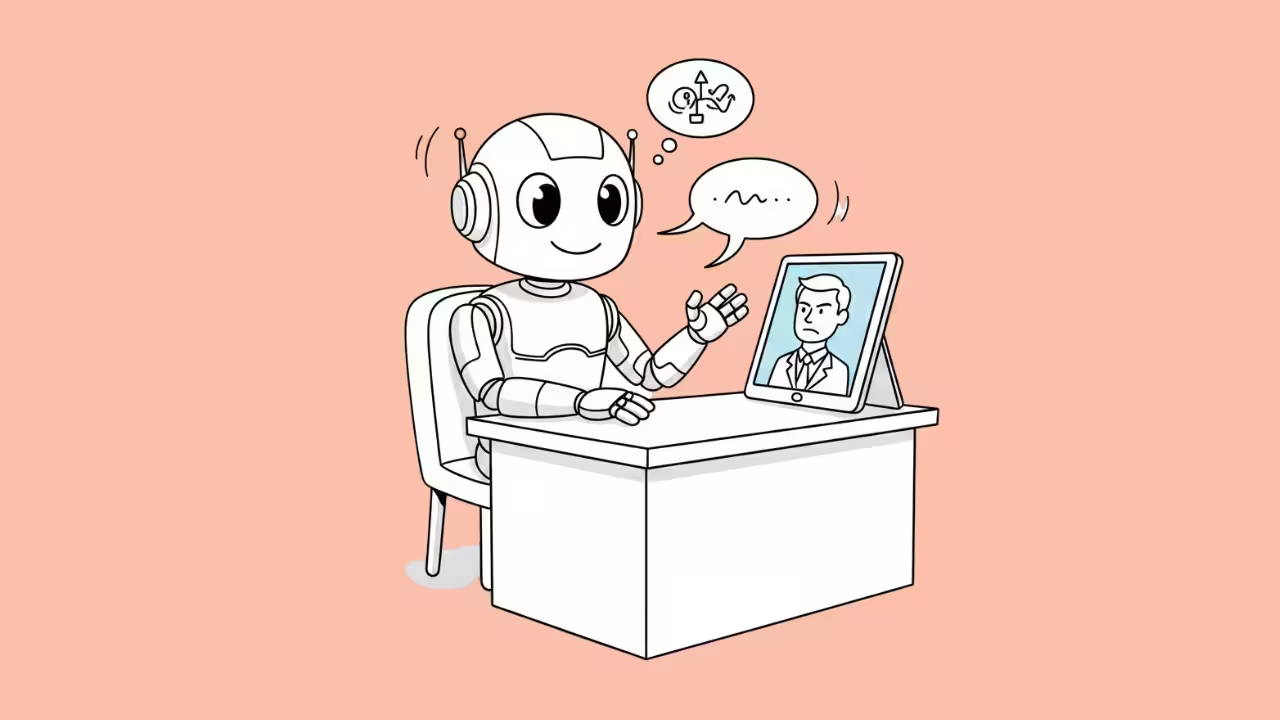
Some of his engineering teams have quietly built an AI chatbot modeled after him. They call it “Dara AI.”
The idea is to use it to rehearse before stepping into a real meeting with the boss.
“Some teams have built a Dara AI, so they basically make the presentation to the Dara AI as a prep for making a presentation to me,” Khosrowshahi said on the podcast.
By the time a presentation lands on Khosrowshahi’s desk, it’s already been polished, challenged, and sharpened, thanks to the AI version of him asking the tough questions first.
Why This Actually Makes Sense
It might sound a little wild at first. But let’s break it down.
Senior executives are busy. Really busy. Every minute of their time costs the company money. So the more prepared a team is before a meeting, the better that meeting goes for everyone.
Here’s what Dara AI likely helps with:
- Spotting weak arguments before the real meeting
- Tightening up slide decks so nothing feels sloppy
- Anticipating hard questions the CEO might ask
- Reducing meeting time by cutting unnecessary back-and-forth
Uber Is Quietly Becoming an AI-First Company
Here’s something that might surprise you.
Most people think of Uber as a ride-hailing app or a food delivery service. But Khosrowshahi sees it differently.
To him, Uber is a massive codebase. And the engineers are “literally the builders of the company.”
That mindset is shifting how the company operates at every level.
The Numbers Tell the Story
| Metric | Detail |
|---|---|
| Engineers using AI tools | ~90% |
| “Power users” of AI | ~30% |
| Impact on productivity | “Like nothing I’ve ever seen” |
That 30% power user figure is huge. These aren’t just engineers who open an AI tool once in a while. They’re completely rethinking how Uber’s systems are built from the ground up.
“Bricklayers” and “Architects” – How Khosrowshahi Sees His Team
Khosrowshahi used a great analogy to describe his engineers.
Some are laying the bricks – building the individual pieces of the system. Others are the architects – stepping back and asking, “Wait, should this whole building look different?”
Both roles matter. And AI is supercharging both.
“They are manufacturing the bricks that go into the system, and they’re architects who are kind of thinking about what the system should look like,” he said.
So what does that mean in practice?
Engineers aren’t just writing code faster. They’re questioning whether the code should even exist in the first place. That’s a massive shift in how software gets built.
Is This the Future of Every Workplace?
Here’s a question worth thinking about: How long before every company has an AI version of its leadership team?
It’s not that far-fetched. If you can train an AI on how a specific person thinks, communicates, and makes decisions, you can use that AI to prep for meetings, test ideas, or even onboard new employees.
Some potential upsides:
- Teams feel more confident walking into high-level meetings
- Less time wasted on poorly prepared presentations
- Faster feedback loops on new ideas
- Executives can focus on decisions, not prep reviews
Of course, there are real questions here too. Does a “Dara AI” actually capture how a real human thinks?
Can it replicate the nuance of a real conversation? Probably not perfectly. But it doesn’t need to be perfect to be useful.
The Big Takeaway
Uber’s engineers didn’t just adopt AI tools. They used AI to change how they work, including how they prepare to talk to their own CEO.
That’s a different level of thinking.
It’s not about replacing people. It’s about getting better, faster, and sharper at the work that matters. And if a digital version of your boss can help you nail a presentation? Why not use it?
Khosrowshahi summed it up best: “It really is changing their productivity in a way that I’ve never, ever seen before.”
That’s not just a catchy quote. Coming from someone who has led one of the world’s biggest tech companies through years of rapid change, that’s saying something.
