


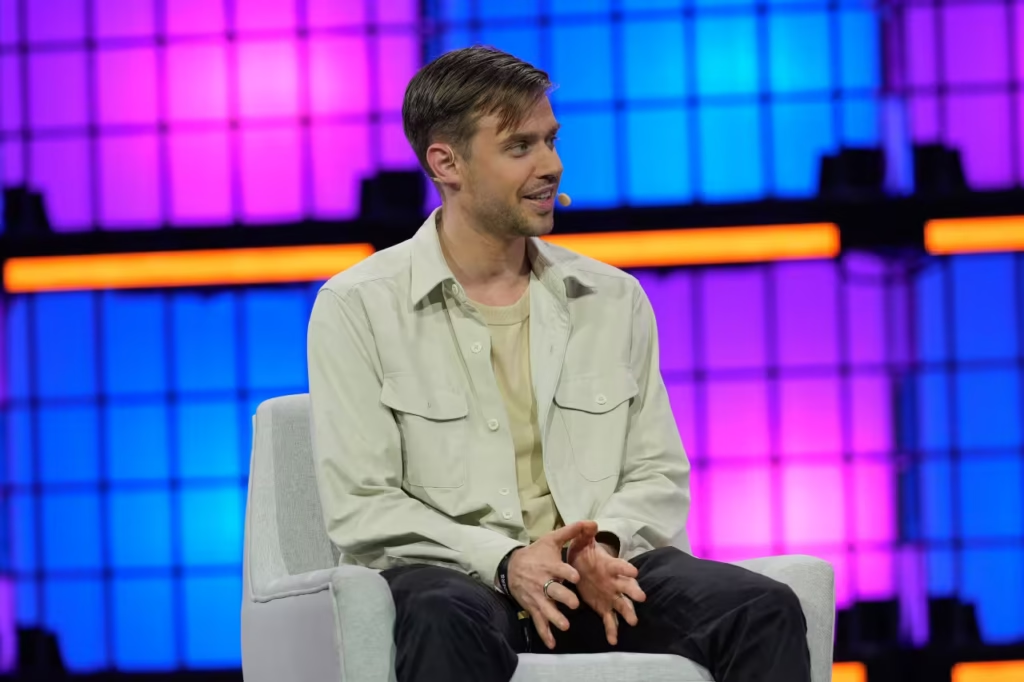
On Monday, CEO Anton Osika confirmed plans to make more acquisitions on X and invited startups and teams to explore joining the company.
Osika explained that many leaders within the company were founders before joining. That’s why Lovable has built a culture that supports independence.
Teams can act quickly and can also take ownership of ideas. Such self-directedness allows innovation to continue after an acquisition.
In contrast, many companies slow teams down with layers of approval. But Lovable wants founders to keep building and scaling their ideas with better resources.
Talent
Lovable has not released strict acquisition criteria. But the company prioritizes skilled and focused teams, founders with proven ideas, and projects that show early traction.
Osika then directed interested parties to Théo Daniellot, who leads mergers and partnerships.
The ideal acquisition looks like this: a small AI startup may struggle to scale. Funding may be limited, and infrastructure may be weak.
Lovable then becomes a turning point for that same team to access stronger systems and a larger user base to make it thrive.
This is not Lovable’s first acquisition effort. In November, the company acquired Molnett, a cloud provider, to become more reliable and scalable.
Competition
Lovable faces competition from several platforms: Cursor, Replit, and Bolt. Also, major LLMS such as OpenAI and Anthropic are advancing coding models quickly.
The systems generate, edit, and debug code, and raise the competitive bar for all parties. Elena Verna has acknowledged this challenge.
Larger firms have more data and resources, and can move faster at scale.
Growth
Lovable recently reached $400 million in annual recurring revenue, up from $200 million at the end of 2025. That’s a significant increase in a short time.
Usage is also high; Lovable now sees over 200,000 new “vibe-coding” projects created each day.
