
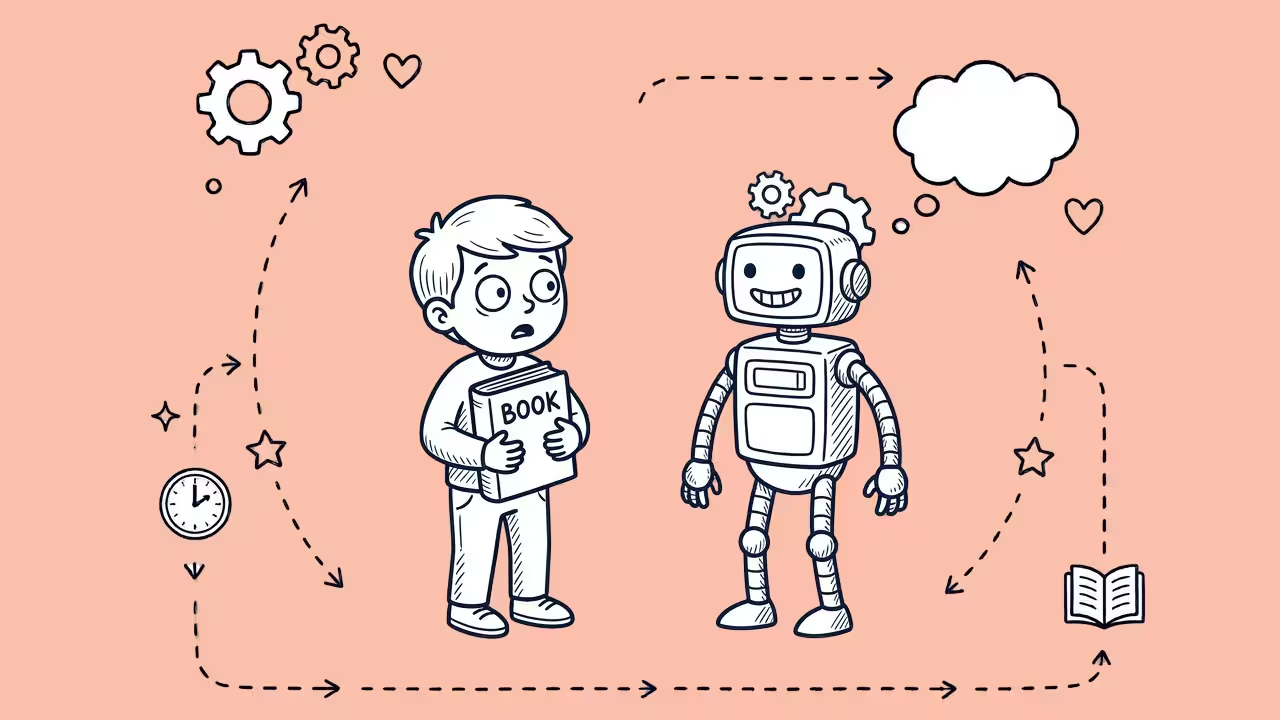

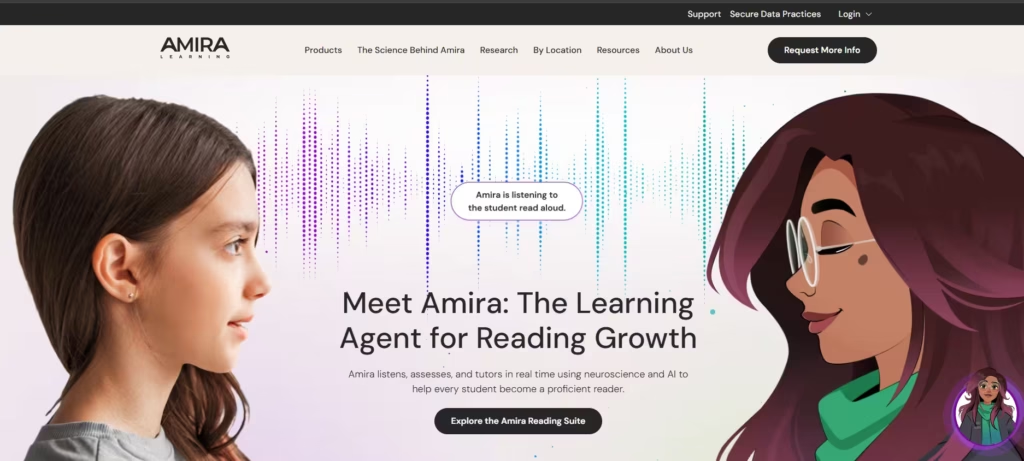
AI reading tutors, like Amira AI, are appearing in more classrooms and living rooms every year. It listens to children read aloud, flags errors in real time, and tracks progress over time, all without a teacher present. That sounds convenient, but it raises a genuinely important question for parents. “Is Amira AI actually safe for your child, both emotionally and in terms of how it handles their data?”
Having reviewed Amira’s publicly available privacy documentation and compared it against similar tools like Lexia Core5, as well as parent feedback from education forums, my verdict is this: Amira AI is reasonably safe for most children when used in short, supervised sessions.
However, I would not recommend it without close parental involvement for children who already struggle with reading anxiety. I also have specific concerns about the transparency of its voice data practices. This is something parents should know about.
Does Amira AI Cause Reading Anxiety?
The honest answer is yes, it can. The risk is real enough that parents should take it seriously rather than brush it aside.
Consider what Amira actually does during a session. It corrects children in real time, every session, without the emotional awareness a teacher or parent brings. That kind of immediate feedback can feel motivating for confident readers.
But for children who are already self-conscious about reading, it can tip sessions into something that feels more like an interrogation than learning. This shows up clearly in parent reports.
In a February 2025 Reddit Teachers thread with 22 comments, some parents and teachers reported that their first or second graders described Amira’s corrections as “mean” or “scary.” Others said their children refused to continue sessions altogether after repeated mispronunciation corrections.
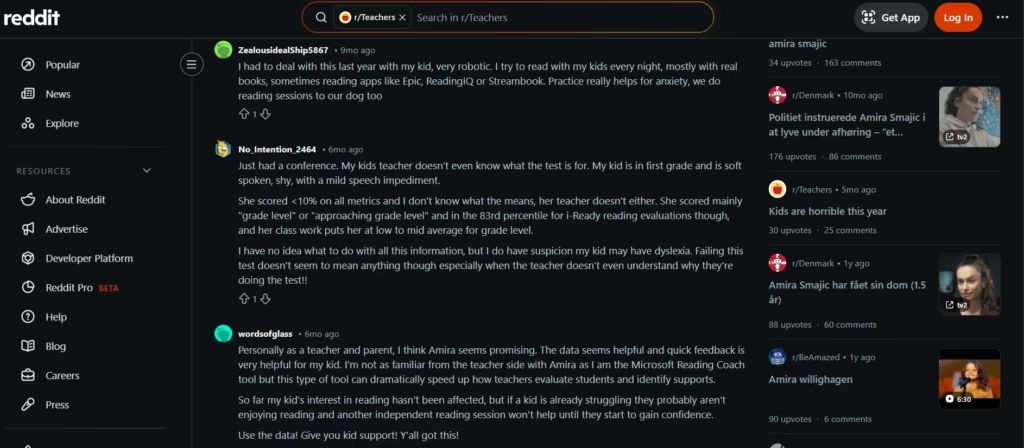
This is not always the case, but it appears often enough to be treated as a real pattern rather than an outlier.
From a child development standpoint, the concern runs deeper than hurt feelings. Healthy literacy growth depends on more than accuracy drills. Children need storytelling, conversation about what they have read, the experience of reading purely for enjoyment, and the reassurance that mistakes are a normal part of learning.
Amira can supplement some of those things, but it cannot replace them. When AI sessions start to crowd out reading time with a parent or teacher, that is when the developmental risk becomes concrete.
So what should parents watch for? The clearest warning signs are a child who starts avoiding reading sessions, becomes visibly upset during Amira use, or develops more negative feelings about reading in general.
If any of those appear, scale back AI use immediately. Then reintroduce low-pressure, human-led reading time where mistakes are welcomed rather than flagged.
How Amira AI Handles Student Data
The data privacy picture is complicated. In some areas, it is more concerning than the company’s general assurances suggest.
During normal use, Amira collects a significant amount of sensitive data. This includes voice recordings of children reading aloud, accuracy and speed metrics, session timestamps, progress data tied to student accounts, and device information.
That is not unusual for educational technology; tools like Lexia Core5 and Reading Eggs collect similar categories of data. The real concern is what happens to that data afterward.
Amira’s privacy documentation states that student data is not sold to third parties. It also confirms compliance with FERPA and COPPA, the two primary U.S. federal laws governing student data.
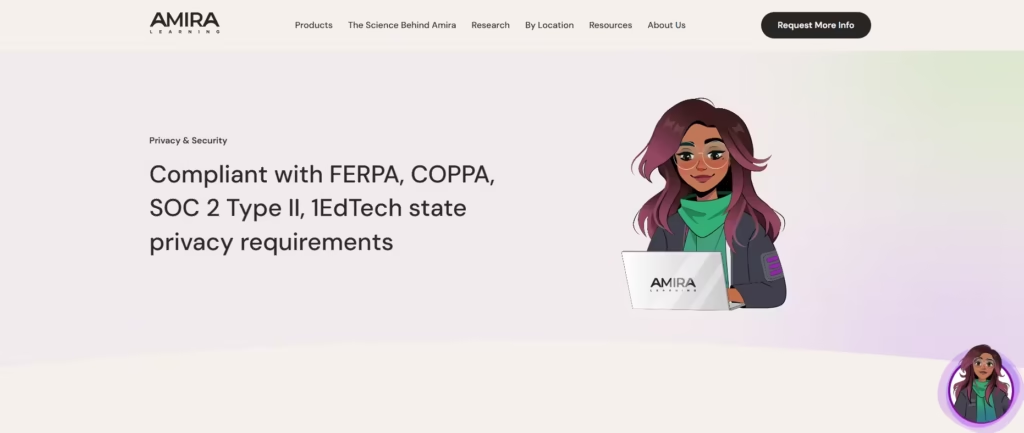
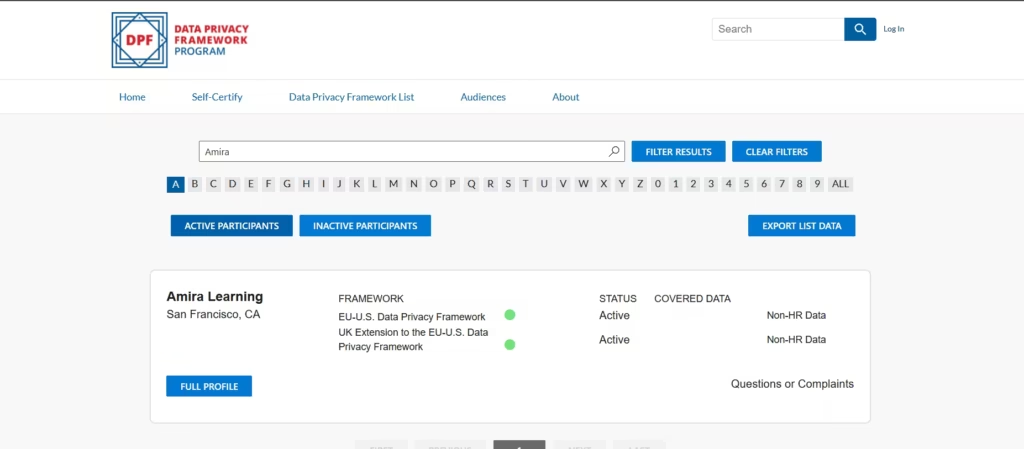
I did run a check on Amira in the data privacy framework database, and it did come up in the system.
Those are baseline legal requirements, not genuine reassurances. Meeting them does not answer the questions most parents actually care about.
Amira’s public privacy policy does not clearly state how long voice recordings are retained. It does not explain whether parents can request the deletion of their child’s voice data. And it does not confirm whether recordings are used in any form to train or improve the AI model.
The policy language is vague. That vagueness matters because voice recordings of children are not ordinary data. They capture hesitation patterns, mispronunciations, emotional state, and developmental progress. If those recordings feed into a commercial AI product, even in anonymized form, parents have a direct interest in knowing that explicitly.
Schools typically sign data privacy agreements with Amira before deploying it, and those agreements may contain stronger protections than the public-facing policy does. If your child uses Amira through school, ask the school directly, “What does our data processing agreement with Amira say about voice data retention and deletion?”
If your child uses Amira at home, contact Amira’s support team before continuing and ask specifically about your deletion rights under COPPA.
Also read: Is Amira Learning Worth It?
How Safe is Amira AI
Amira AI is not a dangerous product. But “not dangerous” is not the same as “safe without conditions.”
For confident readers using the tool in 10 to 15-minute sessions alongside regular human reading time, Amira is beneficial. But children who are already anxious about reading, perfectionistic, or easily discouraged need a more careful approach. It is advisable to keep an adult present during early sessions and watch the emotional response closely.
On data privacy, Amira meets legal minimums but leaves important questions unanswered, particularly around voice data. Until the company provides clearer public documentation on voice recording retention and parental deletion rights, that gap should factor into your decision.
This applies most to home users, who lack the protection of a school-negotiated data agreement. The safest strategy is to keep sessions short and stay nearby. Make sure your child still gets plenty of relaxed reading time where no one is keeping score. And before you commit to the tool, read the privacy policy.
Then ask the school or the company the questions it leaves open.
FAQs
1. Does Amira Record Your Voice?
Yes, Amira records the voices of its users, who are mainly children. Recordings are paired with reading accuracy, progress levels, and device information.
2. Does Amira Use AI?
Yes, Amira uses AI to recognize the pronunciation of words and the ideal of spoken speech.
