
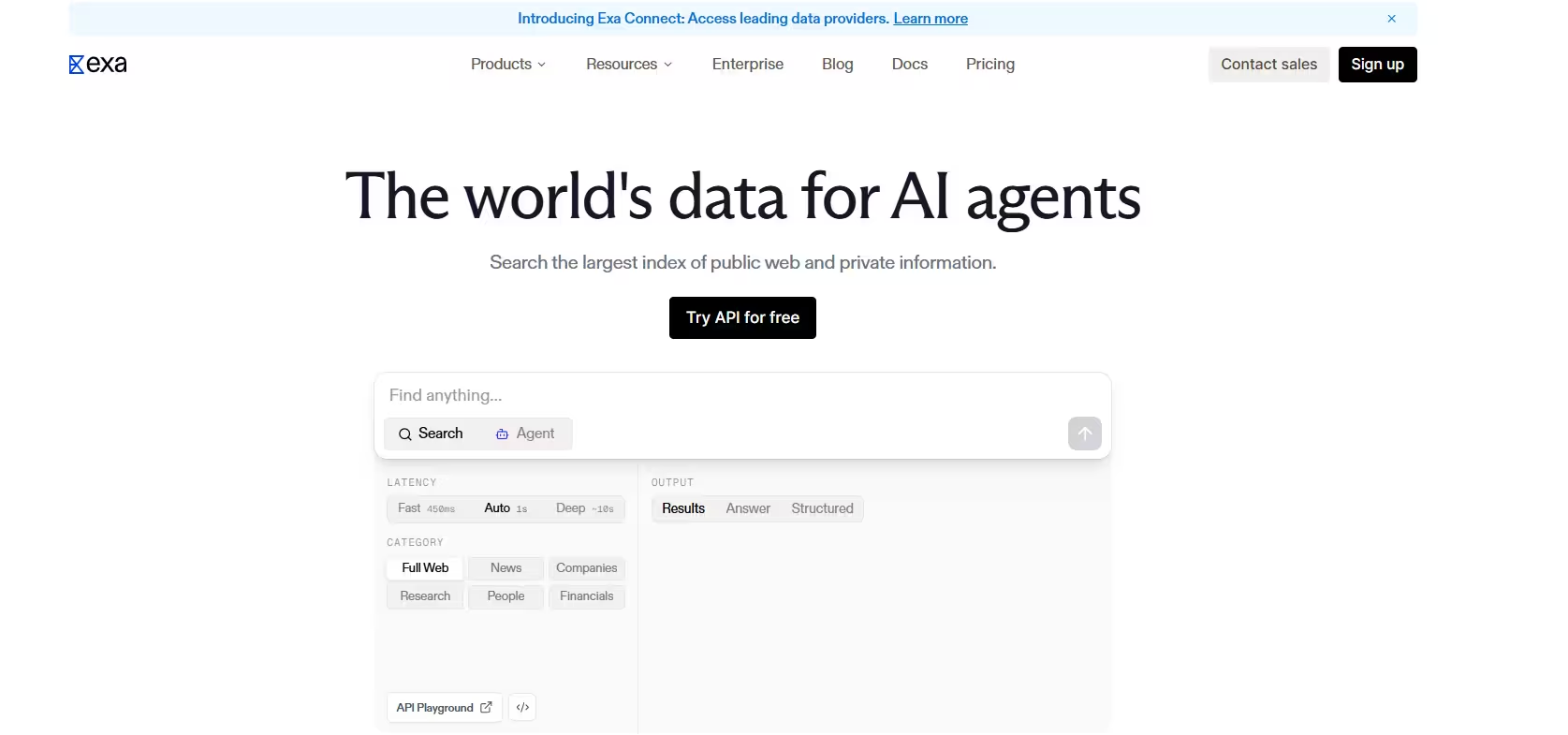


Exa’s $2.2 billion valuation in May 2026 shows traction among AI teams, and for good reason. That round, led by Andreessen Horowitz, raised $250 million and traces back to 2021, when the company launched under the name Metaphor Systems.
Will Bryk and Jeff Wang founded the company after meeting as Harvard roommates, and the pair later joined Y Combinator’s Winter 2022 batch. The team rebranded to Exa in January 2024.
Instead of returning a page of links, Exa’s engine reads the intent behind a query and hands back structured, machine-readable results. Since AI agents cannot click through search pages like humans do, they need clean text, and they need it fast.
Exa AI built its own index rather than reselling results from Google or Bing. That approach gives the company more control over ranking and freshness. It also means Exa can tune results specifically for how language models consume information, not how people scan a results page.
Also read: Best AI Search Engines of 2026
Key Features
1. Search API:
This is the core product. It supports neural search, keyword search, and an “auto” mode that blends both. Developers can filter results by domain, date, or similarity to a given link, which helps narrow noisy queries.
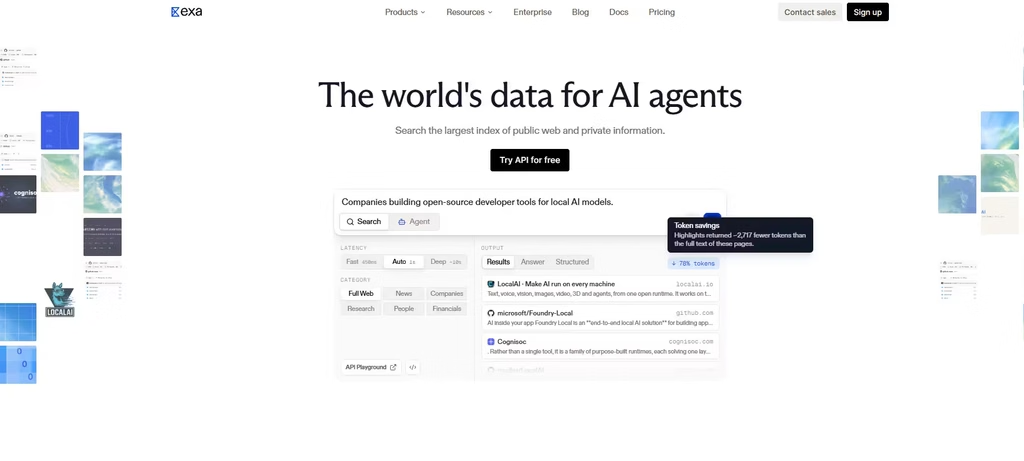
In my testing, I entered a simple search on open-source developer tools, and that resulted in 78% token use reduction. Otherwise, those tokens would be used up on unnecessary website markup (headers, footers, scripts) and pulled into an LLM’s context window.
2. Contents API:
Once Exa finds a page, this endpoint pulls clean, essential, and high-density snippet essential, high-density snippet from it. It returns Markdown or JSON output that plugs directly into LLM prompts or vector databases, so teams skip manual HTML parsing.
This drastically reduces API costs and processing time when feeding live web data into an AI model or RAG pipeline.
3. Agent API:
This endpoint runs multi-step research tasks on its own. It searches, reads, and summarizes without a human guiding each step. This costs more with effort level, so simple lookups stay cheap while deep research costs more.
4. Deep Search and Deep-Reasoning Search:
These modes handle harder questions. They execute multi-step agent workflows and return structured outputs with web-grounded citations, which reduces the risk of hallucinated answers.
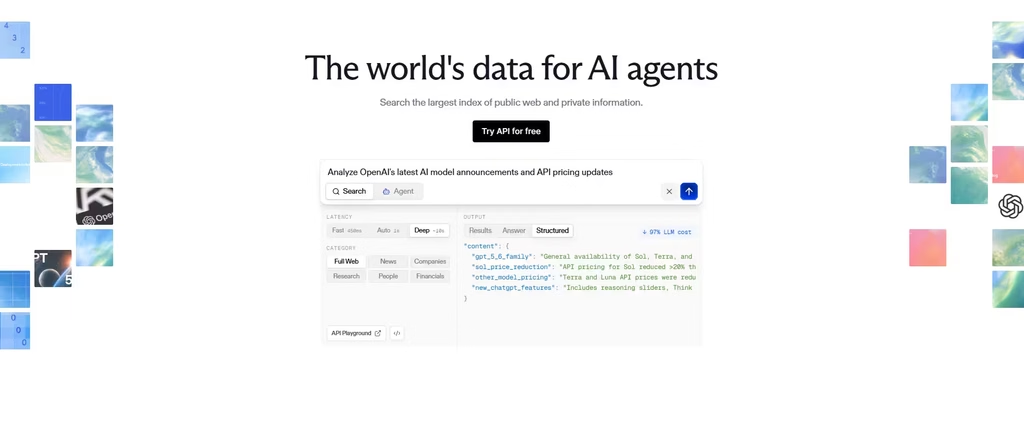
I decided to use this feature for the hypothetical scenario of a sales team creating a detailed analysis of a competitor’s recent pricing changes and updates. All I had to do was prompt Exa AI and then click “answer” or “structured” instead of results. Clicking answer resulted in a natural language summary which can be incorporated into reports.

“Structured” returned a block of JSON schema which I could feed into code and databases to form basis of further work.
5. Monitors API:
This endpoint watches the web for you. It runs searches on a set schedule and sends updates through webhooks, which suits news tracking or competitor monitoring.
6. Integrations:
Exa connects to popular frameworks out of the box. It works with LangChain, LlamaIndex, CrewAI, and Dify, and the company also offers an MCP server and a Claude connector for agent builders.
7. Security:
Exa holds SOC 2 Type II certification, and enterprise plans add zero data retention and HIPAA support.
Exa does have some limits; It handles text only, so image or video search is not available yet. It also is not a general-purpose scraper, so paywalled or login-gated pages stay out of reach.
Should You Use Exa AI?
In my opinion, yes. Exa gives AI agents fast, structured access to the live web, and it does that better than a general-purpose search engine repurposed for AI use. If you build RAG pipelines, coding agents, or research automation, the token savings alone make Exa worth testing; our search query cut token use by 78% compared to raw HTML.
Exa excels at text-based agent search, but if you need multimodal search or heavy scraping, look elsewhere. So niche research tasks may need a second tool alongside Exa.