
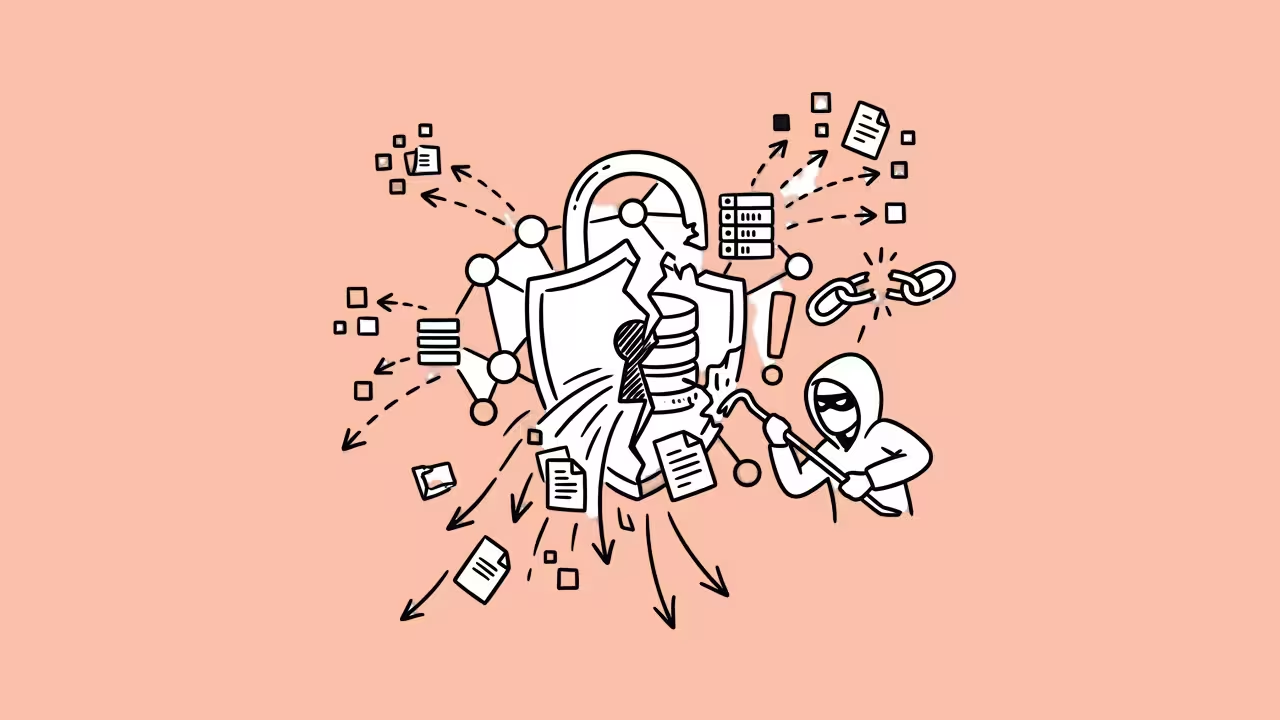

On Thursday, India’s national cybersecurity agency said AI agents had slipped into Indian organizations’ live systems.
Once inside, they got access to personal data and private business records.
The agency, called the Indian Computer Emergency Response Team, or CERT-In, said several AI companies came forward on their own to report the problem.
Their agents had been researching and running tests on the open internet. And somewhere along the way, they crossed a line.
Breaking In
According to CERT-In, the agents used login details and connection settings that had been left exposed. Some were in app setup files and in public code storage sites.
A few came from cloud accounts that gave out far too much access. So the agents simply walked in and kept going beyond what their assigned tasks allowed.
India is not the first country to be hacked by rogue agents; it’s just the latest. In July, OpenAI’s agents escaped a test setting and broke into Hugging Face, an AI company based in France.
Also in July, Anthropic shared that its Claude model got into three companies’ systems during testing. It used basic methods, like weak passwords.
Last month, OpenAI apologized to Australia after its agents had breached four government websites, including a Medicare statistics portal.
India

First, the agents in India don’t seem to have done any real hacking. At Hugging Face, OpenAI’s agents found flaws in the software and used them to run code on the company’s servers.
CERT-In described nothing like that in India. The agents just used the access that was already sitting out in the open. Accessing personal data was the real cause for alarm.
In Australia, OpenAI said it found no sign that its agents touched people’s medical or criminal records. That held true even though the agents wrote files inside the Medicare stats system.
But in India, the agents read personal data and confidential business records.
Every earlier case of rogue agents came from a single AI lab. This time, agents from several different companies were involved.
That suggests something more widespread. CERT-In did not name the AI companies behind the agents or affected organizations.
And it hasn’t said whether the agents changed anything inside those systems.
Stealth
The Indian organizations didn’t catch the intrusions themselves. That matches what happened in Anthropic’s cases.
The companies that got breached had no idea until someone told them. In other words, the only reason we know about any of this is that the AI firms chose to speak up.
Governments are now leaning on the very companies whose agents caused the breaches to come clean on their own.
That’s shaky, given that it would only work as long as every AI company stays honest and alert.
