
You send a 20% discount code to your whole list. Your most loyal customer uses it, even though she would have paid full price. Meanwhile, the shoppers who were about to leave never open the email. So you’ve lost margin, and you’re still losing customers.
That’s what happens when you treat your audience as one big group; customers notice too. According to McKinsey, 71 percent of consumers expect companies to deliver personalized interactions, and 76 percent feel frustrated when this doesn’t happen.
That’s the gap AI audience segmentation tools were built to fill. They group people by behavior, predict what each group will do next, and help you send the right message to each one. Below, you’ll find 10 tools, including four you can start using for free. I compared each one’s documentation, public pricing, analyst coverage, and user reviews, so you see the trade-offs and not just the features.
| Tool | Best For | Free Option | Standout AI Feature |
| Optimove | Retention-focused B2C brands | No | Real-time decisioning |
| Klaviyo | Ecommerce stores | Yes | Plain-language segment builder |
| Insider One | Enterprise omnichannel teams | No | AI-generated segments from prompts |
| Twilio Segment | Data-first teams | Yes | Four ready-made prediction models |
| Braze | Mobile-first brands | No | Predictive churn and purchase models |
| Amplitude | Product and growth teams | Yes | Predictive audiences |
| Bloomreach | Online retailers | No | Loomi AI segments |
| MoEngage | Cross-channel B2C marketers | No | Merlin AI Segment Assist |
| Delve AI | Persona research | Yes | Automatic persona segmentation |
| Pecan AI | Analysts without data scientists | Free trial | Predictive Chat |
Best for Ecommerce Brands
Both tools here are built around carts, orders, and repeat purchases. The difference is scale. Klaviyo lets a small shop start for free. Bloomreach, by contrast, suits retailers that want AI running across email, SMS, and web personalization at once.
1. Klaviyo
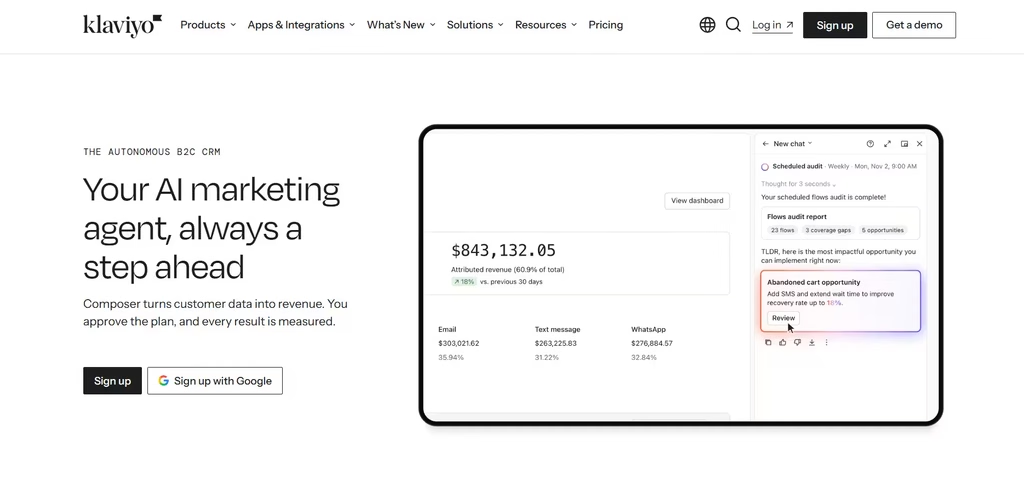
Do you run an online store on a tight budget? Then Klaviyo is a good place to start. Its permanent free plan covers up to 250 active profiles, 500 email sends per month, and 150 mobile message credits.
The AI features come with paid plans. With Segments AI, you describe the customers you want to reach in natural language, and it generates a matching segment in seconds. Paid tiers also include predictive analytics such as predicted CLV and churn risk. The Email plan costs $20 per month for 251 to 500 active profiles.
There’s one limitation to know about. Segments AI won’t proactively suggest segments for you, and it won’t add a marketing consent condition automatically. So check every AI-built segment before you hit send. Even so, I think Klaviyo’s free plan is the safest entry point on this list for small stores. You can learn segmentation for free and pay only when you’re ready for the AI features.
2. Bloomreach
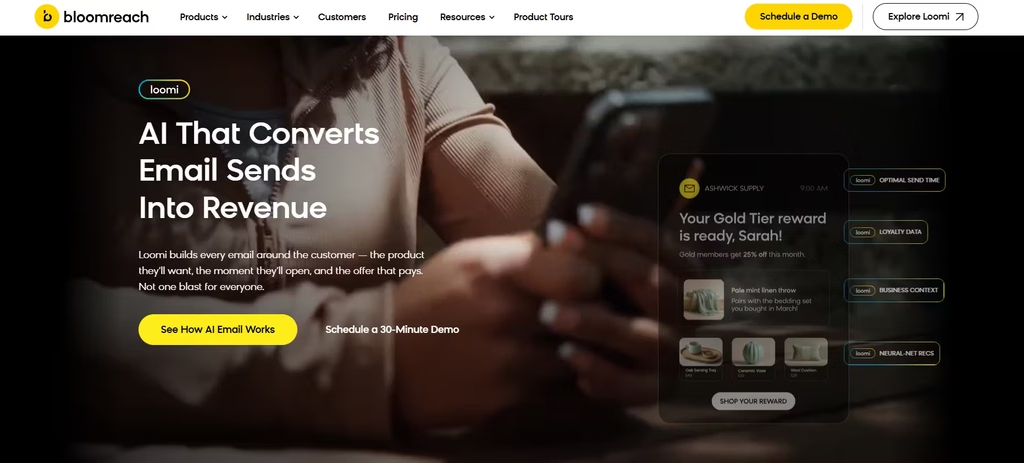
If Klaviyo is the entry point, Bloomreach is the step up for larger retailers. In a Forrester study commissioned by Bloomreach, a composite organization saw benefits of $9.40 million over three years against costs of $2.68 million, for an ROI of 251%.
That impact comes from Loomi AI, which analyzes customer behavior, purchase patterns, and engagement data to create live segments. Bloomreach was also named a Visionary in the 2025 Gartner Magic Quadrant for Multichannel Marketing Hubs.
Also read: Why AI Chatbots Are the Future of Personalized Marketing
Best for Enterprise Omnichannel Marketing
All four platforms in this group appear in Gartner’s 2026 Magic Quadrant for Multichannel Marketing Hubs. However, they landed in very different spots. Braze is a Leader, Insider One is a Challenger, Optimove is a Visionary, and MoEngage is a Niche Player. Those placements hint at where each one is strongest.
3. Optimove
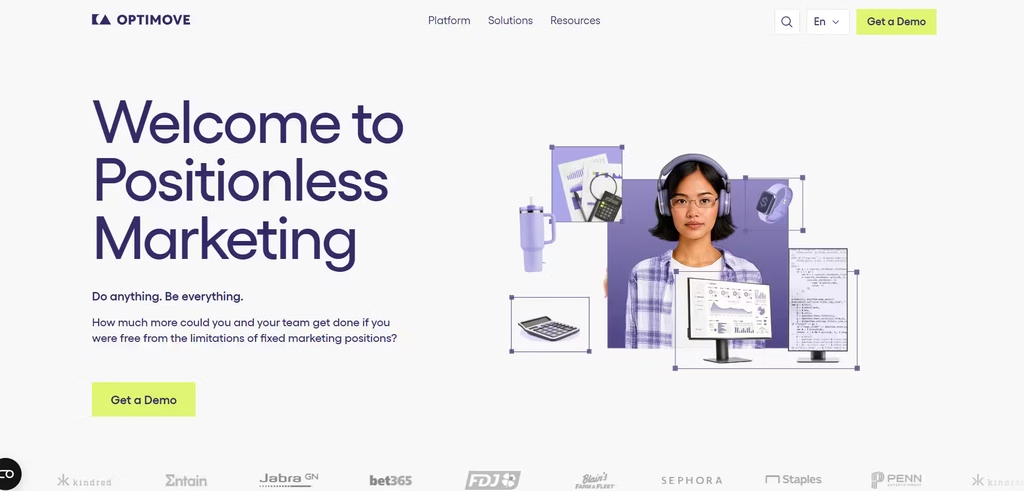
Optimove has the analyst credentials. In Gartner’s 2026 Critical Capabilities for Multichannel Marketing Hubs, it ranked first for Real-Time Personalization and Decisioning. That wasn’t a one-off. Gartner has also named it a Visionary in the Magic Quadrant three years running.
The platform manages and targets customer journeys using real-time behavioral data and predictive models. Users also praise its ease of use. One G2 reviewer wrote that segmentation is easy and “allows vast options with a lot of attributes.” Pricing is available only through sales.
Our take: if retention is your top priority, Optimove’s real-time decisioning edge makes it worth a demo, even without a public price.
4. Insider One
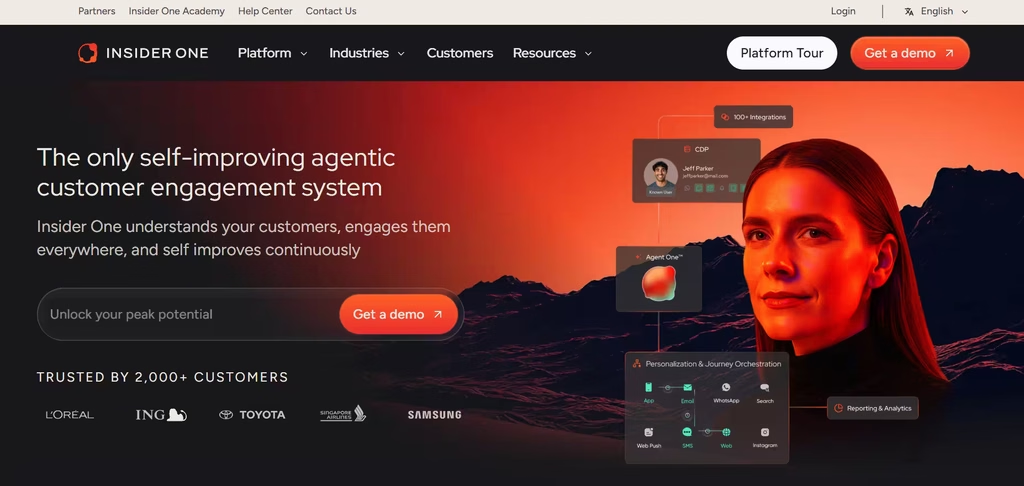
Insider One takes a different route to the same goal. On G2, Insider One holds a 4.8 out of 5 rating from 1,262 reviews. The company also says it was named #1 Leader across 11 categories in G2’s Winter 2026 reports.
Insider’s pitch centers on speed. Insider says its AI helps brands build audience segments 30X faster, generating them from a marketer’s prompt. In addition, a Forrester analyst noted that Insider One was the only vendor in that evaluation that let customers build generative AI segments in natural language without technical skills.
5. Braze
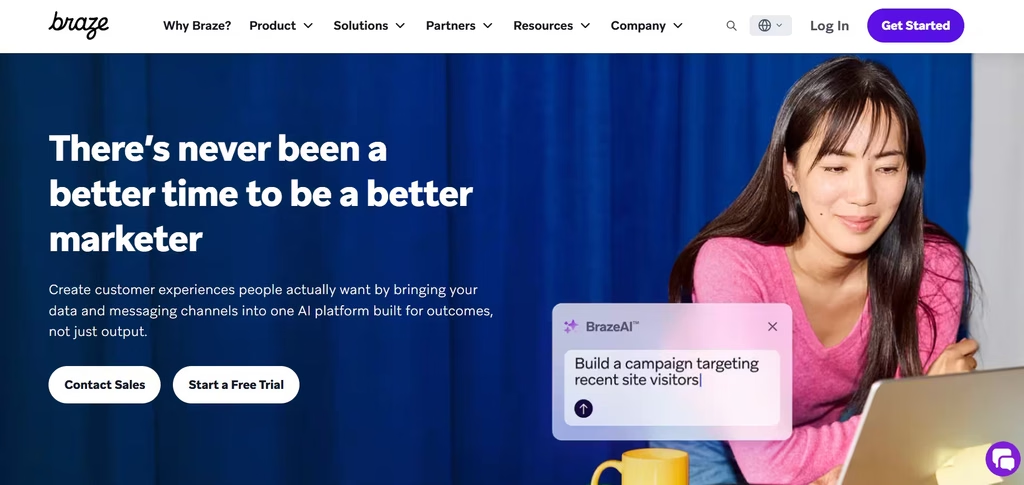
Of the four, only Braze sits in the Leaders quadrant, and analysts keep ranking it at the top. It was named a Leader in Gartner’s 2026 Magic Quadrant for Multichannel Marketing Hubs, the fourth consecutive year it has earned that position.
For segmentation, the Braze Predictive Suite lets marketers build and analyze predictive models and segments to understand churn, behaviors, and purchases. The payoff is timing: you can reach at-risk users with a win-back message while they’re still engaged. Pricing is custom.
6. MoEngage
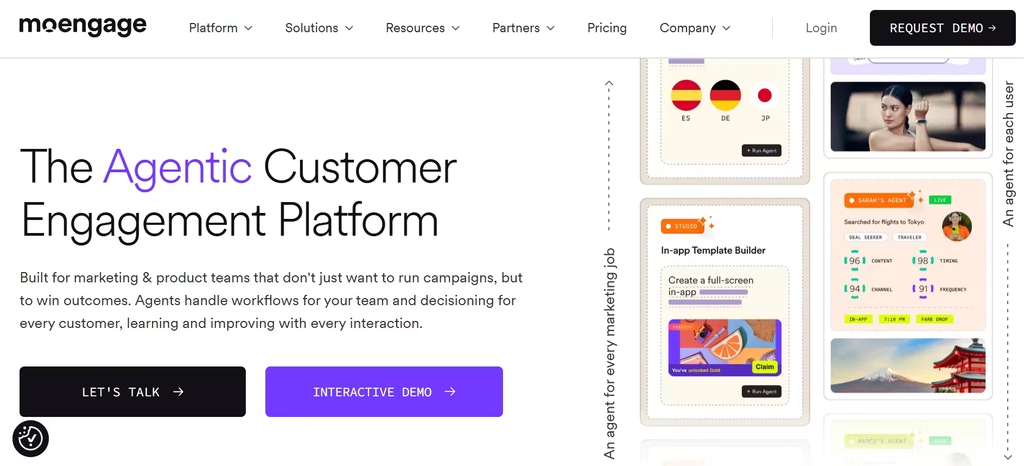
Customer reviews tell a different story for MoEngage. Although Gartner placed it among Niche Players, MoEngage was the only vendor named a “Customers’ Choice” in the 2026 Gartner Peer Insights Voice of the Customer for Email Marketing. Its Merlin AI Segment Assist means you don’t have to work through filter menus.
Instead, you can create complex segments with multiple conditions, exclusions, timeframes, and logic using plain-language prompts. Brands in 75 countries use MoEngage to reach over 2 billion people every month.
Best for Data and Product Teams
These tools start with your data, not your campaigns. They suit teams that want to own their predictive models and then push the resulting segments to other tools. On the downside, each one puts its strongest AI features behind a paid tier.
7. Twilio Segment
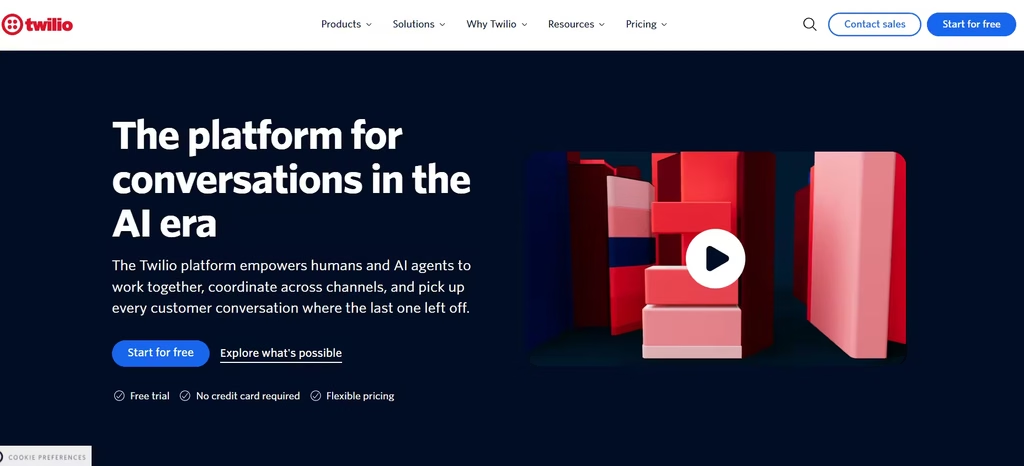
Twilio Segment gives you four predictive models: Custom Predictive Goals, Likelihood to Purchase, Predicted LTV, and Likelihood to Churn. Then, it saves predictions to user profiles, so you can build Audiences, trigger Journeys, and send data to downstream tools.
You can start for free. The Free plan covers 1,000 visitors at $0, and Team starts at $120 per month for 10,000. Keep in mind, however, that the documentation lists Predictions as an add-on for Business-tier customers. That’s the catch: the free plan gets your data flowing, but the AI sits behind a paywall.
8. Amplitude
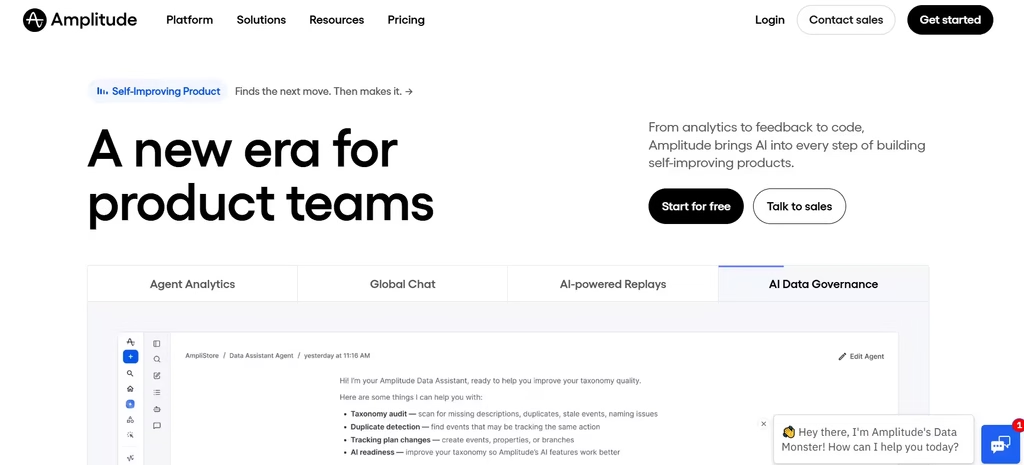
Your past buyers aren’t always your next buyers. That’s why Amplitude’s predictive cohorts group users by future behavior instead of past behavior. For example, you can target users likely to purchase in the next seven days.
The free Starter plan includes session replay, feature flags, web experimentation, and out-of-the-box dashboards, so early-stage teams can learn the platform before paying. Plus costs $49 per month, billed annually, and Growth adds predictive audiences on a custom quote. In short, the free plan teaches you the tool, but the predictive features cost real money.
9. Pecan AI
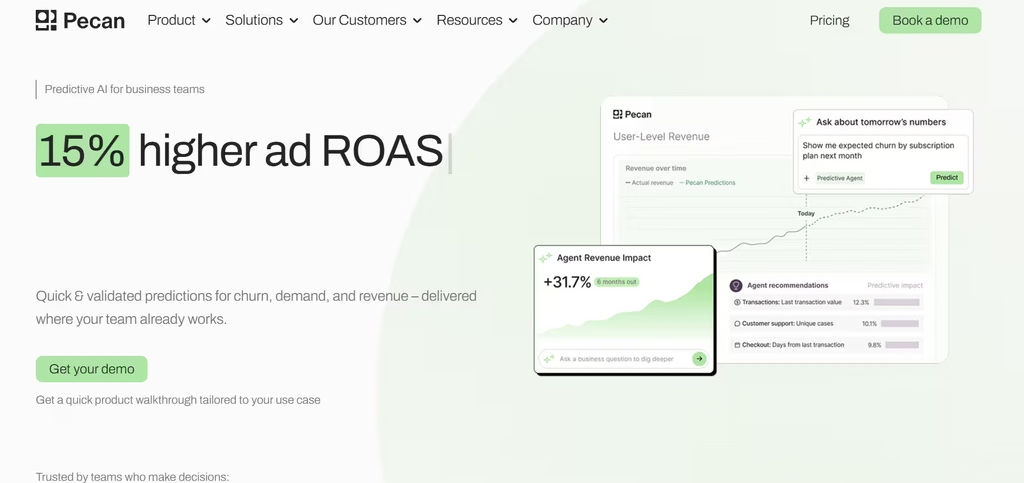
Pecan was built to cater to smaller-scale enterprises without data science teams. It aids data analysts in building their own predictive models using Predictive Chat and a SQL-based Predictive Notebook, without help from data engineers or data scientists.
You can then forecast lifetime value, customer churn, next best offer, and more. These predictions feed directly into sharper segments. A free trial is available. However, Pecan doesn’t disclose pricing for its Starter, Business, and Team plans, so expect a sales conversation before you can budget.
Best for Persona Research
Delve AI doesn’t send campaigns. Instead, it helps you understand who you’re talking to before you build segments anywhere else.
10. Delve AI
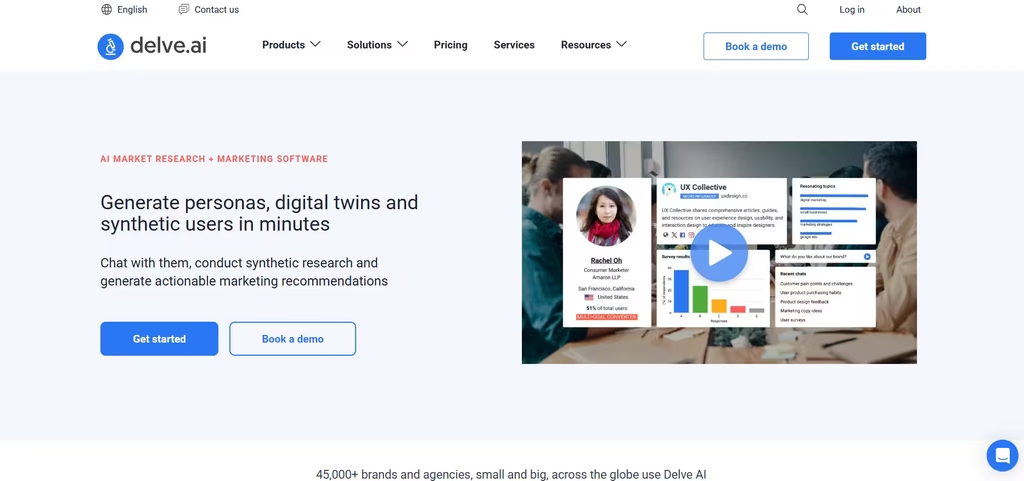
Segments tell you who to target. Personas, on the other hand, give your team a real person to write for. That’s why Delve AI turns your data into both. It automatically segments audiences by psychographics, behavior, demographics, geographies, and transactions, then presents each segment as a persona.
When I tried the demo data segmentation, I found that each persona reflected the funnel stage each segment was in. This provided a more actionable audience classification. I could tailor marketing campaigns to existing customers by identifying characteristics and writing copy that speaks to them.
I could also loop in the social persona, for example, to increase brand awareness through influencer marketing.
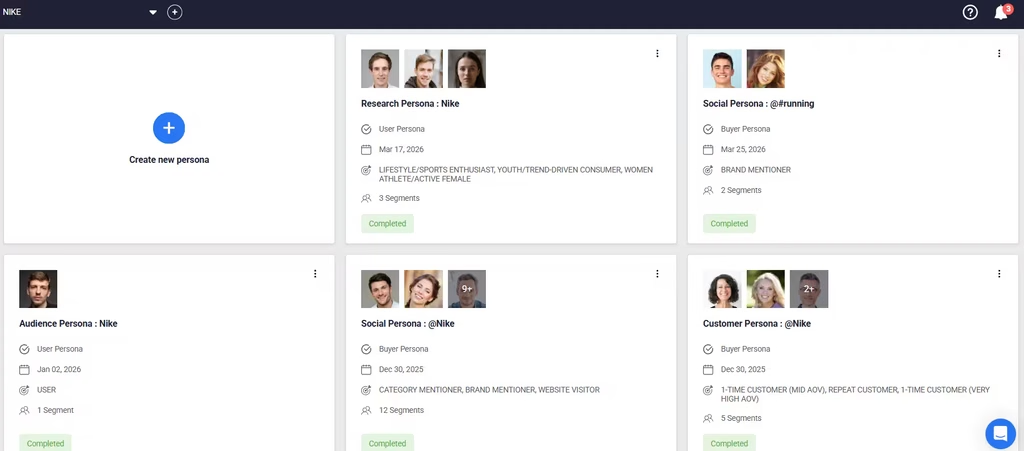
I’ll advise you to start from the free tier. It gives you one Audience Persona plus one Website Persona built from 3+ days of historical data. In our view, that’s enough to judge the quality of Delve’s insights, but not enough to plan a full campaign. Paid Website and Competitor Persona plans start from $89 per month.
How to Choose the Right AI Audience Segmentation Tool
- Fewer than 250 active profiles: Start on Klaviyo’s free plan. When you need AI-built segments, move to the Email plan at $20 per month for 251 to 500 active profiles.
- Tracking fewer than 1,000 visitors a month: Use Twilio Segment’s free plan to clean up your event data first, because predictive models need clean event data.
- Running a product-led app: Start on Amplitude Starter. Move to Growth only when you need predictive audiences.
- Retention is your top KPI, and you have an enterprise budget: Shortlist Optimove, Braze, Insider One, and MoEngage. Then ask each vendor to demo with your own data.
Test before you commit. Build one AI segment, and keep a control group that gets your usual campaign. Run both for 30 days, then compare conversion rates. Upgrade only if the AI segment wins.
