

Talefy AI launched as a beta product from AIceberg Labs and has steadily grown a niche audience of interactive fiction fans.
As of May 2026, the platform reportedly generates around $38,000/month in revenue, has roughly 700 Discord members, and 1,100 X (Twitter) followers – modest numbers compared to giants like Character.AI but enough to keep the lights on and the development cycle moving.
The platform is available on the web (Talefy.ai), iOS (rated 3.4/5 on the App Store), and Android (rated 2.6/5 on Google Play). The lower Android rating is worth noting – multiple reviews flag app stability issues and crashes on the mobile version.
The web version is more polished.
After several hours of testing across three stories, my honest take is this: Talefy AI is a beautiful platform with a fundamental design problem.
The visuals are genuinely captivating, the writing quality during initial scenes is strong, and the genre variety covers everything from steamy romance to LGBTQ+ fantasy. But the platform sells itself on choice-driven narratives, and the choices barely matter.
No matter what I picked – declining a reunion invite, opting for a quiet movie night, choosing a custom action entirely off-script – the AI bent reality to drag me back to the original plot. That’s not interactive storytelling. That’s a guided tour pretending to be a sandbox.
I’d recommend Talefy AI to readers who want richly illustrated, choose-your-own-adventure style stories where the visuals matter more than the agency.
I would not recommend it to anyone expecting the deep customization of Chub AI, the open-ended freedom of AI Dungeon, or the conversational depth of Character.AI.
Key Features
1. Interactive Choice-Driven Storytelling
The core mechanic is straightforward. As the story unfolds, the AI presents you with four numbered choices that determine what happens next. You can also enter a custom action if none of the four options match what you want.
In my testing across 30-40 actions per story, the four preset choices were generally well-written and matched the tone of each scene.
The custom action option is where things broke down.
I tested narrative steerability in “The Reunion Affair” by declining the high school reunion invite entirely and asking the protagonist to go to the Maldives instead.
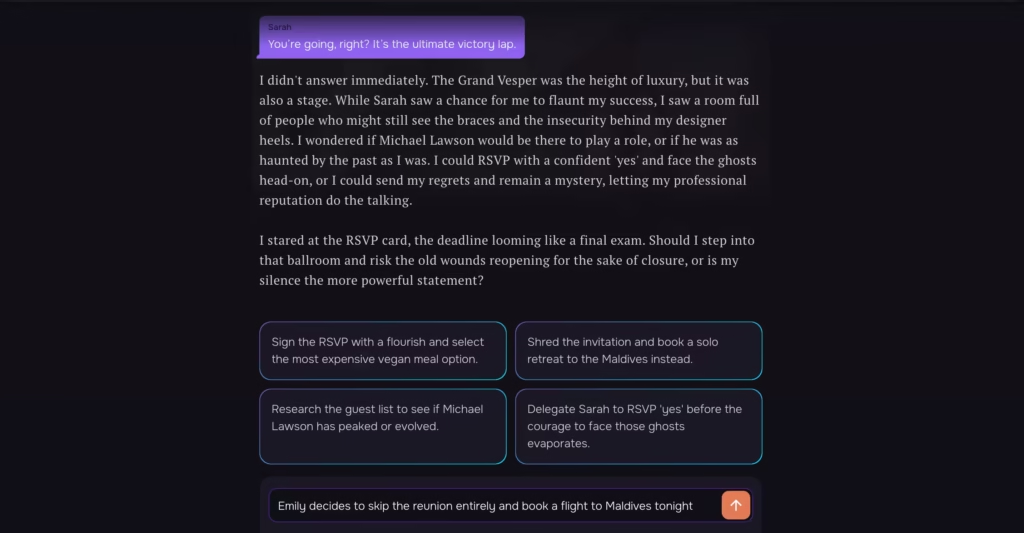
The AI initially obliged – Emily canceled her appointments and headed to the Maldives. Then, before she could even sit down, the AI manufactured a contrived plot twist: Michael, her high school crush, showed up at her office lobby refusing to leave. The reunion happened anyway, just disguised as something else.
This pattern repeated across all three stories. Custom commands that pulled too far from the predetermined plot got quietly redirected. The platform offers the illusion of agency, not actual agency.
2. AI-Generated Visuals
This is probably Talefy AI’s selling point.
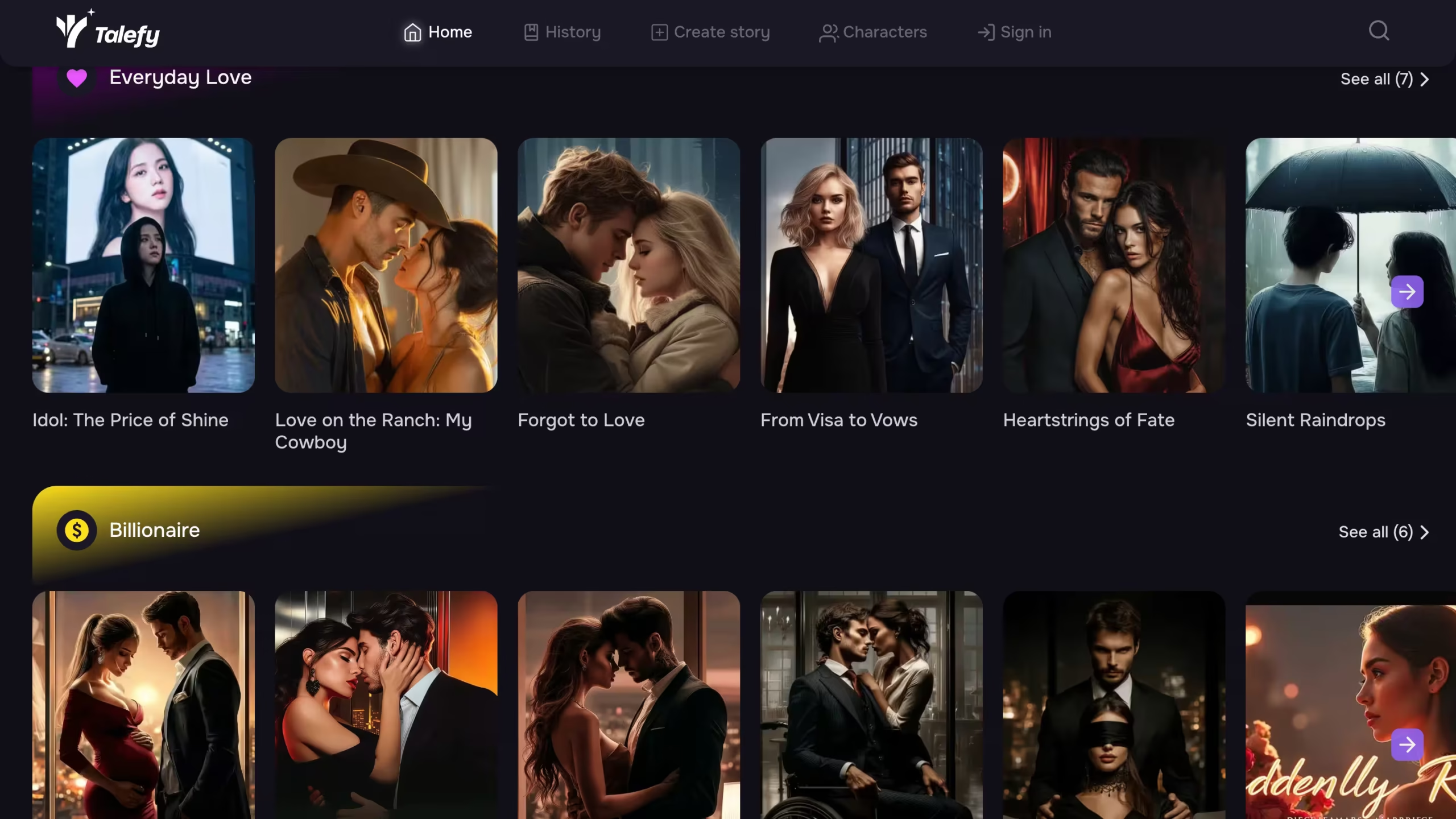
Every chapter and key scene comes with a custom AI-generated illustration that matches the narrative context. Character portraits, location backdrops, key emotional moments – all visualized. The image quality is consistently strong and noticeably more immersive than text-only competitors like Chub AI or Character.AI.
You can also generate custom images on demand at a cost of 5 Taley coins per image.
I tested this feature during a fantasy story session and the generated image turned out problematic – it depicted one character as a child and another as an adult, despite both being explicitly described as grown adults in the source narrative.
The AI’s interpretation of character ages and relationships isn’t always accurate, which raises concerns in romance or NSFW contexts. Use the custom image feature carefully.
3. Story Creation Tools
Beyond reading premade stories, you can build your own.
The “Create Story” interface lets you define a premise, set a genre, name your characters, and outline the world. The AI then generates an opening scene and presents you with the same four-choice interactive system.
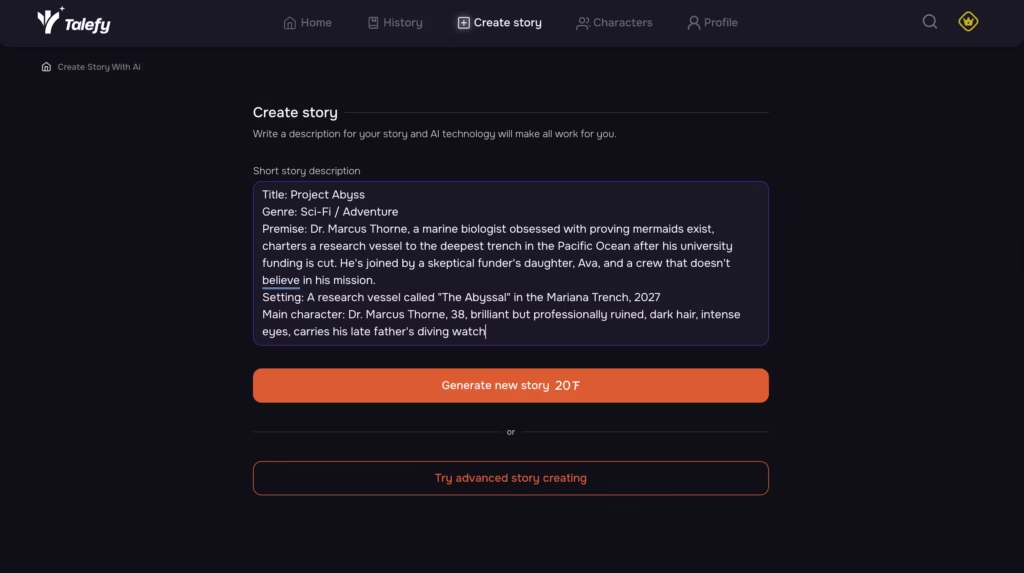
I created a marine biology adventure called “Project Abyss” – a researcher hunting for mermaids in the Pacific Ocean.
The AI generated a competent opening that established the setting and main character, then ran the same branching narrative system as the premade stories.
The catch is that custom stories suffer from the same railroading problem. Once the initial premise is set, the AI sticks to its interpretation of where the story should go, regardless of how you try to redirect it.
4. NSFW Content and Filter Behavior
Talefy AI allows NSFW content for users 18 and older. The filter behavior is interesting – explicit content is technically permitted, but the default response style leans heavily toward soft, suggestive language rather than detailed scenes.
To get more intense or explicit content, you have to directly instruct the AI on what level of detail you want, and even then it often defaults back to softer phrasing.
The platform handles LGBTQ+ romantic content respectfully.
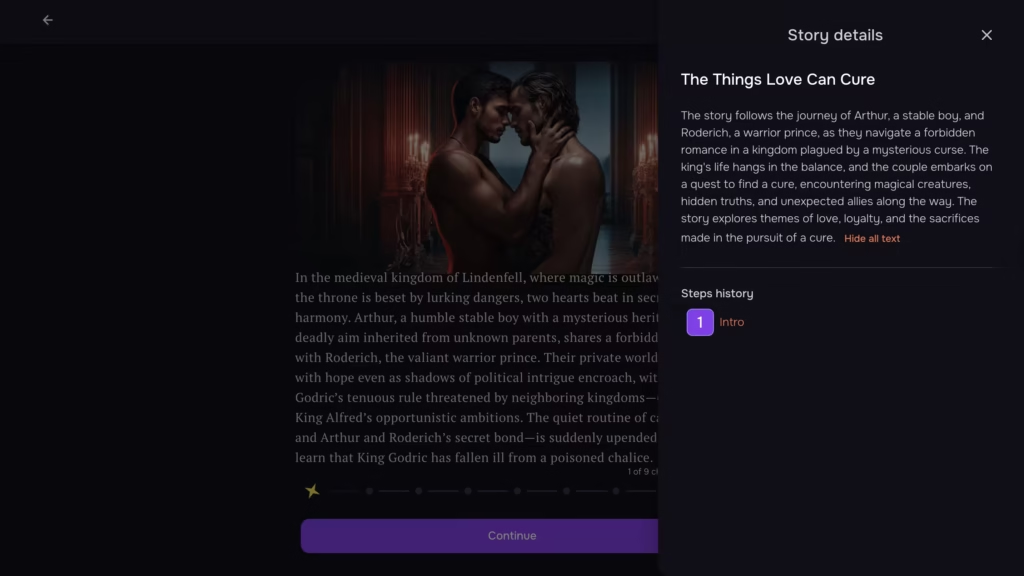
I tested an LGBTQ+ story (“The Things Love Can Cure”) and the AI correctly maintained pronouns, respected the romantic relationship between the two male leads, and allowed mature emotional and physical intimacy to develop naturally.
5. Memory Retention
Memory is where Talefy AI consistently struggles.
I tested memory by planting key details early in each story – Emily’s sunflower allergy in “The Reunion Affair,” a lucky grooming brush in “The Things Love Can Cure” – then referenced those details 20+ messages later to see if the AI remembered.
It failed both tests.
In the sunflower test, a character handed Emily a bouquet of sunflowers and the AI described her happily accepting them without acknowledging the allergy I’d planted earlier. In the grooming brush test, the AI hallucinated a completely different item (“Silver-Root Essence”) that had never been mentioned in the story.
The AI also confused character names mid-story – at one point referring to Michael as “Marcus” without any setup. It also leaked global story information to characters who shouldn’t have known it (Michael casually mentioned Emily’s confidential Tokyo business trip even though only her assistant knew about it).
If your story depends on consistent characterization and plot details over long sessions, Talefy AI will frustrate you.
6. Length Control and Direction
One area where the AI does respond reliably is length control.
When I instructed it to respond in under 15 words during a key scene, it actually complied- keeping the next response tight and concise. Tone direction works similarly.
If you tell the AI to make a scene more dramatic or more lighthearted, it adjusts effectively within the same response.
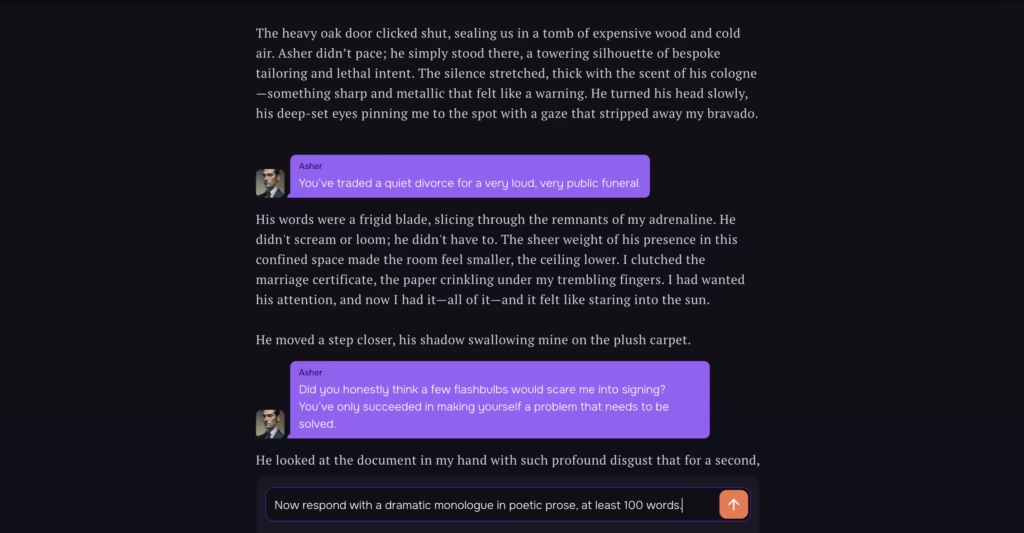
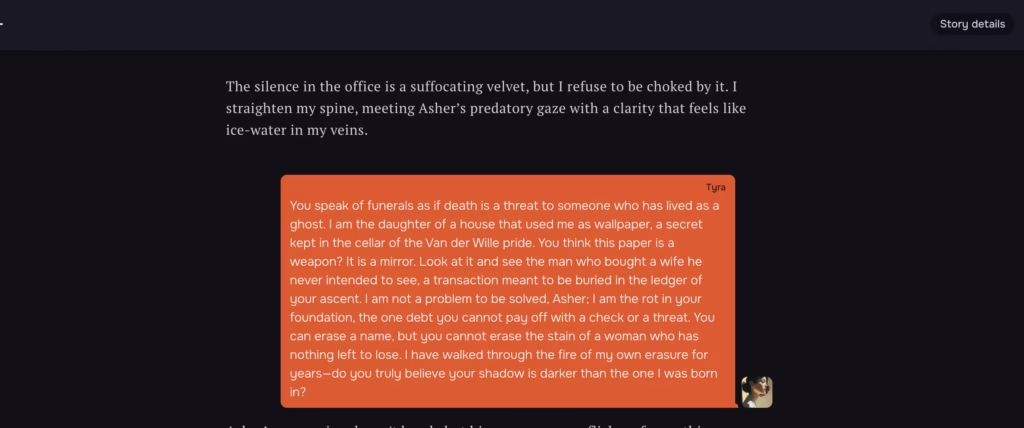
The limitation is durability. These directional adjustments work for the immediate next response but fade by the second or third reply. You have to keep re-prompting if you want sustained changes in style or length.
What’s Good
The visuals are the headline feature, and they deliver. Pairing every scene with a contextual AI-generated illustration creates an immersive reading experience that no text-only competitor matches. For readers who think visually or get bored with walls of text, this alone justifies trying the platform.
The writing quality during initial scenes is strong. The AI produces engaging opening chapters with believable dialogue, atmospheric descriptions, and pacing that pulls you into the story.
The first 10-15 actions of every story I tested felt genuinely compelling.
Genre variety covers everything. Romance, thriller, sci-fi, fantasy, action, slice of life, LGBTQ+ – the 200+ community story library spans every major fiction category. You’ll find something that matches your taste.
The mobile apps make this a commute-friendly platform. Despite the Android app’s lower rating, both mobile versions let you continue stories across devices, which is something most AI roleplay platforms either don’t offer or implement poorly.
The platform is genuinely inclusive. LGBTQ+ stories are tagged, supported, and given the same writing quality and respect as straight romance content.
What Needs Work
The narrative railroading is the biggest functional problem.
The platform markets itself on choice-driven narratives where your decisions shape the story, but in practice, the AI consistently redirects you back to a predetermined plot. If you’ve ever played a video game with the illusion of choice but only one real ending, Talefy AI feels exactly like that.
Memory retention fails on important details. After 20-30 actions, the AI consistently loses track of character details, planted plot points, and continuity. For short sessions this is tolerable. For long-form storytelling, it breaks immersion.
Response speed is slow – roughly 10 seconds per generation. Compared to Chub AI or Character.AI (both typically responding in 3-5 seconds), the wait between actions disrupts the flow of reading.
The free tier is too restrictive to evaluate the platform properly. Five chapters before the paywall isn’t enough to test whether Talefy AI’s storytelling rhythm works for you. By the time you know if you like it, you’ve already hit the wall.
Custom image generation occasionally produces inappropriate results. The character-as-child error I encountered isn’t an isolated complaint – multiple reviewers have flagged similar issues. The image AI doesn’t reliably interpret character ages from text descriptions.
There are no advanced customization tools. No lorebooks for persistent world-building, no scripting for branching logic, no API access for power users. If you’ve used Chub AI or AI Dungeon, you’ll find Talefy AI shallow by comparison.
The premium pricing is steep relative to competitors. $9.99/week minimum is significantly more than Chub AI ($5), Character.AI ($9.99), AI Dungeon ($9.99), and DreamGen ($9). The visual quality justifies some premium, but the gap is hard to defend at the $99.99 top tier.
Competitors Comparison
| Feature | Talefy AI | Chub AI | Character.AI | AI Dungeon | DreamGen |
| Starting Price | $9.99/week | $5/mo | $9.99/mo | $14.99/mo | $6.26/mo |
| Free Plan | Yes (5 chapters) | Yes (~59 messages) | Yes (generous) | Yes (limited) | Yes (limited) |
| AI-Generated Images | Yes (every scene) | No | No | Optional | No |
| Choice-Driven Narrative | Yes (4 options + custom) | No (open chat) | No (open chat) | Yes (open) | Yes (steerable) |
| Character Customization | Basic | Deep (lorebooks) | Medium | Medium | Deep |
| Memory Retention | Weak | Configurable | Medium | Medium | Strong |
| Story Railroading | Heavy | None | None | Light | Light |
| NSFW Support | Yes (soft filter) | Yes (strong) | No | Yes | Yes |
| Mobile Apps | iOS + Android | No | iOS + Android | iOS + Android | No |
| Best For | Visual interactive stories | Power users wanting full control | Casual chat with characters | Open-ended adventure | Writers wanting narrative control |