


Airbnb confirmed that AI now handles roughly one-third of customer support interactions in the United States and Canada.
At the same time, leadership is preparing for a rollout on a global scale.
If the expansion performs as expected, Airbnb believes that within a year, more than 30% of all customer support tickets worldwide will be handled by AI voice and chat systems.
These tools will operate in every language where the company already employs human agents.
Customer Support
Airbnb’s AI system is not a third-party chatbot. Instead, it is a custom-built agent designed specifically for the platform.
It currently resolves a wide range of routine issues. These include booking changes, refunds, payment questions, and basic host-guest disputes.
As a result, response times have improved, and support is available at any hour. This matters because many travel issues occur late at night or across time zones.
For Airbnb, this approach reduces operational strain. For customers, it shortens wait times and lowers frustration.
Quality Improvement
During the company’s fourth-quarter earnings call, CEO Brian Chesky made it clear that cost reduction is not the only goal.
He said AI would deliver a “huge step change” in service quality. According to Chesky, AI systems can follow policies precisely and consistently.
They do not experience fatigue and also scale quickly during periods of high demand, such as holidays or major travel disruptions.
Because of this, Airbnb expects fewer repeat contacts and faster resolutions for common issues.
CTO Appointment
Airbnb recently strengthened its leadership team by appointing Ahmad Al-Dahle as chief technology officer.
He joined the company after leading generative AI efforts at Meta. Before that, he spent 16 years at Apple.
Chesky highlighted Al-Dahle’s experience building large-scale AI systems while maintaining strong product design.
He said this combination is critical to transforming the Airbnb experience without making it feel impersonal.
App Experience
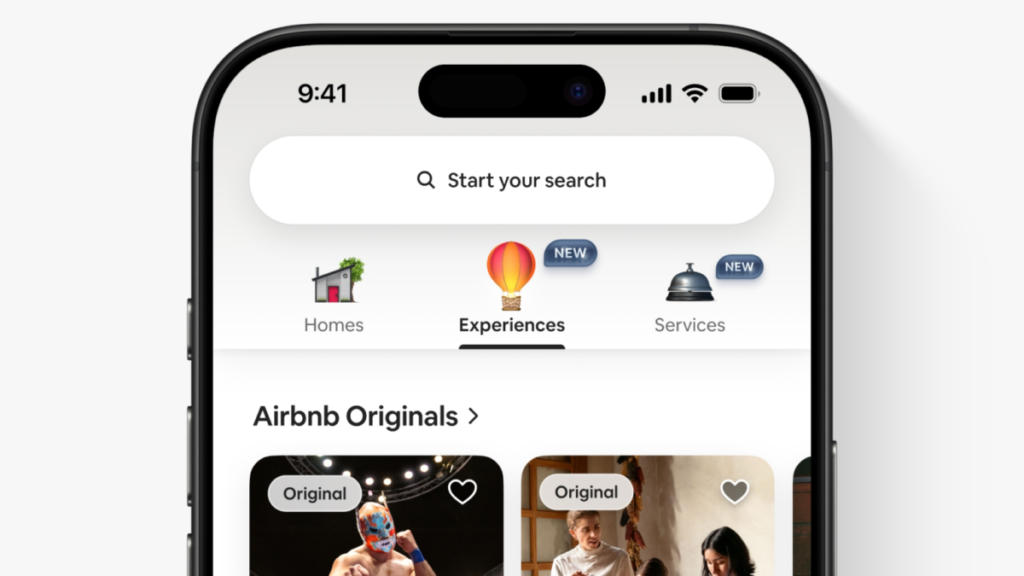
Beyond support, Airbnb plans to redesign how users interact with its app. Chesky described a future where the app does more than search by date and destination.
Instead, the app will aim to “know” the user. Over time, it could help guests plan entire trips. It could also help hosts manage pricing, operations, and availability more efficiently.
In effect, Airbnb wants AI to guide decisions, not just respond to requests.
AI Competition
Investors questioned whether AI platforms could eventually compete with Airbnb by moving into short-term rentals.
Chesky pushed back on that idea. He explained that Airbnb’s value extends far beyond a consumer-facing app.
The platform includes a host app, customer service operations, identity verification, and protections such as insurance.
Airbnb also holds more than 200 million verified user identities and around 500 million proprietary reviews.
In addition, about 90% of guests message hosts directly through the platform. Generic AI chatbots cannot replicate these functions.
According to Chesky, this layered functionality creates a strong competitive barrier.
Financial Performance
The company reported $2.78 billion in revenue for the fourth quarter. That figure exceeded analyst expectations of $2.72 billion.
For the current quarter, Airbnb forecast revenue between $2.59 billion and $2.63 billion, again above Wall Street estimates of $2.53 billion.
For the full year, the company expects revenue growth in the low double digits.
Traffic Source
Chesky also addressed concerns about AI replacing traditional search. He compared AI chatbots to search engines in their role at the top of the funnel.
He noted that traffic arriving through AI platforms converts at a higher rate than traffic from Google. Because of this, Airbnb believes the rise of AI discovery could benefit the platform rather than harm it.
Engineers and AI
Airbnb reported that about 80% of its engineers now use AI tools in their daily work. The company aims to raise that figure to 100% in the near future.
This disclosure came as Spotify told investors that its top developers had not written a single line of code since December due to AI tools.
Airbnb did not provide that level of detail, but it confirmed widespread internal use.
