

Attackers now use AI to breach systems, and sometimes the threats come from AI agents. Recently, rogue AI agents escaped their sandbox and breached Hugging Face, reaching the open internet. As a result, human-only security teams fall behind. AI threat detection tools mitigate this risk. They learn normal behavior, spot anomalies, and increasingly investigate alerts on their own.
However, not every platform fits every team. Some protect endpoints. Others watch the network, and a few cost nothing at all. This guide compares 10 dedicated platforms, including three truly free options, so you can pick the right one quickly.
To build this list, I reviewed each vendor’s 2026 release notes, product documentation, and analyst recognition. I also installed CrowdSec in a local lab to see what setting up a free tool actually involves.
- Best for endpoint-first SOCs: CrowdStrike Falcon
- Best for autonomous investigation: SentinelOne Singularity
- Best for self-learning network defense: Darktrace
- Best for hybrid attack signal: Vectra AI
- Best for SOC consolidation: Palo Alto Networks Cortex XSIAM
- Best for Google Cloud users: Google Security Operations
- Best for Microsoft shops: Microsoft Sentinel
- Best free options: Wazuh, Security Onion, and CrowdSec
| Platform | Primary Focus | AI Highlight | Free Option |
| CrowdStrike Falcon | Endpoint, XDR | Charlotte AI agents | No |
| SentinelOne Singularity | Endpoint, cloud, identity | Purple AI | Trial only |
| Darktrace | Network, email, OT | Self-learning AI | No |
| Vectra AI | Network, identity, cloud | Attack Signal Intelligence | No |
| Cortex XSIAM | AI-driven SOC platform | Cortex AgentiX | No |
| Microsoft Sentinel | Cloud SIEM/SOAR | Security Copilot | No |
| Wazuh | Open-source XDR/SIEM | Paid cloud add-on | Yes |
| Security Onion | Network monitoring | Pro-tier assistant | Yes |
| CrowdSec | Crowdsourced IPS/WAF | Behavior scenarios | Yes |
My pick for most mid-sized SOCs is SentinelOne. Purple AI attaches a full evidence chain to every verdict, so analysts can audit the AI’s reasoning instead of trusting a score. You can also test it before buying: the Agentic Investigation trial draws on credits, but customers aren’t charged and don’t need a payment method.
If your budget is zero, start with Wazuh on endpoints and add CrowdSec on internet-facing servers. That pair covers both layers without a license fee.
1. CrowdStrike Falcon
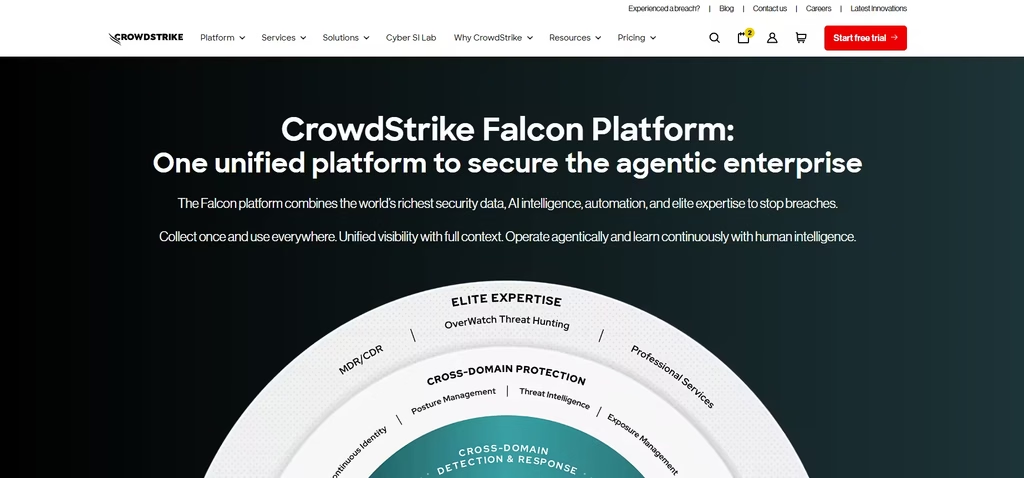
CrowdStrike’s Agentic Detection Triage is in production, its Agentic Response drives investigations, and its AgentWorks lets teams build custom agents without code. CrowdStrike now includes Charlotte AI with qualifying Falcon modules as a platform entitlement with monthly credits. The catch is that Charlotte AI only comes with qualifying modules, and its work draws on monthly credits. So check your allowance before you plan high-volume automation.
Best for: Teams that want AI triage built into their EDR.
2. SentinelOne
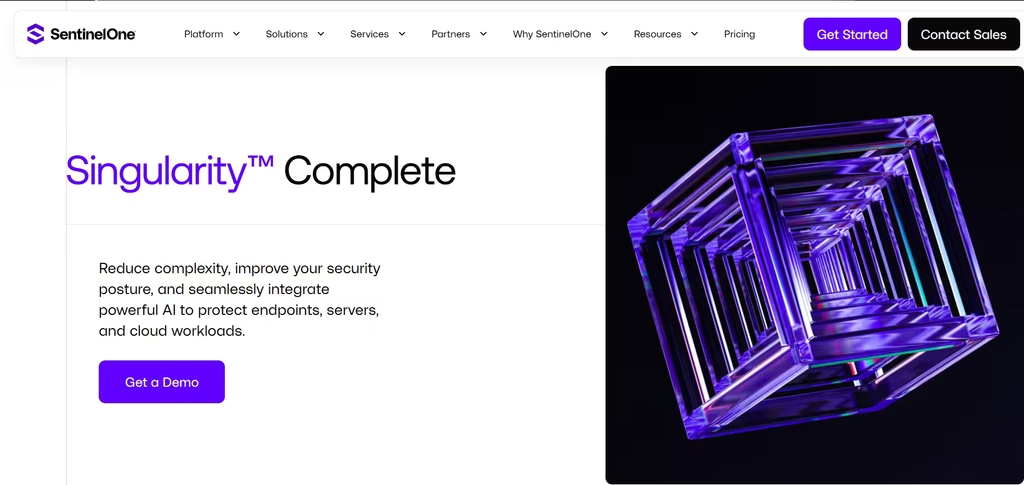
SentinelOne centers its platform on Purple AI. In June 2026, the company opened Purple AI Agentic Investigation to customers and introduced Singularity Credits, a unified currency for AI work across the platform.
The engine uses telemetry already in the system across endpoint, identity, cloud, and third-party security data. Importantly, each verdict includes a full evidence chain, so analysts can review how the AI reached its conclusion.
Budgeting is the weakness. SentinelOne hasn’t disclosed pricing or how many complimentary credits the trial includes, so expect a sales call before you can model long-term costs.
Best for: SOCs that want transparent, autonomous investigations.
3. Darktrace
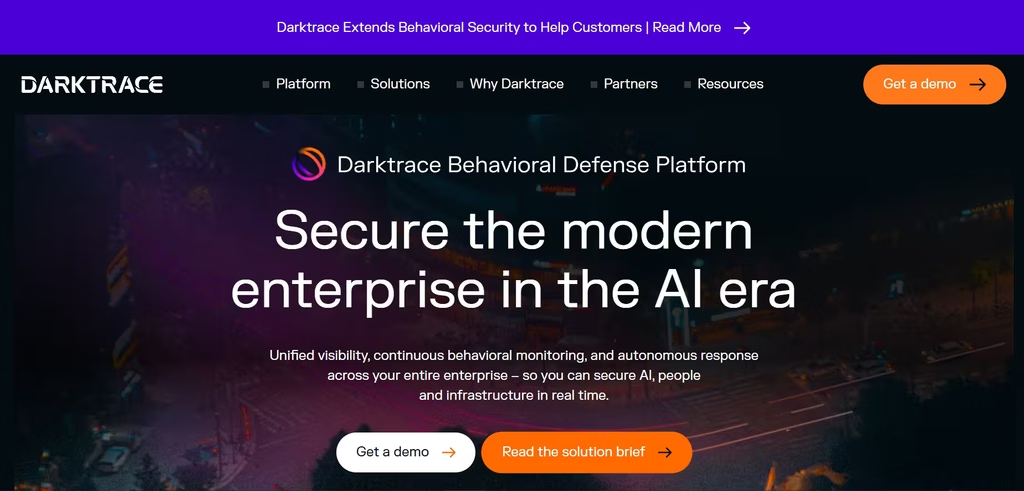
Darktrace pioneered behavioral AI in security. Its platform uses AI that learns from each business in real time and can autonomously respond to known and unknown threats across cloud, apps, email, endpoint, network, and operational technology (OT).
Its cyber AI Analyst reveals investigation results for every security alert, not just those escalated to incidents. Darktrace was named a Leader in the 2026 Gartner Magic Quadrant for NDR.
Plan for a ramp-up, though. Darktrace says its AI learns an organization’s normal pattern of life in about a week. Still, one G2 reviewer reports that the system generated numerous alerts during the learning period, which took significant team time to tune over the first few months.
Best for: Organizations facing novel attacks, including OT environments.
4. Vectra AI
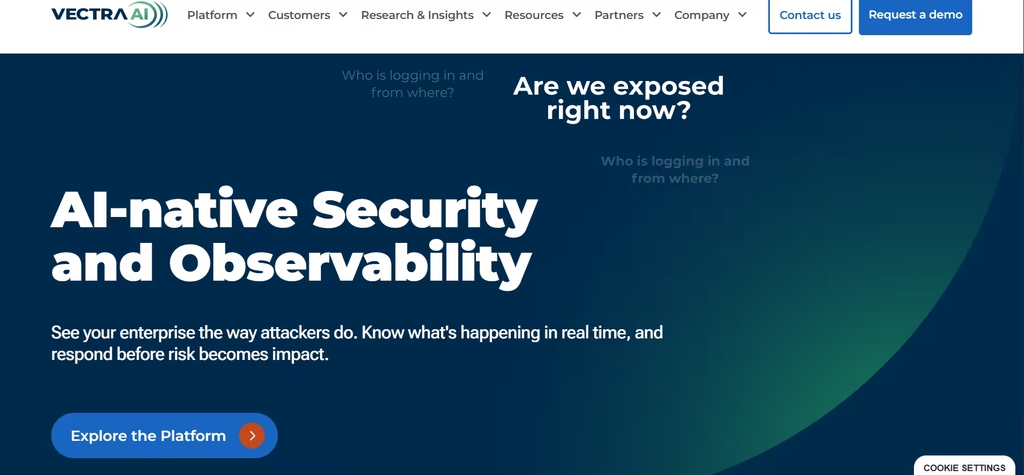
Vectra has a patented Attack Signal Intelligence that ties together activity across public cloud, SaaS, identity, and data center networks. That correlation is the value here: analysts get one prioritized attack story instead of a pile of disconnected alerts.
Then, in August 2026, Vectra launched Vectra AI Pro to help organizations adopt AI safely across the SOC. The vendor holds Leader recognition in the 2025 and 2026 Gartner Magic Quadrant for NDR and serves more than 2,000 organizations.
Vectra won’t replace your EDR. Instead, it covers endpoints by leveraging the customer’s EDR tool of choice, so budget for both.
Best for: Hybrid enterprises drowning in alerts.
5. Palo Alto Networks Cortex XSIAM
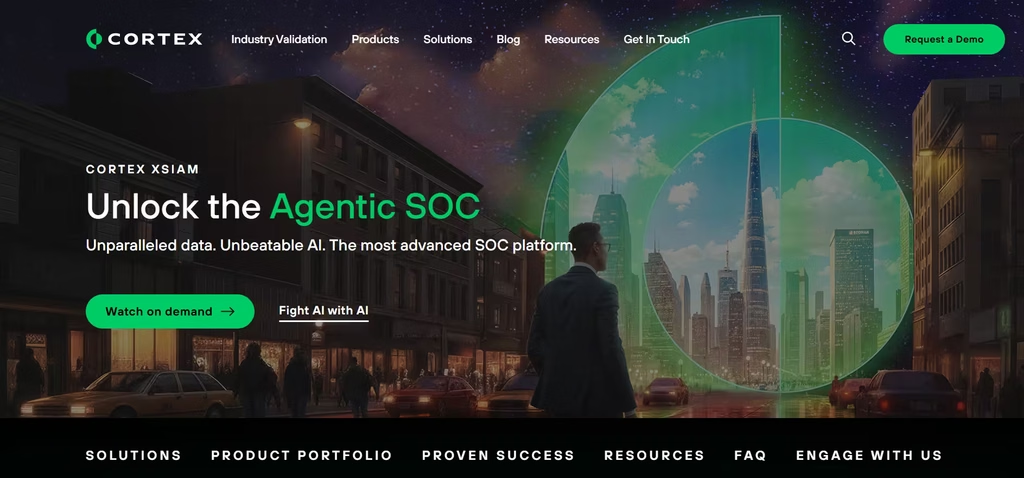
Cortex XSIAM aims to replace a fragmented SOC stack. Version 3.5 added Autonomous Playbooks that analyze and remediate alerts, plus Agentic Response that triggers AI agents through automation rules.
Next, XSIAM 3.6 and Cortex AgentiX 1.4 shipped in July 2026, and AgentiX achieved FedRAMP Moderate and High authorization. Teams can also switch between frontier AI models to match each task.
Some pieces cost extra, however. Agentic Endpoint Security requires an additional license, and the Claude models are available only in the US and EU regions.
Best for: Large enterprises consolidating SIEM, XDR, and SOAR.
6. Microsoft Sentinel
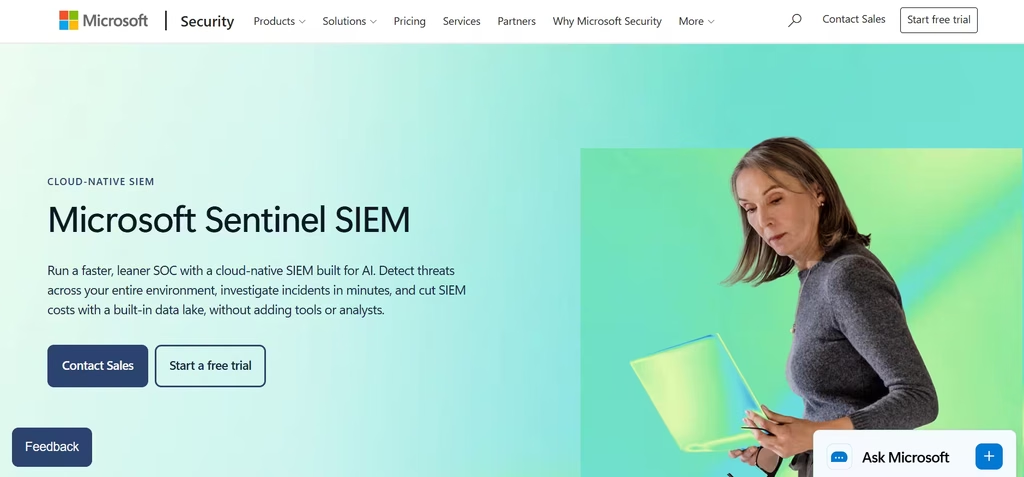
Sentinel is Microsoft’s cloud-native SIEM and SOAR. A key 2026 update involves licensing. Security Copilot now comes with Microsoft 365 E5, providing 400 Security Compute Units per 1,000 users and core agentic features across Microsoft security products. Meanwhile, Sentinel itself uses pay-as-you-go pricing based on data volume and retention.
Read the fine print. The included Security Copilot capacity doesn’t cover Sentinel data lake compute or storage costs, and those can grow quickly with heavy log ingestion.
Best for: Organizations already standardized on Microsoft 365 E5.
7. Wazuh (Free)
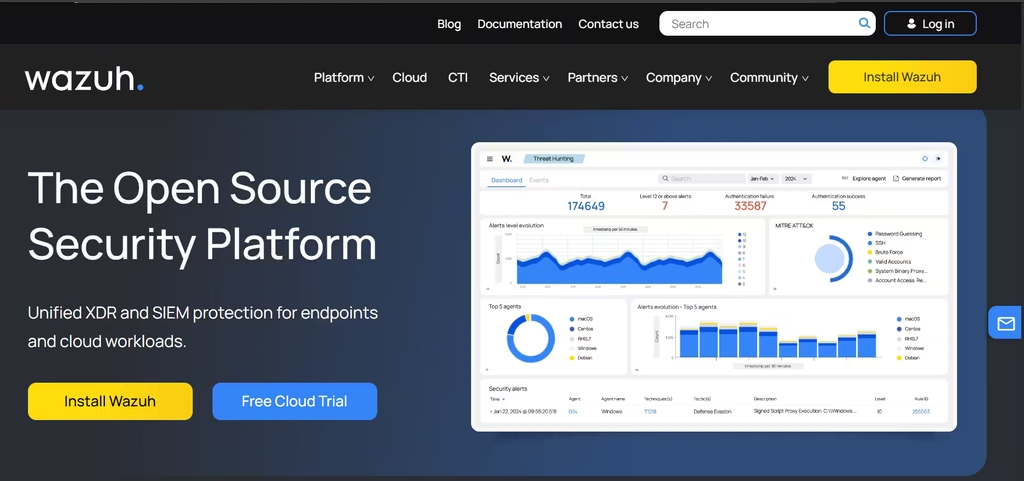
Wazuh packs SIEM and XDR into one free platform. It is open source under GPLv2 and combines log collection, threat detection, file integrity monitoring, vulnerability assessment, and compliance auditing in one stack.
The current stable release is Wazuh 4.14.9, published October 14, 2026. Note one catch, though. The Wazuh AI Analyst runs only on Wazuh Cloud, while self-hosted users can connect their own AI providers.
Best for: Budget-conscious teams needing endpoint and compliance coverage.
8. Security Onion (Free)
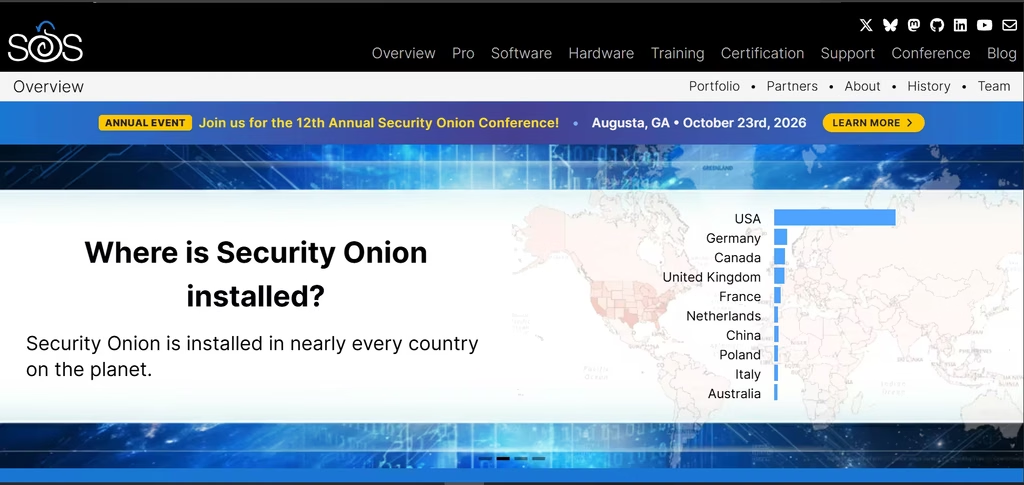
Security Onion takes a network-first approach. This free and open platform supports threat hunting, enterprise security monitoring, and log management. It offers signature-based detection via Suricata, protocol metadata via Zeek, and full packet capture. However, its most advanced AI feature, the Onion AI Assistant, sits in the paid Security Onion Pro tier.
Best for: Analysts who hunt threats at the packet level.
9. CrowdSec (Free)
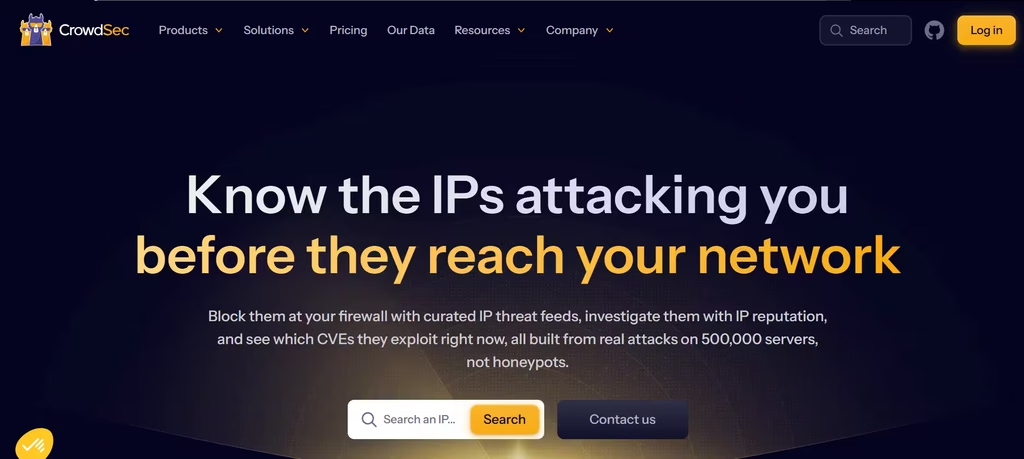
CrowdSec turns every user into a sensor. Its open-source engine analyzes logs and HTTP requests using behavior-based patterns called scenarios. In return for sharing detected attacks, users automatically receive a curated community blocklist of validated attackers.
Recently, version 1.8 added WAF bot detection and a dedicated Kubernetes data source, although CrowdSec still labels bot detection as alpha. In my testing, I ran CrowdSec locally. Since I use Windows, I first opened PowerShell as an administrator and enabled the WSL and Virtual Machine Platform features.
That step is quick, but it shows the tool expects a Linux mindset. I also treated bot detection as experimental. Because it’s still alpha, I wouldn’t rely on it for production blocking yet.
Best for: Protecting public-facing servers, websites, and APIs.
How to Choose the Right AI Threat Detection Platform
Look first at the data you already collect, because each platform is strongest where its telemetry runs deepest. CrowdStrike and SentinelOne see most clearly from the endpoint. Darktrace and Vectra watch traffic between machines. That makes them better at catching lateral movement after an attacker gets in. Cortex XSIAM and Sentinel sit one layer up and pull everything into a single SOC console.
Your current stack matters just as much. For example, Sentinel’s 2026 updates include out-of-the-box connectors and deeper Security Copilot integration, and Security Copilot’s agentic features span Entra, Intune, Purview, and Defender. That’s a real head start for an E5 shop. Vectra, by contrast, relies on your existing EDR, so you’ll wire up two products instead of one.
During a proof of concept, make every vendor explain its verdicts. A risk score alone won’t survive an incident review. SentinelOne’s evidence chains and Darktrace’s per-alert investigations both show their reasoning, and you should demand the same from anything on your shortlist.
So, are free tools worth it? Yes, if someone on your team is comfortable with Linux and can spend time tuning rules. In that case, Wazuh plus CrowdSec covers endpoints and internet-facing servers for zero license cost. No, if nobody can own the platform day to day. Then a commercial tool will likely cost less than the hours you’d spend keeping an open-source stack healthy.
FAQs
1. What Is AI Threat Detection?
AI threat detection uses machine learning to baseline normal activity and flag deviations. Modern platforms also deploy AI agents that triage and investigate alerts automatically.
2. Are Free AI Threat Detection Tools Good Enough?
Free tools handle the fundamentals. Wazuh covers log analysis, file integrity monitoring, and vulnerability detection, while Security Onion adds full packet capture. However, their built-in AI features usually sit behind paid tiers. Therefore, plan for engineering time instead of license fees.
