

Developers learn constantly. But reading documentation all day drains focus fast. Fortunately, podcasts offer a smarter way to stay sharp. You can absorb new ideas during a commute, a workout, or a lunch break. The format is flexible, conversational, and surprisingly deep.
The challenge, however, is choosing the right shows. Hundreds of coding podcasts exist. Many go quiet after a dozen episodes, and many others lack the depth to hold attention. So to save you time, this guide features nine podcasts that are active, trusted, and useful for working with coding languages.
1. Software Engineering Daily
Best for: Daily technical depth
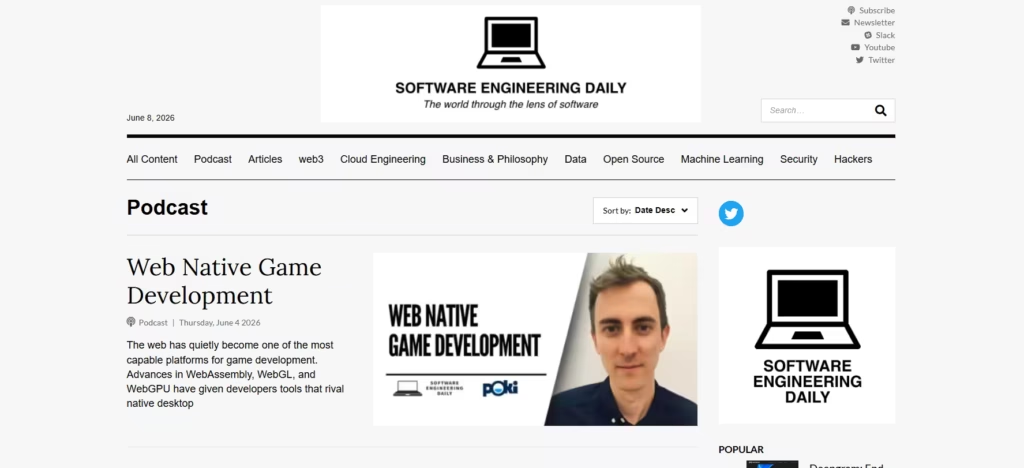
Software Engineering Daily delivers technical interviews about software topics on a near-daily basis. That frequency alone separates it from almost every other show on this list. Most podcasts drop once a week. This one keeps pace with a fast-moving industry.
Recent episodes have covered web native game development and AI’s limitations in hardware.. This is valuable for QA teams whose workflows are constantly changing in response to industry standards.
Aside from that, topics generally cover AI, game development, cloud computing, database management, and applications. Guests discuss the latest technical challenges, emerging technologies, and case studies that touch on practical applications.
Its main limitation is that the daily cadence is overwhelming at first. Switching to 1.5x speed and filtering episodes by topic rather than listening chronologically is the only sustainable approach for most developers. Do that, and it becomes the single most efficient way to stay current with production-level architecture decisions available in audio format today.
Software Engineering Daily ranks highly and has published over 2,100 episodes. Those numbers imply longevity and editorial consistency, two things most coding podcasts never achieve.
Where to listen: softwareengineeringdaily.com, Apple Podcasts, Spotify
2. The Changelog
Best for: Open source and software
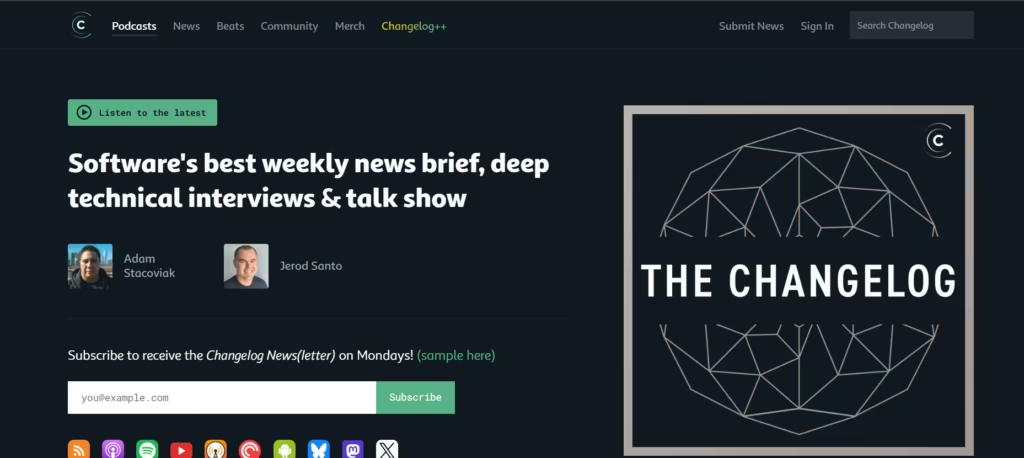
Hosts Adam Stacoviak and Jerod Santo conduct in-depth interviews with software engineers, hackers, leaders, and innovators. It is a polyglot podcast: all programming languages, platforms, and communities are welcome.
The Changelog has operated continuously for over a decade, establishing itself as a definitive voice in open source software development. The show consistently breaks news about major project developments, security vulnerabilities, and architectural decisions that impact the industry.
What makes The Changelog different from a standard tech news podcast is that Stacoviak and Santo pursue understanding, not just information. Guests explain not just what they built, but the reasoning behind every decision. That distinction is why episodes from 2019 still hold up in 2026. The ideas do not expire.
The team has since launched several other podcasts within the Changelog network, including Go Time, JS Party, and Practical AI. The Changelog itself, though, remains the focal point. If you only follow one show from their network, start there and branch out only once you have exhausted the archive.
Where to listen: changelog.com, Apple Podcasts, Spotify
3. Developer Tea
Best for: Developers working on mindset, focus, and career growth
Here is something most coding podcast roundups will not tell you: the majority of top-ranked technology shows on Apple Podcasts focus primarily on framework tutorials and tool reviews. Developer Tea is one of the very few that treats the person writing the code as the actual subject.
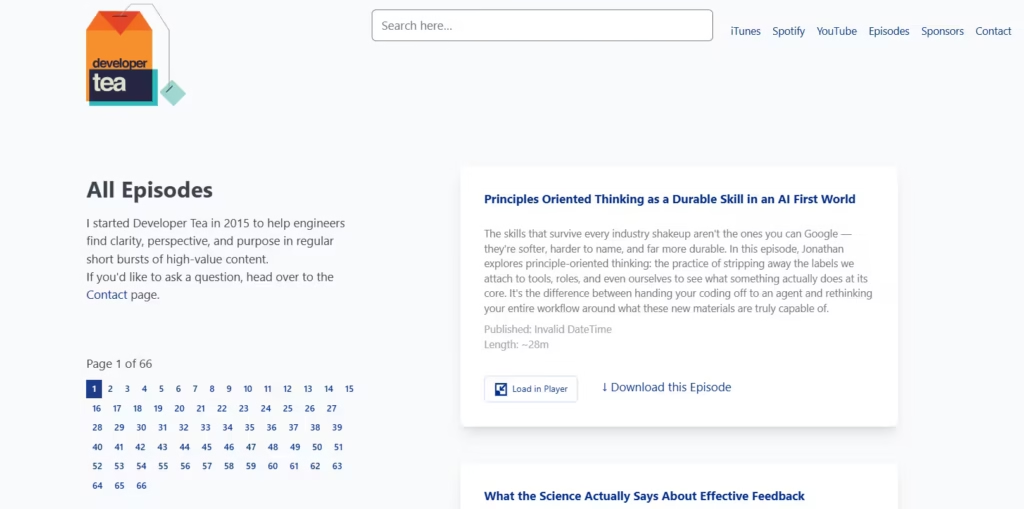
Hosted by Jonathan Cutrell, an engineering leader with over 15 years of industry experience, Developer Tea has surpassed 17 million downloads. Episodes run short, typically under 30 minutes, and that brevity is intentional. The show aims to help developers find their ultimate purpose and excel at their work, thereby positively impacting the people around them.
Recent episodes tackle career pressures that feel especially urgent right now. Cutrell has covered how to give and receive feedback that drives real growth, why updating your mental models is the critical skill in the AI era, and how decision-making is rapidly becoming the central activity of the software engineering job as agentic tools take over more of the actual code-writing.
After spending time with this show, it genuinely reshapes how you approach code reviews, one-on-ones, and technical disagreements. That is a bolder claim than most podcasts earn. Developer Tea earns it.
Where to listen: developertea.com, Apple Podcasts, Spotify
4. CodeNewbie
Best for: Beginners
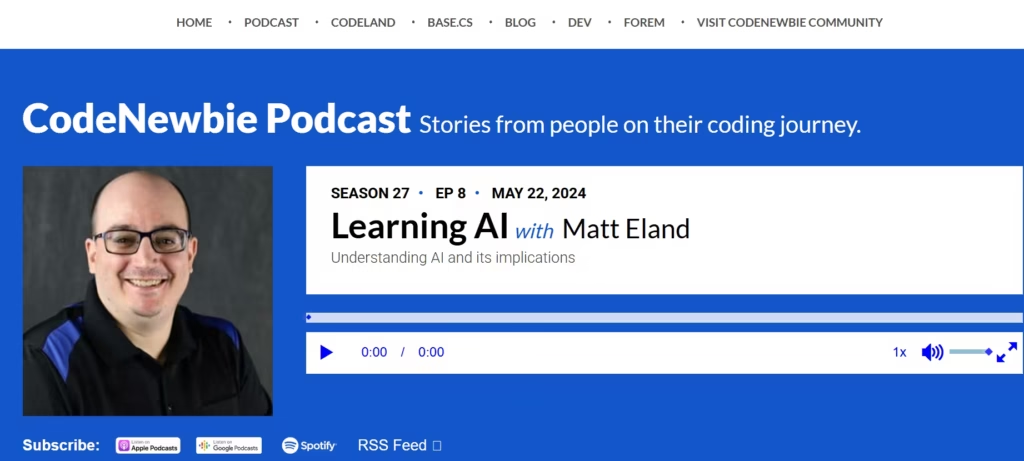
The CodeNewbie podcast was born from an organization that fosters a supportive, international community of people learning to code. Each season, host Saron Yitbarek delivers stories and interviews from people of diverse backgrounds and expertise about their coding journeys, as well as discussions about important tech topics.
Yitbarek is an entrepreneur, developer, speaker, and podcaster who also hosts the Basecs Podcast and Command Line Heroes, the Red Hat-produced podcast. Her own background as a career changer is an important context. She was not a developer who always loved coding. She made the transition deliberately, and that influences every conversation she has on the show.
Other shows talk about beginners; CodeNewbie talks with them. Guests come from genuinely atypical backgrounds: former nurses, teachers, and journalists who retrained and shipped real software. Those stories normalize the difficulty of the transition in a way that no tutorial ever could.
Although great, CodeNewbie is produced seasonally, so active listeners may hit gaps between seasons. Use those gaps to go back through earlier seasons. The archive holds up well.
Where to listen: codenewbie.org, Apple Podcasts, Spotify
Also read: The Best Coding AI Tools for Programmers
5. Talk Python To Me
Best for: Python developers
Talk Python to Me is a weekly podcast hosted by Michael Kennedy. The show covers a wide array of Python topics with a goal of bringing the human story behind Python packages and projects.
Kennedy’s interviews go deep. He regularly invites library authors and Python core contributors to explain design decisions, trade-offs, and real-world usage patterns. You come away understanding not just how to use a tool, but why it exists in its current form.
The show pairs naturally with Python Bytes, Kennedy’s shorter co-hosted weekly show with Brian Okken. Between the two, Python developers get broad, reliable weekly coverage without needing to monitor a dozen separate newsletters or forums.
Where to listen: talkpython.fm, Apple Podcasts, Spotify
6. The Real Python Podcast
Best for: Python learners
The Real Python Podcast is a weekly show hosted by Christopher Bailey. It features interviews, coding tips, and conversations with guests from the Python community. Conversations center on Python programming best practices, career tips, and related software development topics. New episodes drop every Friday morning.
This podcast complements the Real Python website, one of the most respected Python learning platforms online. Episodes often connect directly to tutorials and courses available on the platform. That integration gives learners a clear path forward after each episode.
Where to listen: realpython.com/podcasts, Apple Podcasts, Spotify
7. CoRecursive
Best for: Developers who love narrative-driven tech history
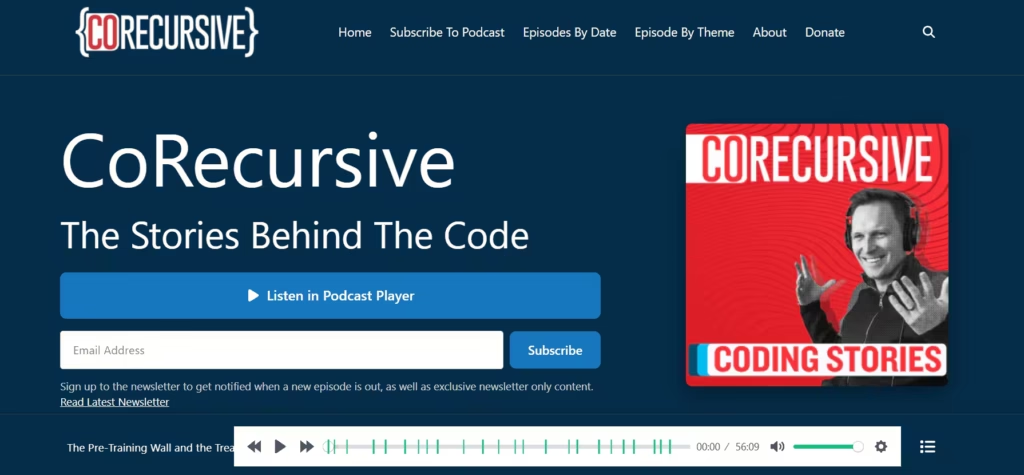
CoRecursive takes a different approach than most coding podcasts; it tells stories. CoRecursive shares the stories and people behind the code, hearing stories of software development from interesting people. Host Adam Gordon Bell uncovers the dramatic, surprising, and often overlooked history of how software gets built.
Episodes have covered the creation of Git, the invention of Erlang, and the engineering decisions behind major system failures. Each episode reads more like a documentary than an interview. This podcast is perfect for long commutes.
Where to listen: corecursive.com, Apple Podcasts, Spotify
8. Soft Skills Engineering
Best for: Workplace and career challenges
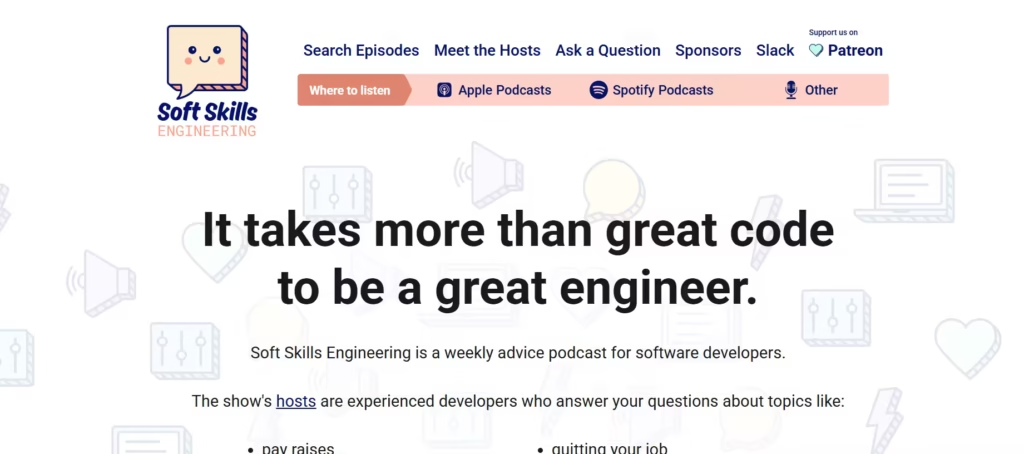
Writing great code is only part of the job. The rest involves communication, negotiation, feedback, and career decisions, which Soft Skills Engineering covers.
Soft Skills Engineering is a weekly advice podcast for software developers focused on the non-technical side of being a great software developer. Hosts Jamison Dance and Dave Smith answer listener-submitted questions about workplace situations, salary negotiation, dealing with difficult colleagues, and making career moves.
The episode format (which runs for 45 mins) is part advice column, part comedy show. Dance and Smith bring experience and sharp humor to topics most developers find uncomfortable.
Where to listen: softskills.audio, Apple Podcasts, Spotify
9. Stack Overflow Podcast
Best for: Industry perspective and career insights
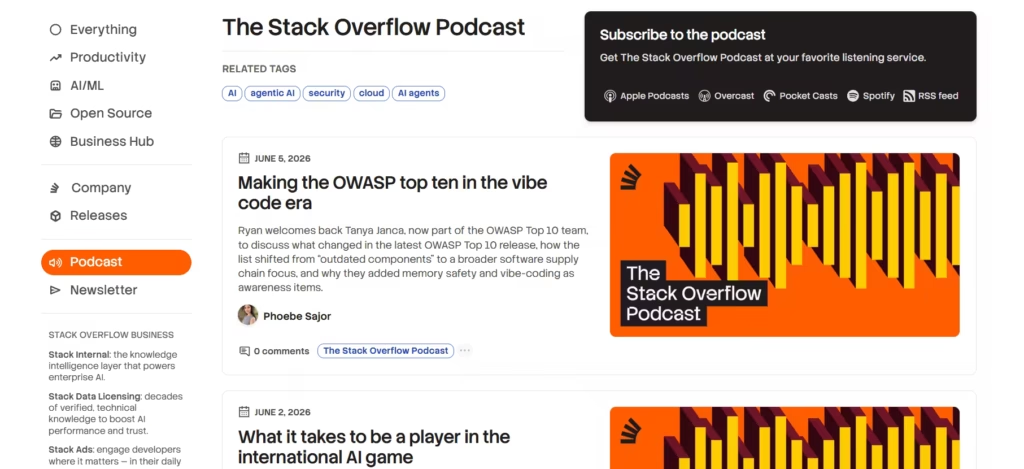
The Stack Overflow Podcast draws on one of the largest developer communities in the world. It leverages that reach to produce thoughtful conversations about how software development is changing.
Episodes regularly feature senior engineers, CTOs, and community leaders discussing trends in AI, developer tooling, team dynamics, and hiring. The podcast connects individual coding decisions to the guiding principles of the industry.
Career advice, industry insights, and leadership perspectives that go beyond technical skills are its core areas. Therefore, it helps developers think about their work in context, not just as individual contributors, but as members of a larger profession.
Where to listen: stackoverflow.blog/podcast, Apple Podcasts, Spotify
How to Choose the Right Coding Podcast
Matching the show to your current goal is a good place to start.
If you are a beginner, start with CodeNewbie; then add Developer Tea.
If you specialize in Python, subscribe to Talk Python To Me and The Real Python Podcast. They both cover the big picture and practical day-to-day skills.
If you want technical depth, Software Engineering Daily and The Changelog are your best bet, as they both go deep and stay current.
If you want career growth, Soft Skills Engineering and Developer Tea complement each other well. One is practical and tactical; the other is philosophical and reflective.
If you want perspective, CoRecursive and the Stack Overflow Podcast round out any developer’s playlist. They provide context that makes your daily work more meaningful.
The best way to get the most out of the coding podcast is to listen consistently. One episode per week adds up to over 50 hours of learning per year. That compounds. Over five years, it adds up to an education most developers never formally receive.
