


Doctrina AI has gained popularity as a study aid in universities and colleges. It crafts personalised study plans, generates quizzes from notes, and even provides tutor-like explanations for complex topics.
Although the platform offers a robust package, there are limitations in its functionality, user interface, and adaptability. Furthermore, some users find its explanations too generic and crave tools that offer more interactive and specialised features.
This prompted users to explore alternatives. In this article, we discuss the top Doctrina AI alternatives, their features, pros, and cons.
Also read: Doctrina AI Honest Review [2026 ]
1. QANDA
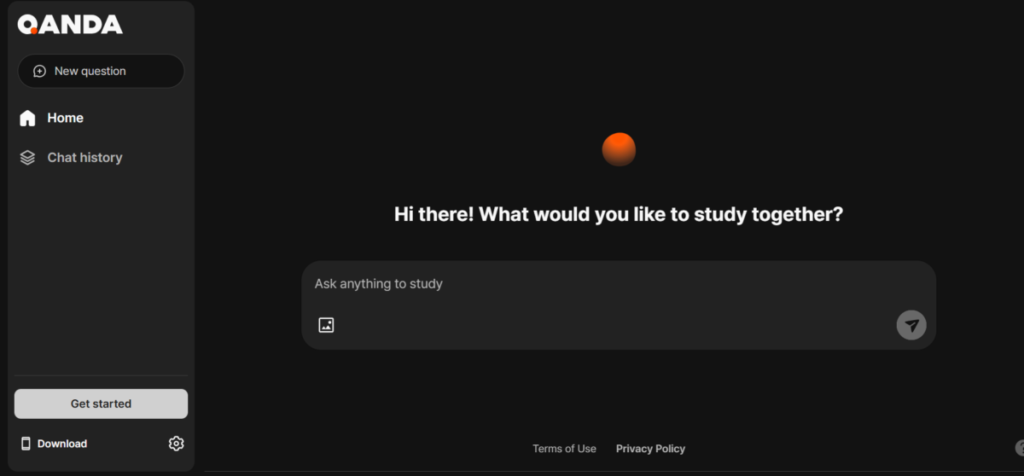
QANDA is a study app that connects students with a vast network of tutors and resources. What sets QANDA apart is its instant homework help feature that allows students to receive answers to their questions.
This platform is a good fit for students who require immediate assistance with math, science, or language. It places a great deal on visual explanations, which keeps learners hooked. QANDA also has a user-friendly interface and mobile app availability make it an attractive option for students on-the-go.
Features
- It has photo-based problem-solving that uses AI to recognise and explain equations, diagrams, or text instantly.
- The platform provides community-driven answers from verified tutors across 20+ countries, supporting over 100 subjects from elementary to college level.
- Users have access to built-in practice modes with randomised questions to reinforce concepts learned from solved problems.
- There is offline access to saved explanations and progress tracking via a personalised dashboard.
Pros
- QANDA delivers rapid and accurate responses that build confidence in problem-solving skills.
- The free plan covers most users’ needs.
- The tool encourages global collaboration, exposing users to diverse problem-solving perspectives.
- It integrates seamlessly with mobile devices for on-the-go studying.
Cons
- It relies on user submissions, so peak hours might mean slight delays in responses.
- Premium features, like unlimited photo scans, require a paid subscription.
- There’s less emphasis on long-term curriculum planning compared to structured platforms.
- Users have noticed occasional inaccuracies in AI recognition for handwritten notes or niche topics.
2. Khan Academy
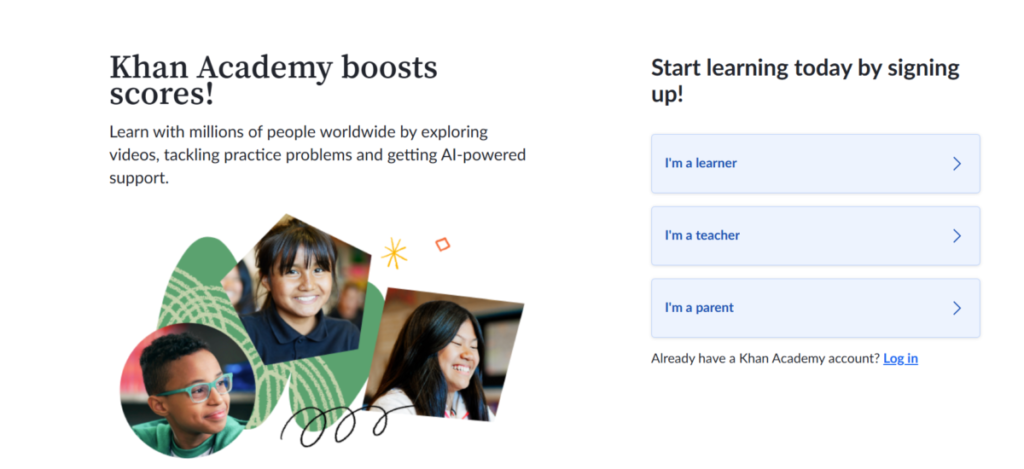
As a non-profit organisation, Khan Academy is revered for offering free online courses and exercises. Its vast library of content makes it an excellent alternative for students seeking comprehensive learning resources.
Although Khan Academy’s platform may seem traditional, it is effective in providing in-depth knowledge to users. Furthermore, it adds dynamism through gamified badges that turn education into an addictive adventure.
Khan Academy’s platform is particularly beneficial for students who prefer a structured learning approach.
Features
- Khan Academy has thousands of free video tutorials and articles with embedded quizzes for immediate feedback.
- Its adaptive learning paths adjust difficulty based on performance, tracking weaknesses and strengths.
- There’s a parent and teacher dashboard for monitoring progress and assigning personalised challenges.
- It is integrated with Google Classroom and mobile apps for seamless study syncing.
Pros
- Khan Academy is completely free, with no hidden costs or ads, making high-quality education universally available.
- It builds deep conceptual understanding through repeated practice and hints, making it ideal for exam prep.
- Khan Academy supports multilingual translation, which includes real-world applications to make abstract topics relatable.
- It has community forums that foster discussions among users.
Cons
- Khan Academy lacks live tutoring, so it suits independent learners more than those needing real-time tutelage.
- The video-heavy format might overwhelm visual learners who prefer text or interactive simulations.
- The updates can lag for cutting-edge topics like advanced AI or current topics.
- Khan has no built-in note-taking tools, requiring external apps for organisation.
3. Quizlet
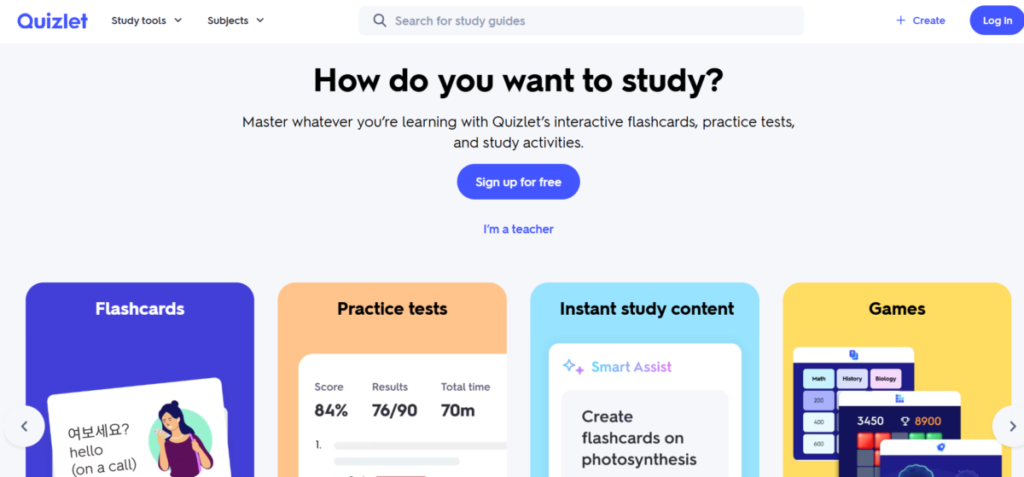
Quizlet is a popular study platform that uses flashcards, tests, and study games to make learning engaging and fun. Users can create decks for subjects, then flip through them with spaced repetition algorithms that prioritise weak areas.
Although simplistic, its interactive features make it an excellent tool for reinforcing knowledge and promoting retention. What sets it apart for learning is its multiplayer modes, where friends compete in live matches, bringing energy to group study. Quizlet’s platform is particularly beneficial for students who prefer a more interactive learning experience.
Features
- Quizlet creates customizable flashcards with images, audio, and diagrams for multisensory learning.
- There are various study modes like Learn, Match, and Test.
- It has a collaborative deck for sharing and class sets for teachers to distribute materials.
- With its AI-powered Q&A generator, Quizlet creates practice questions from uploaded notes or textbooks.
Pros
- Quizlet boosts long-term recall through proven spaced repetition and is perfect for language or science terms.
- It has a vast library of user-created content, which saves time on setup, with millions of sets available.
- The free tier offers robust tools available to users.
Cons
- It overrelies on user-generated content, which leads to inconsistent quality in shared decks.
- The premium subscription is needed for unlimited study sets and ad removal.
- It focuses less on explanatory depth; it is better for review than initial concept learning.
- There’s potential for distractions in gamified modes if not managed.
Also read: Top AI Tools for Students: Improve Your Learning
4. Algor Education
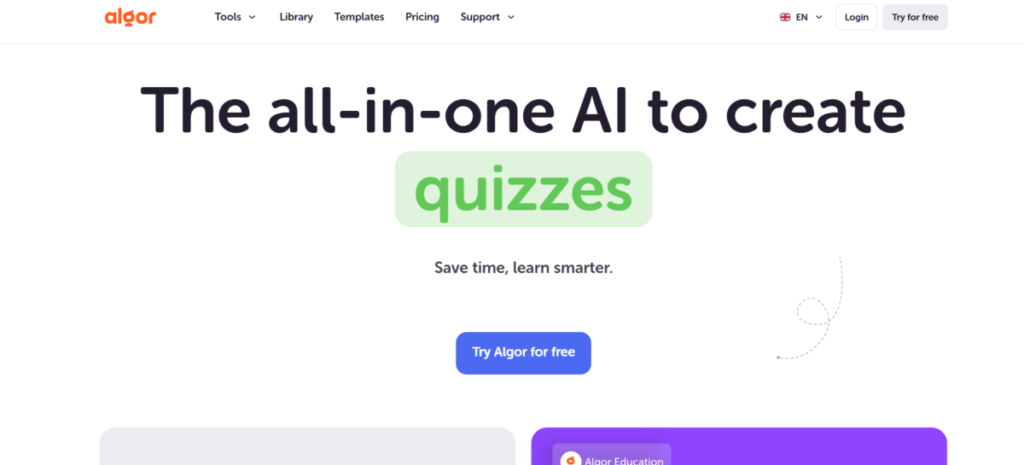
Algor Education offers interactive simulations and visualisations to help students understand complex concepts. Algor Education’s leverage on visual aids provides an immersive learning experience for students with visual learning preferences.
This tool’s dynamite edge comes from its emphasis on active recall. This feature, it prompts users to explain concepts in their own words before revealing answers.
Features
- The text summarisation and mind-mapping features are tools that condense articles or books into visual overviews.
- Users can custom-generate quizzes with multiple-choice, short-answer, and essay formats.
- There is a progress analytics bar that highlights knowledge gaps and suggests targeted practice.
- Algor Education is integrated with cloud storage for easy import of lecture notes or PDFS.
Pros
- It accelerates the comprehension of technical material.
- Algor Education encourages active engagement via varied question types that mimic real exams.
- It has affordable pricing with a generous free plan for subscribers.
Cons
- Occasionally, AI summaries don’t sync with the content.
- The interface feels clunky on smaller screens and, therefore, limits mobile efficiency.
- It has limited coverage outside STEM topics.
5. LearningRO
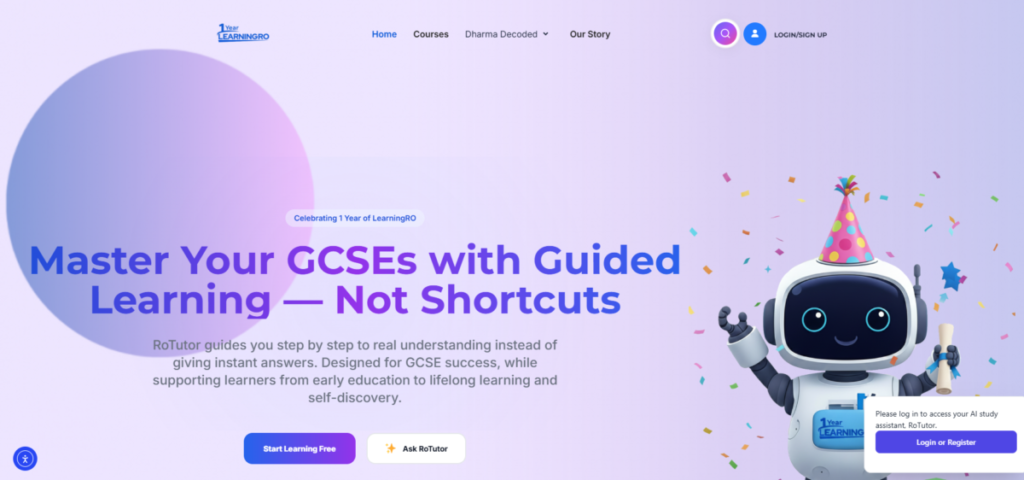
LearningRO is a study platform that helps students organise and review course materials. For users prepping for a certification, it sequences resources that build from basics to advanced strategies, tracking their absorption along the way.
This makes it a powerhouse for professional development, as its engine ensures relevance without fluff. The platform delivers dynamite results by evolving with users’ progress, keeping motivation high through milestone celebrations.
LearningRO’s platform is particularly beneficial for students who struggle with organisation and time management.
Features
- It uses a structured goal-based planning that generates customised curricula from user inputs like skill level and deadlines.
- LearningRO aggregates resources from trusted sites and is embedded with assessments for skill checks.
- There’s AI feedback on quizzes, complete with improvement tips.
- Users can share their progress or results on socials for ”bragging rights,” peer reviews, and group learning cohorts.
Pros
- It is tailored to individual paces, reducing overwhelm in broad subjects.
- It integrates smoothly with diverse media types to suit different preferences, enhancing retention.
- LearningRO provides free access to core planning
- The user can build habits through daily reminders and streak tracking.
Cons
- If inputs are vague, the resource curation can feel scattered.
- LearningRO is slower in non-core subjects due to reliance on external content.
- All premium features require a paid subscription.
6. YouLearn AI
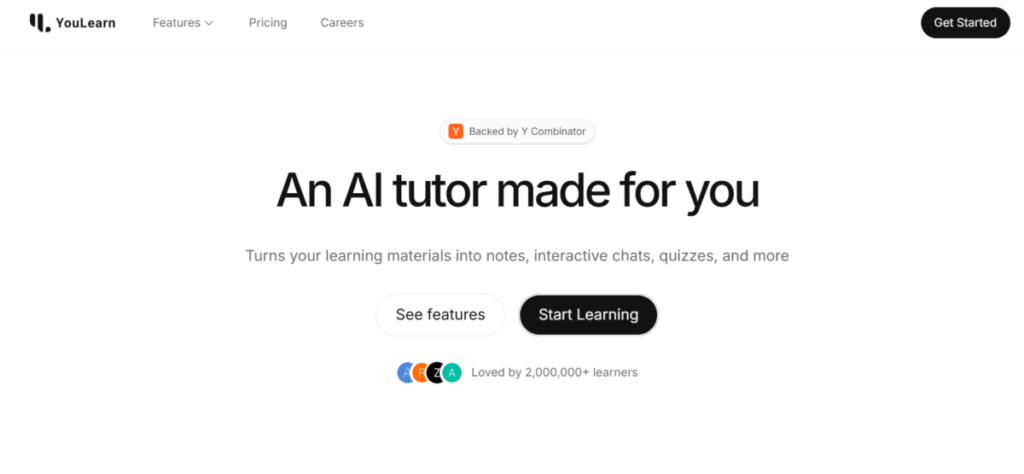
YouLearn AI is an adaptive learning platform that uses AI to tailor the learning experience to individual students’ needs. Unlike Doctrina AI, YouLearn AI focuses on providing a more personalised approach to learning.
Type in a query about Shakespeare’s themes, and it responds with examples, counterpoints, and follow-up questions to spark critical thinking. This tool is perfect for essay writing, debate prep, and coding.
Its conversational flow adds a spontaneous interaction, making the study feel like chatting with a knowledgeable friend rather than drilling facts.
Features
- YouLearn has a chat-based AI tutor that handles open-ended queries across academics and skills.
- All sessions can be recorded with a summarisation for review feature.
- Based on users’ interests, Youlearn can suggest related topics for exploration.
- YouLearn AI’s collaborative features enable students to work with peers, promoting peer-to-peer learning and teamwork.
- The AI platform provides real-time feedback, enabling students to assess their understanding and adjust their learning plans accordingly.
Pros
- It can mimic real tutoring to clarify doubts instantly, boosting comprehension.
- YouLearn is versatile for casual learners, with no rigid structure to follow.
- The premium plan is affordable with a free trial for users.
Cons
- Responses vary in accuracy for evolving or highly factual fields.
- It lacks visual aids and relies on text for explanations. This may not benefit visual learners.
- The premium subscription limits free users to basic features.
Also read: YouLearn AI Review
7. Perusall
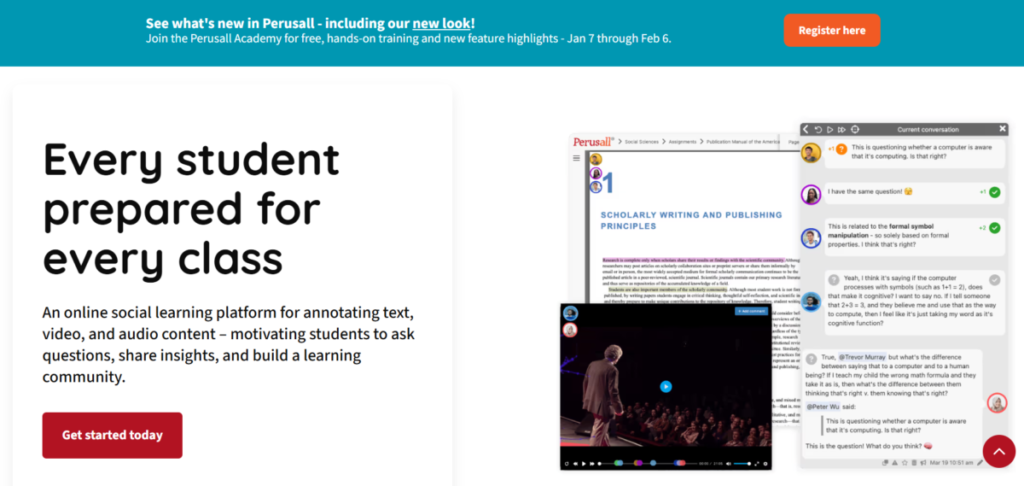
Perusall is a learning platform that enables students to collaborate on study materials and assignments. It ignites group learning by turning textbooks into interactive forums where users ask questions and vote on insights.
Perusall’s platform is beneficial for students who value collaboration and peer-to-peer learning. Its major appeal lies in its ability to combat isolation in online courses and encourage diverse viewpoints.
Features
- Perusall has shared annotations on PDFs or e-books with threaded comments and reactions.
- Its instructor-led prompts guide discussions and assess participation.
- The analytics dashboard shows comprehension trends and engagement levels.
- Perusall’s integration with LMSs like Canva allows for seamless classroom use.
Pros
- It enhances retention through multiple perspectives and social reinforcement.
- Perusall is free for individuals, with educator tools at a low cost.
- The platform is accessible on multiple devices, making it an ideal solution for students who study on-the-go.
Cons
- The effectiveness drops without a group or team.
- It requires consistent participation to yield benefits.
- Perusall is limited to text-based materials, skipping videos or hands-on labs.
8. Cognii

Cognii is a conversational learning platform that uses natural language processing to engage students in interactive lessons. For instance, a user can submit a paragraph on sustainable policy, then Cognii will score it and suggest improvements.
This helps to hone argumentative skills in essays or presentations. Students who prefer a more interactive and engaging learning experience stand to gain a lot from this tool.
Features
- It uses natural language processing for grading essays, quizzes, and verbal responses.
- Cognii provides personalised feedback with examples of stronger phrasing.
- With the “tutoring mode” feature, users can ask clarifying questions to deepen understanding.
- Cognii’s platform provides real-time feedback, enabling students to assess their understanding and adjust their learning plans accordingly.
- There are reporting tools to track improvement over multiple submissions.
Pros
- It accelerates skill-building in writing and critical thinking with unbiased critiques.
- It integrates with educational platforms for hybrid learning.
- Cognii is more cost-effective for institutions.
Cons
- The AI grading may overlook creative or cultural nuances in responses.
- It is primarily B2B focused, limiting direct consumer access.
- It requires clear prompts for optimal feedback accuracy.
- Cognii is less interactive than chat-based tools for casual queries.
9. Studyable
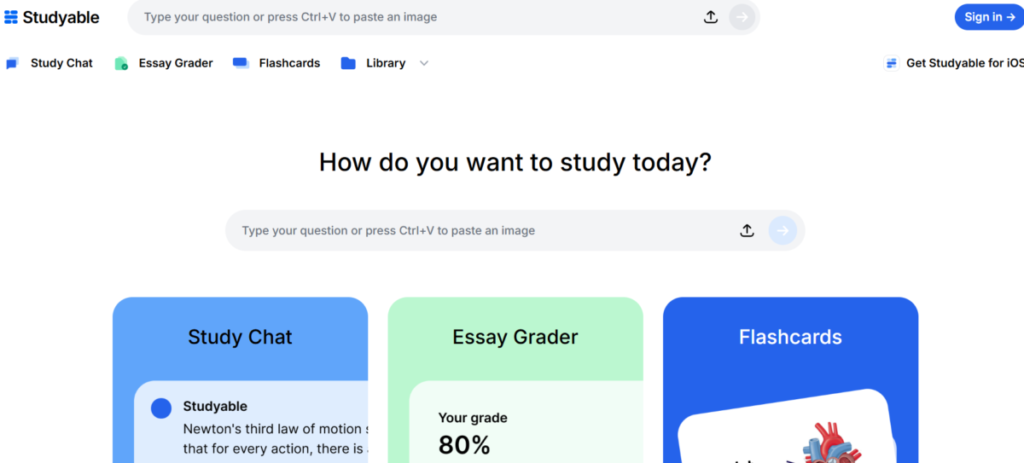
Studyable is a study platform that offers a range of tools and resources to support users’ learning journey. Unlike Doctrina AI, Studyable uses a more traditional approach to learning, focusing on providing high-quality study materials and resources.
It streamlines study sessions by combining note organisation, quiz creation, and progress tracking into one app. This organises scattered materials into actionable plans. Also, it imports lecture slides and auto-generates flashcards, which are beneficial for visual learners prepping for finals.
Features
- Studyable uses an AI-assisted note summarisation and flashcard generation from various inputs.
- Integrated with a calendar for scheduling study sessions with reminders.
- The group can share information, learn, and edit documents in real-time.
- The performance dashboard features gamified rewards for users’ consistency.
Pros
- Studyable’s platform is accessible on multiple devices, making it an ideal solution for students.
- The free version covers essentials for most students.
- It is user-friendly and easy to navigate, making it accessible to students with varying levels of technical experience.
Cons
- It may be overwhelming for beginners with feature density.
- The AI tools occasionally misinterpret users’ inputs.
- In comparison to specialised apps, Studyable is weaker in advanced analytics.
10. Scholarcy
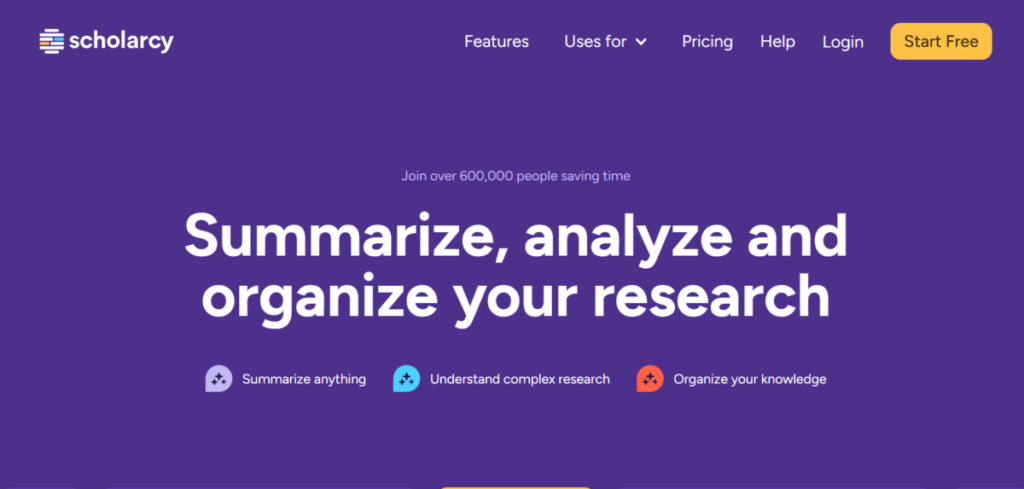
Scholarcy is a research platform that helps students discover, organise, and review academic sources. It lets students focus on what matters most by providing a centralised hub for research materials.
Feed it a journal paper on climate change, and it pulls out methods, findings, and references, transforming hours of skimming into a focused study. This tool adds flexibility for researchers, as its exportable formats integrate with writing software, streamlining thesis work.
Features
- Scholarcy’s citation management tools enable students to manage citations and references, making it easier to write research papers.
- The platform enables students to discover and access academic sources, making it easier to conduct research.
- The platform organisation tools enable students to categorise and review research materials, making it easier to study.
- It has a browser extension for one-click processing of web articles.
Pros
- It saves immense time on reading heavy academic texts.
- Scholarcy enhances skills by highlighting connections between sources.
- The platform is accessible on multiple devices, making it an ideal solution for students who study on-the-go.
- It supports multiple formats like PDFs and web pages.
Cons
- Scholarcy’s platform may require additional resources to provide a comprehensive learning experience.
- Struggles with non-standard or poorly formatted documents.
- The subscription fee is expensive for heavy users.
The Bottom Line
Doctrina AI has a robust study aid platform, but it is not without limitations. This article provides a range of tools that fulfil various learning needs through collaborative features, interactive learning tools, and comprehensive study resources.
