
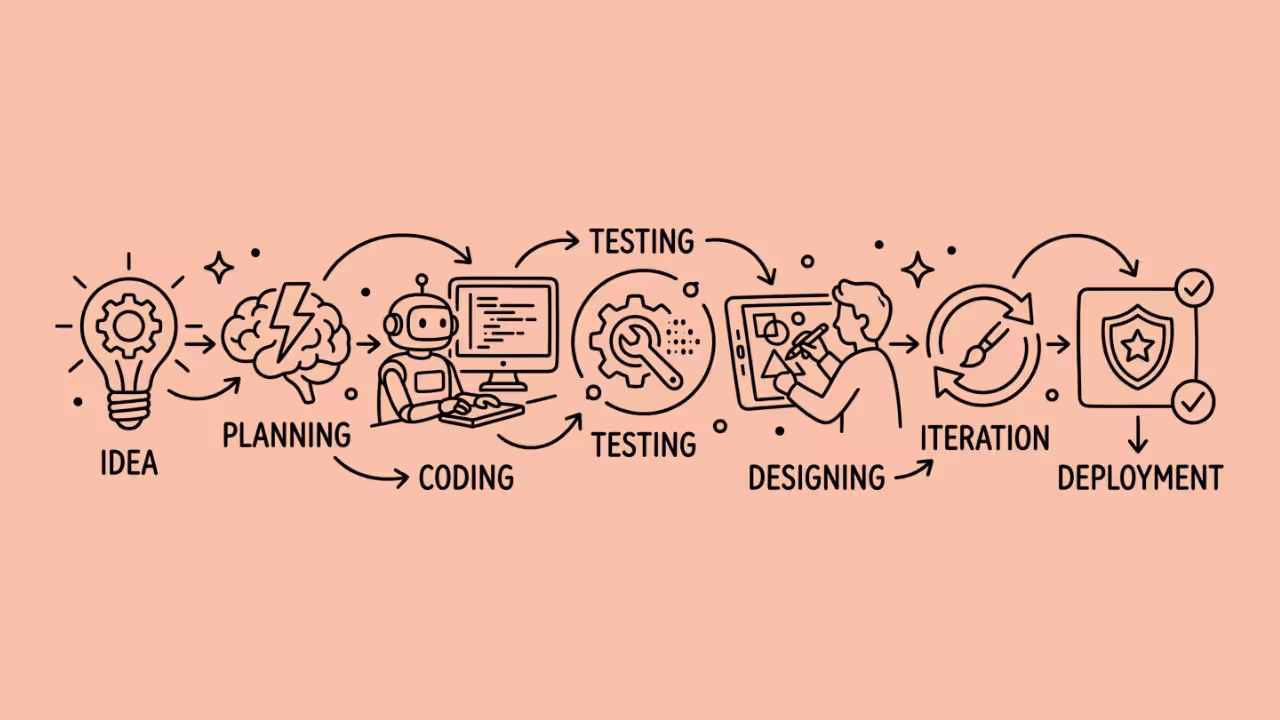

The gap between design and development continues to shrink, and teams increasingly expect tools to support both functions in a single workflow.
In response, Figma has announced a new integration with OpenAI that will bring its AI coding tool, Codex, directly into the design process.
MCP
The integration is centered on Figma’s Model Context Protocol (MCP) server that allows users to move between design and code without friction.
Users can start in Figma and create layouts, prototypes, or collaborative boards. Then, they can move into Codex to implement those ideas in code. The process also works in reverse.
Previously, users could already bring elements, like Figma design files, Figma Make, and FigJam, from Figma into Codex. But the workflow required more manual steps.
Continuous Iteration
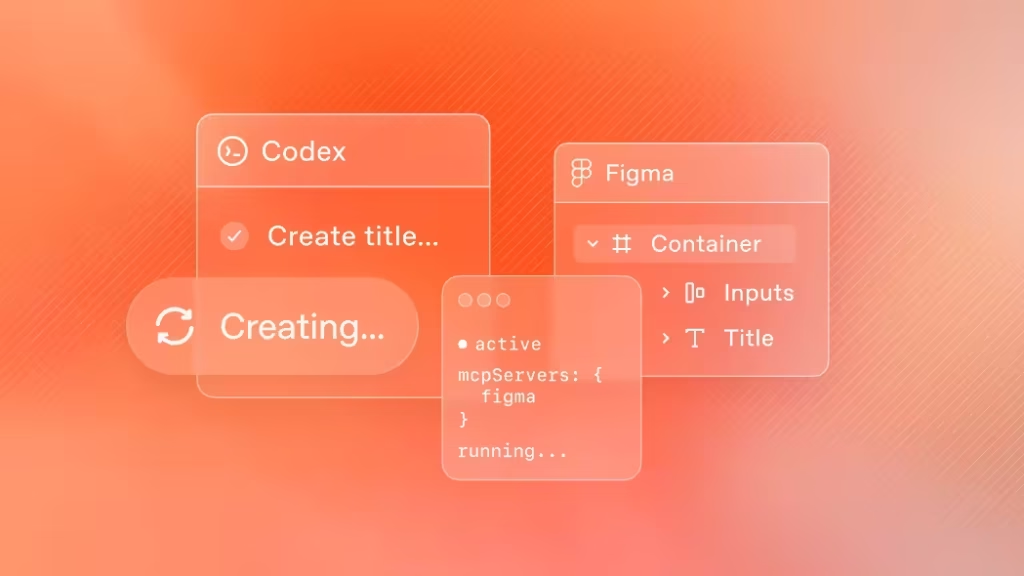
The Codex integration is all about iteration. According to Figma’s Chief Design Officer, Loredana Crisan, teams can now build on their best ideas, not just their first version.
Product development rarely succeeds on the first attempt. Instead, teams test, refine, and improve.
With Codex embedded into the workflow, engineers can adjust designs visually while coding. At the same time, designers can work closer to real implementation.
Product Teams
Figma’s integration changes how teams work together. Before now, designers and engineers operated in separate stages that often created delays and misalignment.
Now, the workflow is more flexible. As noted by Codex Product Lead Alexander Embiricos, the system does not assume a fixed role.
Engineers can iterate visually without leaving their coding environment. Meanwhile, designers can engage more directly with implementation.
Consequently, roles begin to overlap. Collaboration becomes more dynamic. Teams can respond faster to changes.
A Sequel
This announcement comes shortly after another key partnership. Just one week earlier, Figma integrated with Anthropic and its coding assistant, Claude Code.
Multiple providers are now competing to become essential tools for developers and designers. But instead of choosing a single partner, Figma is expanding its ecosystem.
Codex’s Growth
OpenAI first introduced Codex as a command-line coding assistant to compete with emerging tools such as Claude Code.
Later, the company integrated Codex into ChatGPT to make the tool accessible to a wider audience.
Earlier this month, OpenAI launched a dedicated macOS application for Codex. The app reached one million downloads within its first week.

Shortly after, OpenAI released two new Codex models. At present, more than one million users engage with Codex on a weekly basis.
These figures highlight strong demand for AI-assisted coding tools. They also show how quickly developers are adopting these solutions.
Long-Term Partnership
Figma and OpenAI have worked together before. In October 2025, Figma became one of the first companies to launch an application within ChatGPT.
That early collaboration laid the foundation for deeper integration. Now, with Codex embedded into Figma workflows, the partnership has expanded further.
