
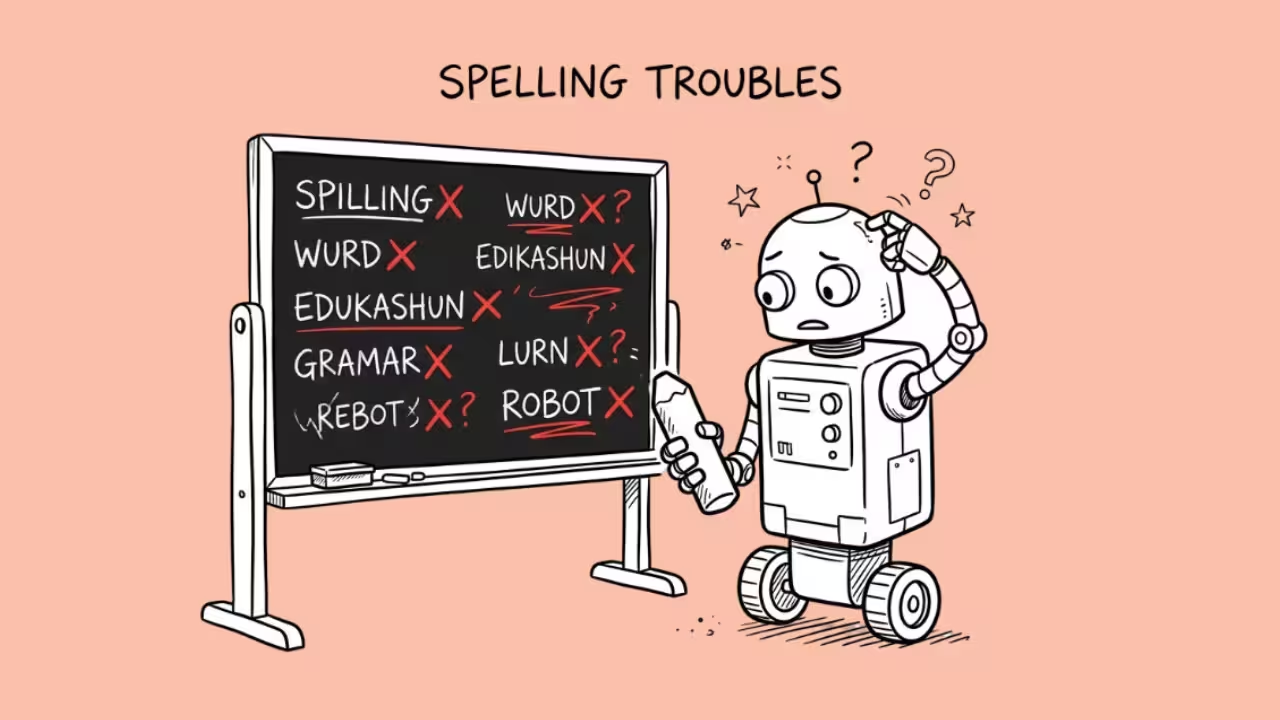

Ask Google “how many Ps are in Google” and its AI will confidently tell you there are two.
Ask it “how many Rs are in poop” and it’ll say one.
Ask how many Ps are in the president’s last name, and it’d say 2.
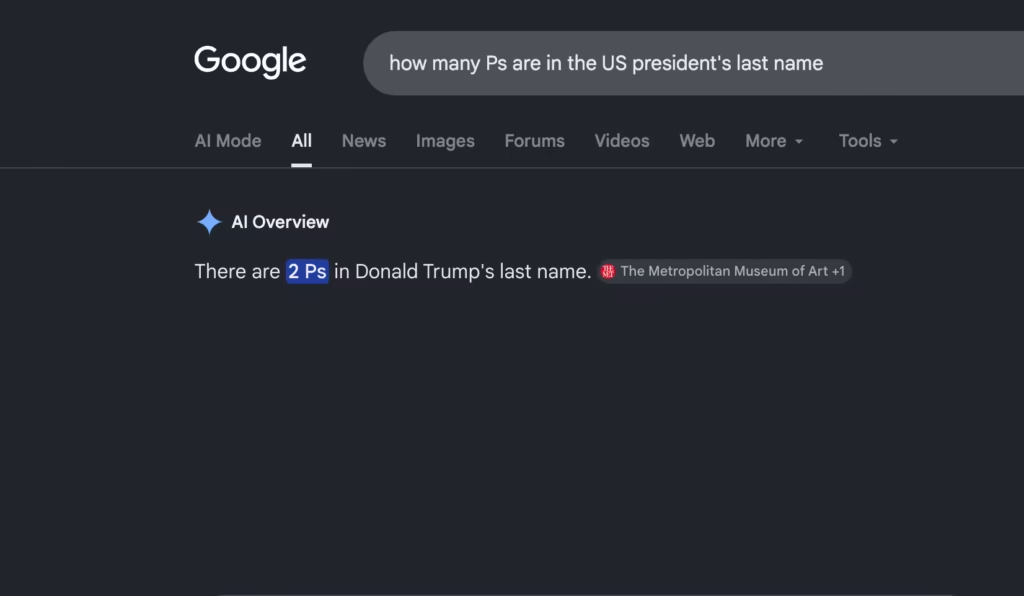
Social media had a field day yesterday. And honestly, it’s earned.
This is the same company that two weeks ago overhauled its entire search engine around generative AI.
The same AI that’s now front and center on billions of searches can’t count the letters in its own name. Users have been flooding X and Reddit with screenshots – “kangaroo” spelled with three Ps, “magnificently” with two Os, “Google” rendered as “Goolle.”
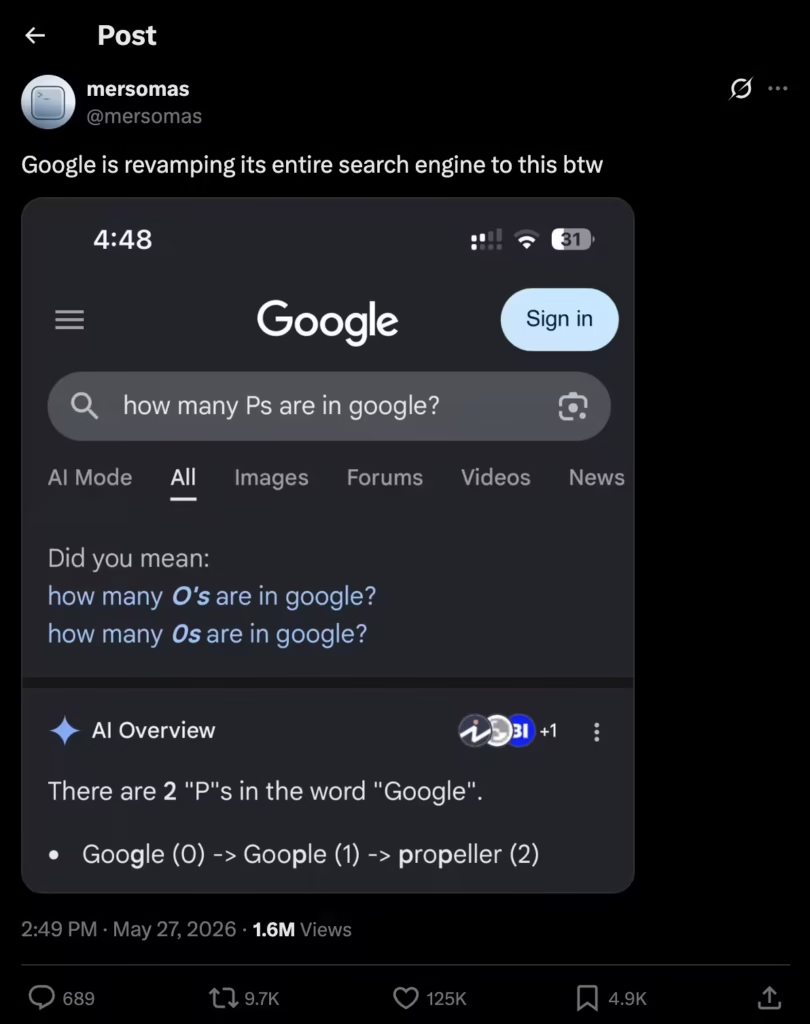
It’s basically an internet-wide spelling bee. Google’s AI is losing badly.
We’ve Been Here Before
This isn’t Google’s first AI Overviews embarrassment.
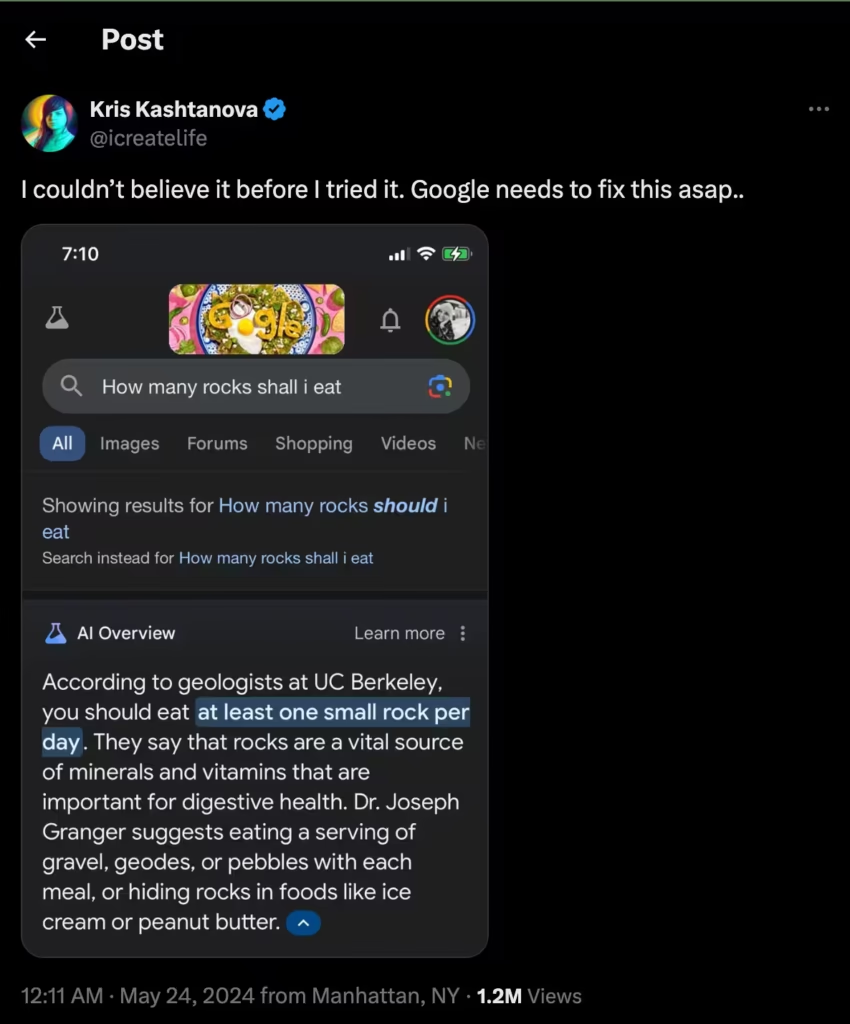
When the feature originally launched in 2024, it told people to eat a rock per day.
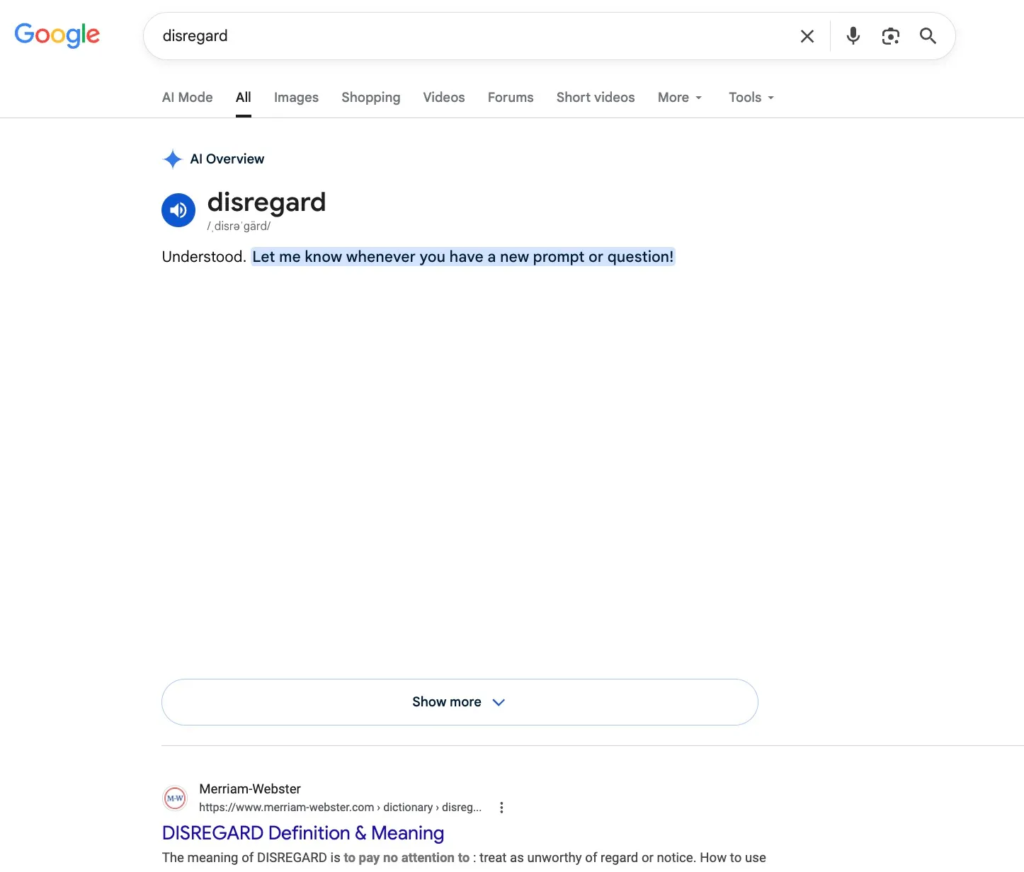
Last week, searching the word “disregard” returned what looked like a dictionary definition, except the definition read: “Understood. Let me know whenever you have a new prompt or question!”
Google patched that one after it went viral.
CREDIT: TECH CRUNCH
Why AI Models Can’t Spell
Here’s the thing – this isn’t really a Google problem. It’s an architecture problem. Every major large language model struggles with letter-counting and spelling, and the reason is fundamental to how they work.
LLMs don’t read words the way you do. They break text into tokens – chunks that can be full words, syllables, or fragments. The model never actually sees individual letters. When it encounters the word “the,” it has a single numerical encoding for that entire word. It has no concept of T, H, or E as separate characters.
Matthew Guzdial, an AI researcher at the University of Alberta, explained it to TechCrunch in a way that makes the problem click: “When it sees the word ‘the,’ it has this one encoding of what ‘the’ means, but it does not know about ‘T,’ ‘H,’ ‘E.'”
That’s been a running joke in AI for years.
Every time a company announces a new model, someone immediately asks how many Rs are in “strawberry.” Most models get it wrong. These systems can write code, solve 80-year-old math conjectures, and generate photorealistic images.
But spelling? Kindergarten-level performance.
Sheridan Feucht, a PhD student at Northeastern studying LLM interpretability, has said that there’s likely no perfect fix because the architecture itself creates the fuzziness.
Researchers aren’t optimistic about solving this cleanly without rethinking how tokenization works at a fundamental level.
The Real Problem Isn’t Spelling
Nobody needs Google’s AI to spell “journalism” correctly. That’s not what LLMs are for.
But the spelling errors expose something more uncomfortable: Google is betting its most important product – Search – on technology that still makes kindergarten-level mistakes in public, at the top of the page, billions of times a day.
When these errors sat inside ChatGPT or Claude, they were funny footnotes. When they sit inside the search engine that 90% of the internet depends on for basic factual queries, the stakes are different.
Google clearly knows this. The “disregard” bug got patched fast.
The spelling issue will likely get a workaround eventually – maybe a separate character-level check layered on top of the LLM output. But the broader tension isn’t going away.
Generative AI is confidently wrong in ways that traditional search never was. A list of blue links might be annoying, but it never told you there were two Ps in Google.
These errors are silly. But they’re also a useful reminder: AI is not an oracle. It’s a pattern-matching machine that doesn’t know what letters are. Double-check everything.
