
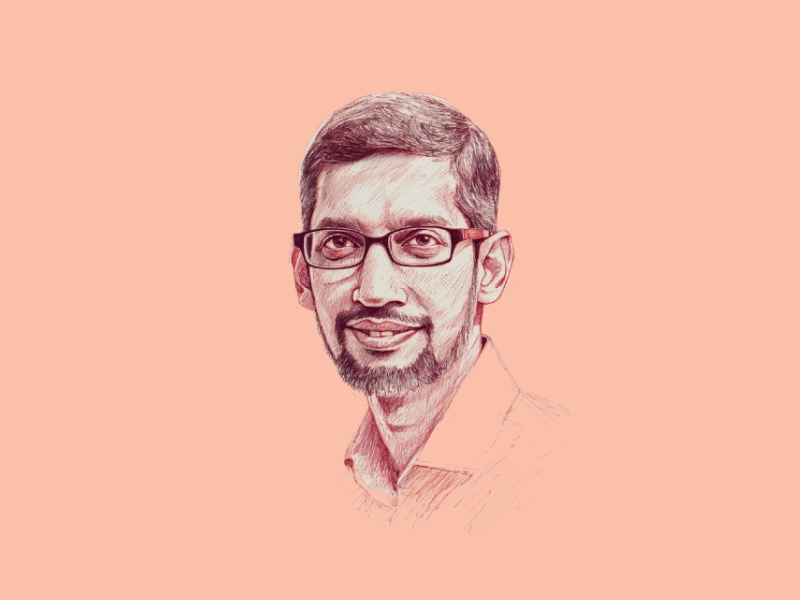

AI drafts emails, explains complex topics, and provides quick advice on almost anything.
However, Google CEO Sundar Pichai warns users not to trust every AI response without question.
In a recent interview with the BBC, he stressed that AI systems still make mistakes. He urged people to treat AI as one resource among many, not a final authority.
Error-prone AI
Pichai noted that modern AI models can deliver helpful and creative answers. Yet they also produce incorrect or misleading information.
They often sound confident even when they are wrong. This creates risks, especially when users ask about health, science, or current events.
Therefore, he emphasized the need for a broad information ecosystem. Search engines, expert sources, and verified reports still play a crucial role.
AI should support these tools, not replace them. Google displays clear disclaimers on its AI products.
These warnings remind users that the systems can fail, yet criticism continues, especially after several public errors.

Inaccuracies
Google faced strong backlash after launching AI Overviews, a feature that summarizes search results.
Soon after release, users found odd and inaccurate answers. Some were trivial, and others raised serious concerns.
Meanwhile, BBC researchers tested several AI chatbots, including ChatGPT, Copilot, Gemini, and Perplexity.
All produced major errors when summarizing news stories. The inaccuracies appeared across platforms, showing a broader industry challenge.
Experts say these mistakes are not surprising. Generative AI sometimes creates information that “sounds” correct but is not.
Gina Neff, a professor of responsible AI at Queen Mary University of London, said these systems often “make up answers to please us.”
This may be harmless for movie suggestions. But it becomes dangerous when the questions involve health, safety, or sensitive personal issues.
Neff argued that tech companies should take more responsibility for accuracy. She said firms should not shift the burden of fact-checking onto users.
Also read: Anthropic CEO Claims AI Hallucinates Less Than Humans
High-Tech AI
The tech industry continues to compete for leadership in advanced AI. Google recently introduced a new “AI Mode” in its search platform.
This feature integrates its Gemini chatbot more deeply into search results. It aims to offer responses that feel more expert and conversational.
This launch also helps Google regain ground as rivals, especially ChatGPT, challenge its long-standing search dominance.
Pichai described the update as a progression into a new phase of AI development. Even so, he acknowledged the tension between innovation and safety.
He said Google must remain “bold and responsible,” moving quickly while still protecting users.
AI Safety And Transparency
Pichai stated that Google continues to expand its safety investments as it builds new AI products.
One example is a tool that helps users detect whether an image is AI-generated. Google plans to open-source this technology to support broader transparency.
He also addressed past comments from Elon Musk, who once warned that DeepMind could create an “AI dictatorship.”
Pichai disagreed, noting that no single company controls the field. He said today’s AI field has many strong companies. As a result, he views such a scenario as unlikely.
