
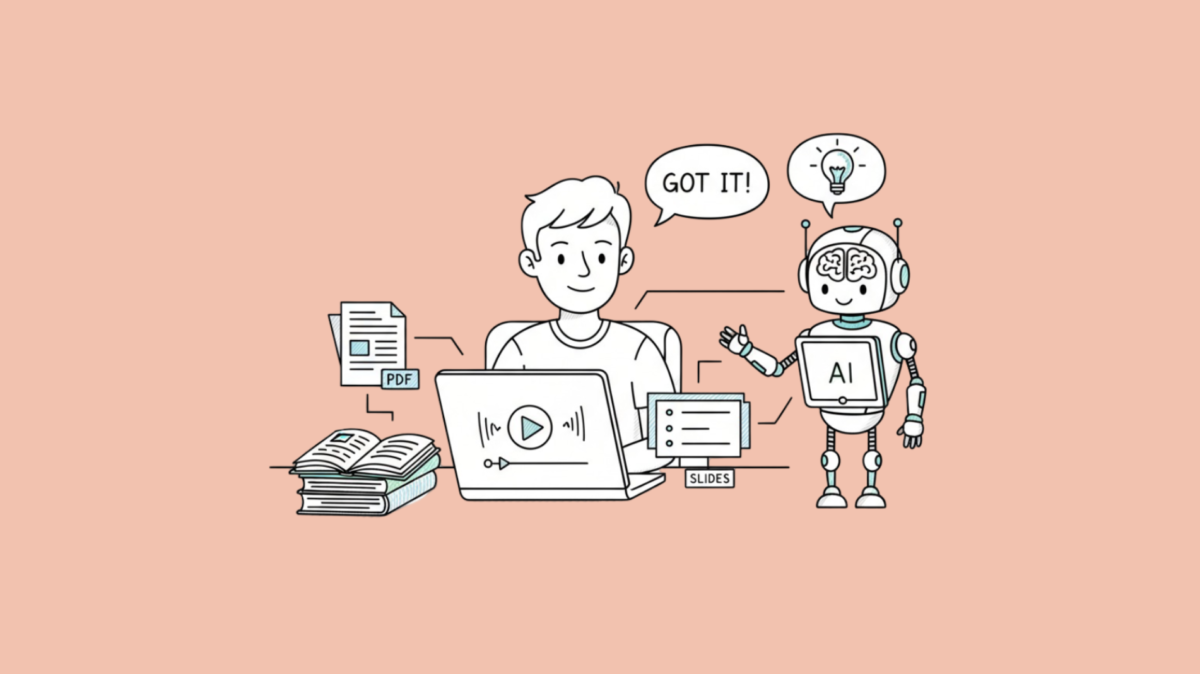

As a bootstrapped founder, you’re basically a one-person team. You’re the CEO, marketer, and support representative all at once.
As your resources are limited, every decision feels high-stakes. One wrong hire, one expensive tool, or one poorly timed campaign can slow momentum, or worse, derail growth altogether. It’s no surprise, then, that studies show nearly 29% of startups fail simply because they run out of cash.
The idea of scaling can feel like too much. It’s tough to grow when you’re already running on fumes, juggling day-to-day operations while trying to think strategically about the future. Hiring more people isn’t always an option, and stretching yourself thinner isn’t sustainable.
Artificial intelligence, or AI, can come to your rescue. When used thoughtfully, AI can help your bootstrapped startup scale smarter, not harder.

Let’s break down how AI can help your bootstrapped startup punch above its weight.
#1 Validate Ideas with Data-Driven Insights
The biggest risk for a founder is building something no one wants. This is called a bad product-market fit.
Traditional product validation was a slow process based on intuition, often leading to products that lacked market fit. Now, AI-driven platforms have transformed this cycle. They allow founders to validate pain points in days rather than months.
Rather than just searching, these platforms analyze and interpret data. Perplexity AI is an excellent example. It has a Research Mode, which creates a full report in about four minutes. This helps you see if a market is growing or shrinking.
Beyond data processing, AI serves as a strategic thinking buddy or sparring partner. Bootstrapped founders often suffer from creative genius bias. That is to say, you become so enamored with an idea that you ignore skepticism. AI tools can be explicitly instructed to act as a skeptical investor, finding reasons why a business plan might fail.
These tools use proprietary algorithms to analyze business concepts and provide an idea score, flagging parts of a plan that are weak or illogical. This encourages socratic questioning, forcing you to stress-test your assumptions and refine your value propositions in a safe, interactive loop.
#2 Rapid Deployment of Professional Digital Infrastructure
For the non-technical founder, the barrier to entry was once the code wall. Building a professional website or a functional app requires either a co-founder with a Computer Science degree or the capital to hire a development firm.
The rise of AI-powered no-code and generative UI (user interface) tools has effectively democratized technical infrastructure. AI-powered website builders have shifted the focus from writing code to describing outcomes.
Hocoos explains that AI-powered website builders apply algorithmic programming structures to carry out website development processes. These tools streamline development and improve user accessibility as they manage core components like layout design and interface adjustments.
And since these builders are integrated with machine learning and natural language processing, they can more accurately interpret and anticipate user intent. That way, you can build professional wireframes and polished landing pages by entering a short text prompt.
Beyond basic websites, modern no-code AI platforms allow resource-constrained startups to build sophisticated, data-driven applications.
These tools turn standard databases into interactive interfaces and let founders deploy custom internal systems, such as inventory trackers, almost instantly. This “database-to-app” approach eliminates the need for professional coding, putting complex development power directly into the hands of the founder.
#3 Customer Support Without a 24/7 Team
Operational scaling is often where bootstrapped ventures falter. As user volume increases, the time required to handle support queries and order tracking scales linearly with the customer base. AI customer support tools provide a scalable safety net that operates 24/7 without the need for additional headcount.
The cost disparity between human support and AI agents is the most compelling argument for AI adoption among bootstrapped firms.
As of December 2025, a human customer service representative charges $17.33/hour, on average. In contrast, AI-powered chatbots and support agents typically operate on predictable monthly subscriptions that cost a fraction of a single hire.
Moreover, they can handle thousands of conversations simultaneously. This allows you to maintain responsiveness without sacrificing margins or sleep. For a business handling around 50,000 interactions per month, the shift to AI can lead to significant savings.
Beyond cost savings, AI support systems improve consistency. They deliver uniform answers, pull information directly from knowledge bases, and never forget product details or policies.
Common requests, such as password resets, shipping updates, and onboarding questions, are resolved instantly, reducing friction for customers and pressure on founders.
Scaling Smarter, Not Just Faster
As a bootstrapped startup founder, you don’t need a fat budget to scale, but you need better leverage, and AI provides exactly that.
It helps you work faster without cutting corners, make better decisions without endless analysis, and grow sustainably without burning out. Most importantly, it gives you control over how and when you scale.
When used thoughtfully, AI isn’t just a tool but a strategic partner that grows with you. And for bootstrapped founders trying to build something meaningful with limited resources, that kind of support can make all the difference.
