


Online gaming marketplaces provide an easy way to trade digital gaming assets such as weapons and equipment. Although they provide time-saving benefits and convenient access to rare assets, things can turn sour in the face of fraud and cybercrime.
AI technology, however, provides a workable solution that enhances security measures. And this article will look at the dangers lurking in marketplaces and the defense AI is putting up against them.
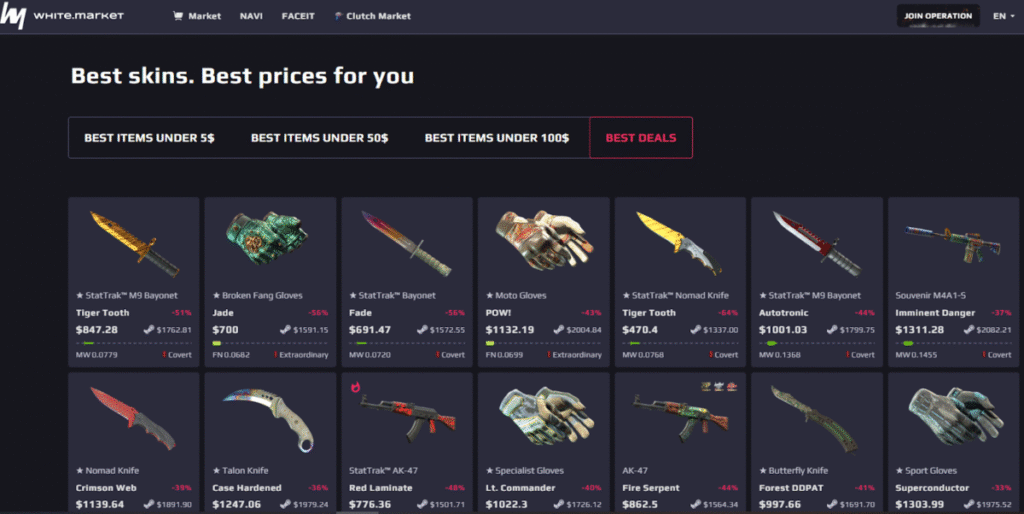
It also provides an example of an online gaming marketplace with routinely updated security measures in the face of 2025’s and even 2026’s cyber threats.
The Dangers of Lax Security in Online Gaming Marketplaces

1. Price Manipulation and Market Rigging
This strategy mirrors real-life world market manipulation. Bots and/or organized groups may make mass purchases to inflate prices and create false scarcity, and dump items at low prices to crash the market. They could also create fake demand for their own products through repetitive listing and buying.
2. Farming & Inflation
Cybercriminals can flood marketplaces with valuable items around the clock to devalue them or even disrupt in-game economies. Typically, the aim is to beat the competition through sabotage.
3. Laundering
Sometimes the dangers transcend business to border on criminal activity. Since gaming marketplaces handle currencies, criminals can take advantage of them and use them to “clean” illegally obtained items and money.
These lawbreakers are usually skilled in covering their tracks. They typically move money and items through a series of trades that hide their origin and sell them through multiple accounts to avoid leaving a trail.
If discovered, the laundering web could implicate innocent players. Laundering involves a web of transactions and accounts; simple actions like receiving a gift flagged as suspicious or buying a cheap item from the wrong account can link an innocent player to a laundering chain.
4. Scams
Cybercriminals post fake item listings to lure players into off-platform transactions. They usually make this attractive by offering a low price or a timed discount. Once a player shows interest, they make claims that draw the player away from the platform.
The scammer may come up with convincing arguments like;
- “Let’s continue this on Discord; Marketplace chat is slow.”
- “The platform takes big cuts; pay me directly, and it’s cheaper.”
- “I can’t trade here because of restrictions; message me elsewhere.”
They might even use fake screenshots and photoshopped seller ratings to build trust. However, off‑platform communication means no moderation, tracking, or escrow. And once the payment is made, the scam is complete.
5. Account Takeovers
Sometimes scammers want more than payment for non-existent goods. They want access to players’ accounts for their assets. They typically trick the players into giving their login information by asking them to pay through dummy sites or run codes that activate malware.
After gaining control of the account, they liquidate valuable assets or transfer them to mule accounts. Sometimes, accounts can be used as points of distribution in a laundering scheme,
How AI Makes Gaming Marketplaces Safe
1. Fraud and Cheat Detection
The dexterity of AI models has found applications in gaming security. AI models can analyze large data on players’ behavior to spot anomalies like unusual account activity, mismatched account behavior, rapid login attempts from multiple devices, and abnormal transaction histories.
Therefore, the AI can flag suspicious behavior before it escalates into serious damage. Certain machine learning models can also detect large-scale fraud by identifying subtle signals across many transactions that appear ordinary in isolation.
Although well-equipped, new formats are rising by the day. However, marketplaces like White.market have adaptable AI that provides quick responses to new forms of fraud. The AI constantly monitors the market to catch inconsistencies.
2. Enhanced Identity Verification (KYC)
Gaming “Know Your Customer” (KYC) processes have undergone significant upgrades from a simple, one-time onboarding hurdle to ongoing verification. Aside from initial document uploads and credential checks, KYC now includes continual live risk-scoring, behavioral signals, and adaptive verification that’s triggered by unusual activity.
To do this, AI can use many methods. One is biometric authentication, which involves asking the user to perform simple gestures, follow prompts provided through a short video session, or provide audio responses. The AI system then evaluates for natural human movements and micro-expressions.
Anti-deepfake technology is an alternate route. Although advanced AI tech is required, it can detect doctored videos, synthetic faces, and forged ID documents by analyzing the underlying pixel structure. AI scans for pixel inconsistencies, and also unnatural motion, lighting anomalies, and metadata fingerprints. These are all qualities the human eye can’t catch.
As rigorous as these sound, AI runs the checks without interrupting legitimate users.
3. Content Moderation
Marketplaces are social. Players chat, negotiate trades, post listings, and share screenshots. These ordinary behaviors become a problem when bad actors come on the scene. AI technology can, however, scan interactions and posts for even the most subtle signs of ingenuity or odd behavior.
They look out for phishing attempts, fake listings, impersonation, and solicitations to move off-platform (that is, out of reach). These keep players, especially inexperienced ones, from falling into scams and harassment cycles.
4. Safe Escrow and Delivery Verification
This acts as a protective measure for both buyers and sellers. When a transaction is initiated, the buyer is tasked with depositing the payment into Escrow, a neutral system out of the reach of the seller.
Then, the seller delivers the assets for evaluation. The AI examines them for legitimacy, originality, and ties with stolen goods and spoofed data. Once the goods are marked as authentic, the money is delivered to the seller and the goods to the buyer.
5. Detecting Laundering
AI tech in marketplaces often run through extensive transaction chains, no matter how complex. It scans trade history and network connections to detect anomalies that could point to organized financial crime.
There are inconspicuous markers, such as the same items passing rapidly between dozens of low-level accounts and large amounts of currency circulating through suspiciously structured trades. Upon detection, the AI system can automatically block the trade. Sometimes, it quarantines items and freezes transactions, allowing enough time for a human review.
The Bottom Line
AI technology has undergone significant advancements that make online safety a possibility. The extra security layers provided by this tech and adopted by marketplaces like allow for safer online gaming transactions.
