


Meta, led by Mark Zuckerberg, is building a large AI data center known as Hyperion. Once completed, the facility will consume as much electricity as the entire state of South Dakota.
This level of demand is unprecedented for a single site.
Natural Gas
Meta recently announced plans to fund seven new natural gas power plants. This comes in addition to three already under development. In total, the company will support ten plants.
And all facilities will be located in Louisiana. Combined, these plants will generate approximately 7.5 gigawatts of electricity.
This output slightly exceeds the total capacity of South Dakota, and it’s all for one purpose: Meta’s AI infrastructure.
Meta has long positioned itself as a leader in clean energy adoption. It has been a patron of solar power, battery storage, and nuclear energy.
However, this latest development is a complete detour away from a cause it’s supported over the years.
The most likely reason is reliability. Renewable energy sources depend on weather conditions, and although battery storage helps, it cannot always meet continuous demand.
Natural gas provides stable, on-demand power, often described as a “bridge fuel” while renewable systems are replenished.
Also read: Meta Pressured to Increase Oversight of AI-Generated Videos
High Emissions
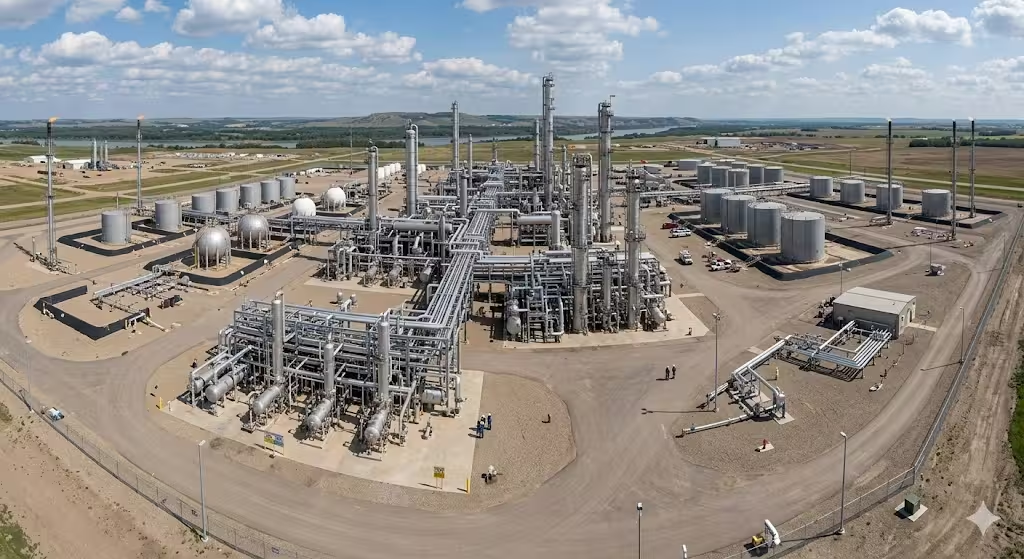
The ten planned power plants could emit approximately 12.4 million metric tons of carbon dioxide each year. This figure is about 50% higher than Meta’s total carbon footprint in 2024.
Moreover, this estimate may not capture the full impact as it does not fully account for methane leakage.
Methane is the primary component of natural gas. Importantly, it is far more potent than carbon dioxide in trapping heat and increasing global warming.
Even small leaks can increase overall emissions. Studies show that leakage rates as low as 0.2% can negate the benefits of natural gas over coal.
In the United States, leakage rates are estimated to be closer to 3%. Therefore, the true climate impact of Meta’s actions could be substantially higher.
Sustainability Reporting
Meta has consistently emphasized its environmental commitments. It publishes annual sustainability reports and highlights its renewable energy progress.
However, its latest report does not address methane emissions or meaningfully discuss natural gas usage.
If the planned plants become operational, natural gas could become a major contributor to the company’s emissions profile.
Carbon Offsets
Meta may still meet its climate targets. However, it will likely rely more heavily on carbon removal credits.
These credits support projects that remove carbon from the atmosphere. Examples include reforestation and direct air capture technologies.
Nevertheless, these solutions are costly and are not yet widely scalable. Offsets can reduce reported emissions, but they do not eliminate the underlying source.
