
Ever had so many tabs open that your computer slowed to a crawl? That’s basically what happened to OpenAI, but with entire products.
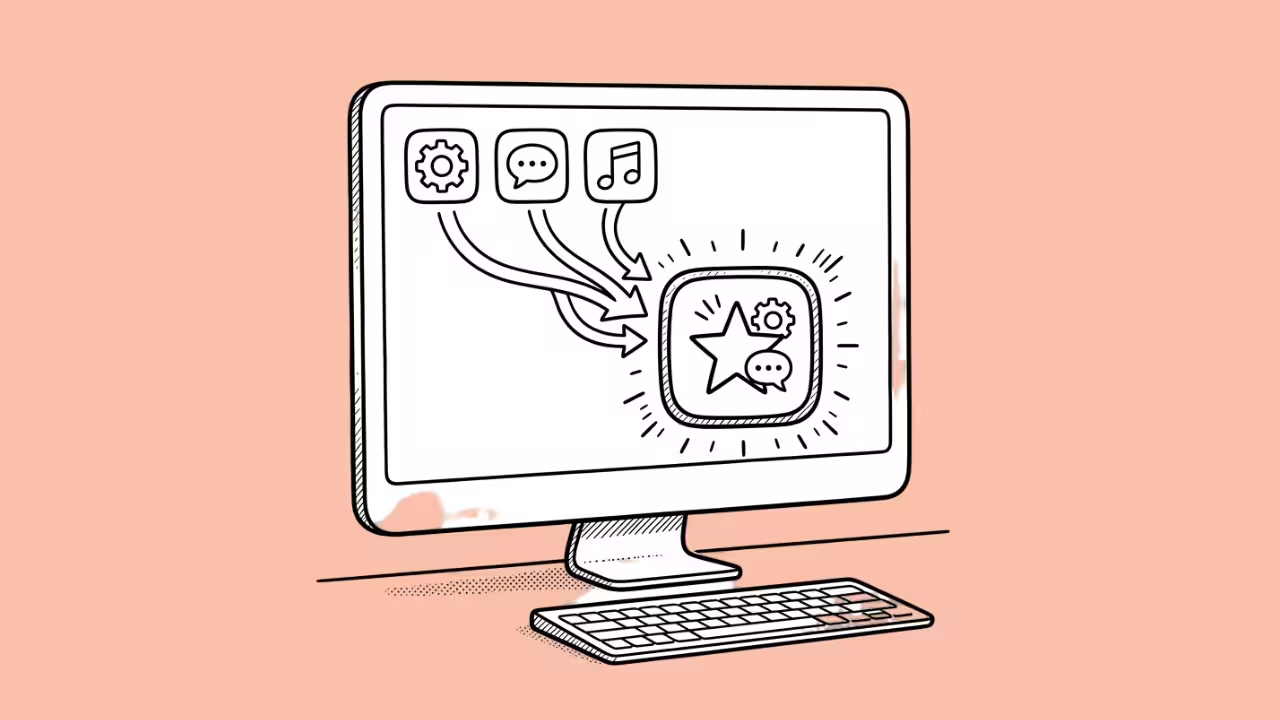
The company is now working on a desktop “superapp” that will combine three of its tools into one.
ChatGPT, the Codex AI coding assistant, and the Atlas AI-powered browser will all merge into a single application. The Wall Street Journal first reported the news.
Why the change? Because juggling separate apps was hurting more than it was helping.
What Sparked the Superapp Idea?
Fidji Simo, OpenAI’s CEO of Applications, laid it all out in an internal memo.
She told employees that spreading the team across too many apps and tech stacks was dragging the company down. It made hitting their quality targets harder.
In her words, the fragmentation “has been slowing us down.”
So instead of running three separate desktop products, OpenAI will bundle everything under one roof.
What’s Going Into the Superapp?
Here’s a quick breakdown of the three products merging together:
| Product | What It Does |
|---|---|
| ChatGPT | The AI chatbot millions already use for writing, research, brainstorming, and more |
| Codex | An AI coding assistant that helps developers write, review, and debug software |
| Atlas | An AI-powered web browser that launched in October 2025, currently available only on macOS |
Each tool does something different. But combining them means users won’t need to bounce between apps anymore. Need to chat with AI, browse the web, and write code?
One app handles it all.
OpenAI president Greg Brockman will help oversee the technical side of the merge. Simo will lead the marketing and sales push for the new product.
And if you’re worried about your phone, don’t be. The mobile version of ChatGPT isn’t changing.
Why Now? The Anthropic Factor
Here’s the part that makes this move really interesting.
OpenAI isn’t just simplifying for fun.
The company is feeling serious heat from Anthropic. Claude Code, Anthropic’s coding tool, has surged in popularity.
Anthropic already bundles its chatbot, coding tool, and desktop productivity features into a tighter package. That focused approach has won over business customers.
Simo didn’t sugarcoat it. She reportedly described Anthropic’s growth as a wake-up call and told employees the company needed to stop getting “distracted by side quests.”
That’s a pretty telling phrase. It suggests OpenAI knows it spread itself too thin.
A Year of Big Announcements – But Did They Land?
Let’s rewind. In 2025, OpenAI went on a product blitz:
- Sora – the AI video generator that briefly hit number one in the App Store, then saw usage drop off
- Jony Ive’s hardware startup – OpenAI acquired io Products for about $6.5 billion to build AI-powered devices
- Atlas browser – a Chromium-based AI browser that launched in October
- E-commerce features – shopping tools added to ChatGPT
- Agent mode – browser automation that reportedly lost most of its users because people didn’t understand what it was for
That’s a lot of launches.
But quantity doesn’t always mean quality.
According to the Wall Street Journal, current and former employees said the sheer volume of projects created confusion.
Teams competed for computing resources. The organizational chart got messy. The Sora video team, for example, sat under the research department, even though they were shipping a major consumer product.
What Does the Superapp Actually Look Like?
OpenAI hasn’t shared a release date yet. But here’s what we know about the rollout plan:
- First, OpenAI will upgrade Codex with new AI-powered productivity features that go beyond just coding
- Then, ChatGPT and the Atlas browser will fold into the unified app
- The result – one desktop application with conversational AI, web browsing, and coding tools baked in
The superapp will also lean heavily into what the industry calls “agentic AI.”
That means AI systems that can work on tasks by themselves, like writing software, analyzing data, or navigating websites on your behalf.
From Exploration Mode to Execution Mode
Simo framed the shift as a natural phase in any company’s life cycle. On X, she wrote that companies go through “phases of exploration and phases of refocus.” Both matter.
But when something starts working, like Codex, you have to go all in.
She called this a chance to combine the most popular AI consumer app (ChatGPT) with the most powerful AI agent tool (Codex).
That combination, she argues, could bring agent-powered features to a massive audience.
How Does This Stack Up Against the Competition?
Here’s a quick look at how OpenAI’s new strategy compares to its biggest rivals:
| Company | Desktop Strategy | Key Strength |
|---|---|---|
| OpenAI | Merging ChatGPT, Codex, and Atlas into one superapp | Massive consumer user base |
| Anthropic | Claude chatbot + Claude Code + Cowork bundled together | Focused enterprise and coding tools |
| Gemini integrated into Workspace, Chrome, and Android | Deep ecosystem integration | |
| Microsoft | Copilot embedded across Office, Windows, and Edge | Enterprise software dominance |
OpenAI’s superapp is basically its answer to what Anthropic has already been doing.
The only difference is OpenAI has far more everyday users. If it can combine that reach with strong developer tools, it could be a powerful combo.
What This Means for Regular Users
If you use ChatGPT on your desktop, your experience is about to change.
Instead of a standalone chat window, you’ll get a full platform. Browse the web with AI assistance. Write and review code. Have conversations. All in one place.
For developers, the appeal is obvious. No more switching between a coding tool and a chatbot. For everyone else, it means a smarter, more capable desktop experience.
Will it work? That depends on execution.
Combining three products with very different needs is no small engineering challenge.
But if OpenAI pulls it off, the superapp could become the default way people interact with AI on their computers.
