


Smart glasses help people make better sense of their environment by packing interactive features into sleek frames. This technology integrates into daily life and merges augmented reality, AI assistance, and hands-free connectivity into stylish eyewear.
These devices improve how we interact with information, whether that’s recording memories or navigating bustling areas. This article discusses a selection of standout smart glasses, highlighting their features, pros and cons.
1. Pickle 1 Soul Computer
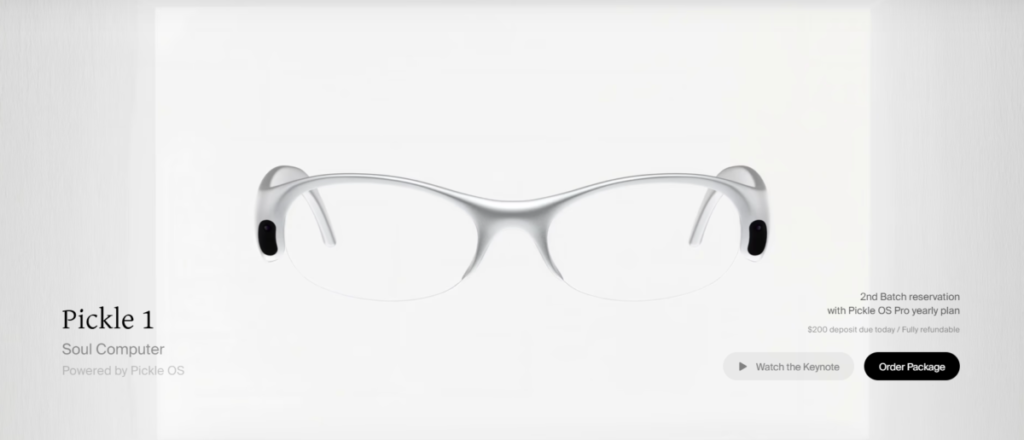
Picture a device that slips into your routine like a trusted notebook, but supercharged with intelligent technology to capture memories before they fade. It’s a tool that quietly helps writers and designers be more creative.
Engineers at Pickle Labs craft the Pickle 1 Soul Computer as a bold fusion of wearable computing and soulful design, emphasising its intuitive AI integration that feels like an extension of your thoughts. Because it connects directly to your thought process through voice and minimal visuals, it is easier to avoid the overload of heavier AR setups.
Features
- It has a voice-activated AI that transcribes spoken notes and suggests related concepts based on your input history.
- Modular frame design allows swaps for tinted or prescription lenses, plus haptic ⁰0feedback for discreet alerts without screens.
- Pickle 1 Soul Computer allows cloud syncing with tools like Evernote or Google Drive and complete end-to-end encryption for sensitive brainstorms.
- It has a built-in microphone array that blocks out background noise for clear dictation in noisy areas.
Pros
- It is feather-light, weighing just 45 grams, and stays comfortable from dawn till dusk without neck strain.
- Its “privacy-first” approach keeps most processing local, reducing reliance on constant internet and minimising data exposure.
- Pickle 1 Soul Computer is budget-friendly, with a starting price of around $200, punching above its weight for niche creative tasks.
Cons
- It skimps on visual AR elements, so no overlaid graphics or virtual screens for more immersive work.
- The battery holds for about 6-8 hours, often needing a top-up during heavy use.
- The app library is still growing and lacks deep integrations with specialised software.
2. Meta Ray-Ban Display Smart Glasses
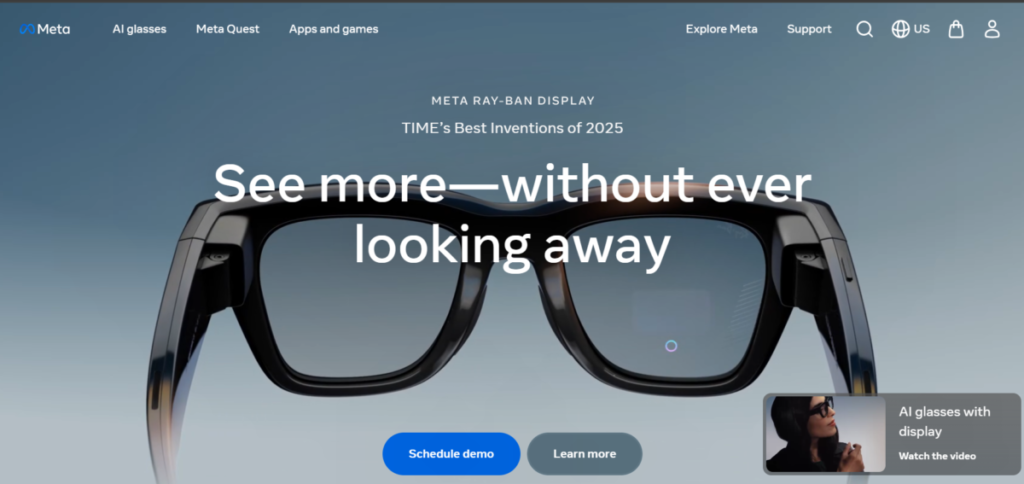
Meta teams up with Ray-Ban to create a timeless yet modern piece. These smart glasses let you snap life’s highlights and digital flair directly into your line of sight. Meta Ray-Ban’s cameras and audio help content creators and vloggers turn spontaneous moments into polished shares. On the other hand, its AI assistant handles queries on the go, making every outing an adventure in connectivity.
Features
- A 12MP camera with AI-powered stabilisation and auto-editing for quick clips, plus live streaming to all Meta platforms.
- Ray-Ban Display has built-in open-ear speakers and microphones for calls, music, and voice commands, supporting assistants like Meta’s own or Siri.
- The AR overlays for fun filters, or real-time info like weather pops during walks.
- All touch controls on the arms are for volume, photo capture, and gesture-based navigation.
Pros
- It blends in like regular eyewear, with customizable styles from aviators to wayfarers, avoiding that “tech geek” look.
- Ray-Ban has a tight-knit relationship with Meta apps for effortless posting, making it a content creator’s dream on the go.
- It has a solid sound setup that keeps you aware of your surroundings, unlike isolating headphones.
Cons
- Issues of data privacy take a hit with Meta’s ecosystem, as captured pictures or videos often feed into their algorithms.
- The premium plan lands on the pricier side at $300 monthly, which might feel steep for occasional users.
- Its screen resolution tops out at 1080p, falling short of intricate AR details in bright light.
3. MemoMind AI Glasses
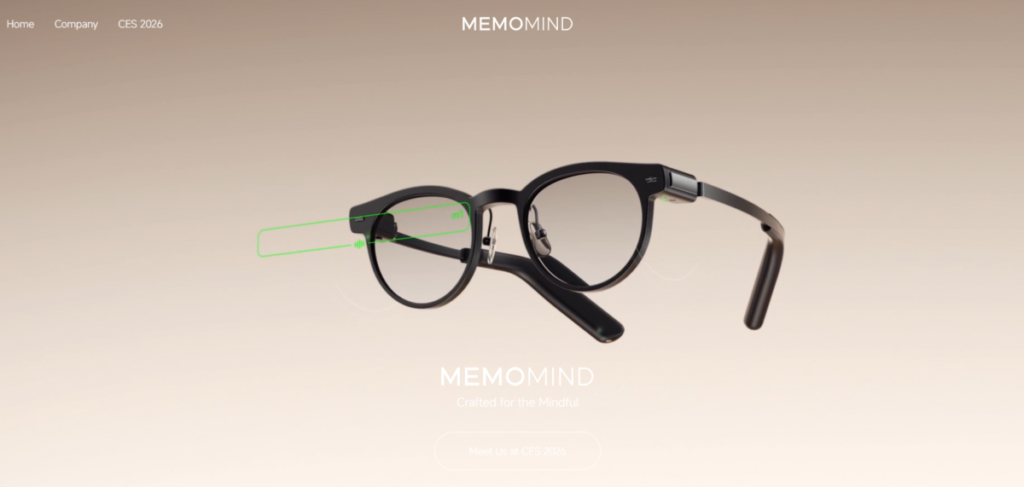
Imagine eyewear that acts like a helicopter parent (but without the controlling behaviour) that records all key details to keep life on track. MemoMind is that kind of eyewear. It uses smart tech to weave memory aids into the field of view. This makes it ideal for busy individuals as it provides a hands-free experience.
Features
- AI transcription that converts conversations to text notes, with keyword highlighting and automatic categorisation.
- A micro-LED heads-up display for floating reminders, calendar events, and subtle health metrics like step counts.
- It is integrated with email and task apps, sending notifications and suggesting responses based on context.
- Standard bio-sensors for monitoring focus levels, alerting you to take breaks during prolonged concentration dips.
Pros
- MemoMind adapts to your patterns over weeks, becoming more predictive and personalised without much setup.
- It has an impressive 12-hour battery stretch through full workdays, with quick USB-C charging.
- It weighs below 60 grams, making it the best way for long hauls.
Cons
- It sticks to productivity over entertainment, with no support for media or gaming AR.
- The premium features cost $5/monthly, a huge expense for individuals.
- The speaker’s quality dips in loud settings, making voice feedback hard to hear.
4. XREAL 1S
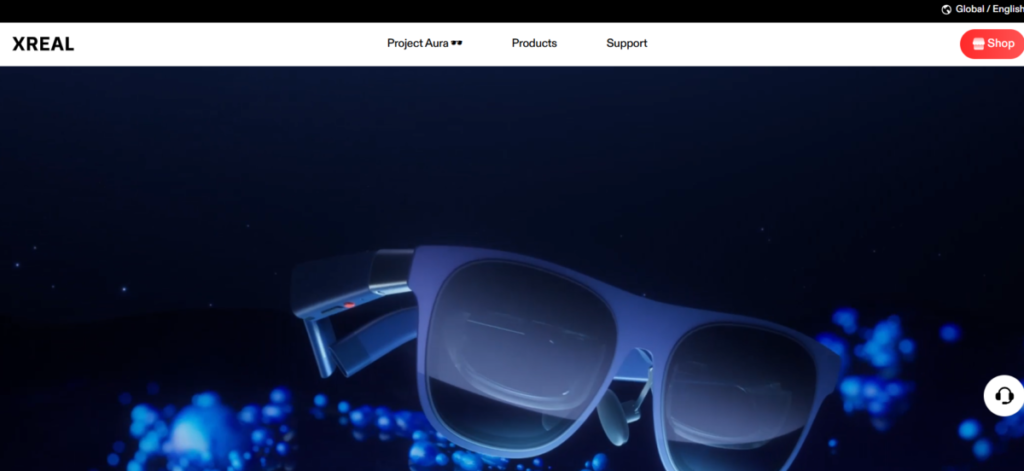
XREAL brings augmented reality to life with the 1S model. XREAL 1S is a sleek pair of smart glasses that immerse users in virtual screens for entertainment and work. It projects high-definition displays to transform any space into a productive one.
This and its precise spatial mapping help users navigate digital space while staying anchored in reality. Furthermore, its lightweight build invites extended sessions that cover various tasks like editing documents and gaming.
Features
- XREAL’s dual 1080p micro-OLED displays can create up to three virtual screens with adjustable sizes and positions.
- It has hand-tracking gestures for zooming, dragging windows, and selecting.
- There’s a USB-C connection to Android/iOS devices for mirroring apps, plus a standalone mode for AR.
- It has a spatial audio that positions sounds in 3D space, enhancing immersion for calls or videos.
Pros
- It has stunning high-end monitors, ideal for binge-watching, coding, design, or on the fly.
- XREAL works across platforms, with low latency for smooth interactions.
- It has easy adjustments to ensure a snug fit for diverse head sizes.
Cons
- The tips scale at 80 grams, causing discomfort after some hours.
- It depends heavily on a paired device, cutting standalone capabilities short.
- New users face a curve to master gestures and calibrations.
5. Even Realities G2
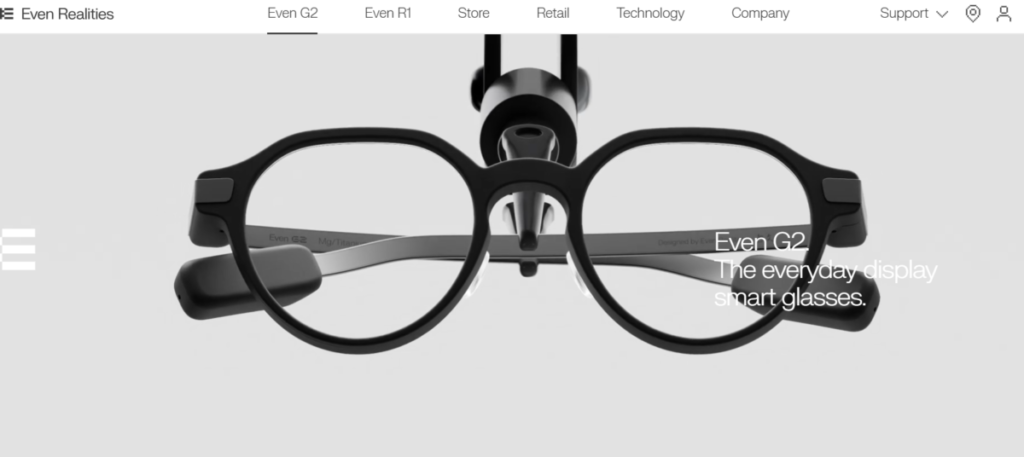
Even Realities G2 comes in as a quiet enhancer with just enough digital help to navigate foreign environments. It can manipulate 3D models in real time, making it perfect for designers, educators, and businesspeople on the go. These smart glasses provide understated AR that feels like a personal interpreter for practicality and serenity.
Features
- It supports instant multilingual translation of signs and speech in over 50 languages with offline modes.
- Even Realities G2 has GPS-guided AR arrows and landmarks projected subtly for walking directions.
- The voice assistant is available for queries like nearby restaurant recommendations or weather checks.
- An array of ambient light sensors that auto-adjust display brightness for indoor/outdoor shifts.
Pros
- Its aesthetics mimic standard frames, perfect for blending into any setting.
- The battery power lasts up to 10 hours with recharging via wireless pads.
- It is wallet-friendly and delivers core travel tools without excess.
Cons
- The display washes out in harsh sunlight, requiring shaded views for clarity.
- Its narrow app selection focuses on navigation, ignoring broader entertainment.
- Even Realities G2 earbuds are needed for private audio, as built-in speakers are minimal.
6. Leion Hey2
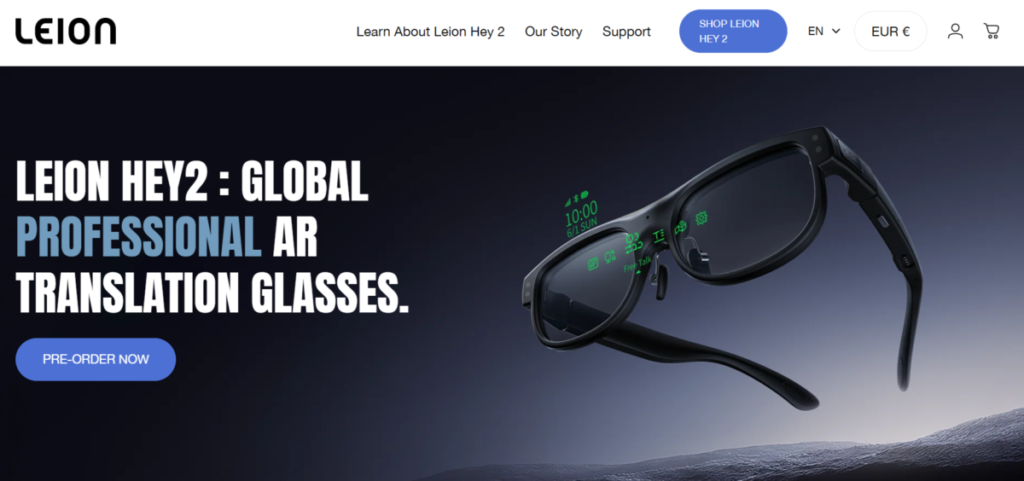
Leion Hey2 smart glasses combine voice-activated assistance and health monitoring in a minimalist package. Also, it amps up leisure time with AR that pulls you into games and shows, making downtime an interactive thrill ride.
The smart glasses listen to commands and deliver responses through discreet audio, keeping the hands free for multitasking. Hey2 is highly adaptive to active, dynamic lifestyles. It can make the switch between fitness tracking, quick queries, and providing live feedback on activity.
This is great for those who value subtlety and would rather that technology enhances and doesn’t dominate the experience.
Features
- A 90Hz refresh rate for fluid AR gaming, with motion sensors tracking head movements.
- It has streaming support for platforms like Netflix, projecting up to 200-inch virtual screens.
- Leion Hey2 has customizable interfaces with themes, shortcuts, and multiplayer AR modes.
- It is integrated mics for voice chat in games or calls.
Pros
- It has a rich, colourful visual pop with high contrast, elevating movies and games alike.
- Padded frames that distribute weight evenly for long sessions.
- Expanding content partnerships bring fresh apps regularly.
Cons
- Its intensive AR mode drains battery in 4-5 hours, demanding backups.
- The frame size runs large, possibly awkward for petite users.
- The entry price of $400 is high for non-gamers.
7. HTC VIVE Eagle
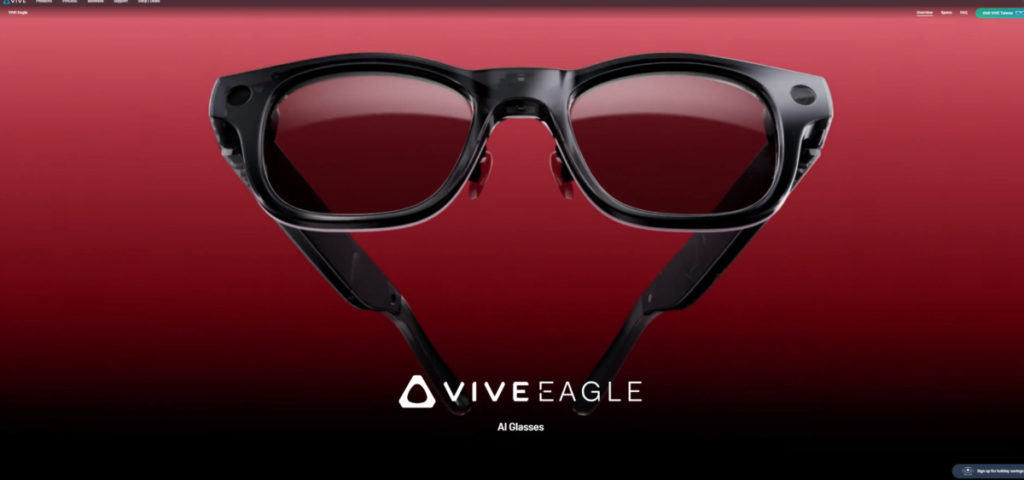
HTC releases the VIVE Eagle as a powerhouse, combining VR and AR for immersive adventures. This model captivates with its wide field of view, drawing users into detailed virtual worlds while overlaying practical data.
Professionals use it for simulations, while casual users like gamers dive into epic narratives, all within a headset-like frame. Moreover, its modular design allows for customisation and adaptation to diverse needs. This makes it a sustainable technology in the fast-evolving market.
Features
- Eye-tracking tech for gaze-based selections in detailed 3D environments.
- It has high-resolution displays rendering complex models with sub-millimetre precision.
- It is integrated with CAD software and real-time team sharing via the cloud.
- A tough IP65 rating for dust and water resistance in tough settings.
Pros
- It delivers lab-level accuracy, streamlining workflows in engineering or medicine.
- The tough construction holds up to drops and daily wear.
- There are add-ons like extra batteries to extend usability.
Cons
- The premium plan is expensive and only suited for businesses over individuals.
- It weighs 100 grams, leading to fatigue in long-term wear.
- The setup involves software tweaks that can overwhelm casual users.
8. RayNeo X3 Pro
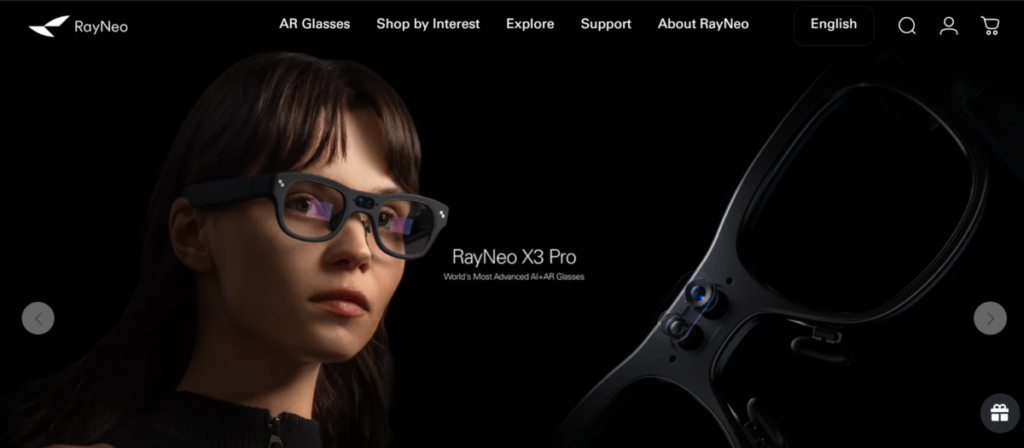
RayNeo X3 Pro is a compact set of smart glasses that coaches workouts, reads foreign signs, and guides explorations. As users explore new territories, the glasses provide contextual enhancements that feel intuitive and empowering. Their affordability broadens their appeal and invites a wider audience to experience AR without breaking the bank.
Features
- A pair of biometric sensors for heart rate, steps, and form analysis during exercises.
- The AR paths for virtual tours or gamified fitness challenges.
- There are gestures and voice inputs for controlling music or maps hands-free.
- It is weather-resistant and built with UV-protective lenses.
Pros
- RayNeo X3 Pro thrives in dynamic environments, with stable performance on the move.
- Its intuitive control lowers the barrier for tech newbies.
- The premium plan is mid-range at $350 with lots of features and cost.
Cons
- Screen glitches occur in fluctuating light, like dawn or dusk.
- The audio can get muddled by wind or crowds.
- RayNeo X3 Pro lacks depth in some areas, but is great in variety.
9. INMO Air 3 AR +
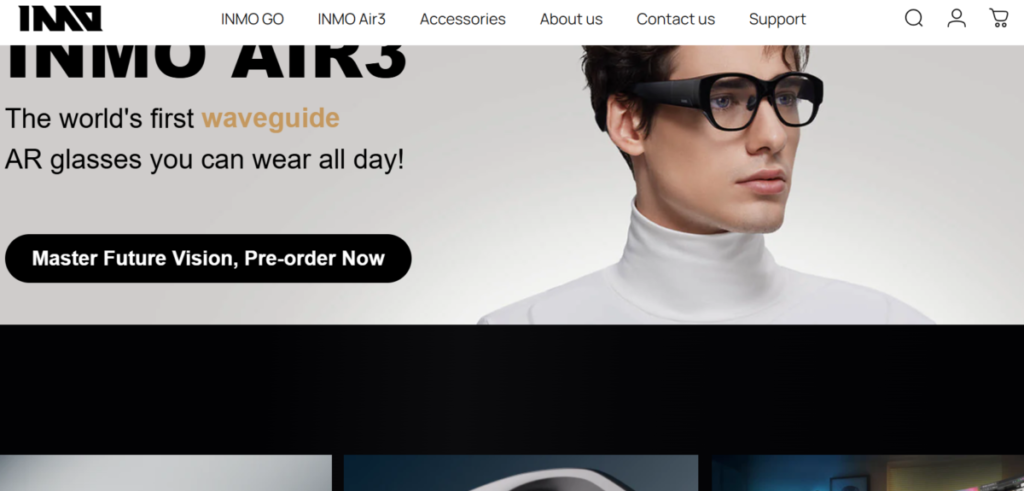
INMO Air 3 AR+ are ultra-light smart glasses that infuse vision with augmented layers for productivity and fun. They excel in delivering quick-access info from assistant and productivity tools, while maintaining a featherweight feel. INMO Air 3 AR+ handles fast-paced needs like glancing at alerts and pulling up recipes during cooking. This ability to tend to and transition between varied needs makes it a friend rather than a distraction.
Features
- A compact AR projector for notifications, emails, and quick web searches.
- Without data, users can access basic translations and queries.
- It comes with prescription-ready frames with anti-fog coatings.
- INMO Air 3 AR + has a low-power mode extending use to 8 hours.
Pros
- It is barely over 40 grams and integrates effortlessly into routines.
- It emphasises efficiency, minimising battery use for prolonged outings.
- Its data-minimal design appeals to privacy hawks.
Cons
- It is restricted to essentials, like skipping advanced AR-like games.
- The battery falters under heavy loads, dropping to 4 hours.
- It has a beginner-friendly interface that stays simple.
10. VITURE Luma Ultra
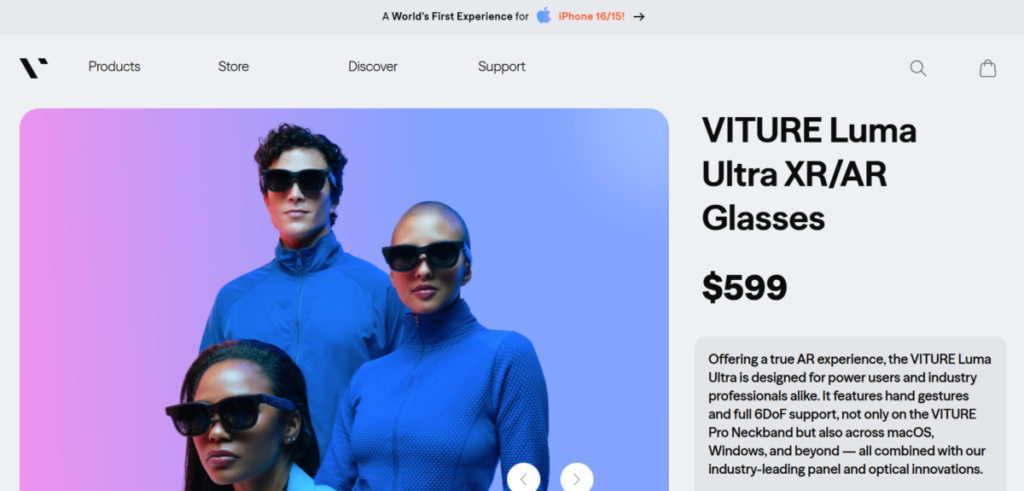
VITURE Luma Ultra acts like a massive virtual canvas for work or play by letting the user escape into cinema-sized views from any location. This model turns any wall into a theatre or workspace, with adjustable brightness that adapts to environments.
In casual use, it helps tourists enjoy distraction-free entertainment. In professional use, it lets creatives experience precise design viewing. Whatever the use case, the viewing sessions are enjoyable due to VITURE glasses’ blend of form and function in a compelling package.
Features
- VITURE Luma Ultra has a 4K-equivalent resolution for sprawling virtual desktops or theatres.
- A multi-device pairing for seamless switching between phone, PC, or console.
- It has an adjustable focus and inter-pupillary distance for sharp, personalised views.
- It has built-in storage for offline content.
Pros
- It creates deeply immersive setups that outshine phone screens.
- Flexible viewing angles adapt to lounging or standing.
- It is made out of durable materials that promise years of reliable use.
Cons
- The premium plan is expensive and, therefore, suits committed users, but not impulse buys.
- VITURE Luma Ultra’s extended sessions might trigger eye fatigue without breaks.
- An initial calibration demands patience for optimal setup.
The Bottom Line
Smart glasses are a thrilling cocktail of possibilities. The good part is that they evolve with AI capabilities and can tend to every need: style, productivity, and adventure. As good as they sound, there are concerns about data handling in a world where privacy is fast becoming extinct.
