


Sales reps spend roughly 28 – 30% of their week actually selling, according to Salesforce’s State of Sales research. The rest? CRM updates, meeting prep, manual research, and chasing leads that never respond.
That gap is exactly why AI sales tools have exploded in adoption.
But with hundreds of platforms claiming to be “AI-powered,” separating the genuinely useful from the marketing fluff takes work.
I’ve spent the past several weeks testing, comparing, and verifying the top AI sales tools across six categories – from prospecting and email coaching to conversation intelligence and revenue forecasting. Some impressed me. Others looked great on a pricing page and fell apart in practice.
Below are the eight that actually earned a spot, with transparent breakdowns of what each does, what it costs, and where it falls short.
What Exactly Are AI Sales Tools?
AI sales tools are software platforms that use machine learning, natural language processing, or predictive analytics to automate or improve parts of the sales process.
That includes prospecting, lead enrichment, email outreach, call analysis, deal forecasting, and CRM hygiene.
Real AI tools learn from data and improve over time. They don’t just follow static if/then rules, they recognize patterns in your pipeline, your emails, or your call transcripts and adapt their recommendations based on what’s actually working.
These tools sit across every stage of the sales funnel, and most teams use a combination rather than relying on a single platform.
8 Top AI Sales Tools
1. HeyReach
Category: LinkedIn Automation & Outreach
Website: heyreach.io
Best For: Agencies and sales teams running high-volume LinkedIn campaigns
Starting Price: $79/month per sender
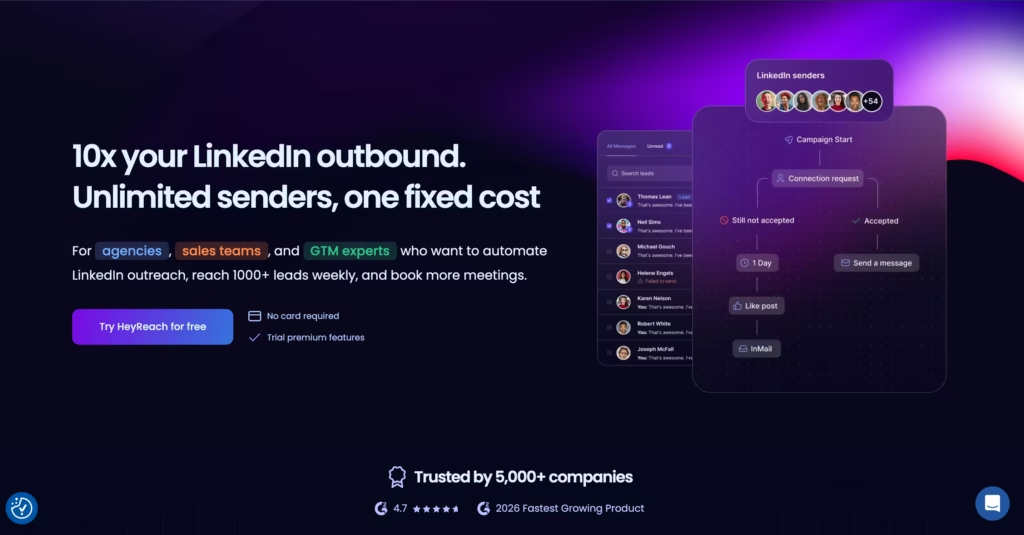
If LinkedIn is your primary outbound channel, HeyReach is the tool I’d pick first.
It’s a cloud-based LinkedIn automation platform that lets you connect unlimited accounts under one flat fee, then automatically rotate sending between them. That means you can reach over 1,000 leads per week without tripping LinkedIn’s daily limits.
What sets HeyReach apart in 2026 is its MCP (Model Context Protocol) server – a first for LinkedIn automation. MCP lets you connect HeyReach directly with AI agents from tools like Claude, Clay, and n8n.
Instead of manually clicking through campaign setup, you can instruct an AI agent to add leads, launch sequences, pull analytics, or pause campaigns in real time.
The drag-and-drop campaign builder chains actions like profile views, connection requests, and messages with conditional logic and human-like delays. A unified inbox centralizes replies from every connected LinkedIn account in one place.
Pros: Flat-fee multi-account rotation, strong account safety track record, native integrations with Clay and HubSpot, MCP server for agentic AI workflows, pre-built campaign templates.
Cons: LinkedIn-only. No email, phone, or multichannel sequences natively. You’ll need separate tools (like Salesforge or Outreach) to build a complete outbound stack. When I ran my first campaign, I used one of the pre-built templates without customizing the message copy, and the connection acceptance rate was a dismal 12%.
Once I rewrote the messages with personal details from each prospect’s profile, it jumped to 34%. The tool gives you speed, but generic copy will tank your results fast.
2. Clay
Category: Data Enrichment & Sales Intelligence
Website: clay.com
Best For: Revenue operations teams, GTM engineers, and outbound-heavy sales orgs
Starting Price: $185/month
Clay is one of the top AI sales tools and data enrichment platform that over 50,000 teams rely on to turn raw lead lists into rich, actionable prospect profiles.
The platform’s AI research agent, Claygent, scrapes websites, reads PDFs, researches companies, and answers custom questions about any prospect without you writing a single line of code.
Clay’s waterfall enrichment method tries multiple data sources in sequence, so you only pay for the first successful match.
Clay doesn’t send emails or run outreach sequences. It sits before your outreach tools and CRM, preparing the cleanest, richest data possible, then pushing it into platforms like HeyReach, Outreach, or Salesloft.
Pros: Aggregates 100+ data providers, Claygent AI agent for custom prospect research, waterfall enrichment minimizes wasted credits, strong integrations with CRMs on Growth plan, trusted by well-known SaaS companies.
Cons: Steep learning curve. When I tested Clay’s waterfall enrichment on a 500-contact list, I burned through 1,200 credits in under an hour because I hadn’t configured the provider sequence properly.
The platform gives you serious power but assumes you already know what you’re doing. Credit-based pricing can be unpredictable at scale (Clay charges for failed lookups on legacy plans). CRM sync requires the $495/month Growth plan. It’s not an outreach tool, you need additional software to send messages.
3. Lavender
Category: AI Email Coaching & Optimization
Website: lavender.ai
Best For: SDRs, BDRs, and any sales team sending high-volume outbound email
Starting Price: $29/month
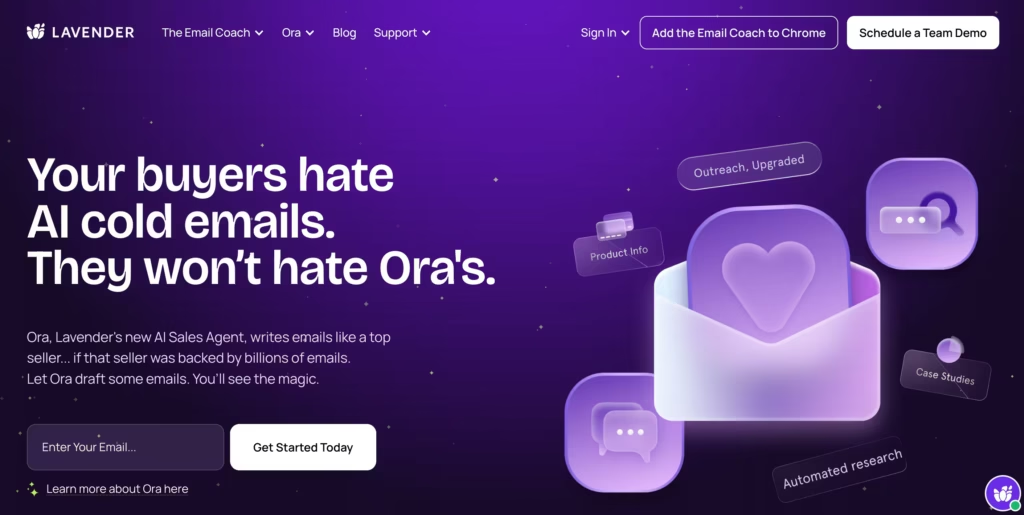
Founded in 2020 by Will Allred and William Ballance, Lavender works as a Chrome extension that lives inside your inbox.
It scores every email you write on a scale of 0 to 100, then tells you exactly what to fix: subject line length, reading level, personalization depth, question placement, and more.
The magic is in the specificity. Lavender doesn’t just say “make it better.” It highlights the exact sentences dragging your score down and suggests rewrites. It also pulls prospect data directly into your inbox so you can personalize without switching tabs.
According to Lavender’s published data, users who consistently score 90+ see reply rates around 20.5%, roughly four times the industry average. Twilio reported a 60% increase in meetings booked in the first six months of using Lavender, even with 11% fewer sales reps.
Lavender recently introduced Ora, an AI sales agent trained on over 2 billion emails that drafts entire cold emails, not just coaching suggestions.
Pros: Real-time scoring and coaching in your inbox, prospect research and personalization assistant built in, affordable pricing, team analytics dashboard for managers, mobile preview optimization.
Cons: Email-only. No LinkedIn, phone, or multichannel support. It’s a coaching and drafting layer, not a sequencing platform. Team pricing requires a sales conversation (no self-serve enterprise tier).
4. Gong
Category: Conversation Intelligence & Revenue Intelligence
Website: gong.io
Best For: Mid-market and enterprise sales teams with 10+ reps
Starting Price: Custom
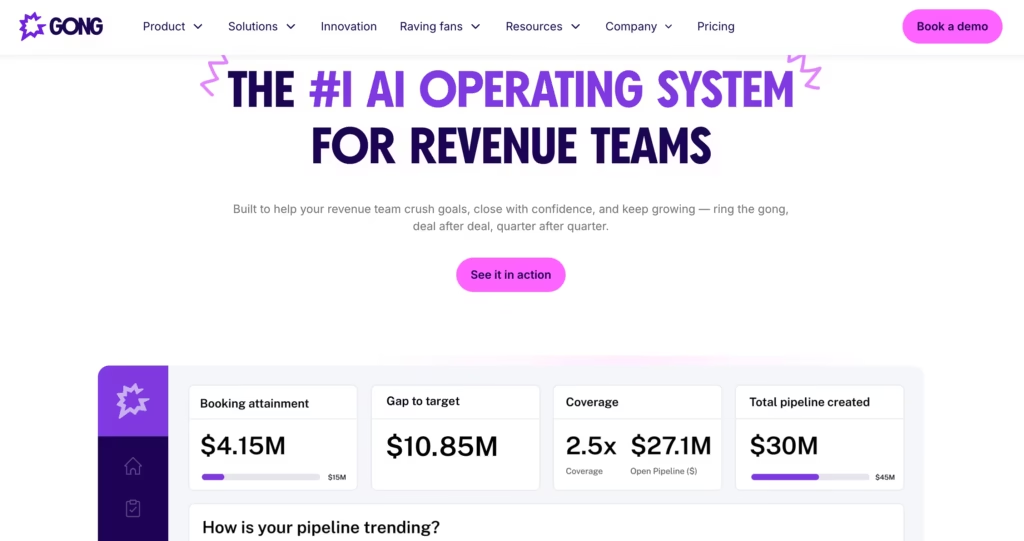
Gong is the market leader in conversation intelligence and for good reason.
Every sales call your team takes on Zoom, Teams, Google Meet, or phone gets recorded, transcribed, and fed through AI that picks apart what happened. Which talk tracks won. Which objections killed the deal. Which rep talked for 80% of the call when they should’ve been listening.
Gong’s Revenue Graph connects every interaction across your business into a single data model. Sales managers can spot which talk tracks win, which objections stall deals, and which reps need coaching on specific skills.
Deal intelligence predicts which opportunities will close, and AI-generated call summaries mean reps spend less time on post-call admin.
In 2026, Gong introduced Gong Agents – AI that automates follow-ups, pipeline edits, enablement triggers, and forecast corrections.
Pros: Best-in-class conversation analytics, AI-powered deal scoring and forecasting, 7,000+ third-party integrations, coaching tools grounded in real customer interactions, proven ROI at scale.
Cons: Opaque, enterprise-only pricing, small teams are effectively priced out. Mandatory onboarding fees. Long implementation timeline (3–6 months for full deployment). Requires high call volume to generate meaningful insights.
5. Apollo.io
Category: Sales Intelligence + Engagement (All-in-One)
Website: apollo.io
Best For: Startups and mid-market teams looking to consolidate prospecting, enrichment, and outreach into one platform
Starting Price: $59/month
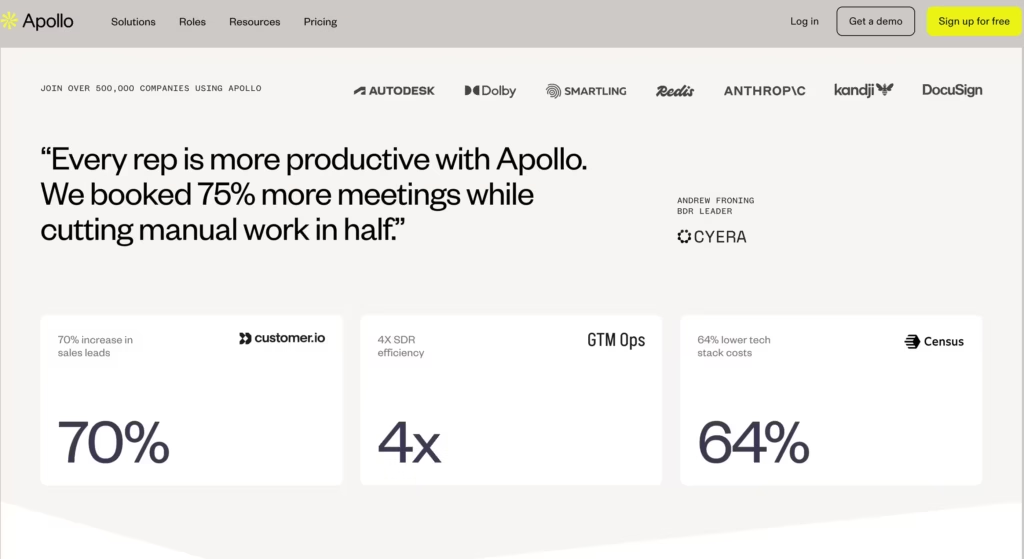
Apollo.io is one of the top AI sales tools that tries to be everything in one box, and it covers more ground than any other tool at this price point.
It packs a 210+ million contact database, email sequencing, a cloud-based dialer, buying intent signals, and AI-generated call summaries into a single platform that starts at $59/month per user.
For a startup, that’s a lot of firepower for not a lot of money.
For startups and small sales teams, Apollo offers a way to replace three or four separate tools. You can search for leads using 300+ filters (job title, company size, tech stack, hiring signals, funding rounds), enrich contact data, build automated email sequences, and even make calls without leaving the platform.
Apollo’s AI features include lead scoring, email sequence optimization, and call transcription with AI-generated summaries on Professional and Organization plans. The built-in email warmup and spam testing help protect sender reputation, which matters enormously for cold outreach.
That said, Apollo’s credit system is where the value proposition gets complicated. Credits expire at the end of each billing cycle. Mobile numbers cost 8x more than email addresses.
Pros: Massive contact database, genuinely all-in-one (data + outreach + dialer), very competitive pricing for the feature set, strong email deliverability tools.
Cons: Credit-based pricing can spike unpredictably. I exported a 200-contact list with mobile numbers and watched 1,600 credits vanish because mobiles cost 8x more than emails, which I hadn’t budgeted for.
Phone number accuracy is inconsistent for cold calling. LinkedIn automation requires manual execution (not truly automated). Data accuracy of ~65–70% means some leads will bounce. The credit system takes real effort to understand before you start spending.
6. Clari
Category: Revenue Forecasting & Pipeline Intelligence
Website: clari.com
Best For: CROs, VPs of Sales, and RevOps leaders at mid-market to enterprise companies
Starting Price: Custom
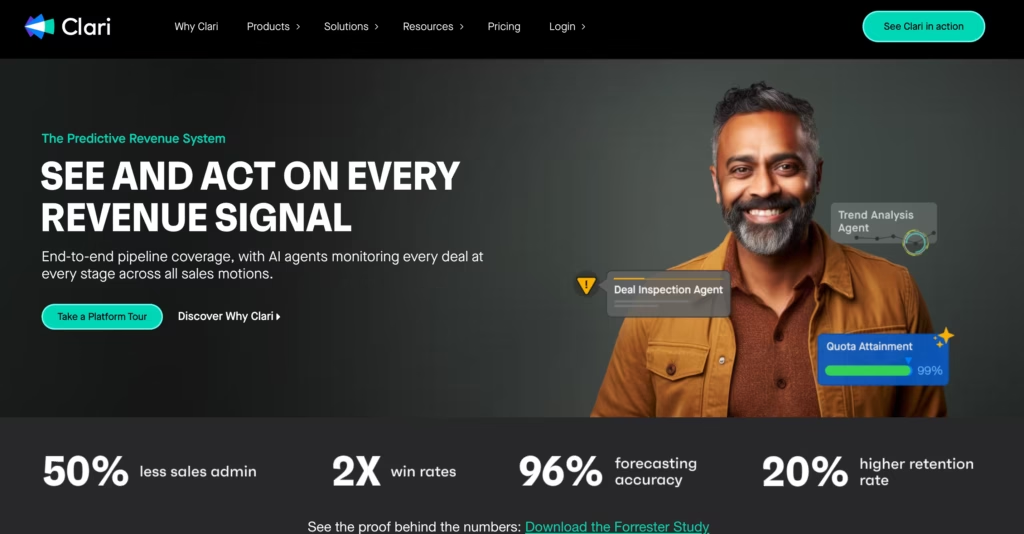
If you’ve ever sat in a Monday forecast call where every rep gives a different number and nobody trusts any of them, Clari was built for you.
It’s one of the top AI sales tools and the command center for revenue teams that need forecasting they can actually defend in a boardroom.
The platform connects to your CRM (primarily Salesforce), pulls in email, calendar, and call data, then uses AI to show you what your pipeline really looks like, deal by deal, rep by rep, region by region.
What Clari does better than almost anything else is enforce forecasting discipline.
Instead of relying on reps’ gut feelings entered into spreadsheets, Clari’s AI scores deals, predicts slippage, and flags risks before they become misses.
And the platform now manages over $5 trillion in revenue across its customer base, according to its website.
The platform is modular. Clari Core handles forecasting and pipeline inspection. Clari Copilot (formerly Wingman, acquired in 2022) adds conversation intelligence. Groove by Clari provides sales engagement and email/call cadences. You can buy just one module or the full stack.
Pros: The most accurate revenue forecasting tool I’ve seen for enterprise, automated pipeline roll-ups, deep Salesforce integration, modular architecture (buy only what you need), recognized by Gartner as a category leader.
Cons: Management-facing tool. During my demo, I noticed the rep-facing views felt cluttered and unintuitive compared to the clean executive dashboards. Reps I spoke to at two companies using Clari confirmed they mostly ignore it and let their managers handle the forecasting views.
7. Amplemarket
Category: AI-Native Multichannel Sales Engagement
Website: amplemarket.com
Best For: Sales teams that want a single AI-driven platform for prospecting and multichannel outreach (email, LinkedIn, phone, WhatsApp)
Starting Price: $600+/month
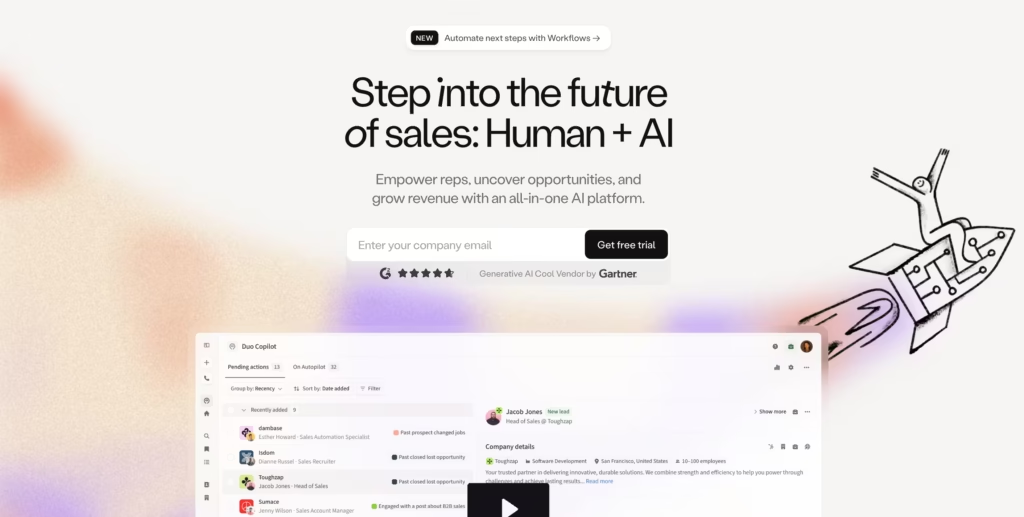
Amplemarket is the platform for teams that want AI to handle the entire outbound loop, from detecting buying signals to researching prospects to writing and sending personalized sequences across email, LinkedIn, phone, and even WhatsApp.
In a 231-feature benchmark test published on its own blog in early 2026, Amplemarket scored 219 out of 231 (94.8%), outperforming Outreach, SalesLoft, Instantly, HeyReach, and Reply.io across multichannel engagement, deliverability, AI capabilities, and data quality.
The platform’s Duo system deploys three AI agents – Signal (detects buying intent), Research (gathers prospect context), and Sequence (writes and sends personalized outreach).
Amplemarket is the only platform in the benchmark that supports WhatsApp messaging, AI voice calls, and a parallel dialer alongside standard email and LinkedIn sequences.
For teams that want to consolidate five or six point solutions into one AI-driven platform, Amplemarket is compelling. The tradeoff is price, this is firmly enterprise territory.
Pros: Top scorer in its own published multichannel benchmark (methodology is transparent), AI agents that handle prospecting end to end, supports 7+ outreach channels including WhatsApp and AI voice, built-in deliverability management, strong data layer.
Cons: Premium pricing puts it out of reach for small teams. Relatively newer brand compared to Outreach or SalesLoft. Limited public pricing transparency, requires a sales conversation.
8. Copy.ai
Category: AI Content Generation for Sales & GTM Teams
Website: copy.ai
Best For: Sales and marketing teams that need to generate outbound messaging, call scripts, LinkedIn posts, and sales collateral at scale
Pricing: $29/month
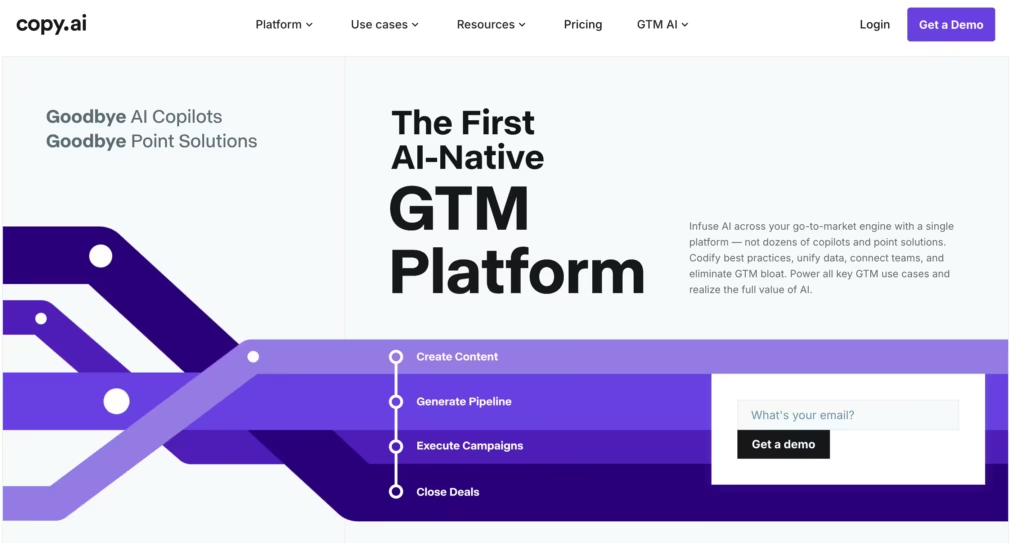
While Lavender coaches you on individual emails, Copy.ai takes a broader approach to AI-generated sales content. It helps teams create outbound email sequences, LinkedIn messages, call scripts, follow-up templates, blog posts, and ad copy, all from a single platform.
Copy.ai’s GTM AI workflows let you build automated pipelines where AI researches a prospect, drafts a personalized email, generates a LinkedIn connection message, and creates a follow-up sequence – triggered by a single input like a company URL or CRM record.
The platform supports team collaboration with shared templates, brand voice settings, and workflow libraries. For teams that create a high volume of outbound content across channels, Copy.ai acts as a force multiplier – reducing the time from research to finished message from minutes to seconds.
Pros: Versatile content generation across channels (not just email), GTM workflow automation, brand voice customization, team collaboration features, 2,000+ integrations including Salesforce and HubSpot.
Cons: Generates drafts, not finished products – when I tested Copy.ai on a batch of 20 cold emails, about half needed significant rewriting because the AI defaulted to generic “hope you’re doing well” openers that would’ve killed my reply rate.
Doesn’t score or coach emails like Lavender does. No built-in sending or sequencing. Quality varies directly with how specific your prompts are.
Comparison Table
| Tool | Category | Starting Price | Best Channel | CRM Integration |
| HeyReach | LinkedIn Automation | $79/mo/sender | HubSpot, Pipedrive | |
| Clay | Data Enrichment | $185/mo | N/A (data layer) | Salesforce, HubSpot (Growth) |
| Lavender | Email Coaching | $29/mo | Salesforce, HubSpot | |
| Gong | Conversation Intelligence | Custom | Calls | Salesforce, HubSpot |
| Apollo.io | All-in-One Intelligence | $59/mo/user | Email + Phone | Salesforce, HubSpot |
| Clari | Revenue Forecasting | Custom | N/A (pipeline) | Salesforce |
| Amplemarket | Multichannel Engagement | ~$600+/mo | Email + LinkedIn + Phone + WhatsApp | Salesforce, HubSpot |
| Copy.ai | Sales Content Generation | $29/mo | All (content layer) | Via workflows |
How Do You Pick the Right AI Sales Tools for Your Team?
- Measure before you buy. Track where your team’s hours actually go for two weeks. The biggest time sink tells you which category of tool to start with, not which brand looks best on a demo.
- Check integration compatibility. A tool that doesn’t talk to your CRM or sequencer creates more work, not less.
- Start with one tool, not five. Deploy it, measure the impact over 30–60 days, then layer the next one in.
- Calculate total cost of ownership. Credit-based pricing (Clay, Apollo) can surprise you. Factor in add-ons, seat licenses, failed lookup charges, and complementary tools you’ll also need.
- Use free tiers and trials first. HeyReach, Clay, Lavender, and Apollo all offer free options or trials. Copy.ai has a limited free plan. Gong, Clari, and Amplemarket require sales conversations but will typically provide demos.
If I were building a 5-person SDR team from scratch today, I’d start with Apollo for the first six months before layering in Clay. The all-in-one approach matters more than best-in-class data enrichment when you’re still figuring out your ICP and ideal messaging.
Once you know who you’re selling to and what resonates, that’s when you invest in specialized tools.
FAQs
1. What is the best AI sales tool for small teams on a tight budget?
Apollo.io offers the most features per dollar with its free tier and $59/month Basic plan. Lavender at $29/month is the best value for email-focused teams. Both deliver immediate results without enterprise pricing.
2. Do AI sales tools actually replace salespeople?
No. They handle repetitive tasks – data entry, lead research, email drafting, CRM updates, call note-taking – so reps can focus on conversations and closing. Every tool on this list still requires human judgment and oversight.
3. Can I use Clay and HeyReach together?
Yes, and many teams do. Clay enriches and scores leads, then pushes that data directly into HeyReach for automated LinkedIn outreach. The two platforms integrate natively.
4. What’s the difference between Clay and Apollo.io?
Clay is a data enrichment platform, it makes your lead data better using 100+ providers. Apollo is an all-in-one platform, it finds leads, enriches them, and lets you reach out via email and phone. Clay goes deeper on data quality; Apollo goes wider by combining data with built-in outreach tools. Some teams use both.
5. Are AI sales tools safe to use with LinkedIn?
Cloud-based tools like HeyReach are generally safer than browser extensions because they don’t modify LinkedIn’s interface directly. But any automation carries risk. Use daily sending limits, warm up new accounts gradually, and always personalize your messages.
