
AI fitness apps build your workout, adjust it when you stall, and track recovery data that a paper logbook never could.
The best ones replace a $150/month personal trainer with a $7-$16/month subscription.
The worst ones slap “AI” on a static workout library and charge you for the label.
The difference comes down to what the app actually reads about you.
I tested nine apps over six weeks, rotating through strength blocks, running phases, and recovery weeks, and the single biggest predictor of useful output was data depth.
Apps that only read an intake questionnaire generated generic plans indistinguishable from a PDF template.
Apps that read my logged sets, heart rate variability, and sleep data produced workouts that actually responded to how my body was recovering.
The AI fitness market hit $13 billion in 2025 and is growing at 20.6% annually, part of a broader AI revolution in fitness that extends beyond apps into wearables and connected equipment. 49% of consumers now use AI fitness apps daily.
But 55% still worry about data privacy, and only 2% of Boomers fully trust these tools. The gap between what the technology can do and what most people are comfortable with is still wide.
Here is what each app actually does well, where it falls short, and who should use it.
1. Freeletics
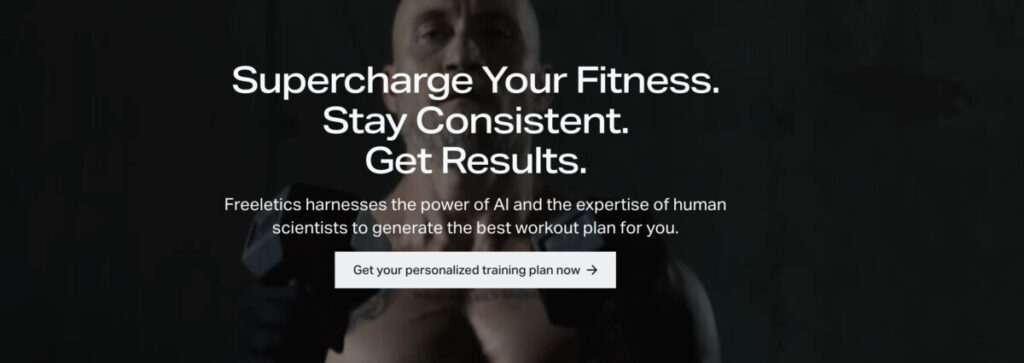
Freeletics made its name on bodyweight training, and that is still where it performs best.
The AI Coach builds sessions from a library of equipment-free movements – burpees, pistol squats, muscle-ups – and adjusts intensity based on post-workout feedback.
After every session, you rate difficulty and energy levels. The AI recalibrates your next workout based on those responses.
The feedback loop works. I ran a four-week bodyweight block using Freeletics exclusively, and the difficulty curve matched my recovery better than I expected from a system that relies on self-reported data rather than biometrics.
The app also includes running plans and basic mindfulness content, making it a reasonable all-in-one for someone who does not want separate apps for cardio and strength.
Where it breaks down: after three to four months, the workout pool starts repeating. The bodyweight exercise library is inherently smaller than a gym-based one, and you start recognizing the same circuits in different sequences.
Barbell and dumbbell programming exists but feels like an afterthought – if strength training with equipment is the priority, Fitbod or Alpha Progression does it better.
Price: $49.99 for three months, $94.99/year, or $549.99 lifetime. The free tier gives you 34 fixed workouts – enough to test the interface but none of the AI coaching.
2. MyFitnessPal
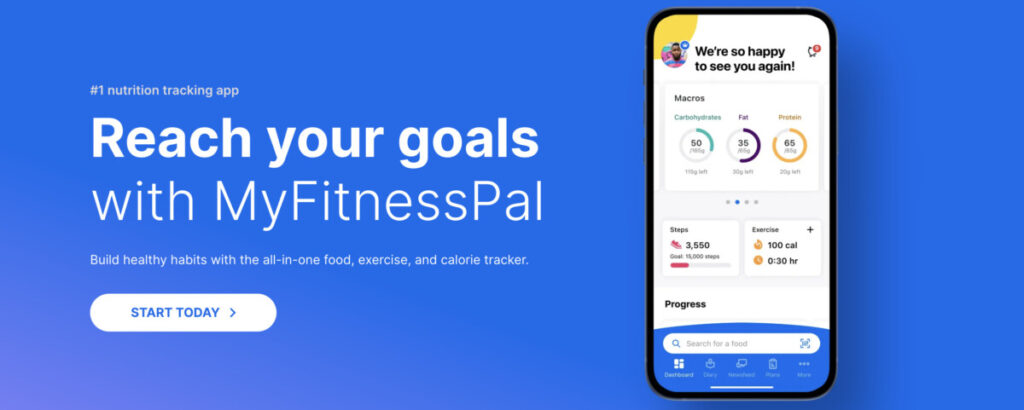
MyFitnessPal is on this list because it remains the largest food database in the fitness app ecosystem –over 14 million foods, verified by a combination of crowdsourced entries and barcode scanning.
For calorie and macro tracking, nothing else comes close to its coverage.
But the AI story here has gotten complicated.
In May 2026, MyFitnessPal moved three previously free features behind its paywall: Scan-a-Meal (photo-based food logging), recipe URL import, and per-meal macro breakdowns.
Within 48 hours, the App Store rating dropped from 4.6 to 4.2 stars. Free users now get manual logging, barcode scanning, and exercise tracking – which is still useful, but the photo-logging feature was the closest thing MyFitnessPal had to genuine AI functionality.
The paid tier adds AI-driven insights on eating patterns and nutrient gaps.
These are useful for identifying blind spots – I discovered I was consistently under-eating protein on rest days, a pattern I had not noticed in months of manual tracking.
For pure nutrition tracking, MyFitnessPal is still the most comprehensive option.
But at $19.99/month or $79.99/year for premium, it is hard not to notice that competitors like PlateLens offer photo logging on their free tier for $34.99/year.
Price: Free (limited); Premium $19.99/month or $79.99/year.
3. Fitbod
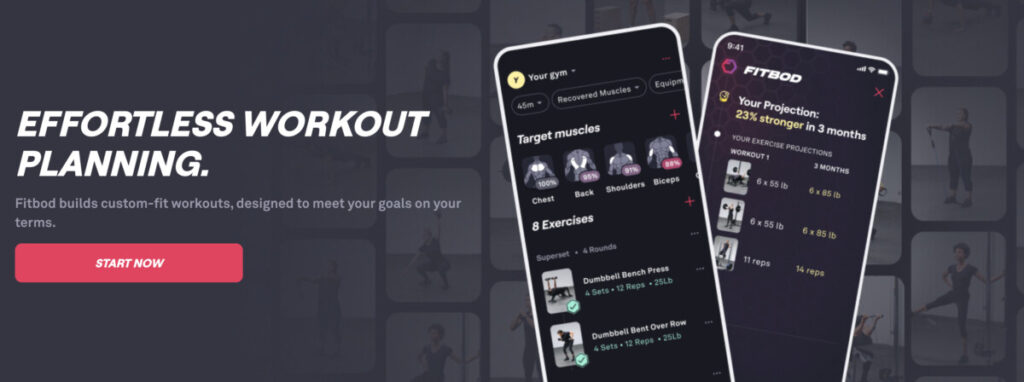
Fitbod is the default recommendation for gym lifters who want their next session generated automatically.
The app uses rules-based machine learning on your logged workout history – every set, rep, and weight you record feeds its model of your current capacity.
After a few weeks of consistent logging, the recommendations sharpen noticeably. Before that, they are generic enough to be disappointing.
The standout feature is plate-math accuracy. Fitbod rounds suggested weights to actual plate combinations and accounts for bar weight, which sounds trivial until you have used an app that tells you to load 67.5 pounds on a barbell.
The exercise library runs 1,600+ movements, each with video demonstrations that are consistently higher quality than competitors.
Logging is frictionless. Supersets, drop sets, AMRAP finishers — the interface handles all of them without the clumsy workarounds most trackers force on you.
But Fitbod does not see anything outside the gym.
It ignores HRV, sleep quality, and readiness data from wearables. If you slept four hours and your resting heart rate is elevated, Fitbod will still prescribe the heavy squat session it had planned.
There is no conversational coaching – it prescribes workouts without explaining why it made a particular choice, which makes it hard to learn from the programming.
Price: $15.99/month or $95.99/year. No permanent free tier — a 7-day trial requires a credit card and auto-renews.
4.Juggernaut AI
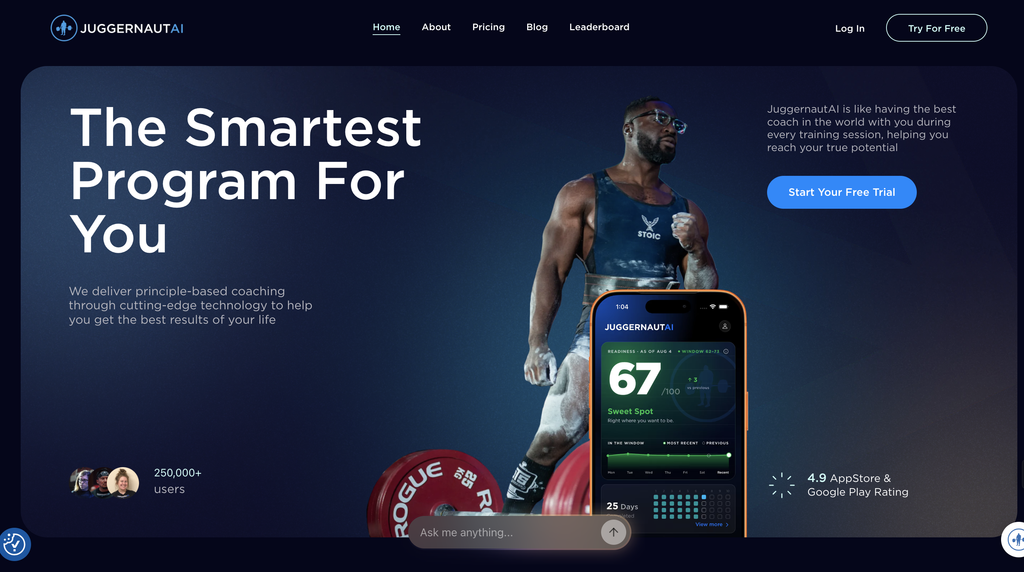
If your training revolves around the squat, bench press, and deadlift, Juggernaut AI is the most specialized tool on this list.
It programs structured periodization for powerlifting -planned progressions, programmed deloads, fatigue management – using a methodology from Dr. Mike Israetel and Chad Wesley Smith that has decades of competitive lifting behind it.
The AI adjusts your training max based on how sets go.
Hit every rep cleanly at a prescribed RPE? The system nudges the weight up. Grind through a set that should have been smooth? It dials back. This is evidence-based programming that you would normally get from a high-level strength coach charging $200+/month.
The catch is that Juggernaut AI does one thing. No wearable integration, no cardio programming, no nutrition features, no general fitness.
If you are not specifically training the competition lifts, this app has nothing for you. And at $34.99/month, it is one of the most expensive options – justified only if powerlifting programming is what you need.
Price: $34.99/month. No free tier.
5. Future
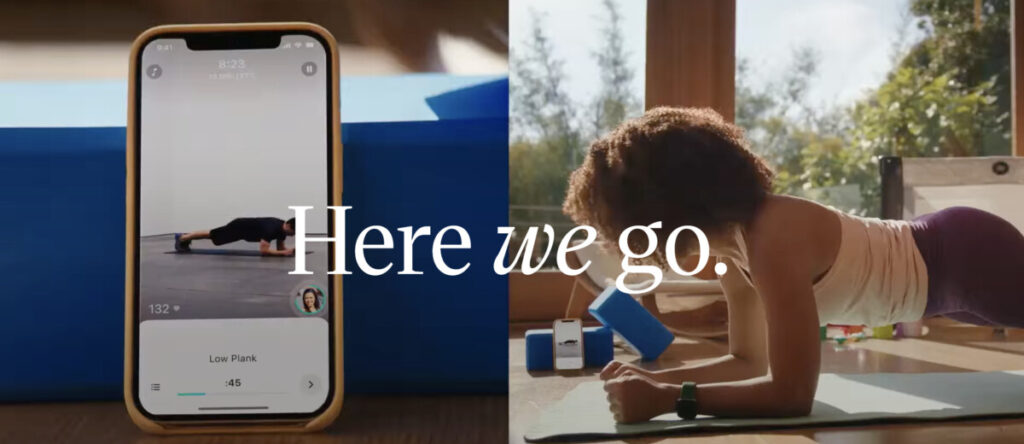
Future occupies a different price bracket and a different philosophy.
You are paying $199/month for a real human coach who builds your program, adjusts it weekly, reviews your form via video, and messages you in the app.
The AI here is a coach-side tool – it helps the trainer write programs faster, but the member-facing experience is entirely human.
Is it worth 10-25x what the other apps on this list cost? For a specific type of person, yes.
Someone recovering from injury who needs a qualified eye on their form. Someone who has never trained and needs accountability that a push notification cannot provide.
Someone whose schedule changes weekly and needs a human to rebuild the plan every Monday.
Future cancelled its free AI coaching beta in June 2026 to concentrate on human trainers, which tells you where the company thinks the value is.
For everyone else, the math is hard to justify when $7-$16/month gets you adaptive AI programming that actually adjusts to your data.
Price: $199/month ($149/month on annual prepayment). US-only. 30-day refund window.
6. Alpha Progression
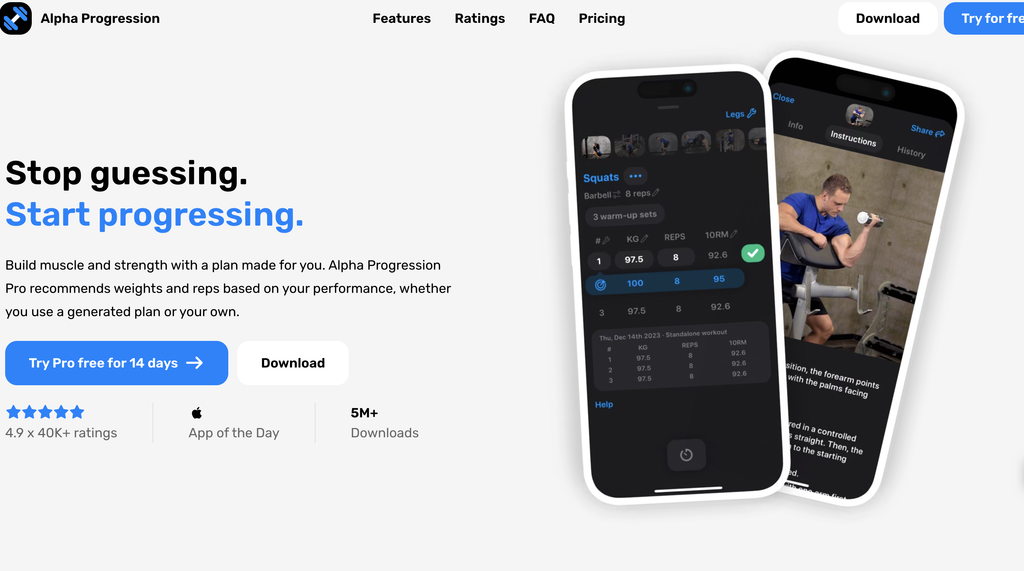
Alpha Progression carries the highest App Store rating on this list (4.9 stars) and earns it by doing hypertrophy-focused programming well at a reasonable price.
The app plans cycled progressions with scheduled deloads, tracks volume by muscle group, and adjusts based on your logged performance.
The 400+ exercise database covers most gym movements, and the interface is cleaner than Fitbod’s for users who prefer to see their training organized by muscle group rather than movement pattern.
For bodybuilding-style training – high volume, progressive overload, structured splits – Alpha Progression is a strong match.
What it lacks: no conversational interface, no recovery signal integration, and no real-time adjustments.
It reads your logged data and programs accordingly, but if your HRV tanked overnight or you are coming off a bad night of sleep, you are on your own to decide whether to modify the session.
Price: $12.99/month or $79.99/year.
7. Sweat App
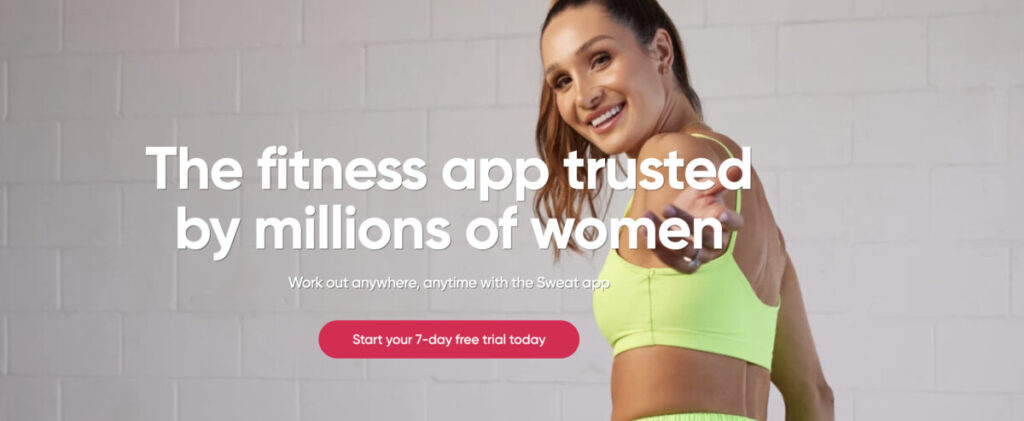
Sweat – built by Kayla Itsines, bought by iFit for $300 million in 2021, then bought back by Itsines and Tobi Pearce in 2023 – serves a specific audience well: women who want structured, trainer-designed programs across strength, HIIT, yoga, and postnatal training.
The app carries 60+ programs with over 13,000 workouts and 30 million downloads.
What Sweat does not have is meaningful AI. Programs are pre-designed by trainers and follow a fixed weekly structure.
There is no adaptive coaching, no biometric integration beyond basic Apple Health syncing, and no recovery-aware programming. You pick a program, follow it, and progress through the weeks as designed.
I am including it because the execution quality is high and the programs are well-structured for their target audience. But calling Sweat an “AI fitness app” would be inaccurate. It is a premium digital training program with excellent production values.
Price: $24.99/month or $134.99/year.
How to Pick the Right One
The AI in these apps ranges from “asks you five questions and generates a static plan” to “reads your sleep, HRV, and resting heart rate to decide whether today should be heavy or light.”
That range matters more than feature lists.
One framework that is useful for evaluating AI depth, developed by SensAI, breaks fitness AI into three tiers:
Tier 1 apps use a one-time intake questionnaire. They generate a plan based on your stated goals and fitness level but never update based on what actually happens in your sessions. This is a PDF with extra steps.
Tier 2 apps read your logged performance data – sets, reps, weights, completion rates – and adjust programming based on trends. Fitbod, Alpha Progression, Juggernaut AI, and Freeletics operate here.
Your workouts improve as the app accumulates data about your actual performance.
Tier 3 apps integrate wearable recovery signals – HRV, sleep quality, resting heart rate – to make decisions about training load before you start the session. This is where the field is heading, but very few apps do it well today.
If you are picking between these apps, start with the type of training you actually do:
Gym strength training: Fitbod ($15.99/month) for general lifting, Juggernaut AI ($34.99/month) for competitive powerlifting.
Bodyweight and HIIT without equipment: Freeletics ($94.99/year).
Nutrition tracking alongside training: MyFitnessPal (free for basics, $79.99/year for AI features).
Human coaching with AI-assisted programming: Future ($199/month), but only if the budget justifies the accountability.
Women-focused structured programs: Sweat ($134.99/year), with the caveat that the “AI” label is generous.
FAQs
1. Can AI fitness apps actually replace a personal trainer?
For workout programming, the best apps produce plans comparable to what a mid-tier personal trainer would write – and they adapt faster because they process your data after every session.
Where they fall short is form correction, injury prevention, and accountability. An app cannot spot that your left knee caves during squats or that your grip shifts on heavy deadlifts.
If you are a beginner learning movement patterns or recovering from injury, a human trainer (even temporarily) is worth the investment. Once you know how to perform the movements safely, an AI app can handle the programming.
2. Which AI fitness app is best for beginners?
Freeletics for bodyweight training (no equipment needed, adaptive difficulty). Fitbod for gym-based strength training (clear exercise demonstrations, automatic weight suggestions). Avoid jumping straight to specialized apps like Juggernaut AI – they assume you already know the movements and have specific competition goals.
3. Do AI fitness apps work without a smartwatch?
Yes. All the apps on this list function without a wearable – you can log workouts manually and get adaptive programming based on your performance data alone. A smartwatch adds recovery context (HRV, sleep, resting heart rate) that makes the AI’s recommendations more informed, but it is not required for the core functionality.
4. Are AI fitness apps safe?
The workout programming is generally safe for healthy adults who know basic exercise form. The risk is that apps cannot detect compensatory movement patterns or pre-injury signals the way an experienced trainer can.
If something hurts during a prescribed exercise, stop – the app will not know until you tell it. Apps with wearable integration have a marginal safety advantage because they can flag unusual heart rate patterns during exercise.
