The era of the slow launch is dead. The business world is splitting in two. On one side, you have companies stuck in the mud of burning weeks chasing freelancers and stitching together scattered files. On the other hand, a new wave of founders is deploying fully realized brands in a single afternoon.
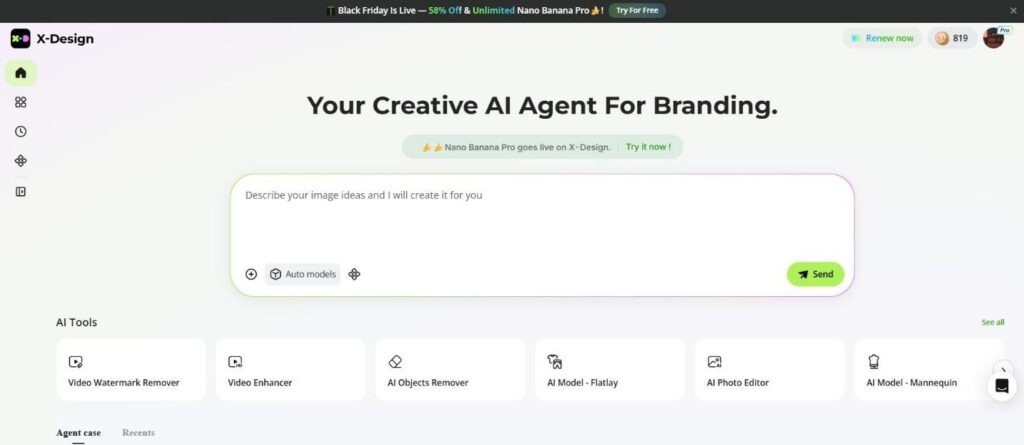
They aren’t better designers; they just have better weapons. This gap is widening fast as we shift from passive tools to active agents. X-Design sits right at the center, acting less like a standard app and more like the operational partner you need to actually compete.
Why the Blank Canvas Slows Down Most Brands?
For years, the industry standard for design software was the blank canvas. It was the ultimate symbol of creative freedom, but for the average business owner, it was a trap. A blank canvas demands expertise. Miss the mark on kerning or color theory, and your brand looks amateur. In a saturated market, “homemade” is a death sentence. Customers judge your credibility in a split second. This is where the agent flips the script.
X-Design removes the burden of creation from the user. It operates on a semantic level. You do not push pixels; you explain intent. When a user engages the system, they are not asked to choose a brush size. They are asked to define their business. The agent translates your raw inputs—audience, vibe, market—into a cohesive identity. It’s the difference between DIY construction and hiring an architect. One risks collapse; the other is engineered to last.
You Need a Complete Branding, Not Just a Logo
Most founders enter the market looking for a quick fix. They search for a basic AI logo generator, hoping to tick a box and move on. This is a mistake. A logo in isolation is useless; it needs to live within a context. It needs to work on a dark mode mobile screen, a printed cardboard box, and a high-definition billboard. The X-Design agent understands this interconnectedness. It doesn’t just hand you a symbol; it builds a “Brand Kit.” This kit is the key to production for all your content.
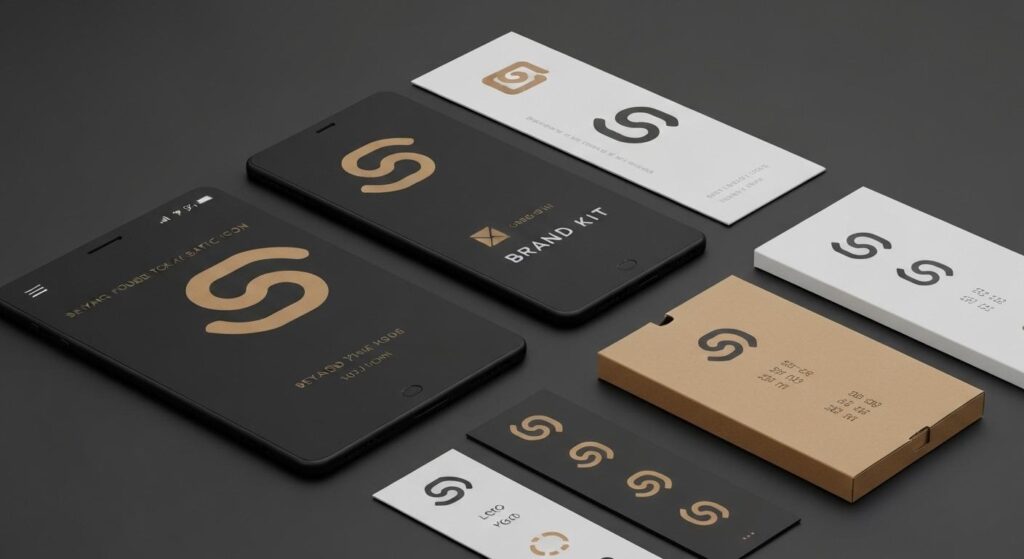
A business owner often has raw assets that are less than perfect—a grainy photo of a storefront or a dimly lit product shot. In the old workflow, these assets would be unusable. Today, the agent utilizes tools comparable to an HD photo converter to upscale, refine, and integrate these rough inputs into the polished brand system. It enforces strict consistency, grading every photo to match your logo so nothing cheapens the brand.
Chat With X-Design To Create Your Design
The interface of X-Design is perhaps its most disruptive feature because it mimics a human relationship. Traditional software relies on menus and toolbars. You have to know where the “opacity” slider is. This agent relies on language. The feedback loop is conversational. If the generated design feels too cold, the user simply types, “Make it feel warmer and more inviting.” The agent interprets this abstract request and adjusts the color temperature and font roundness accordingly.
It translates your raw vibe into technical reality, letting you play creative director without the jargon.
How X-Design Keeps Consistency To Build Brand Identity?
The hardest part of branding is not launching; it is maintaining. Brand drift is the silent killer of small businesses. It happens slowly. You create a flyer in Canva that doesn’t quite match the website. You post an Instagram story with the wrong font. Over six months, the visual identity fractures. Customers stop recognizing the brand instantly.
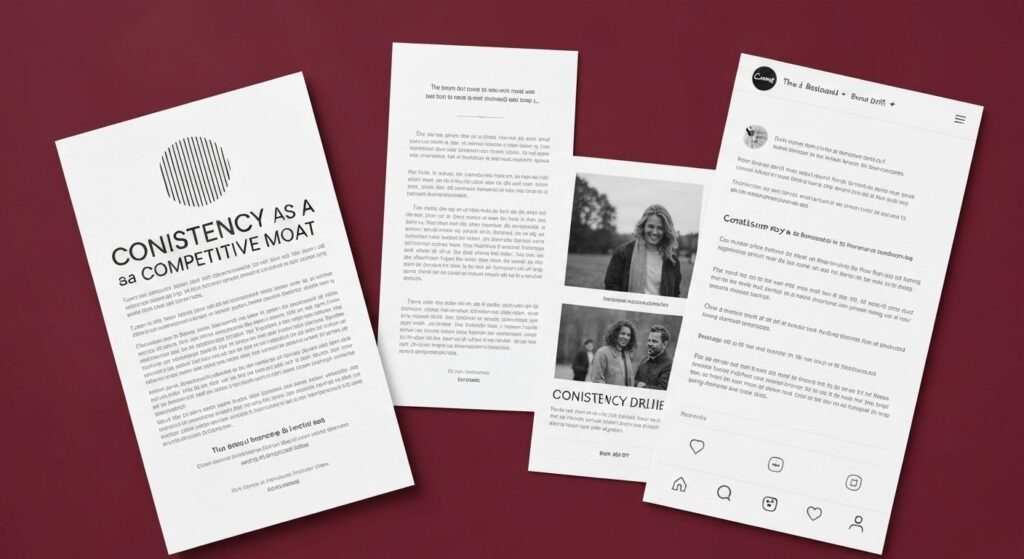
The X-Design agent prevents this by acting as a rigid brand guardian. Once the Brand Kit is established, the agent enforces the rules. When you ask it to generate a social media post, it automatically pulls the correct hex codes and typography. It ensures that the logo has the correct padding. It applies the approved photo filters. This consistency builds trust. It makes a small operation look like a multinational corporation. The agent doesn’t get tired, it doesn’t get lazy, and it doesn’t decide to “try something new” just for the sake of it.
Upgrading Raw Photos Into Usable Brand Assets
We live in a visual economy where photography often does the heavy lifting. For e-commerce, the product photo is the product. If the lighting is bad, the product is bad. Historically, getting “studio quality” shots meant renting a studio. X-Design has integrated a generative photography engine that renders this physical expense obsolete.
The system allows users to recontextualize their products. It creates a library of high-value assets from zero budget. It solves the content volume problem that plagues social media managers.
Test Your Design With X-Design 3D Mockups
One of the biggest anxieties for new business owners is the transition from screen to print. Designs that look crisp on a monitor can turn into a muddy mess on a tote bag. X-Design’s mockup engine runs a hard reality check, plastering your logo onto 3D cups, signs, and vans. It’s not a gimmick; it’s a stress test to ensure your brand survives the physical world.
It helps you catch errors before they become expensive mistakes. You can see that your tagline is too long for the side of a pen. You can see that your yellow logo disappears on a white t-shirt.
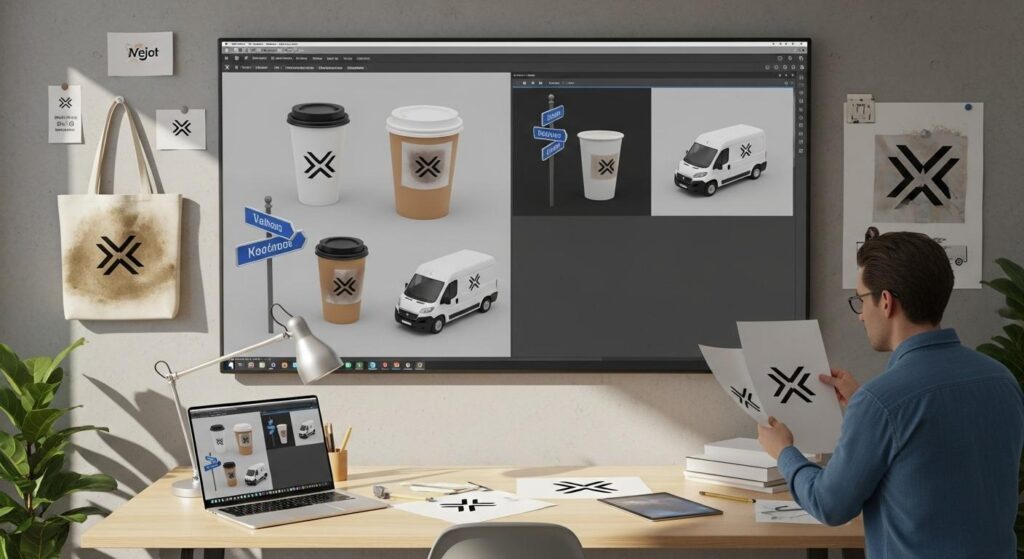
Furthermore, the system handles the technical translation. Print shops require specific file formats—usually vectors like SVG or PDF—to ensure crisp lines. JPEGs pixelate when resized. Many simplified design tools hide these formats behind paywalls or don’t offer them at all. X-Design provides production-ready files by default. It bridges the gap between the digital dream and the physical reality, ensuring that the business owner looks professional when handing off assets to a vendor.
How X-Design Is Helping Businesses Build Perfect Brands?
There is a pervasive fear that using AI means losing control—that the machine will spit out a generic result that you are stuck with. X-Design addresses this by maintaining a layered, editable environment.
Every asset generated is fully editable. If the agent creates a layout that is 90% perfect, the user can step in and tweak the final 10%. This hybrid workflow is the future of creative work. It leverages the computational power of the agent for speed and structure while reserving the nuance and taste for the human operator. It creates a collaboration where the user acts as the editor-in-chief, directing the vast resources of the software to achieve a specific vision.
Takeaway
The market isn’t affected, no matter how hard you worked. It only judges the result. Businesses switching to agent-based workflows are already lapping the competition—launching campaigns in hours and nailing studio-quality visuals for free.
X-Design packs the entire expensive agency experience into a simple conversation. The danger isn’t that the tech will fail you. The danger is that your competitors are already using it to make your brand look invisible. The speed is sitting right there. The only question is why you haven’t grabbed it yet.