
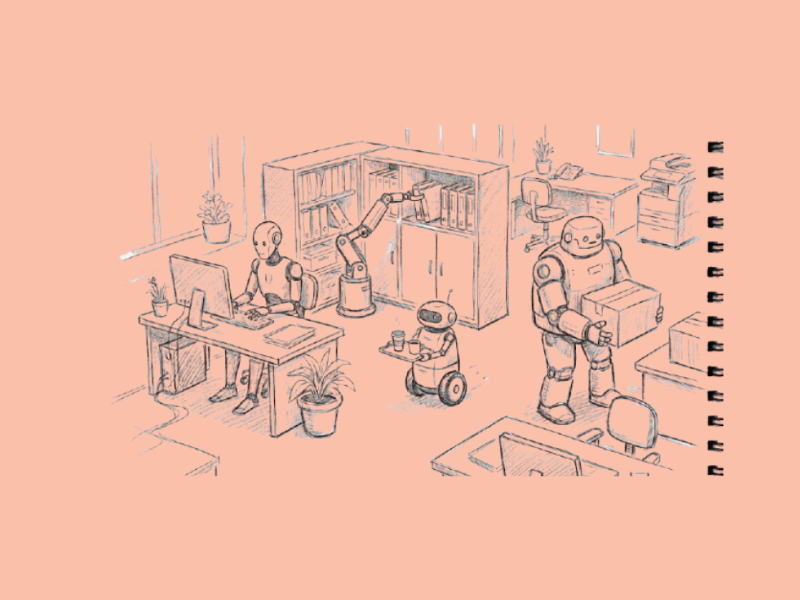

Concerns about AI and its impact on jobs remain. The reason is not far-fetched; AI is developing at an even faster rate.
Updates and new releases promise automation, efficiency, and cost savings. Recent evidence suggests these concerns are not misplaced.
Researchers, investors, and employers now point to 2026 as a key year for workforce change.
Automation
AI is already embedded in daily business operations. A November study from MIT found that 11.7% of jobs could already be automated using current AI technology.
This finding explains why workers feel uneasy. At the same time, surveys show companies are eliminating entry-level roles.
Employers increasingly rely on AI to complete basic tasks. And in several cases, companies have cited AI directly as a reason for layoffs.
As AI adoption deepens, companies may reassess how many employees they truly need.
Unprompted Concerns
A recent TechCrunch survey of enterprise venture capitalists revealed that several investors independently raised concerns about AI and labor.
Notably, the survey did not specifically ask about workforce impacts. This unsolicited focus suggests some concern within the investment community.
Eric Bahn, co-founder and general partner at Hustle Fund, said he expects labor effects to emerge in 2026. However, he remains uncertain about the outcome.
Bahn believes repetitive roles face some risk. Yet he also sees potential automation in more complex positions.
As AI handles logic and decision-making more effectively, fewer roles may remain untouched.
He posed critical questions. Will AI lead to widespread layoffs? Will it boost productivity instead? Or will it serve as a tool that augments existing workers?
For now, these questions remain unanswered. Still, Bahn believes a significant shift is coming.
Shrinking Budgets
Several investors expect AI budgets to rise sharply in 2026. However, that growth may come at a cost.
Marell Evans, founder and managing partner at Exceptional Capital, predicts companies will redirect funds from labor to AI.
In her view, increased AI investment will reduce hiring and staffing budgets. Evans expects layoffs to continue aggressively.
She also warned that these cuts could impact the U.S. employment rate. Rajeev Dham, managing director at Sapphire, shared a similar outlook.
He expects 2026 budgets to reflect a clear shift. More resources will flow to AI systems. Less money will go toward human labor.
Also read: Top Places to Find AI Remote Jobs in 2025
Workforce Replacement

Some investors believe AI will evolve beyond productivity support. Jason Mendel, venture investor at Battery Ventures, expects 2026 to mark a turning point.
He believes AI agents will become more common across enterprises. These agents can complete tasks without constant human input. They plan, execute, and adapt.
Mendel said AI will move from helping workers to automating work itself. In some areas, this will fulfill the long-discussed promise of labor displacement.
As a result, entire functions may require fewer employees.
A Convenient Scapegoat
Not all workforce reductions will stem directly from AI. Antonia Dean, partner at Black Operator Ventures, warned that AI may be used as an explanation rather than a cause.
She believes some companies will point to AI investments to justify cuts elsewhere.
In reality, those reductions may reflect past strategic mistakes. AI, however, offers a modern and appealing narrative.
Dean noted that even companies not ready to deploy AI effectively may still cite it when trimming workforces. This practice makes it harder to assess AI’s true impact.
The Debate
AI companies often argue their tools do not eliminate jobs. Instead, they claim AI automates repetitive tasks. This, they say, allows workers to focus on deeper, higher-skilled work.
Supporters argue that AI removes busy work while humans retain creative and strategic roles.
However, many workers and investors remain skeptical. Entry-level roles often include repetitive tasks.
When those tasks disappear, so do opportunities to gain experience. This concern weighs heavily on younger workers and new graduates.
Worker Anxiety
Despite reassurances, fear around automation remains strong. Workers see roles disappearing; they see hiring slowdowns, and they hear executives cite AI as justification.
According to investors who closely follow the sector, these fears will not ease in 2026. If anything, they may intensify as AI capabilities expand.
