
The 2026 F1 season is set to be one of the most intriguing for years, with new rules that change the way the teams compete. With significant changes that need to be implemented seamlessly in a high-stakes environment, it’s no wonder that AI is being used to make it go as smoothly as possible. How will this affect our predictions for the upcoming season?
The Impact of These Changes
How will these changes affect the results of the next races, and how can fans start wagering on these events? If we look at theScore bet daily offers today, we can see how to start wagering online on a variety of sports. The sign-up bonus for new users gives access to free bets across a variety of sports, including motorsports, baseball, and football. Before placing a bet, you’ll want to take into account the effect of each team’s use of AI to meet this challenge.
At the time of writing, the three favorites for the 2026 championship are George Russell, Max Verstappen, and Lando Norris. However, as the season-opener in Australia gets closer, we can expect to get a clearer idea of which teams have made the smoothest transition to the new rules and should be classed as the favorites in the season’s first races.
The use of AI in making these changes will prove to be crucial, since the teams that do it best will massively boost their chances of success.
The Active Aerodynamics Challenge
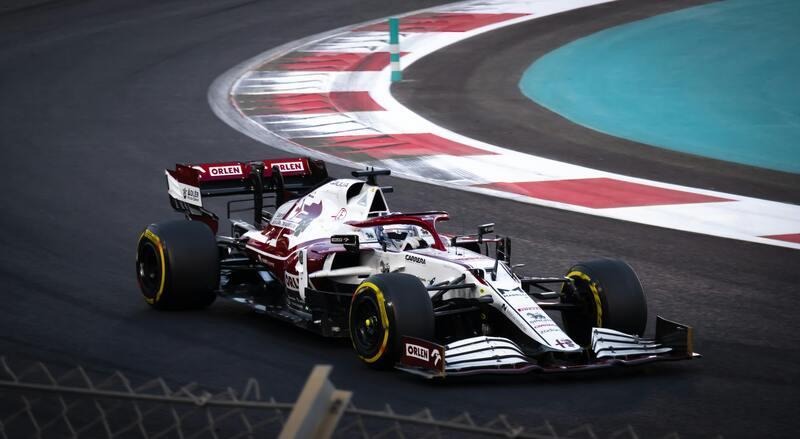
The traditional drag reduction system is being overhauled with a new active approach to aerodynamics. Drivers now need to switch between two distinct modes. Z-mode gives a high amount of downforce and is used to generate sufficient downforce for corners. X-mode is the method of achieving low drag and is used during straights.
The problem is that team engineers now need to design cars with two very different types of aerodynamics. One of the huge advantages of AI is that it can now test thousands of designs in the time that it used to take to test just a few. In this way, AI surrogate models are used to augment high-fidelity Computational Fluid Dynamics (CFD) as a way of making the design process slicker and less expensive.
AI is also used to create a huge variety of new shapes that meet the downforce requirements, potentially hitting the perfect formula that human engineers might never discover on their own. Finally, AI models are needed to make the transition between both modes smooth and balanced. The McLaren team has already pointed out some additional changes that it feels are necessary, so this area is subject to further changes.
The 50/50 Energy Calculations
Energy management is going to be one of the most crucial aspects of F1 races in 2026. This is due to the new split between electrical power and an internal combustion engine that has split opinion among the drivers, according to this BBC article. It’s meant to give a more sustainable approach that’s relevant to F1 as well as on-road vehicles, but it’s also led to some major technical challenges for the teams.
The total power output of each vehicle is to remain at about 1,000 hp. The big difference is in the way that this level is achieved. It’s now almost 50/50 between fossil fuels and electric power, which is good news for the planet, but finding the right way to get this balance is proving to be one of the key factors that will help determine which team succeeds this year.
The MGU-H (Motor Generator Unit – Heat) has also been banned from this season onwards. This is an advanced piece of technology that works to recover part of the energy lost from exhaust gases. Yet, its huge cost and the fact that it’s not relevant to road cars meant that it has been removed from the list of allowed tech.
How have the car makers dealt with these changes? The most notable visual change is the loss of the flapping rear wing, known as the DRS. This has been replaced by an overtake mode that is a type of push-to-pass system based on electrical power management.
There are many details for the pilots to get to grips with, but AI has been widely used to help them use the new technology. AI models are used in driving simulators, known as digital twins, to let them understand how the new cars drive differently from below. The simulators are updated constantly to make them feel exactly like the real vehicles.
AI has also been deployed to create a vast number of scenarios showing the different situations in which the switch to the 350kw of electrical power should be made so that the pilots know when to do this efficiently. AI is also used to improve thermal management and sustainable fuel optimization.