

As ATO attacks become more automated and harder to detect, choosing the right solution depends less on feature lists and more on understanding where your organization is most exposed.
What is account takeover (ATO)?
Account takeover (ATO) refers to a type of cyberattack where an unauthorized party gains access to a user account using stolen credentials. These credentials are often obtained through phishing, credential stuffing, malware, or session hijacking.
Account takeover used to feel like a contained problem. A compromised password, an unusual login, maybe some fraud to clean up. That’s no longer the case. What’s changed is the scale and the starting point. Many attacks now begin well before a login attempt ever happens. Phishing campaigns are more convincing, credential harvesting is more targeted, and attackers are increasingly operating their own infrastructure to stage attacks in advance.
How to Choose the Right ATO Protection Solution
Not all ATO protection tools work in the same way, and those differences matter more than they used to. Some tools focus on the login layer, analyzing behavior and blocking suspicious activity in real time. Others try to address the earlier stages of an attack, such as phishing sites or impersonation campaigns that capture credentials in the first place.
In practice, most organizations will get the most value by aligning their defenses with how they are actually being targeted. As attacks continue to evolve, there’s also a growing need to think beyond login attempts and consider the full lifecycle of an account takeover.
Account Takeover Protection Tools Compared
- Akamai Account Protector – Strong visibility at scale, best for high-traffic environments
- Memcyco – Focuses on phishing prevention before credential theft
- Cloudflare Bot Management – Effective bot mitigation with broad network insight
- F5 Distributed Cloud Bot Defense – Designed for advanced bot evasion techniques
- Imperva Account Takeover Protection – Combines bot protection with credential monitoring
- Akamai Account Protector
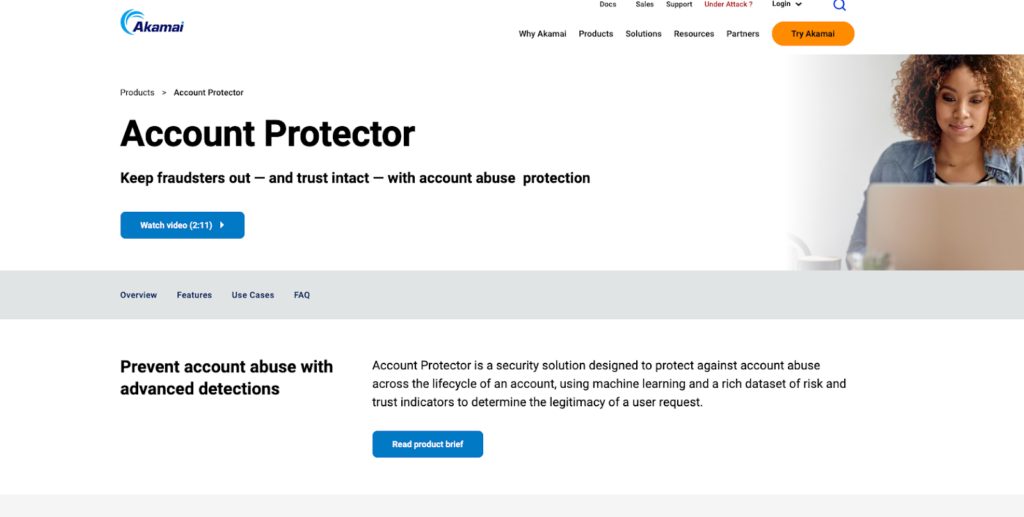
Akamai approaches account takeover through large-scale visibility. Because it operates one of the largest content delivery and security networks globally, it has access to a wide range of behavioral signals across sessions.
Its Account Protector solution uses these signals to score login attempts and detect anomalies that may indicate credential stuffing or automated abuse. This makes it particularly effective in high-volume environments where distinguishing between legitimate and malicious traffic can be challenging.
Best for: Organizations with large user bases and high login volumes.
- Memcyco
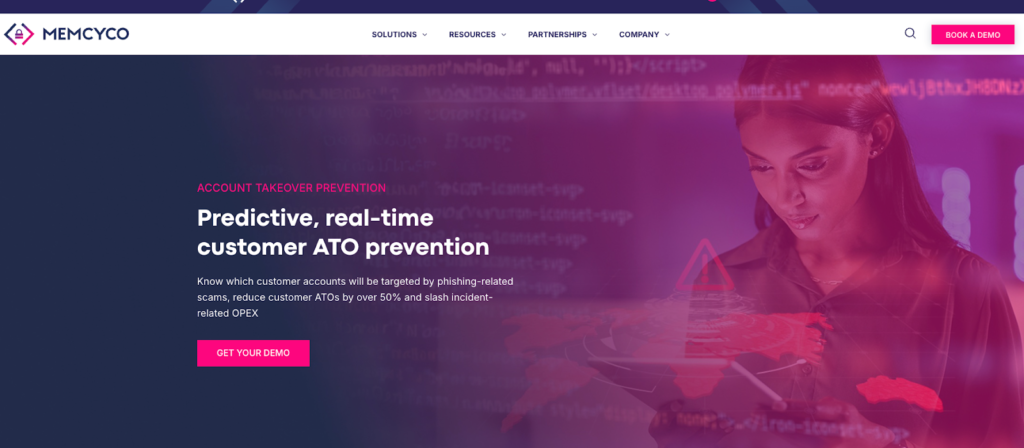
Most ATO tools begin working when a login attempt is made. Memcyco takes a different route by focusing on what happens before that. Instead of waiting for suspicious activity at login, it looks for phishing sites and fake environments that impersonate a brand. These are often where credentials are first captured.
Memcyco can detect these environments early, even when they haven’t yet appeared in known threat databases. It also provides visibility into which users have interacted with them. If credentials are submitted through a phishing page, the platform replaces them with decoy data at the point of entry. This helps prevent unauthorized access while also exposing information about the attacker when those credentials are used. This approach shifts the focus from reacting to attacks to disrupting them earlier in the chain.
Best for: Organizations that are frequently targeted by phishing or impersonation campaigns, especially in the financial, retail, and other high-risk sectors that rely on online transactions.
- Cloudflare Bot Management
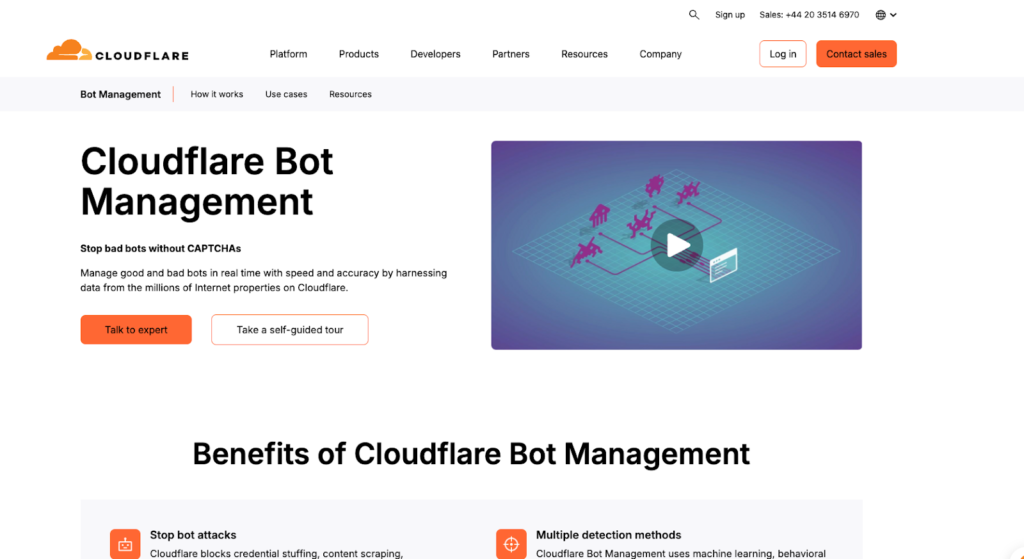
Cloudflare’s Bot Management solution relies heavily on network-scale visibility. With a large volume of traffic passing through its infrastructure, it can identify patterns that indicate automated behavior. The platform uses behavioral analysis and machine learning to distinguish between legitimate users and bots. Suspicious traffic is then blocked before it reaches the application. For organizations already using Cloudflare, this tends to be a straightforward extension rather than a separate deployment.
Best for: Teams looking to consolidate bot protection within an existing Cloudflare setup.
- F5 Distributed Cloud Bot Defense
F5 focuses on collecting detailed telemetry from devices, networks, and applications to determine whether activity is human or automated. Its approach is particularly relevant for detecting sophisticated bots that attempt to mimic real user behavior using residential proxies or other evasion techniques. By focusing on signal depth rather than static indicators, F5 aims to stay effective even as attackers adapt their methods.
Best for: Organizations dealing with advanced or evasive bot activity.
- Imperva Account Takeover Protection
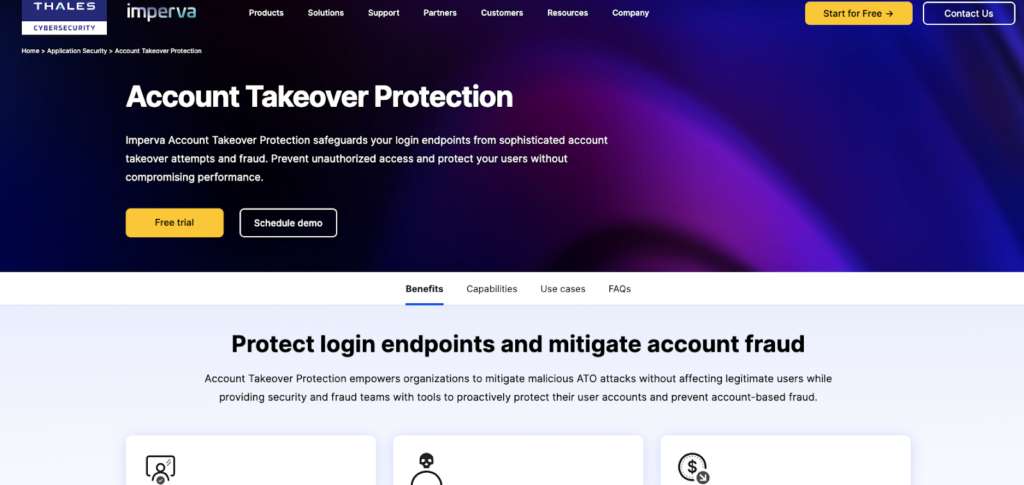
Imperva combines real-time detection with credential intelligence. On one side, it identifies and blocks bot-driven attacks such as credential stuffing. On the other, it monitors for leaked credentials associated with your users and provides early warnings when exposure is detected. This dual approach allows teams to respond both reactively and proactively.
Best for: Organizations looking for a layered approach that includes both prevention and monitoring.
How to Choose
No single solution covers every angle. Organizations that face large-scale login abuse may lean toward providers with strong network visibility, such as Akamai or Cloudflare. Those dealing with more sophisticated bots may benefit from F5’s telemetry-driven approach.
Where phishing and impersonation are the primary concerns, earlier-stage protection can make a noticeable difference. In those cases, approaches that focus on detecting and disrupting credential harvesting tend to be more effective. Ultimately, the right choice depends on where attacks are happening and how early you want to stop them.
Key Takeaways
- Account takeover attacks are no longer limited to login attempts
- Phishing and credential harvesting often occur earlier in the attack chain
- Different tools address different stages of the problem
- Matching your defense strategy to your risk profile is critical
Frequently Asked Questions
How do account takeover attacks happen?
Attackers gain access to accounts by stealing credentials through phishing, credential stuffing, malware, or session hijacking.
Is MFA enough to prevent account takeover?
MFA helps reduce risk, but it does not eliminate it. Some attacks are specifically designed to bypass it.
What is credential stuffing?
Credential stuffing is an automated attack where stolen login credentials are tested across multiple services.
What should organizations prioritize?
A combination of visibility, prevention, and early detection tends to be the most effective approach.