


Intel is back in the headlines, and for once, it’s not for the wrong reasons.
The company’s stock has skyrocketed 490% over the past year. That’s nearly five times in value in twelve months.
New CEO
Lip-Bu Tan took the reins at Intel in March 2025. He came in with a reputation as a dealmaker, and so far, that’s exactly how he’s played it.
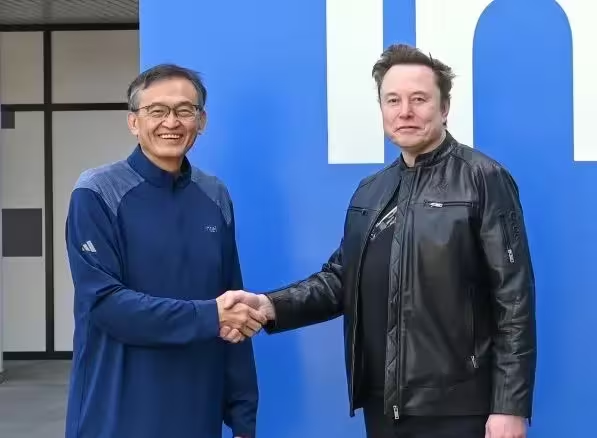
Instead of slashing budgets and issuing dramatic press releases, Tan got on a plane, met with government officials, called Elon Musk, and reportedly knocked on Apple’s door. And Tesla’s too.
These actions birthed preliminary manufacturing deals with both Apple and Tesla, according to Bloomberg. It also brought a formal partnership with Musk on a factory project.
And perhaps most eye-catching of all, the U.S. government is now Intel’s third-largest shareholder, holding a 10% stake through a government-backed deal Tan helped lock in.
Government Deal
Washington wants American chips made on American soil. Intel is one of the few companies that actually builds its own factories, called fabs, right here in the U.S.
TSMC, the world’s leading chipmaker, is based in Taiwan. So Intel fits neatly into America’s national chip strategy.
That government backing gives Intel a level of political protection and potential future contracts that most chipmakers simply don’t have.
It also helps Intel’s image. Being seen as a key part of U.S. economic security is a powerful card to hold.
Messy Fundamentals
Behind the headlines and the stock surge, Intel’s chip manufacturing still lags well behind TSMC.
Chip “yields,” how many working chips come out of each production run, remain significantly lower than the industry leader.
That’s a problem that can’t be solved by a handshake deal or a photo op. Bloomberg’s reporting also reveals something telling inside Intel’s walls.
Employees say Tan has been vague about specifics. Some internal teams are quietly adjusting missed deadlines rather than actually fixing the underlying problems.
That’s a classic warning sign for a company that needs real, structural change, not just a fresh coat of PR paint.
In other words, the house looks great from the outside. The inside still needs work.
Wall Street
A 490% stock gain is extraordinary. It’s the kind of number you’d expect after a company completely reinvents itself, ships a groundbreaking new product, or dominates a brand-new market.
Intel hasn’t done any of those things yet.
What it has done is make the right noise, sign the right agreements, and position itself as a comeback story. And investors love a comeback story, sometimes a little too much.
This doesn’t mean the optimism is totally wrong. Tan’s deal-making instincts are clearly sharp; landing Apple and Tesla as potential customers would be massive if those deals hold.
And the government stake is real money and real credibility. But there’s a wide gap between “promising early signs” and “490% better than twelve months ago.”
Investors are essentially pricing in a future that hasn’t happened yet.
