
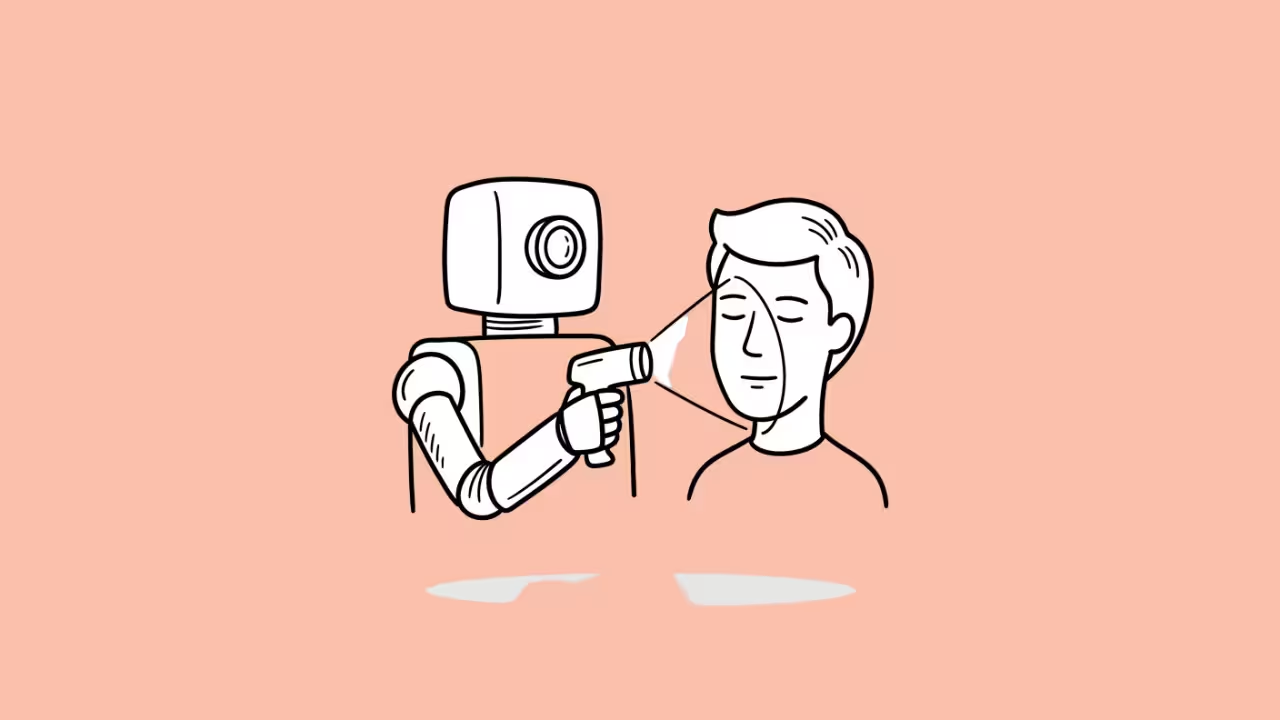

The British government is rolling out a new tool at its borders, according to the BBC. It uses AI to estimate how old asylum seekers are, just by looking at their faces.
Sounds futuristic, but the plan has sparked a fierce debate between officials who say it’s needed and human rights groups who call it dangerous.
The Border
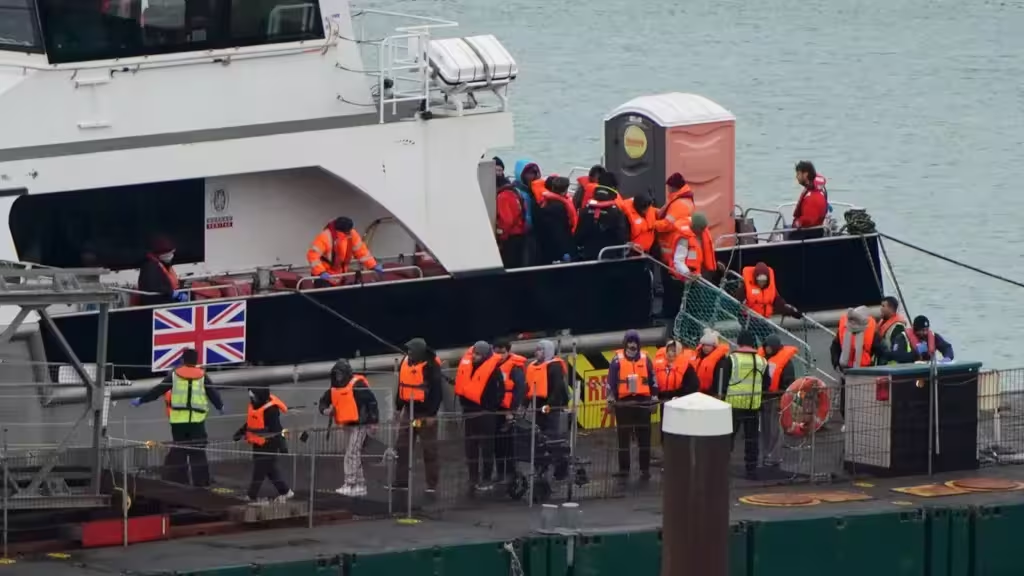
When someone arrives in the UK and claims asylum, their age matters a lot. Children get extra protections; they’re placed with local councils and housed in the care system.
They also get legal protections that can make it easier to stay in the country. But adults go through a completely different process.
So naturally, the government wants to make sure adults aren’t claiming to be children to get those extra benefits.
In the year ending March 2026, more than 6,400 migrants who claimed to be children were age-assessed at the border.
Of those, 43% turned out to be adults. That’s why the Home Office wants a better system.
Also read: AI Is Generating Nude Pictures of Minors
AI Tool
The technology is fairly straightforward in concept. Officers photograph a person at the border. The AI then analyses that photo and estimates their age.
It doesn’t replace human judgment, at least not yet. It acts as an extra layer of support when a person’s age is unclear.
Right now, border officers assess age using documents, physical appearance, and behaviour. The intended AI tool would sit alongside these existing methods.
A company called Akhter Computers Ltd, based in Harlow, has been awarded a £322,000 contract to develop and test the technology over three years.
The plan is to trial it on live cases at Western Jet Foil, a processing centre in Dover, sometime next year. A full rollout is expected by mid-2027.
U.K. Government
Alex Norris, Minister for Border Security and Asylum, says adult migrants have been “exploiting the system” by falsely claiming to be children.
He argues this diverts support away from real children who genuinely need it. The Home Office has already done some early testing.
They used images of people across different ethnicities and genders, including people from groups that typically seek asylum.
Officials say the early results show “promising performance and accuracy.” Still, none of those test results has been used to make real decisions yet. That part comes next.
Supporting Numbers
It’s worth zooming out for a moment to understand the scale here. A total of 111,084 people claimed asylum in the UK in the year ending June 2025.
That’s 14% more than the year before. Channel crossings in small boats have been at heightened levels for years now.
A government inspector’s report last year found mistakes going both ways. Some adults were wrongly classified as children and some children were wrongly classified as adults.
The report admitted there’s no “foolproof” test, and that getting it wrong can cause serious harm, especially when a child is denied the protections they’re legally entitled to.
So the pressure to find a better solution is real. The question is whether AI is that solution.
Human Rights
Human Rights Watch researcher Anna Bacciarelli called the plan “deeply flawed.”
She said there’s no proven evidence that facial age estimation technology works in refugee processing settings.
So far, this type of tool has mainly been used in shops and bars, not in high-stakes immigration decisions.
She described the process as “dehumanising” and said there’s “no ethical way to move forward.”
The British Association of Social Workers agrees. Professor Sam Baron, interim CEO of the organisation, warned that using AI in this context could lead to “major safeguarding mistakes.”
Social workers, he argued, are the ones best placed to carry out these assessments. The process is complex.
It involves listening, observing, and building trust, things a camera and algorithm can’t do.
Taking Chances
If the AI underestimates someone’s age, a vulnerable adult could end up in the children’s care system, placed with minors. That could put young people at risk.
If it overestimates someone’s age, a real child could be sent to adult accommodation or detained.
They’d lose access to the support they’re legally entitled to. That’s not just unfair; it could also be traumatic.
The stakes are incredibly high. And critics say experimenting with unproven technology in this environment is simply not acceptable.
