
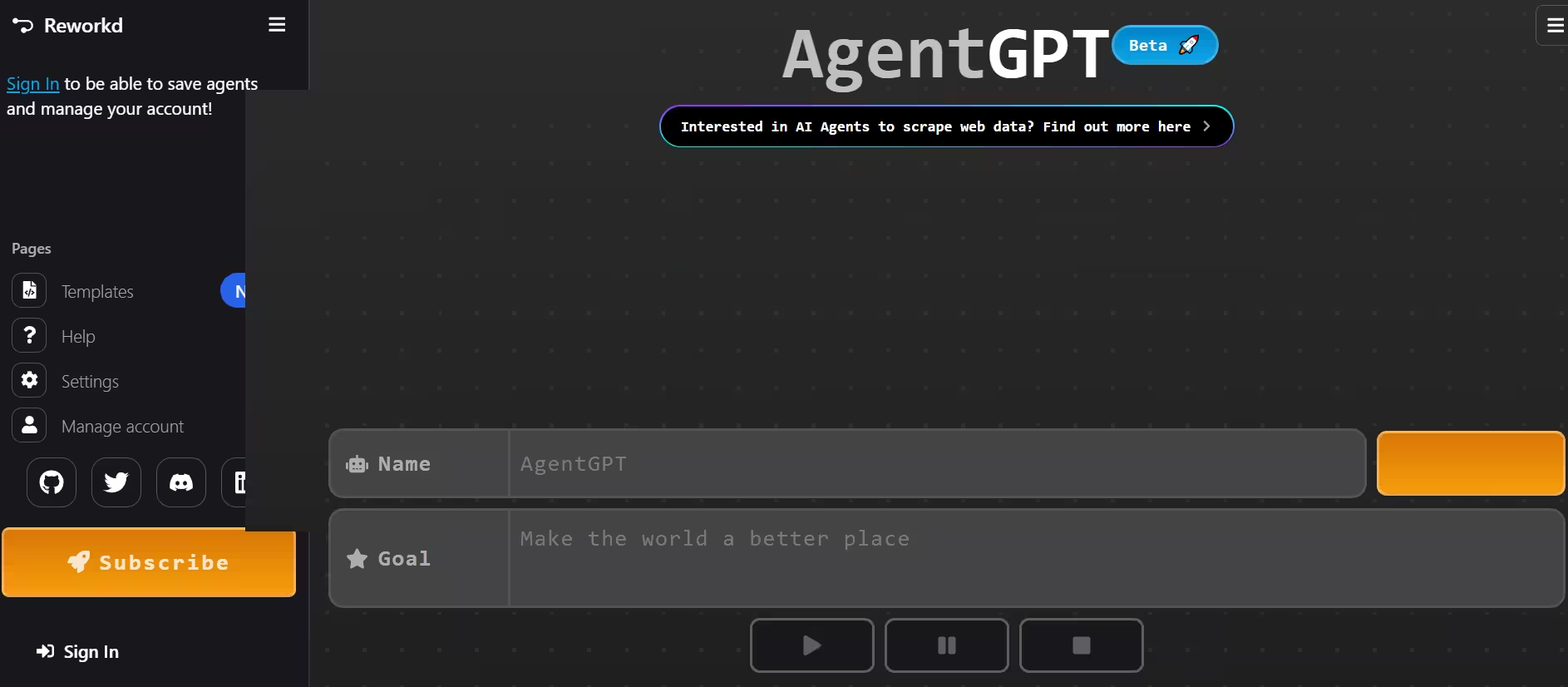


AgentGPT was built by Reworkd AI and released as an open-source project. It hit 28,000 GitHub stars by April 2023, just six weeks after launch.
After hands-on testing, my take is this: AgentGPT is somewhat oversold for production work, but excellent for brainstorming, research drafts, and exploratory tasks. The gap between what the marketing implies and what the tool reliably delivers is there, but smaller than critics suggest.
Using AgentGPT is simple: you name your agent, define a goal, and deploy. The agent then generates a task list, executes each step, evaluates the output, and creates new tasks based on what it finds. It mirrors how a project manager actually thinks, which is what makes it feel different from a standard chatbot.
The limitations are real, though, and I watched them play out firsthand. This is most evident in the free plan, which is limited to a GPT 3-5; in deployment and execution, it terminates before completion each time.
Still, on cleaner, shorter tasks such as content research, competitor summaries, and structured planning, it performed well above what I expected from a browser-based tool with no setup required.
Also read: 13 Top AI Agent Builders In 2026
Key Features
Three features are outstanding. The rest are useful additions, but they’re not why you’d pay for this tool.
Features That Matter
1. GPT-4 Integration (Pro): This is the single biggest performance differentiator on the platform. Contrast testing on both the free GPT-3.5 and Pro GPT-4 will yield results that are noticeably more structured, less repetitive, and require far less manual cleanup. If you want Pro, this is what you’re paying for.
2. Goal-Oriented Task Planning: AgentGPT decomposes high-level goals into sequential, executable tasks automatically. I asked it to “identify the top 10 project management tools under $20/month and summarize their core differentiators.” It returned a usable structured breakdown in under three minutes. A standard chatbot would need multiple follow-up prompts to get there.
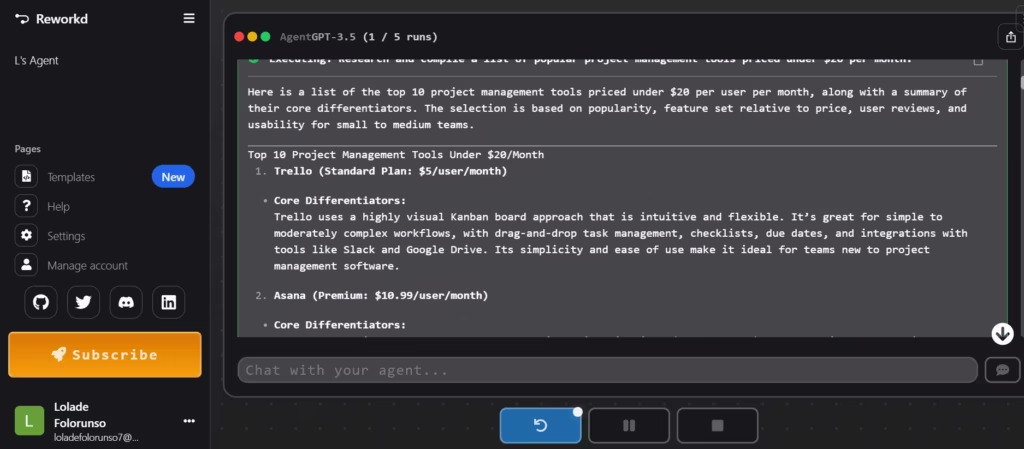
However, it didn’t return a full list of 10. The agent faltered on the seventh tool. I also fact-checked the pricing and found it accurate. My agent scored a point on that one.
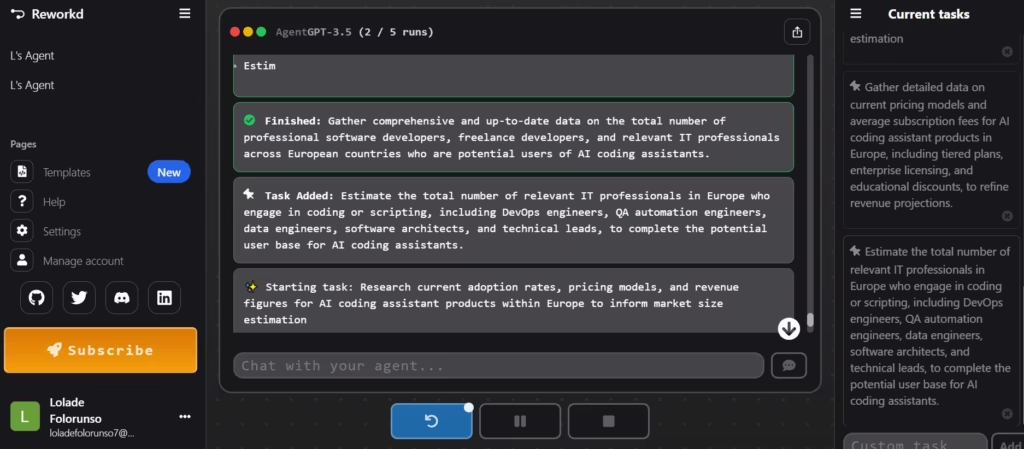
3. Real-Time Task Visibility: Watching the agent work in real time is more useful than it sounds. It lets you catch drift early and make corrections before wasting more runtime. Without this visibility, you’d only discover the problem after the fact.
Also Notable
4. Browser-Based Deployment: This eliminates all setup friction, which is advantageous for non-technical users. Persistent Agent Memory keeps the agent coherent across longer task chains, which matters for multi-step research. Open-Source Foundation means developers can self-host and customize freely, Custom Agent Naming helps when you’re managing multiple workflows simultaneously, and API Access (Pro and Enterprise) opens the tool up for integration into custom applications.
The Verdict
AgentGPT is worth the $40/month if you’re running at least five complex research or planning tasks per week. At that volume, the time saved easily justifies the cost. Below that threshold, the free tier covers your needs without spending a dollar.
It is not a production-ready automation engine, not yet. But as a research assistant, brainstorming partner, and goal-decomposition tool, it delivers real, consistent value. The learning curve is nearly zero, and the ceiling is higher than most browser-based AI tools.
Start with the free plan, stress-test it on two or three real tasks, and you’ll know within an hour whether Pro is worth it for your workflow.