

Job hunting consumes time. So when a tool promises to apply to hundreds of jobs while you sleep, it’s tempting to believe the pitch. Sonara AI makes exactly that promise. But does it actually help you land a job, or does it just create the illusion of progress? Let’s find out what the tool does, what it costs, and what actual users report.
What is Sonara AI?
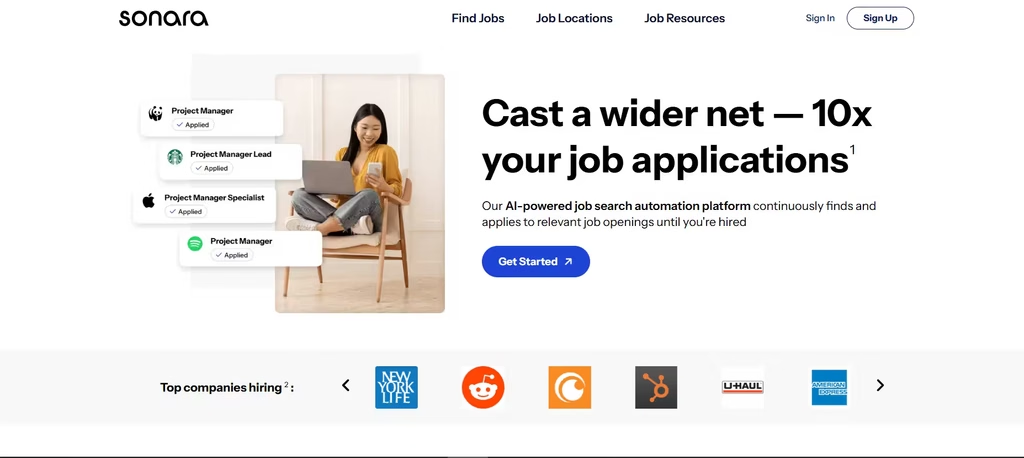
Sonara AI is an auto-apply platform. You upload your resume, set your job preferences, and the tool searches job listings and submits applications on your behalf. This cuts out the hours you’d otherwise spend copying your resume into application forms one job at a time.
This category of tool isn’t new, but Sonara has a more complicated history than most competitors.
Sonara’s History
Before you sign up, it helps to know Sonara’s backstory. The original company shut down abruptly on February 1, 2024, after failing to secure funding, and users lost access to their application history with little notice.
About six months later, BOLD acquired the brand, the same career-services company behind Zety, LiveCareer, and MyPerfectResume. Sonara’s co-founder joined BOLD to lead auto-apply and AI initiatives, and the platform relaunched under new ownership.
That matters for two reasons. First, the “Sonara” you’d sign up for today isn’t run by the team that originally built it. Second, a shutdown-and-relaunch history is a reasonable thing to factor into how much trust you place in any subscription service, especially one tied to your job search timeline.
How Sonara AI Works
Once you’re signed up, Sonara scans job boards for openings that match your stated preferences. It fills out application forms automatically and submits them using your profile data. In theory, this lets you focus on interview prep instead of repetitive form-filling.
In my testing, I uploaded a dummy CV and went through a round of selecting preferences. At the final stage, Sonara matched me with a few jobs before it began its auto-apply. I got skeptical, so I googled each of those companies and positions- they were real.
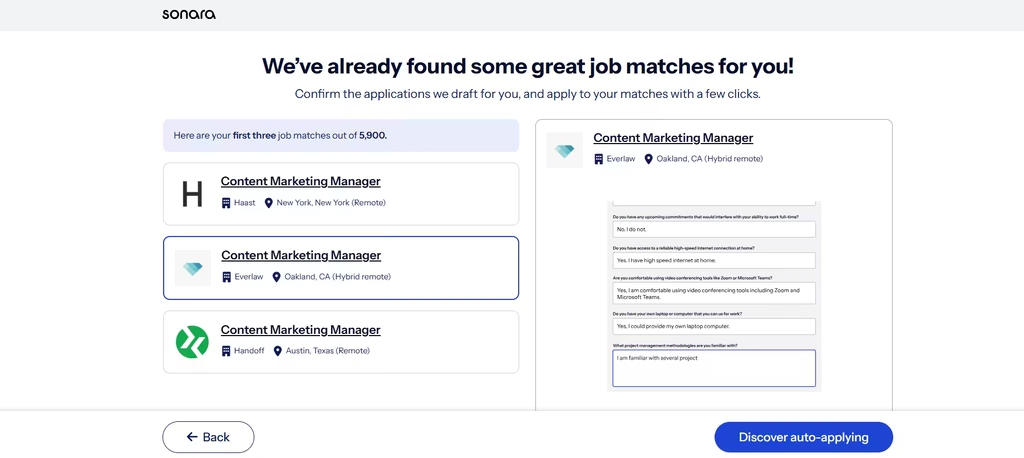
So, I’d say that Sonara delivers on that basic function. Applications go out, and the volume increases. The question then becomes accuracy: are those applications going to jobs that fit you, and are they actually reaching the employer?
In my experience, yes, Sonara does match you to jobs that fit. I found that it really helped to be as specific as possible in the onboarding phase. That gives the AI a focus it can work with.
Reviews From Trustpilot and Reddit
The Positives
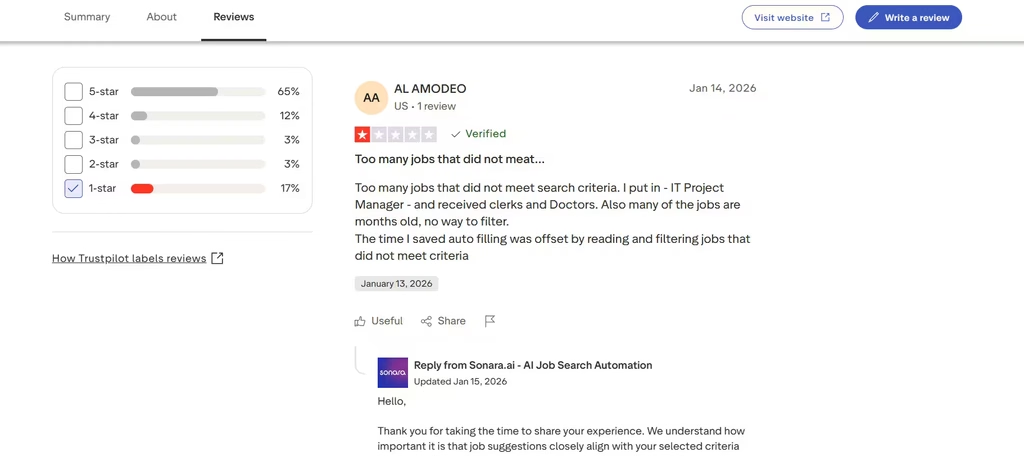
On Trustpilot, Sonara holds a 3.9 rating out of 5. But that average hides an unusual pattern. Independent review sites analyzing the review breakdown found the ratings skew bimodal: about 65% of reviews are five stars, while 17% are one star, with relatively few reviews landing in the middle.
That wide difference suggests polarized experiences rather than a broadly “pretty good” tool. Users who leave positive reviews consistently mention the same thing: the one-click application process saves real time, and the setup is simple enough that you’re applying within minutes.
The Complaints
The negative reviews cluster around a few recurring issues. Users consistently report application failure rates between 25% and 40%. That means a significant share of submissions never actually reach the employer, even though they show up as “applied” in your dashboard.
Job matching quality is another frequent complaint. One user searching for IT roles reported getting recommendations for clerk and doctor positions, jobs with no connection to their field or experience.
Reddit threads on auto-apply tools echo a similar tone. Users worry about the “spray and pray” approach, where blasting out hundreds of applications without tight filters produces low-quality matches, including senior roles they weren’t qualified for or junior roles that paid well below their target.
Resume customization is another sticking point. Sonara sends the same resume version to every employer rather than tailoring it per listing, which can reduce your odds of standing out compared to a targeted application. Finally, several reviewers describe frustration with cancellations and refunds, saying the process requires back-and-forth emails rather than a simple account setting.
Also read: AI Apply: Does It Really Work to Get a Job?
How Much Does Sonara AI Cost?
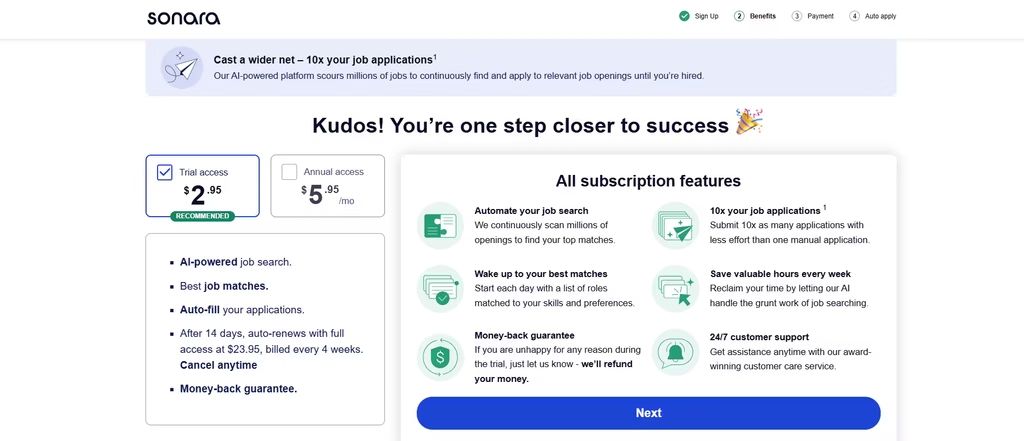
Pricing has stayed fairly consistent through the relaunch. Sonara offers a trial period priced at $2.95 for 14 days. After that window, or after 10 applications, whichever comes first, the trial automatically renews into a recurring subscription billed at $23.95 every four weeks. There’s also an annual option, advertised at $71.40 per year, which works out to roughly $5.95 per month if you pay the full amount upfront.
Because the trial auto-renews without a reminder, mark a calendar date if you sign up just to test the platform. Several reviewers specifically flagged this billing structure as a source of frustration, since forgetting to cancel means an unexpected charge at the higher monthly rate.
Can AI Job Search Tools Really Help You Find a Job?
In my view, auto-apply tools solve the wrong problem. Most of them are marketed to job seekers with the promise of a high application volume. That sounds great in theory, but in reality, volume doesn’t equal quality.
Auto-apply tools save time at the top of the funnel. If you’re job hunting while employed, or your search covers a role with standard titles like software engineer or customer success manager, automation can generate volume without eating your evenings. That part works as advertised.
Where these tools struggle is accuracy. Most auto-apply platforms, Sonara included, pull listings from job board aggregators rather than pulling directly from company hiring systems. Aggregated listings can be outdated, already filled, or missing steps like email verification that a human applicant would notice and complete. That gap explains a large share of the failure rates reviewers describe.
There’s also an associated risk. Applying broadly and indiscriminately can hurt you in smaller or niche industries where hiring managers compare notes. A flood of generic applications to the wrong companies does more reputational harm than good in tight-knit fields.
So can AI job search help you find a job? It can help you apply faster. It’s far less reliable at helping you apply well. Those are different problems, and only one of them is solved by automation alone.
But if you still want to go ahead AI job search, I advise that you be as specific as possible in providing information about your competencies and preferred roles. Also, I’d only recommend them if you’re already employed and searching passively.
How to Get the Most Out of Sonara AI (or Any Auto-Apply Tool)
- Tighten every filter available. Loose settings for title, seniority, and location are the fastest way to end up with irrelevant matches.
- Check your dashboard regularly. Since failed submissions can look identical to successful ones, spot-check a sample of your applications against the original job posting.
- Reserve manual, tailored applications for your top-choice employers. Let automation tools increase application volume on standard roles, and put effort into the jobs you actually want.
- Set a cancellation reminder before your trial ends, since the plan renews automatically at a higher rate.
- Track your response rate, not your application count. Fifty applications with zero replies tell you more than five hundred with the same result.
Should You Give Sonara AI a Try?
Sonara AI does what it says: it submits job applications automatically, and it saves time doing it. But the tool’s history- a 2024 shutdown followed by an acquisition and relaunch, plus a polarized review pattern and a reported application failure rate near one in three- means it’s not a guaranteed shortcut to a new job.
Treat Sonara, or any AI job search tool, as one piece of a larger strategy. Use it to handle volume on standard roles. Then put your own effort into the applications that matter most. That combination, not automation alone, is what actually moves a job search forward.
