
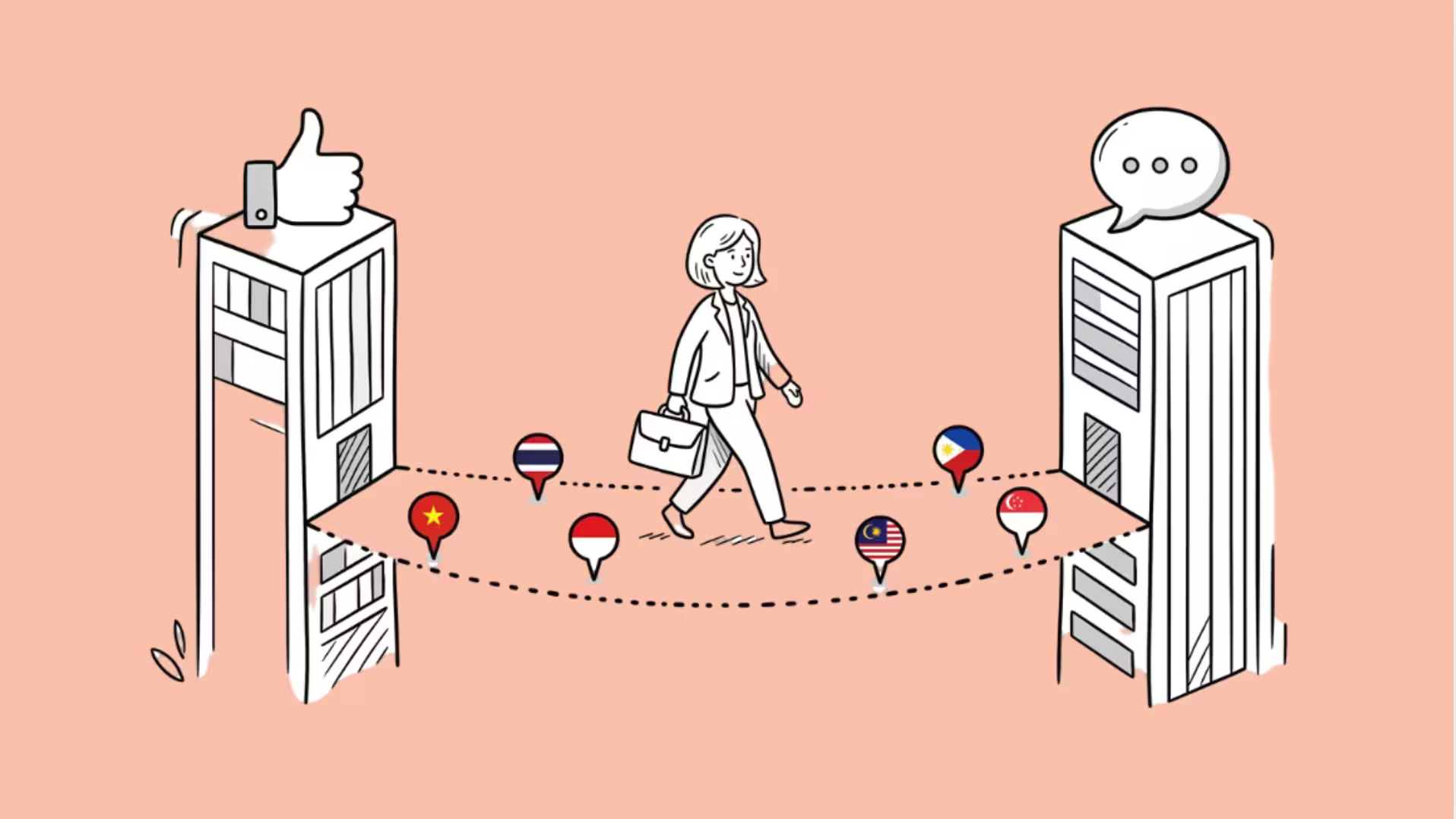

Sandhya Devanathan spent a decade building Meta’s business across India and Southeast Asia.
Now she’s taking everything she learned to the company trying to replace it.
On Thursday, OpenAI confirmed that Devanathan, Meta’s vice president for India and Southeast Asia, is joining as VP for Southeast Asia and Australia.
She’ll be based in Singapore and report to Kiran Mani, OpenAI’s managing director for Asia-Pacific. She starts in October.
Her mandate covers consumer growth, enterprise adoption, partnerships, regulatory engagement, and operations across the region.
It’s a newly created role that makes her OpenAI’s most senior executive in Southeast Asia and Australia.
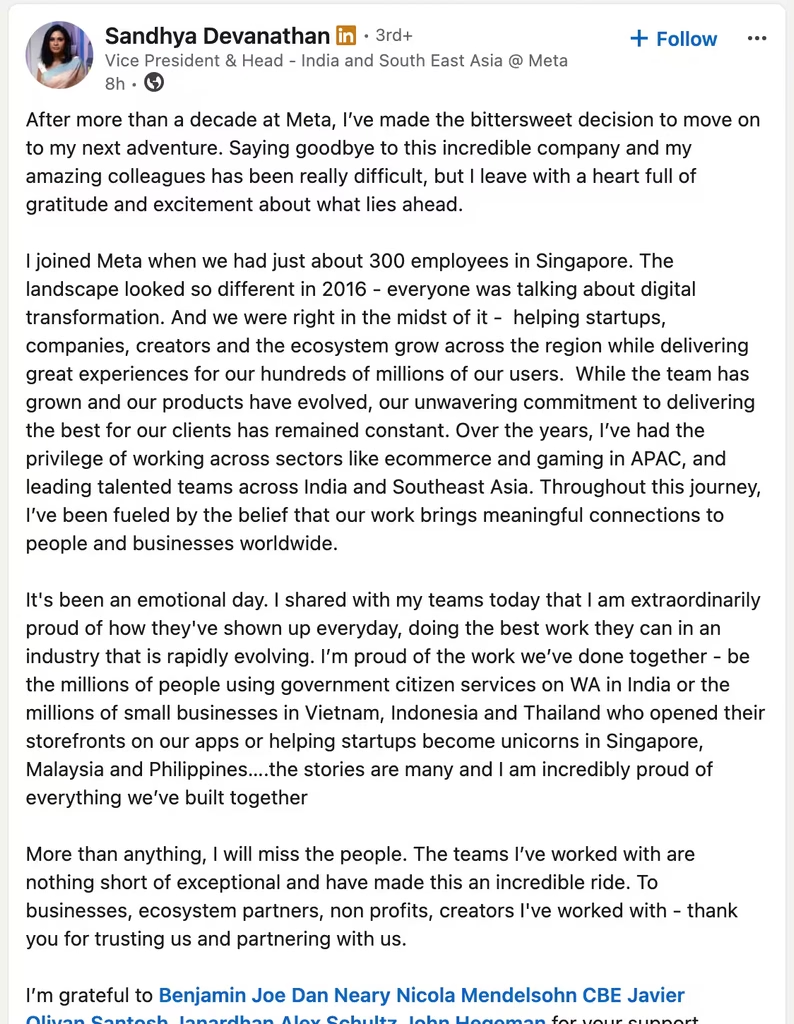
Devanathan posted on LinkedIn Friday that she was leaving Meta after more than a decade.
OpenAI Is Stacking Its Asia Leadership Fast
Devanathan is the third major Asia-Pacific hire OpenAI has announced this summer.
In March, the company brought on Kiran Mani as Asia-Pacific managing director.
In June, former Uber India head Prabhjeet Singh joined as India managing director. Singh spent over a decade at Uber leading its India and South Asia operations. He starts in September.
All three hires share something in common: deep operational experience running large-scale consumer businesses in high-growth emerging markets. That’s not a coincidence.
Southeast Asia is home to two of OpenAI’s top 10 markets globally by ChatGPT users: Indonesia and the Philippines.
OpenAI has already been expanding ChatGPT Go across 16 Asian countries at under $5/month, and offered a full year of free access in India to accelerate adoption.
Weekly active users in Southeast Asia have grown up to four times.
The company has also opened offices in Singapore, Tokyo, Seoul, Sydney, and Delhi over the past two years and struck a strategic partnership with Kakao to embed ChatGPT into South Korea’s most popular messaging platform.
Hiring someone who ran Meta’s business across the exact same region is the clearest signal yet that OpenAI is treating Asia-Pacific as a top priority, not a secondary market.
Meta’s India Problem Made the Exit Easier
Devanathan isn’t just leaving Meta for a better opportunity. She’s leaving a company under growing pressure in her own territory.
In July, Instagram mistakenly restricted a post by Indian Prime Minister Narendra Modi.
Meta apologized in August, but the damage was done. The Indian government summoned Meta executives to explain, including chief global affairs officer Joel Kaplan.
Then came the child safety crisis.
A BBC investigation found Instagram advertisements that allegedly offered access to child sexual abuse material.
The Indian government demanded an explanation. Meta said it removed violating ads and accounts and had taken down 160,000 accounts in India over six months based on child exploitation signals.
India is one of Meta’s largest markets by user count.
Having your VP for the region leave during a period of government scrutiny and public backlash isn’t a great look.
Following Devanathan’s departure, Meta’s India managing director Arun Srinivas will report directly to Benjamin Joe, the company’s Asia-Pacific VP.
The Bigger Talent Pattern
This hire fits into a year-long trend of senior executives leaving established tech giants for AI startups.
Google has lost four senior AI researchers in a single week, including a Nobel laureate and a Transformer co-inventor, to OpenAI and Anthropic.
OpenAI has also poached executives from Apple’s hardware team and brought on a former Trump White House AI adviser.
Devanathan brings something different from those hires.
She’s not a researcher or an engineer. She’s an operator who knows how to build consumer businesses in complex, price-sensitive, regulation-heavy markets.
That’s exactly the skill set OpenAI needs as it shifts from a product company to a global platform.
Devanathan has 25 years of experience across tech and financial services.
Before Meta, she held leadership roles at Standard Chartered and Citibank in Singapore. She knows regulators, enterprise buyers, and consumer markets across the region.
For Meta, it’s another senior departure in a year that’s been full of them.
For OpenAI, it’s another piece in an Asia-Pacific strategy that’s moving from office openings to real operational muscle.
The race for Asia’s AI market is no longer theoretical. It’s a hiring war. And right now, OpenAI is winning it.
