

Every other browser sends your AI requests to someone else’s server.
Opera’s new WebAI standard keeps them on your machine. It’s a small, privacy-first bet in an industry that can’t stop centralizing everything.
On Tuesday, Opera launched WebAI, a proposed web standard that lets websites and browser extensions run AI models directly inside the browser using your own hardware.
No cloud subscription. No API key. No data leaving your device.
The feature is rolling out as an early preview in Opera One, with Opera GX and Opera Neon getting it next.
Google and Microsoft reportedly back the standard.
It supports Google’s Gemma open-weight models, and on Macs, it also works with Apple’s on-device foundation model.
But Opera says WebAI isn’t tied to any single model. It’s built to be model-agnostic, supporting a range of open-weight systems.
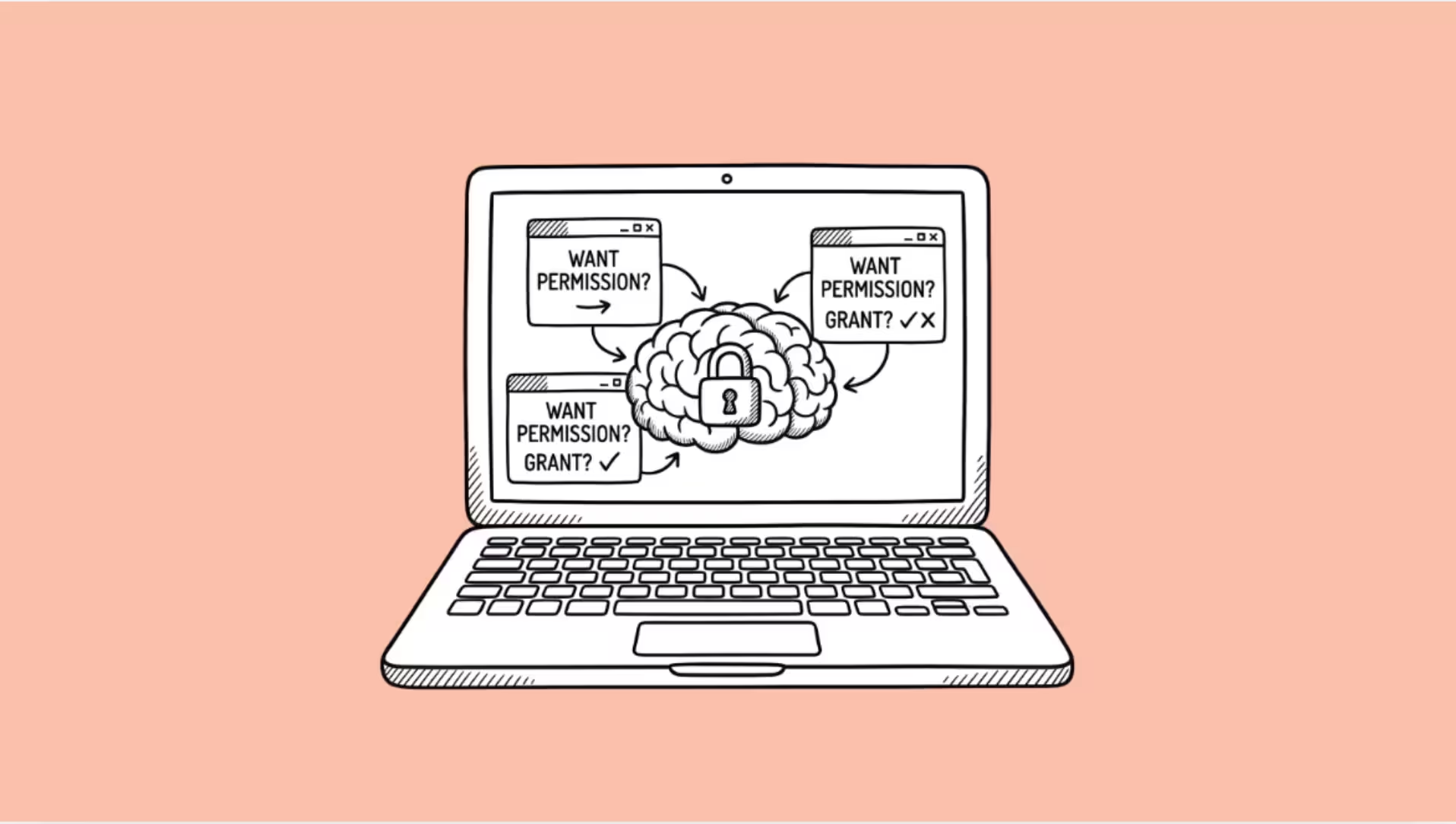
Nothing downloads until you opt in.
Each website needs separate permission before it can access the local AI. You stay in control of what runs and who gets to use it.
Why This Is Different From Gemini in Chrome
Google has been embedding Gemini into Chrome for months.
But there’s a fundamental difference.
Gemini in Chrome sends your queries to Google’s servers for processing.
WebAI processes everything locally. Your prompts, your documents, your data never leave your machine.
“Developers can add AI features without running AI infrastructure or paying for every request,” Opera said.
“Users don’t need AI subscriptions, the information the local AI handles stays on their own device, and they stay in control of the AI on their computer.”
For Opera, this is a natural extension of a brand that has made privacy a selling point for years.
Built-in VPN. Tracker blocking. Ad blocking. Now local AI. Each feature reinforces the same pitch: your data stays yours.
What Developers Can Build With It
WebAI opens local AI to third-party developers, not just Opera’s own features. The browser handles the inference engine. Developers build on top of it.
The initial use cases Opera highlights are practical rather than flashy: extensions that organize tabs using AI, tools that detect clickbait headlines, and job listing filters that match relevant positions.
The standard also supports text generation, content classification, and semantic understanding, all running locally.
For developers, the economics are appealing.
No inference servers to manage. No per-request billing from an API provider. The user’s hardware does the work. For small teams building browser extensions, that eliminates the cost barrier to adding AI features entirely.
The Tradeoffs Are Obvious
Local AI means local hardware limitations.
Opera acknowledges that performance depends on the device.
A laptop with 8GB of RAM isn’t going to run a multi-billion-parameter model smoothly.
The models that fit comfortably on consumer hardware are smaller and less capable than what runs in a data center.
Each model variant typically requires 2 to 10 GB of local storage.
That’s manageable on modern machines, but it adds up if you’re running multiple models or working on a device with limited storage.
And “local” doesn’t mean “perfectly private.”
The AI runs on your device, but what a website does with the results is still governed by that website’s privacy practices.
Local inference eliminates one privacy risk. It doesn’t eliminate all of them.
The Bigger Trend: AI Is Leaving the Cloud
Opera isn’t the only one pushing this direction.
Last week, Meta released Muse Spark Open, an 816-billion-parameter model designed to run on desktop hardware.
The open-weight model movement has been accelerating all year, with Chinese labs and now European competitors like Mistral making powerful models available for anyone to download and run locally.
The common thread: a growing number of developers and users want AI they control, on hardware they own, without a monthly subscription or a data pipeline to someone else’s servers.
Whether that’s a security researcher who can’t trust cloud-based tools or a privacy-conscious consumer who doesn’t want their journal entries processed on Google’s servers, the demand is real.
Opera’s WebAI is a small piece of that shift.
It’s a browser with 300 million users, not 3 billion.
It won’t reshape the industry overnight. But it’s the first browser to propose a standard that treats local AI as a first-class citizen of the web platform, not an afterthought bolted onto a sidebar.
This started in 2024 as an experiment in Opera’s developer channel.
Now it’s a proposed web standard with Google and Microsoft backing.
Whether Chrome and Edge eventually adopt WebAI or build their own version probably depends on whether users actually choose privacy over convenience. Opera is betting some of them will.
