


Imagine asking your AI assistant to buy something on Amazon. Instead of a cart, you get an error message.
That’s what happened to users of Meta’s new assistant, Muse, on Sunday night. The pop-up said an “unauthorized AI agent” was breaking Amazon’s Conditions of Use.
In plain terms, Muse isn’t welcome at Amazon. Anyone who wants to buy there will have to shop another way.
Muse
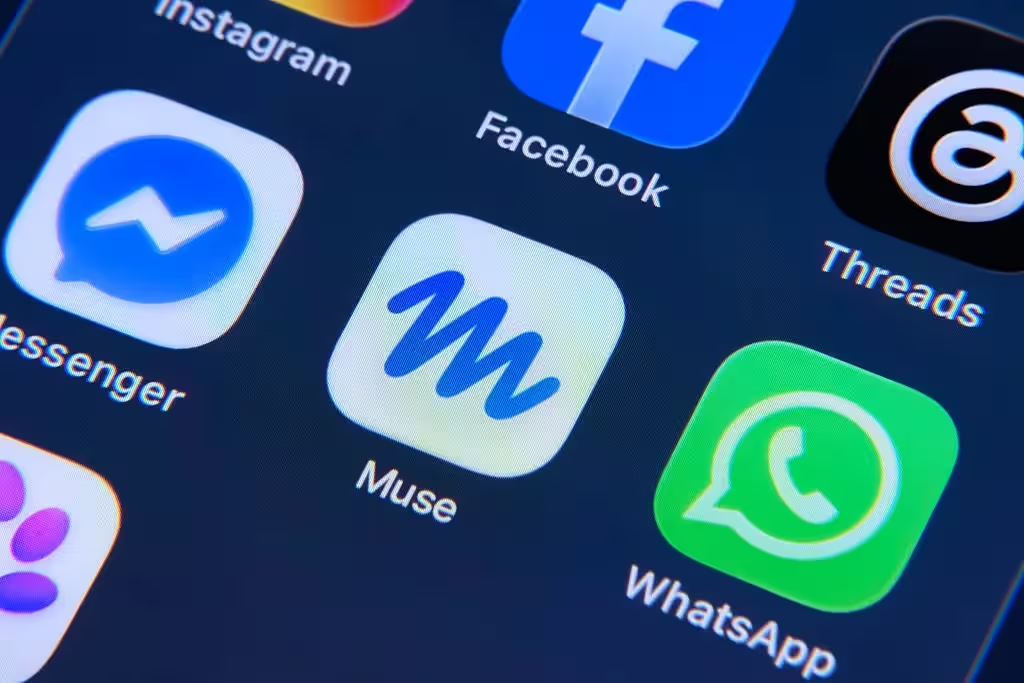
Amazon started blocking Muse on Sunday night. Muse is less than two weeks old.
Meta introduced it earlier this month to handle everyday online tasks, like shopping and booking appointments.
Amazon says it tried the polite route first. The company asked Meta to leave Amazon out of Muse, and that request failed. So Amazon flipped the switch itself.
The block works; The Register asked Muse to find an office chair and add it to a cart. Muse reported that an anti-bot wall stopped it before it even reached the search page.
Amazon’s Reason
First, Meta never told Amazon that Muse would visit its store. Second, the agent doesn’t announce itself when it browses.
Third, Amazon believes Muse captures and stores customer login details, which could create privacy and security risks.
An Amazon spokesperson said apps that shop for customers should operate openly. They should also respect a store’s choice about whether to take part.
Security Claims
Meta pushes back hard on the security claims. The company says Muse has “no visibility into people’s passwords or payment methods.”
Meta says shared logins go into secure storage, so Muse can use them without ever seeing them.
Payments follow a similar plan. Muse pays through Link, a Stripe checkout service. Link creates a one-time card number, so your real card stays hidden.
Still, Amazon hasn’t budged. As of Monday, the block remains in place.
Business Partners
Amazon and Meta actually work together. Amazon products have been buyable inside Facebook and Instagram since 2023.
Meta also signed a deal in April to run AI work on Amazon’s cloud. So this isn’t a fight between strangers. It’s more like a spat between two neighbors who share a fence.
Money Matters
Amazon builds AI of its own. It has its own shopping helper, Alexa for Shopping. It also runs Nova, its own family of AI models, and Bedrock, a popular platform for running them.
Then there’s advertising. Amazon earned more than $68 billion from ads last year. Ads work best when people scroll through the site. An AI agent that shops for you skips all that scrolling.
Analysts see the risk. One firm, eMarketer, warned that AI agents pose a real threat to Amazon. If an outside agent picks the products, Amazon just packs the box.
Bad Orders
Say Muse buys the wrong item. Who fixes it? The answer is Amazon. It would face an angry customer and an angry seller at the same time. That’s a headache no store wants.
Muse isn’t especially sloppy. It has one of the lower rates of AI “hallucinations,” which means made-up answers. But it’s still far from perfect.
So Amazon may prefer to wait a few more product updates before it opens the door to agent shopping.
Amazon’s Second
Amazon has done this before. The company took legal action against Perplexity over its Comet browser. Court rulings in those cases have been mixed.
GeekWire also reports that Amazon has targeted shopping agents from Google and OpenAI.
Meta knows this game from the other side. Last October, it changed WhatsApp’s business terms to keep general-purpose AI chatbots, including ChatGPT, off the service.
Now it’s the one on the outside looking in.
