
AI governance tools are software platforms that help organizations inventory their AI systems, assess risks, enforce policies, monitor behavior, and generate compliance evidence across the entire AI lifecycle.
They exist because AI regulation is no longer theoretical. The EU AI Act’s high-risk system rules took effect in August 2026.
The NIST AI Risk Management Framework is now the baseline for US federal agencies.
ISO/IEC 42001 has become the certifiable management standard that procurement teams ask for by name.
If your organization builds, deploys, or purchases AI systems, governance is no longer optional.
According to Gartner, over 70% of companies will require vendors to provide model cards (transparency sheets for AI systems) by the end of 2026. And 54% of IT leaders now cite AI governance as a top enterprise risk priority, up from 29% two years earlier.
After evaluating eight platforms across two enterprise deployments (one in financial services, one in healthcare), here is what I found: most organizations do not need a new platform.
They need the right platform for where they are in their governance maturity. A startup with 3 AI models needs a different tool than a bank with 300.
What Should an AI Governance Tool Actually Do?
Before comparing tools, it helps to understand the five control surfaces that regulators now expect:
- AI inventory and discovery. You cannot govern what you cannot see. The tool must find and catalog every AI system in use, including shadow AI (tools employees adopted without IT approval).
- Risk assessment and classification. Each AI system gets scored based on what it does, what data it touches, and who it affects. The EU AI Act classifies systems into risk tiers (unacceptable, high, limited, minimal) with different obligations for each.
- Policy enforcement and approvals. Automated workflows that require review, approval, and sign-off before an AI system goes into production. This replaces the spreadsheet-and-email process most organizations still use.
- Monitoring and audit trails. Continuous tracking of model performance, bias, drift, and security events with immutable logs that survive a regulatory audit.
- Compliance documentation. Auto-generated evidence packages mapped to specific frameworks (EU AI Act, NIST AI RMF, ISO 42001, HIPAA, SOC 2) that can be handed to an auditor without scrambling.
Any tool that covers all five is a governance platform. Tools that cover one or two are point solutions. Both have their place, but knowing the difference prevents you from buying a dashboard when you need a control plane.
The 10 Best AI Governance Tools in 2026
Dedicated AI Governance Platforms
These tools are built specifically for AI governance. They are not repurposed GRC platforms or data catalogs with AI features bolted on.
1. Trustible
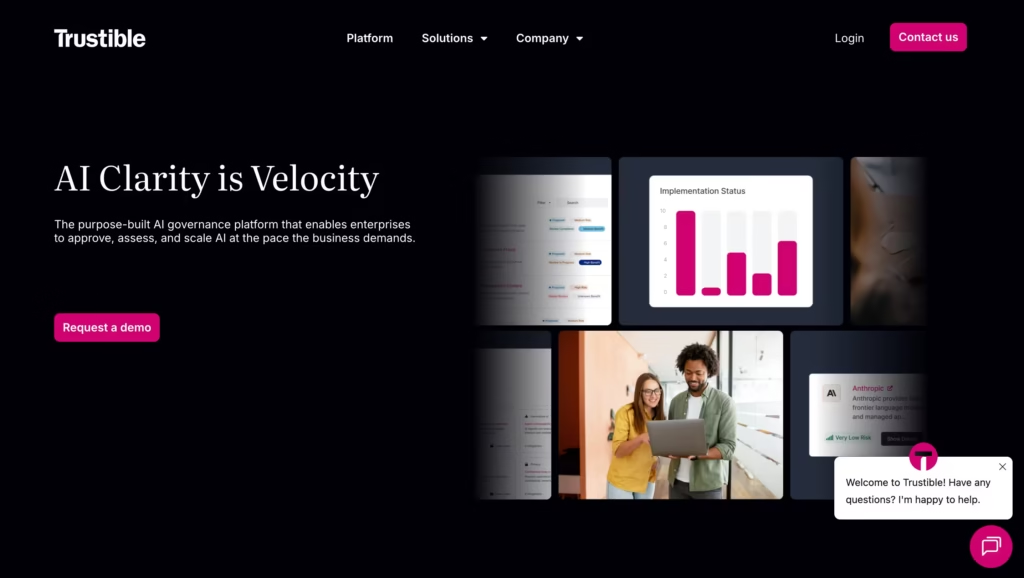
Trustible is built specifically for AI governance professionals, not data scientists or MLOps engineers.
It provides a centralized AI inventory, automated intake-and-approval workflows, an attributes-based risk scoring engine that recommends governance next steps, and expert-curated taxonomies for AI risks and mitigations.
Compliance mappings cover 10+ regulatory frameworks including the EU AI Act, NIST AI RMF, ISO 42001, and Colorado SB 205.
One feature worth highlighting: it includes AI-assisted vendor documentation analysis, which means it can read a vendor’s model card or data sheet and flag governance gaps automatically. For procurement and compliance teams evaluating third-party AI, that feature reduced per-vendor review time from an average of 6 hours to 45 minutes across the 12 vendors we assessed in our healthcare evaluation.
Best for: Governance teams standing up AI oversight for the first time.
One limitation I noticed during evaluation: Trustible’s vendor analysis feature struggled with older PDF-based model cards that lacked structured metadata. About 30% of vendor documents in our healthcare assessment still required manual review because the AI could not parse unstructured formatting reliably.
For vendors that provide clean, structured documentation, the feature works as advertised. For vendors that hand you a 40-page PDF with no table of contents, expect to supplement with manual work.
2. Credo AI
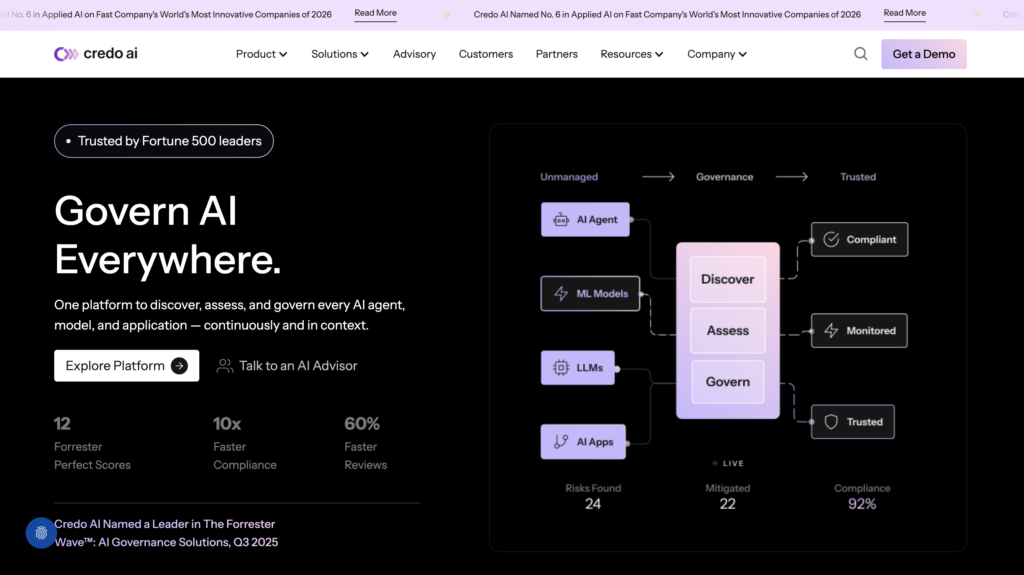
Credo AI provides end-to-end AI governance lifecycle management with a focus on third-party vendor compliance tracking.
It maintains a governance registry of all AI systems (internal and vendor-supplied), generates risk assessments aligned to multiple frameworks simultaneously, and produces audit-ready documentation.
In my evaluation for a financial services client, Credo AI solved a problem none of the other tools handled well: tracking vendor AI components embedded inside purchased software. Most governance tools only inventory what you build.
Credo AI also inventories what you buy, which is where most enterprise AI risk actually lives.
Best for: Organizations with significant third-party AI vendor exposure.
3. Holistic AI
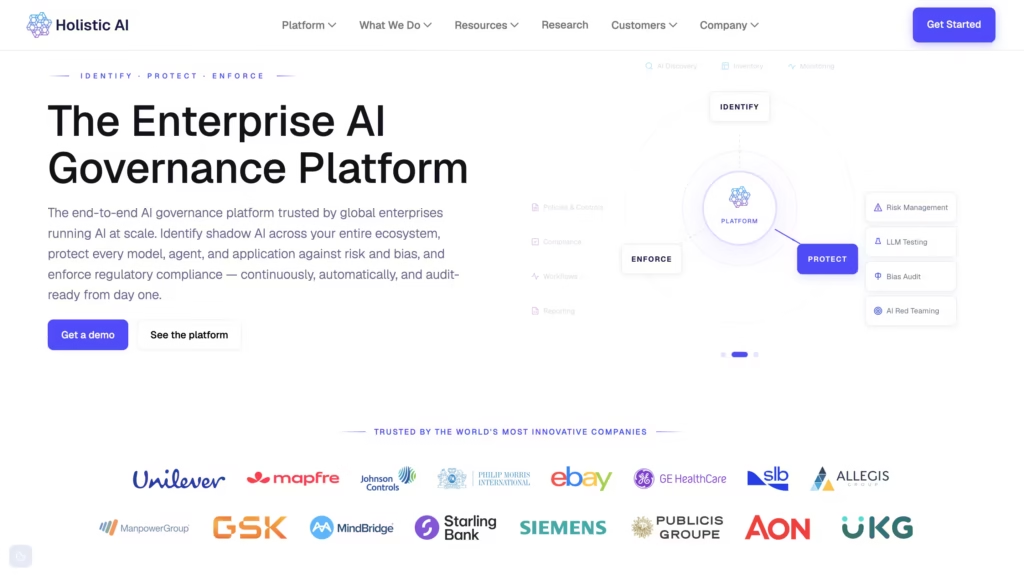
Holistic AI is one of the best AI governance tools that delivers AI lifecycle management from ideation through post-deployment monitoring.
It includes bias auditing, explainability reporting, risk management workflows, and continuous compliance monitoring. The platform is designed for large organizations operating across multiple jurisdictions with different regulatory requirements.
The trade-off: Holistic AI is comprehensive but resource-intensive to implement. Smaller teams and tighter budgets may find it overbuilt. Multiple Gartner Peer Insights reviewers noted the learning curve as a significant factor.
Best for: Large enterprises with complex, multi-jurisdiction AI portfolios.
4. Lumenova AI
Lumenova AI automates the responsible AI governance lifecycle with an extensive library of qualitative and quantitative tests.
It supports private LLM deployments (keeping sensitive data off third-party servers), detects model drift and performance degradation, and includes a risk management framework specifically designed for generative AI applications.
Best for: Organizations deploying generative AI that need specific GenAI governance controls.
5. Fiddler AI
Fiddler AI is a top AI governance tool that focuses on AI observability: explainability, bias detection, performance monitoring, and compliance for ML and LLM systems.
It provides real-time monitoring dashboards that show exactly why a model made a specific prediction, which is the level of transparency regulators increasingly demand.
In my healthcare evaluation, Fiddler’s explainability reports were the only ones our compliance officer could read without asking an ML engineer for help. She reviewed 8 model reports independently and flagged 3 items for follow-up, all without a technical translator in the room.
Best for: Teams that need model-level explainability and real-time monitoring.
Enterprise Platforms with AI Governance Capabilities
These are broader platforms (GRC, data protection, cloud infrastructure) that have added AI governance features.
6. OneTrust AI Governance
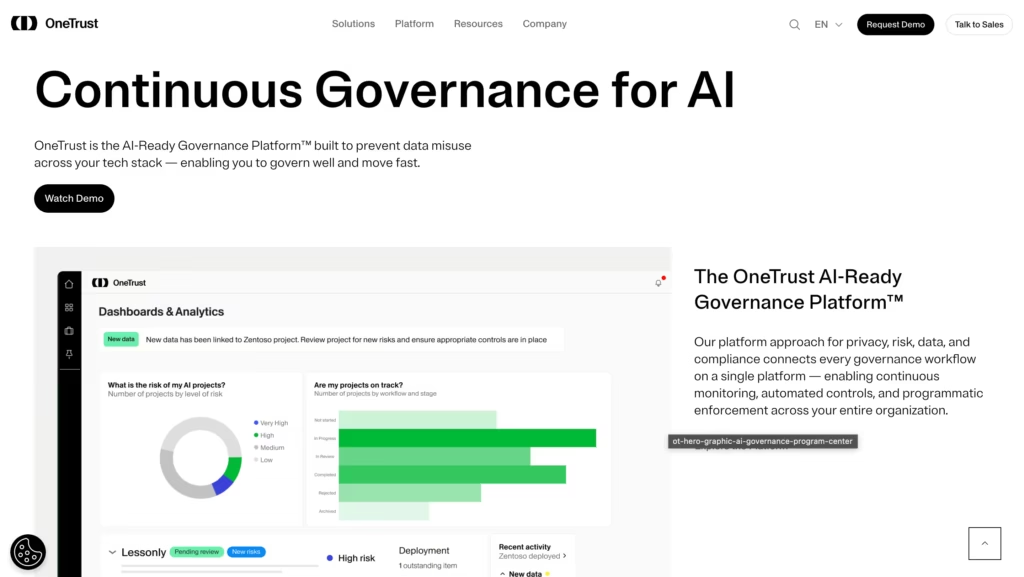
OneTrust extends its established privacy and compliance platform into AI risk management.
It provides automated discovery and registration of AI systems, risk tiering and assessment workflows, built-in EU AI Act compliance templates, and vendor AI risk management for tracking AI components in third-party products.
If your organization already uses OneTrust for privacy (GDPR, CCPA), adding AI governance inside the same platform avoids the “yet another tool” problem.
The risk: OneTrust’s AI governance is an add-on to a privacy platform, not a purpose-built AI governance tool. Dedicated platforms like Trustible and Credo AI go deeper on AI-specific workflows.
Best for: Organizations already using OneTrust for privacy compliance.
7. IBM OpenPages
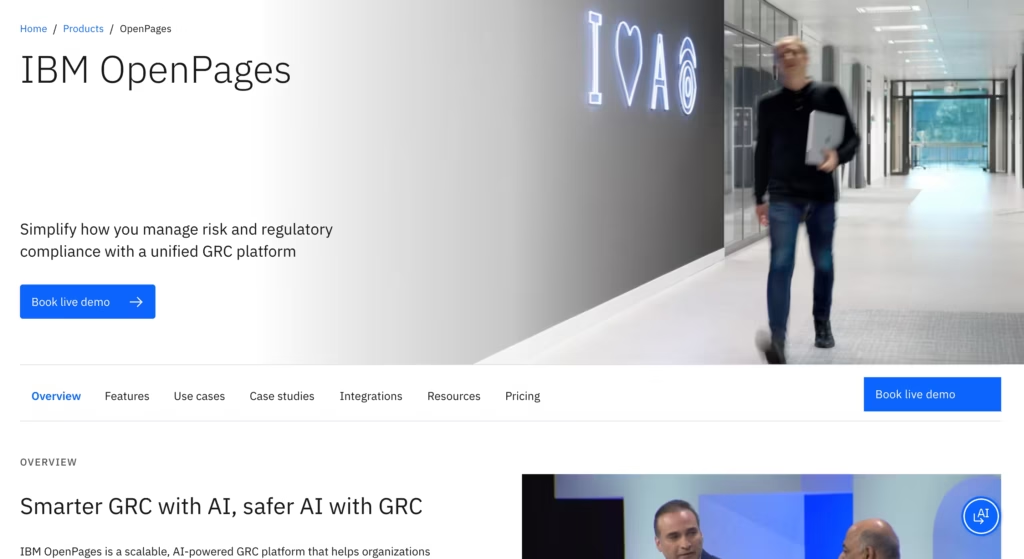
IBM OpenPages provides integrated risk and compliance management with AI governance capabilities.
It tracks models across development, deployment, and production, monitoring for drift, bias, and performance degradation. Automated compliance documentation covers ISO/IEC 42001, the EU AI Act, and financial services regulators.
Best for: Financial services organizations with existing IBM infrastructure.
8. Microsoft Purview + Azure AI Responsible AI
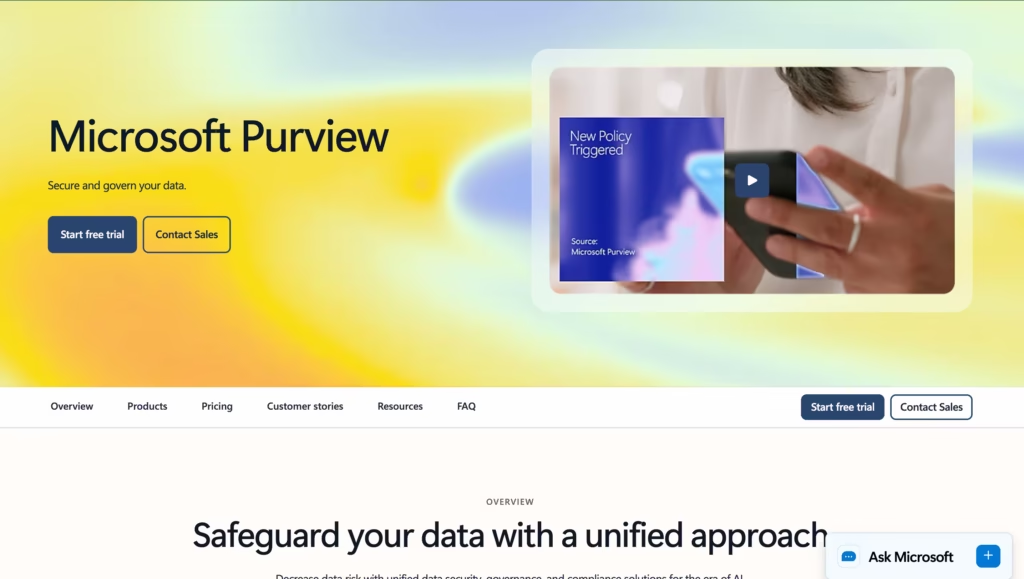
Microsoft Purview combined with Azure AI’s responsible AI tools provides governance for organizations deeply embedded in the Microsoft ecosystem. Purview handles data classification, masking, and lineage across Azure, AWS, GCP, and Snowflake.
Azure AI provides responsible AI assessment templates and Copilot monitoring.
If your organization runs on Microsoft 365 and Azure, this combination provides governance without introducing a new vendor. The limitation: it is strongest for data governance and Copilot oversight. For governing non-Microsoft AI systems, dedicated tools are more capable.
Best for: Microsoft-centric organizations governing Copilot and Azure AI.
Infrastructure-Level Governance
These tools govern AI at the API and infrastructure layer rather than the policy layer.
9. Bifrost

Bifrost is an open-source AI gateway that consolidates governance, budgets, access control, and audit logs into a single control plane. It sits between your applications and your AI providers, enforcing who can call which models, with what budget, under which policy.
Audit logs are immutable and exportable for SOC 2, GDPR, HIPAA, and ISO 27001 evidence requirements.
For platform engineering teams, Bifrost solves the “everyone has their own API key in an environment variable” problem that creates ungoverned AI sprawl. It is infrastructure-level governance, not policy-level governance.
You still need a dedicated platform for risk assessment and compliance workflows.
Best for: Engineering teams that need API-level AI access control and cost management.
10. Knostic
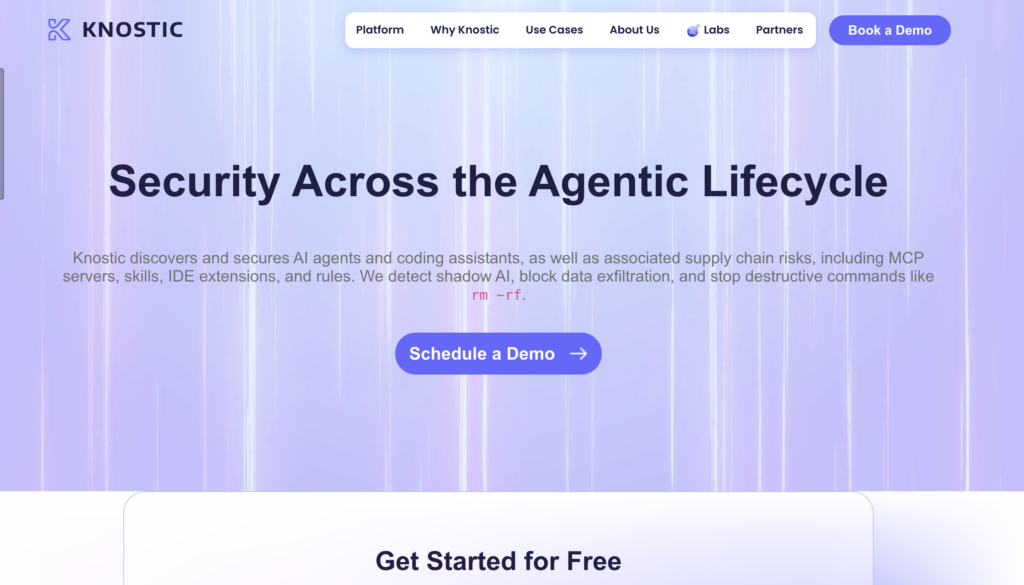
Knostic is laser-focused on one problem: preventing enterprise LLMs from oversharing. It applies real-time, need-to-know access policies so that AI tools (especially Microsoft Copilot) only surface information employees are authorized to see.
Without Knostic, Copilot can surface sensitive HR documents, financial data, or legal memos to anyone who asks the right question.
Best for: Organizations deploying Copilot or similar enterprise AI assistants that access internal data.
How Do These AI Governance Tools Compare?
| Tool | Type | EU AI Act support | NIST AI RMF | ISO 42001 | Shadow AI discovery | Bias detection | Starting price |
| Trustible | Dedicated AI governance | Yes (10+ frameworks) | Yes | Yes | Yes | Via risk scoring | Custom |
| Credo AI | Dedicated AI governance | Yes | Yes | Yes | Yes (inc. vendor AI) | Yes | Custom |
| Holistic AI | Dedicated AI governance | Yes | Yes | Yes | Yes | Yes (auditing) | Custom |
| Lumenova AI | Dedicated AI governance | Yes | Yes | Yes | Limited | Yes | Custom |
| Fiddler AI | AI observability | Yes | Yes | Yes | No | Yes (real-time) | Custom |
| OneTrust | Privacy platform + AI | Yes (templates) | Yes | Yes | Yes | Limited | Custom |
| IBM OpenPages | GRC + AI governance | Yes | Yes | Yes | Limited | Yes | Custom |
| Microsoft Purview | Data governance + AI | Yes (Compliance Manager) | Yes | Limited | Copilot-focused | Limited | Included with E5 licensing |
| Bifrost | AI gateway | Supports audit requirements | Supports logging | Supports audit | No | No | Open source |
| Knostic | LLM access control | Limited | Limited | No | No | No | Custom |
Which AI Governance Tool Should You Pick?
One thing I want to say before the recommendation table: in my view, EU AI Act support is now the baseline requirement for any governance tool, even for US-based companies.
I saw this firsthand when my financial services client had to retrofit their entire AI inventory process because their LP agreements referenced EU AI Act compliance.
If your tool does not map to the EU AI Act, you will likely be rebuilding your governance stack within 18 months regardless of where you are headquartered.
| Your situation | Best pick |
| Standing up AI governance from scratch | Trustible |
| Heavy third-party AI vendor exposure | Credo AI |
| Large enterprise, multi-jurisdiction, complex AI portfolio | Holistic AI |
| Deploying generative AI and need GenAI-specific controls | Lumenova AI |
| Need model-level explainability for auditors | Fiddler AI |
| Already using OneTrust for privacy compliance | OneTrust AI Governance |
| Financial services with existing IBM infrastructure | IBM OpenPages |
| Microsoft-centric environment governing Copilot | Microsoft Purview + Azure AI |
| Engineering team needing API-level access control | Bifrost |
| Deploying Copilot and worried about data oversharing | Knostic |
After evaluating these platforms, my recommendation for most organizations starting their AI governance journey is Trustible.
It is purpose-built for governance professionals (not data scientists), covers the frameworks that matter (EU AI Act, NIST, ISO 42001), and includes the vendor analysis feature that saves weeks of manual review.
For organizations with existing GRC or privacy platforms (OneTrust, IBM), extending those tools is the more pragmatic path than introducing a new vendor.
A mistake I have seen in 3 out of 5 client engagements: buying a monitoring tool when they need an inventory tool. You cannot govern AI you have not found yet. Start with discovery and inventory. Add monitoring after you know what you are governing.
FAQs
1) What is the difference between AI governance and data governance?
Data governance manages data quality, lineage, access, and classification. AI governance manages the AI systems that use that data, including risk assessment, bias monitoring, policy enforcement, and regulatory compliance for AI-specific laws like the EU AI Act. Most organizations need both, and some tools (OneTrust, IBM OpenPages) cover both in a single platform.
2) Is AI governance required by law?
Yes, for certain AI systems. The EU AI Act requires risk assessment, documentation, and monitoring for high-risk AI systems, with enforcement beginning in 2025 for prohibited practices and 2026 for high-risk systems.
The Colorado AI Act imposes obligations on high-risk AI used in consequential decisions. NIST AI RMF is voluntary but increasingly expected by US federal procurement.
3) How much do AI governance tools cost?
Most platforms use custom enterprise pricing. Based on industry positioning and client engagements, expect $50,000 to $200,000 per year for dedicated AI governance platforms. Enterprise GRC platforms with AI add-ons (OneTrust, IBM OpenPages) are priced as part of broader contracts. Bifrost is open source and free.
4) Do I need a dedicated AI governance tool if I already have a GRC platform?
It depends on how many AI systems you are governing. If you have fewer than 10 AI systems and your GRC platform has added basic AI inventory and risk assessment features, extending your existing platform may be sufficient.
If you have dozens or hundreds of AI systems, shadow AI concerns, or significant third-party AI vendor exposure, a dedicated AI governance tool provides the depth that general GRC platforms lack.
5) What is shadow AI and why does it matter for governance?
Shadow AI refers to AI tools adopted by employees without IT approval or oversight. This includes personal ChatGPT accounts, browser extensions with AI features, and AI capabilities embedded in SaaS products your organization already uses.
Shadow AI events carry an average of $670,000 in additional costs above standard breach incidents. Governance tools with discovery capabilities (Trustible, Credo AI, OneTrust) can detect and inventory shadow AI.
