
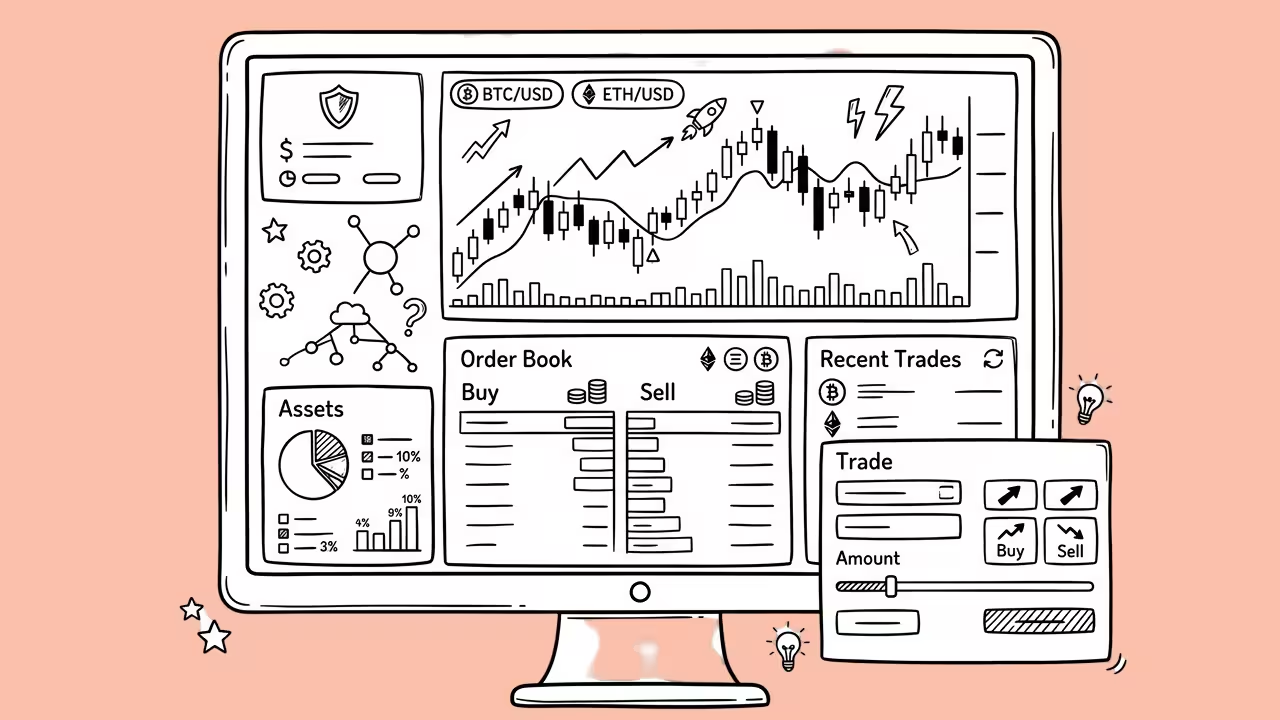

Binance, the largest crypto exchange on the planet, rolled out a platform on Thursday that lets AI agents analyze markets and place trades for you.
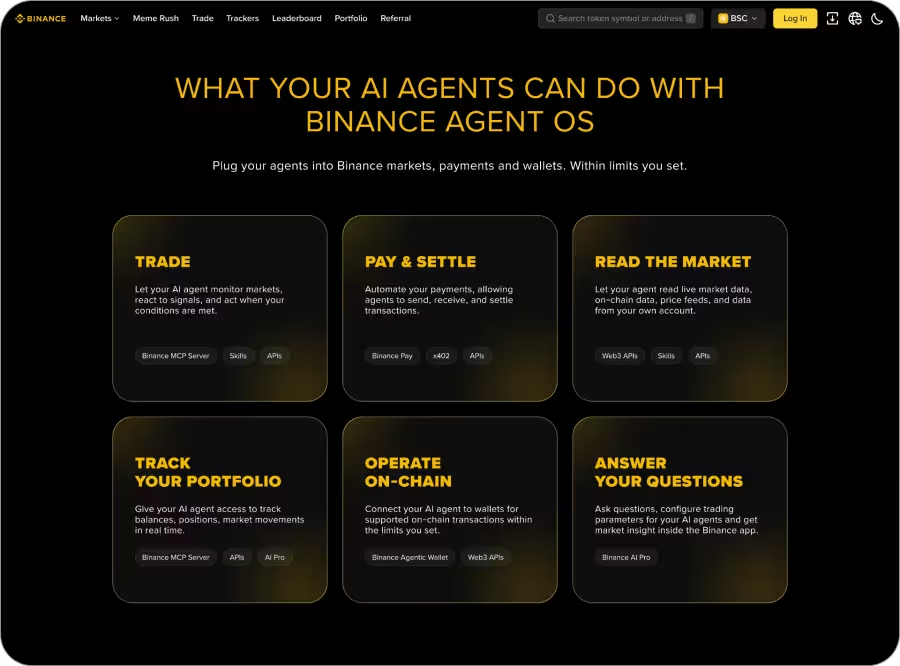
The platform is called Agent OS, which connects AI apps and agents straight to Binance’s financial systems.
That includes Binance’s APIs, its Wallet Agentic Hub, a payment tool called x402, and something called Skill Hub.
Binance also added new support for the Model Context Protocol, or MCP, which is becoming a common language for AI tools to talk to different platforms.
Agent OS works with tools people already use every day. That includes OpenAI’s ChatGPT and Codex, Anthropic’s Claude Code, and Cursor.
So if you already use one of these AI tools, you could soon let it peek at market data, check your account, and place trades for you.
More than 300 million people have accounts on Binance, a massive pool of potential users who might hand some trading power over to a bot.
Agent Oversight
The job of overseeing the AI agents falls on the user. Jeff Li, Binance’s vice president of product, explained the thinking behind this setup in a recent interview.
He said Binance wanted to avoid giving agents total freedom. So the company built in what he calls granular access control. That means you decide exactly what your agent can and can’t do.
Li said this control sits at the account level, and it will help to protect your funds, even if the AI messes up or gets tricked somehow.
Safety Cage
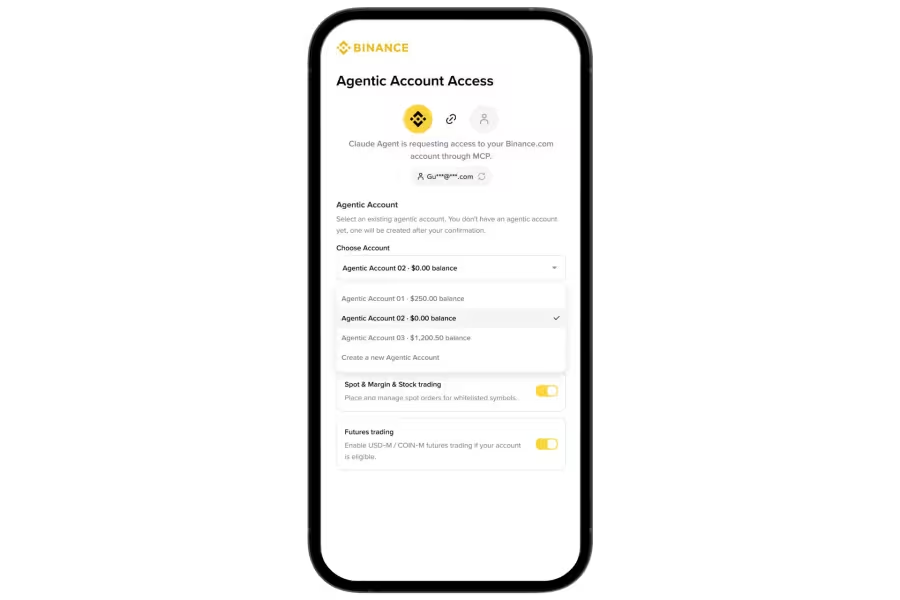
So how does this actually work in practice? Binance uses something called sub-accounts. You set one up and assign it to your AI agent.
Then you decide what that sub-account can do, whether it’s spot trading or futures trading. Withdrawals are blocked by default on these sub-accounts.
That means even if an agent goes rogue, it can’t just drain your funds and send them somewhere else.
Li called this setup a sandbox. It boxes in whatever the agent is doing, so the damage stays limited.
You also get to choose how much freedom your agent has. You can set it up to ask permission before every single trade.
You can also let it run wild once you’ve configured its permissions. There’s no separate cap from Binance on how much an agent can trade or lose.
Instead, the limit is simply how much money you put into that sub-account in the first place. Whatever you deposit is the ceiling.
Blind Spot
Someone asked Li whether Binance can actually see why an agent made a certain trade. He said the reasoning happens outside Binance’s systems entirely.
It could be happening on your own computer or inside whatever AI app you’re using. In his words, Binance really can’t see the reasoning behind a user’s actions.
That means Binance can watch what trades an agent makes. But it has almost no way to tell if a bad decision came from faulty data, a glitchy algorithm, or even outside manipulation.
This begs the question, “What happens if someone hacks or tricks an agent into making bad trades? Li pointed right back to the sub-account system.
That’s still the main line of defense, he said. Binance also noted that its usual security checks, risk controls, and anti-money-laundering rules already apply to Agent OS from day one.
Beyond Trades
Trading is just the starting point here. Li made it clear that agents could do a lot more down the road. They could watch markets around the clock and dig into research and assess risk.
They could react instantly to market signals. Some could even run full strategies on their own, like arbitrage, where you profit off small price differences between markets.
Agent OS also links up with payments and blockchain activity. Through the x402 integration, agents can send and settle payments automatically.
The Agentic Wallet lets them interact with different tokens and also decentralized finance protocols.
There are limits built into the wallet side. Regular swaps top out at $50,000 a day and DeFi transactions max out at $100,000 daily by default.
x402 payments are capped at just $20 a day. This shows Binance is still being cautious, especially with newer, less-tested features.
Li called Agent OS the company’s first step. The vision is a platform where developers can build AI tools that operate across both crypto markets and traditional financial markets.
Crypto Platforms
Back in March, Kraken rolled out an open-source command-line tool with its own built-in MCP server. That tool lets AI agents handle spot and futures trades directly.
Then in June, Coinbase jumped in with its own version called Coinbase for Agents.
It connects AI agents straight to user accounts, letting them trade, send payments, and run other financial tasks, all within limits the user sets themselves.
OKX also joined in. Earlier this year, the exchange released an open-source MCP toolkit of its own, opening the door to agentic trading on its platform.
