
Most beginners enter trading the same way: nervously and with money, and then end up with regret. Reasons are not far-fetched: the learning curve is steep, the stakes are high and immediate, and the emotional pressure of watching live funds move makes rational decision-making nearly impossible.
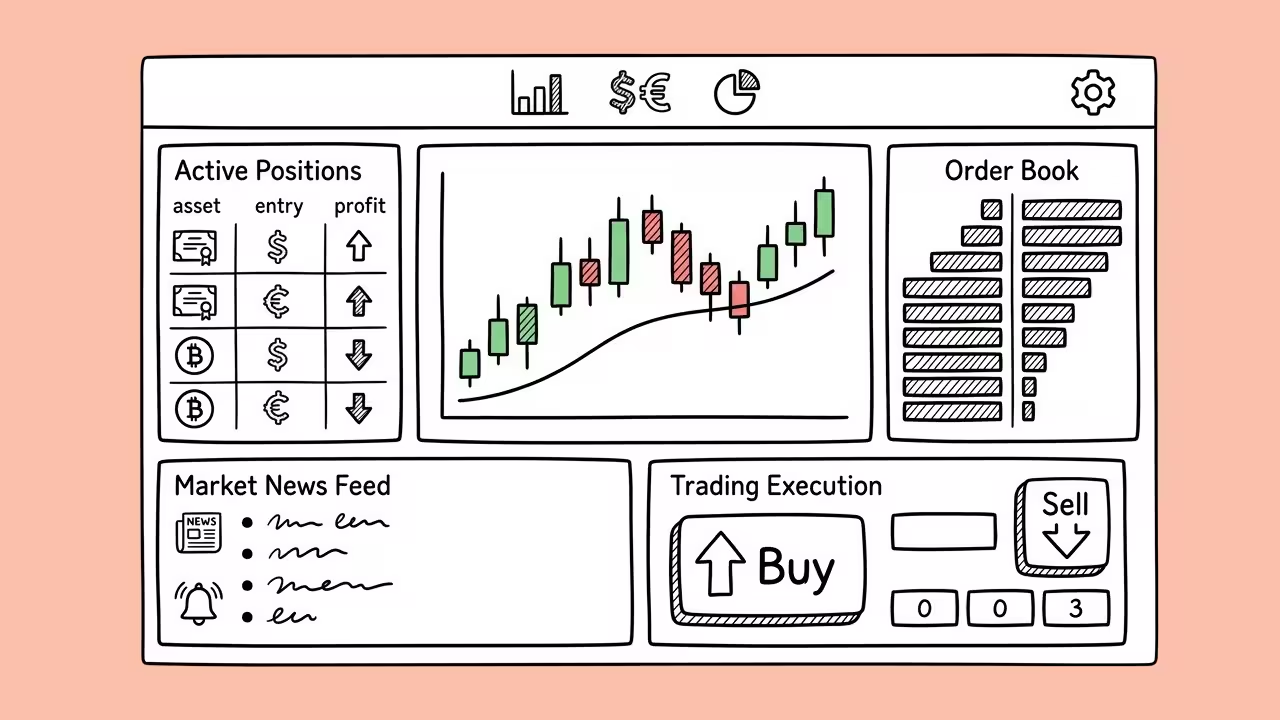
Today, beginners have access to tools that previously required institutional infrastructure to use. AI now analyzes market patterns, flags risk exposure in real time, and simulates live trading environments, all before a single dollar is committed. I have spent time testing these tools directly, and the gap between a platform that uses AI well and one that does not is not subtle.
Copy trading lets beginners mirror the strategies of experienced traders automatically, thereby removing much of the guesswork. Add AI to the mix, and the result is a safer, smarter entry point into financial markets.
This guide breaks down exactly how that works. It covers where AI filtering helps, where it still falls short, and how to start practicing today without any financial risk.
What Is Copy Trading, and Why Does AI Make It Less Risky?
Copy trading is straightforward in concept. It involves selecting a trader whose strategy you want to follow. The platform then automatically replicates their trades in your account, proportionally. When they buy, you buy. When they sell, you sell. You participate in the market without needing to make every decision yourself.
This significantly shortens the learning curve. Instead of spending months developing a strategy from scratch, traders learn by observing and profiting from the experts. It also removes impulsive, emotional decision-making. Panic selling and impulsive buying are among the most common beginner mistakes, which copy trading eliminates.
However, copy trading alone is not a guaranteed path to success. When I tracked three top-rated traders, two of them dropped 18% within 72 hours despite 90%+ historical win rates. Their strategies were not built for sudden liquidity crunches, and nothing in their historical data flagged that vulnerability in advance.
That gap between past performance and live behavior is the single most important thing every beginner needs to understand before committing real capital.
How AI Reduces Risk in Copy Trading
AI enhances copy trading in several specific ways, though I want to be direct about what it can and cannot do. Rather than simply mirroring a trader, AI platforms analyze historical performance data, win rates, drawdown levels, and risk profiles before surfacing any trader to you.
In my view, this filtering saves hours of manual research. But it should not replace your own due diligence. I have seen traders with clean AI scores still blow up portfolios during black swan events. The algorithm filters out predictable high-variance risk but does not predict the unpredictable.
BYDFi tracks and displays drawdown data transparently. Armed with risk controls and filtering tools, users can therefore decide which trader to follow.
AI also monitors live market conditions. It can flag when a trader’s strategy begins to deviate from their historical pattern (a potential early warning sign). Sometimes, machine learning to match your risk tolerance profile with compatible traders. AI can also suggest when to pause or exit a copied strategy based on live market sentiment data.
Trading decisions are therefore informed and more protected. Still, even with AI assistance, practice matters. Deploying real capital before you understand the mechanics of a platform, or before you have tested a strategy, is avoidable risk. That is why paper trading exists.
How to Use BYDFi’s Paper Trading Feature: Step by Step
Paper trading means simulated trading. You use virtual funds to execute real market orders in a live environment with real prices and real positions. The only thing that is not real is the money, which means the risk is not real either.
1. Create a Free BYDFi Account
Visit BYDFi and sign up. The registration process requires no deposit to access the paper trading feature. You are not asked to commit capital to explore the platform, either.
2. Navigate to the Paper Trading Section
Once logged in, locate the practice trading environment in the platform dashboard. BYDFi labels this clearly enough that first-time users find it without needing support documentation.
3. Receive Your Virtual Funds
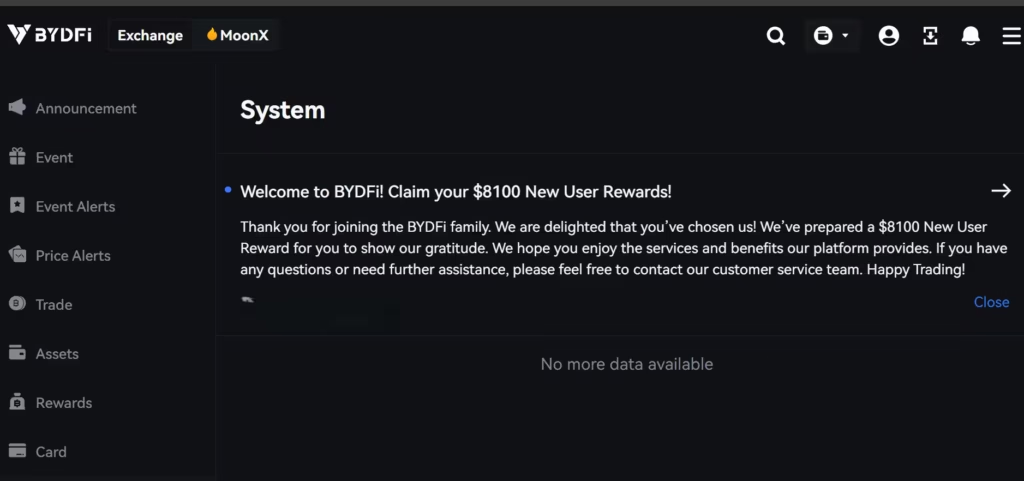
When I first set up my paper trading account, I received 8,100 in virtual USDT and was able to start copying a trader within 10 minutes. I compared this onboarding experience against Bybit; only BYDFi gave me full access to copy trading simulation without requiring a deposit first.
4. Explore the Copy Trading Feature
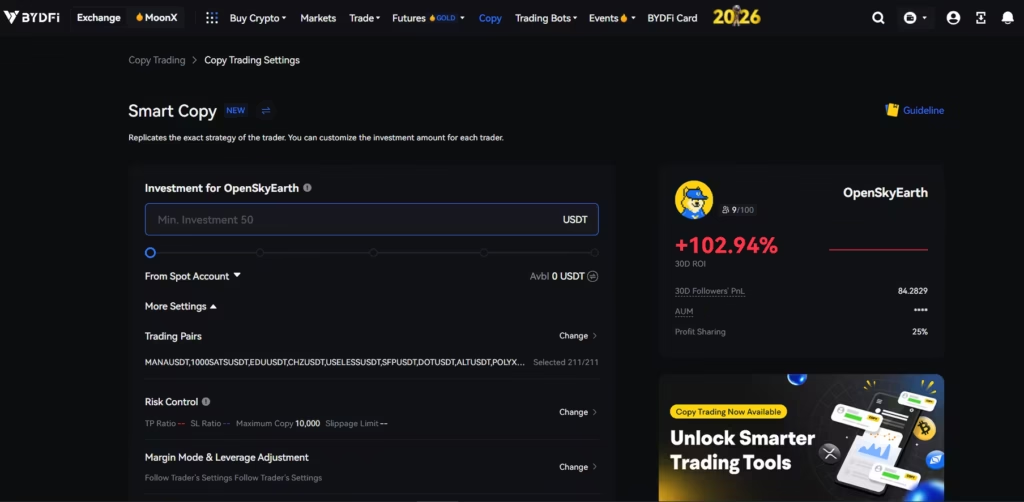
This is where the real learning begins. Through BYDFi practice trading, you can browse available traders, review their performance metrics, and select one to copy, all within the simulated environment. You are allowed to test strategies under current market conditions.
5. Analyze Your Results
After running a copy trading strategy for a period, review the outcomes. Ask “What worked?” “What did not?” “How did the strategy respond to sudden volatility”
Because real money and the associated emotions aren’t concerned, these questions are much easier and far less costly to answer.
6. Transition to Live Trading With Confidence
Once you consistently understand how your chosen strategy performs and how the platform executes it, you are in a far stronger position to move to live trading.
What to Look for in an AI Copy Trading Platform
- Fully transparent trader performance data, including maximum drawdown, monthly return consistency, total trade volume, and risk scores.
- Trader matching according to risk profile. This should be powered by an algorithm, not a basic filter dropdown. BYDFi’s drawdown-threshold filtering is a concrete example of this done right.
- Practice through paper trading.
- Risk management tools such as stop-loss controls, position size limits, and automated alerts.
- Documented security infrastructure and regulatory compliance.
Alerts can be configured to send signals through webhooks to the broker for automatic execution, or they can be sent as push notifications to a mobile trading app so the trader can review and execute manually. To easily bridge webhooks directly to MetaTrader, traders can also claim free PineConnector access through Switch Markets.
Key Takeaways
- AI helps beginners with trading by filtering trader performance data, matching risk profiles, and monitoring live market conditions.
- Copy trading has its caveat; even top-rated traders can drop 15–20% within 48 hours during volatile conditions despite proven track records.
- Paper trading is a good beginner path that prepares for actual trading.
- In my assessment, BYDFi’s integrated paper trading puts it ahead of other platforms like Bybit that push beginners toward live capital without structured practice.
- The ideal platform should provide transparent performance data, AI matching, risk controls, and a good practice environment.
