
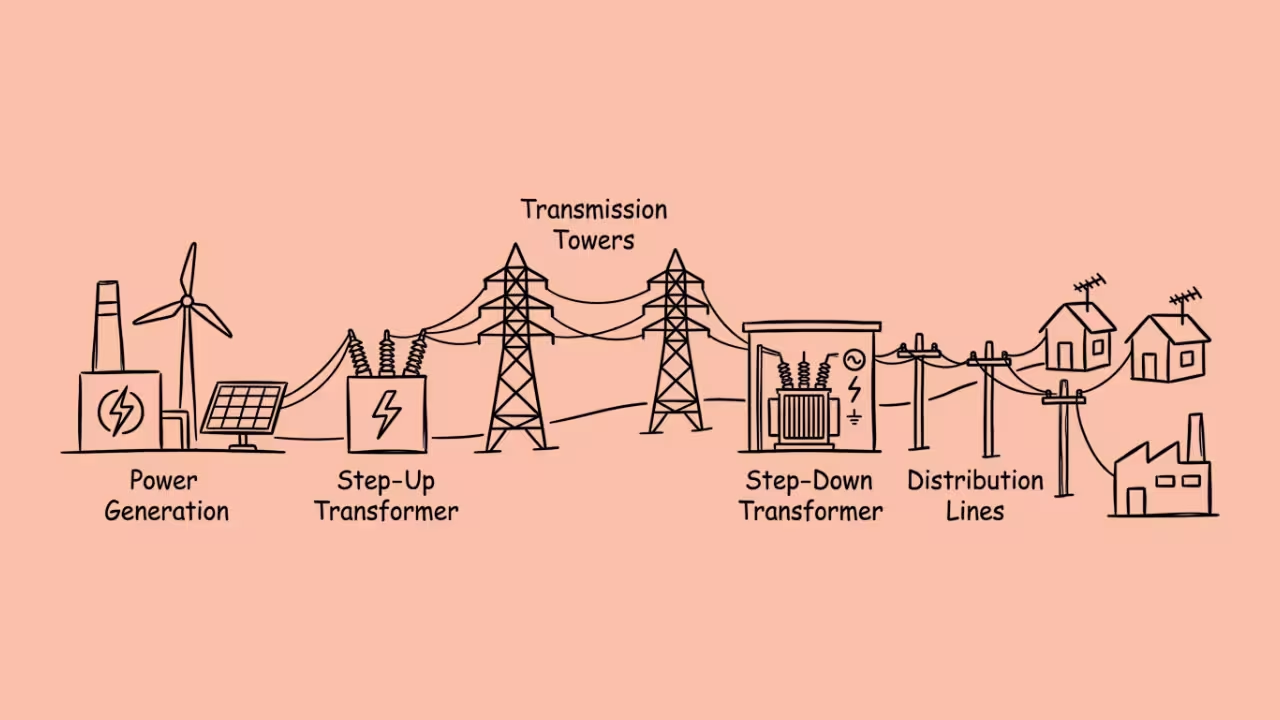

As more companies build massive data centers to support AI tools and cloud services, electricity demand keeps increasing.
Now, the operator of the largest electrical grid in the United States says it may temporarily cut power to some of the biggest electricity users during periods of high demand.
This will help prevent blackouts while the grid works to add more power generation.
Power Cuts
PJM Interconnection, which manages the largest regional power grid in the U.S., recently announced that certain large electricity users may have their power temporarily reduced.
The new policy was enacted when a generating capacity auction failed to secure enough new electricity supplies to keep pace with demand.
As a result, PJM is taking extra steps to protect grid reliability. The program is expected to begin in June 2027.
It will only apply to facilities that consume at least 50 megawatts of electricity, a level typically reached by large AI data centers, cloud computing campuses, and other major industrial users.
PJM’s service area stretches from Virginia to Illinois and supplies electricity to roughly 67 million customers. This makes it the largest regional transmission organization in the country.
AI Data Centers
Every AI chatbot, image generator, and large language model depends on thousands of powerful servers running around the clock.
Those servers require enormous amounts of electricity, not only for computing but also for cooling systems that prevent equipment from overheating.
Industry forecasts suggest that by 2035, data centers could consume four times more electricity than they use today.
That rapid increase has left many utilities and grid operators racing to expand power generation before demand outpaces supply.
Building new power plants and transmission lines takes years, while new data centers can become operational much faster.
Such a mismatch is putting additional pressure on the nation’s electrical infrastructure.
Power Reduction Program
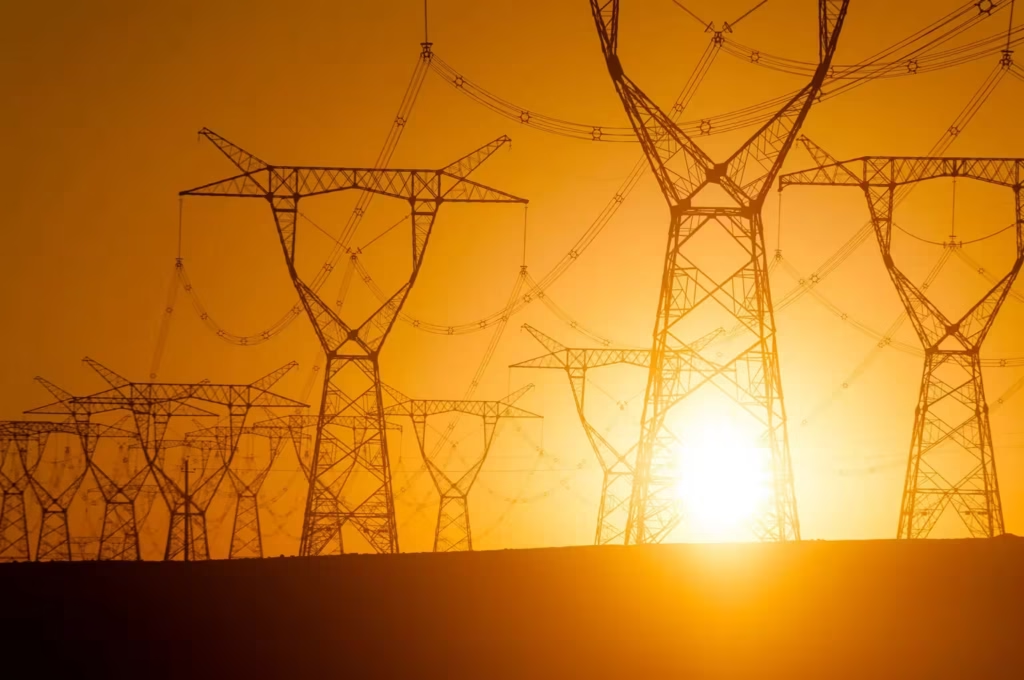
The planned power reductions resemble demand response programs that utilities have used for decades.
Instead of cutting electricity to homes or hospitals, grid operators ask large commercial customers to temporarily reduce their power use during periods of peak demand.
Companies that participate receive financial compensation for helping stabilize the grid.
Depending on weather conditions and electricity forecasts, participating facilities may receive notice anywhere from about 30 minutes to several days before they need to reduce their electricity consumption.
This will lower demand enough to avoid widespread outages while maintaining reliable service for residential customers and essential services.
Data Center Operators
Many data center companies are unlikely to accept downtime, even for a short period.
Instead, they may invest in their own on-site power systems to keep operations running during grid interruptions.
Some companies are already exploring natural gas power plants, battery storage systems, and even small nuclear reactor projects to provide dedicated electricity for future facilities.
Others will continue relying on backup generators.
Also read: Meta Is Building Data Centers in Giant Tents
Diesel Generators
Diesel generators are one of the most common backup power solutions for large data centers.
They can start quickly, store fuel on-site, and continue operating even if the electrical grid experiences problems. However, they also come with environmental concerns.
Federal regulations generally allow these generators to operate for up to 50 hours each year during demand response events and up to 100 hours annually for emergencies, maintenance, and testing.
If more data centers begin relying on diesel generators during planned power reductions, local air pollution could become an issue in communities located near large server campuses.
Electricity Prices
PJM has also faced criticism over how it has handled both new electricity generation and the rapid connection of large power users like data centers.
Over the past year, wholesale electricity prices across the PJM region have nearly doubled.
PJM’s independent market monitor has pointed to the rapid expansion of data centers as one of the major drivers behind the increase.
Higher wholesale electricity prices can eventually affect businesses and households, although retail electricity rates depend on local utilities and state regulators.
