
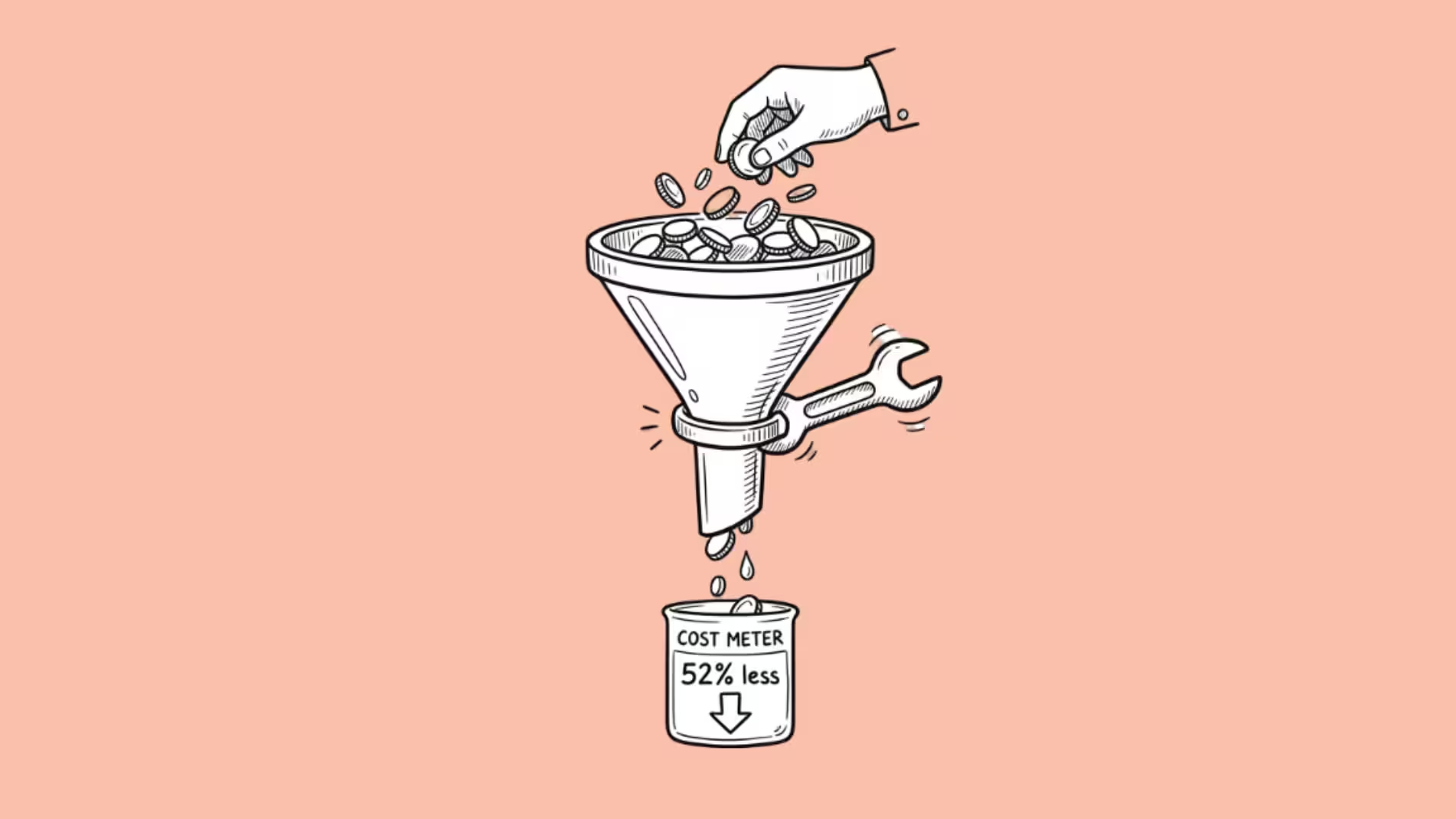

If you’ve spent any time looking at your Shopify analytics lately, you’ve probably noticed a bit of a worrying trend. The cost of getting a new customer through the door is higher than it’s ever been. It’s a common story; we’re all paying more for Meta ads, Google keywords are becoming a bidding war, and the return on that initial spend isn’t what it used to be. I’ve spoken to many brand owners who feel like they’re running on a treadmill that keeps getting faster, yet they’re staying in the same place.
The shift we’re seeing right now is a move away from the frantic hunt for new traffic and towards a much more sensible, sustainable focus: retention. It’s no longer just about the first sale. It’s about how we keep people coming back without having to pay Mark Zuckerberg for the privilege every single time. This is where gamification enters the room, but I’m not talking about just slapping a badge on a profile. We’re looking at the engineering behind high-stakes engagement that actually moves the needle on growth.
The CAC Pivot: Why Shopify Brands are Moving to Retention-First Models
The era of “cheap clicks” is well and truly over. There was a time, perhaps five or six years ago, when you could throw a bit of money at social media and see a healthy return almost instantly. Those days are gone, replaced by a complex environment where privacy changes and increased competition have sent Customer Acquisition Costs (CAC) through the roof. I find that the brands winning right now are those that have realised their most valuable asset isn’t their next customer; it’s their last one.
Focusing on retention-first models isn’t just a defensive move; it’s a strategic one. When you increase your customer retention rate by even 5%, you can see profits jump by anywhere from 25% to 95%. That’s because a returning customer is already familiar with your brand. They trust you. You don’t need to convince them from scratch. By shifting the budget from acquisition to retention, brands are building “moats” around their businesses. They’re creating communities and habits that are much harder for competitors to disrupt.
Micro-Incentives & Psychology: The Science of ‘Spin-to-Win’ Popups in E-commerce
We’ve all seen them: the little wheels that pop up promising a discount if you just give them your email address. Some people find them a bit cheesy, but the data doesn’t lie. They work. But why do they work so much better than a static “10% off” banner? It all comes down to the psychology of micro-incentives.
When you interact with a “Spin-to-Win” mechanic, you’re not just looking for a bargain; you’re participating in a micro-event. There’s a moment of anticipation. Psychologically, this taps into what’s known as the “Endowed Progress Effect.” By interacting with the wheel, you feel like you’ve earned that discount. It’s not just a generic offer given to everyone; it’s your prize. This small shift in perception makes the customer much more likely to actually use the code.
It’s also about overcoming the “choice paralysis” that many shoppers feel. By gamifying the initial interaction, you’re providing a clear, fun path forward. You’re breaking the ice. Many of us have experienced that moment of hesitation before buying something new; these little psychological nudges are designed to smooth over that friction and make the journey feel a bit more rewarding.
The Mechanics of Engagement: Variable Rewards and High-Frequency Digital Environments
The real secret sauce of gamification is something called “variable rewards.” This is a concept rooted in behavioural science, specifically the work of B.F. Skinner. He found that creatures (including us humans) are much more likely to repeat a behaviour if the reward is unpredictable. If you get a treat every single time you press a button, you eventually get bored. But if that treat only comes occasionally, or in different sizes, you’ll keep pressing that button for a long time.
In the Shopify world, we can apply this to loyalty programmes. Instead of just “spend £1, get 1 point,” why not introduce elements of surprise? Perhaps a customer gets a random “thank you” gift, or a “mystery tier” they can reach. This creates a high-frequency digital environment where the customer feels there’s always something new to discover.
It’s about building a loop:
- The Trigger: An email or a push notification.
- The Action: Visiting the store or checking a loyalty balance.
- The Variable Reward: A surprise discount, early access to a sale, or a piece of exclusive content.
- The Investment: The customer spends time or money, deepening their connection to the brand.
Technical Benchmarking: Mobile-First UX Lessons from Leading Online Gaming Platforms
When we look for inspiration on how to build these systems, we shouldn’t just look at other retailers. We should look at sectors that have perfected the art of engagement under high-pressure, high-traffic conditions. The iGaming industry is a prime example of this. When you look at how high-traffic platforms like Virgin Games manage their slots online, you see what I call “peak UX performance.”
These platforms are masters of zero-latency engagement. If a user clicks a button and there’s even a half-second delay, the flow is broken. Shopify developers should really be studying the reward delivery systems and mobile-first architecture used in this sector. The way these sites handle complex animations, real-time balance updates, and instant feedback loops on a mobile browser is incredibly impressive.
For a Shopify brand, “peak UX” means that your gamified elements shouldn’t slow down the site. If your loyalty pop-up takes three seconds to load, you’ve already lost the customer. We need to aim for that same level of “snappiness” found in professional gaming environments. The lesson here is clear: the tech stack must support the psychology. If the mechanics are clunky, the magic of the “spin” or the “win” disappears instantly. We want our rewards to feel as immediate and satisfying as a winning spin on a high-end mobile platform.
(Please gamble responsibly. For help and support, visit BeGambleAware.org)
Integrating Loyalty SaaS: Aligning MarTech Stacks with Gamified Customer Journeys
So, how do you actually build this without hiring a team of fifty engineers? Thankfully, the Shopify ecosystem is packed with “Software as a Service” (SaaS) tools designed to do exactly this. Tools like Smile.io, Yotpo, or LoyaltyLion are great starting points, but the trick is in the integration.
You want your “MarTech” (Marketing Technology) stack to talk to each other. If a customer wins a prize on your “Spin-to-Win” wheel, that information should immediately flow into your email tool (like Klaviyo) and your CRM. You don’t want to send a “We miss you” email to someone who just spent twenty minutes engaging with your loyalty programme.
The goal is a seamless customer journey. Imagine this: a customer visits your site, plays a small game to earn points, and those points are immediately visible in their account. Later that day, they get a personalised SMS mentioning their new balance and suggesting a product they might like based on their browsing history. This isn’t just marketing; it’s a choreographed experience.
When you’re choosing your tools, look for:
- Deep Integration: Do they play nicely with Shopify’s native checkout?
- Mobile Optimisation: Does the widget look and feel good on an iPhone?
- Data Portability: Can you easily export your loyalty data to use in other campaigns?
A Natural Shift in Strategy
At the end of the day, gamification isn’t about tricking people into buying things they don’t want. It’s about making the process of being a loyal customer more enjoyable. We’re all tired of boring, transactional relationships with brands. We want to feel recognised and rewarded for our attention.
By engineering these high-stakes gamification models, you’re not just “fixing” your retention problem; you’re building a brand that people actually want to interact with. It takes a bit of technical effort and a lot of psychological understanding, but the payoff in terms of growth and customer lifetime value is well worth the work. Just remember to keep the user experience at the heart of everything. If it’s not fast, fun, and fair, it won’t work. But if you get it right, you’ll find that your customers do a lot more than just spin; they stay.
