

Until now, AI in Google Classroom was for teachers and college students only. On August 10, the age gate comes down.
Google announced that Gemini in Google Classroom is expanding to K-12 and higher education students of all ages, giving younger students access to the same AI-powered study tools that were previously restricted to users 18 and older.
The rollout begins August 10 on web and August 17 on mobile.
There’s an important caveat.
Schools aren’t being forced into this. Students only get access if their admin has already turned on Gemini in Classroom, Gemini, and Gemini Notebook.
If those settings are currently off for students, they stay off. Admins can also create separate organizational units for students under 18 and disable access for that group specifically.
Still, the default setting is on. That means schools that haven’t actively locked things down will see their students get AI tools automatically.
What Students Can Actually Do
A new Gemini tab inside Classroom lets students interact with their course materials through AI.
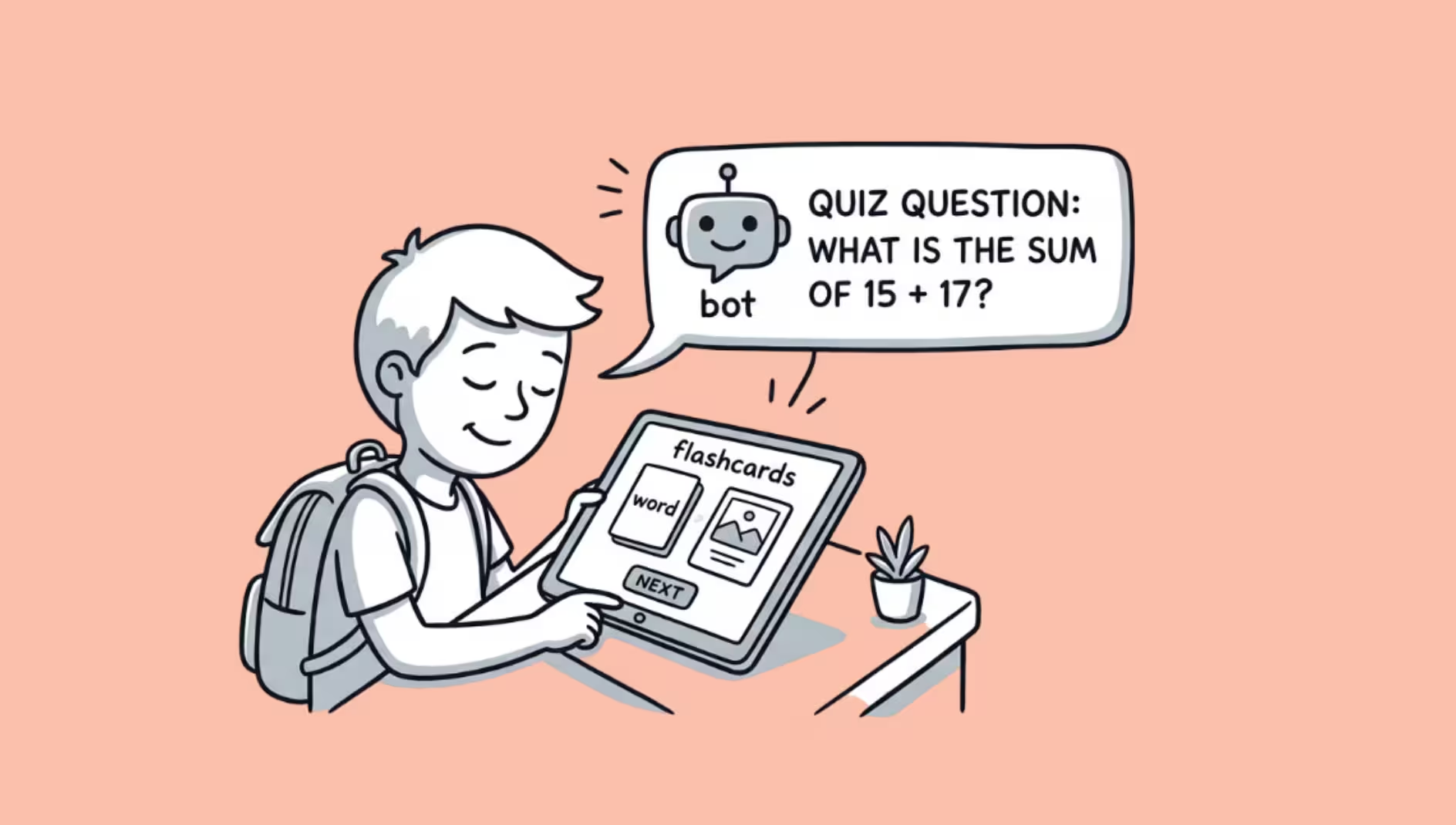
They can select assignments and readings, then ask Gemini to generate flashcards, practice quizzes, and study guides tailored to their specific class.
Students with Gemini Notebook access (formerly NotebookLM) can sync teacher-provided materials directly into Notebook, then create interactive study guides, audio overviews, and infographics from those materials.
The smartest addition is contextualized starter prompts. When a student clicks a prompt, a box pops up asking them to select a specific class and assignment.
Gemini then pulls in the assignment title, instructions, and curriculum materials as context. No more copying and pasting assignment details into a separate AI chat window. The assistant already knows what class you’re in and what you’re working on.
There’s also a “Learn with Gemini” button that appears when students hover over any assignment in “Due Soon” on the redesigned Classroom homepage. One click and they’re getting guided help grounded in their actual coursework.
The Bigger Education Play
This is part of a broader push Google outlined at ISTE in late June.
Alongside the Classroom expansion, Google announced “study notebooks” that turn Gemini into an adaptive learning platform. Students take a diagnostic quiz, Gemini identifies weak spots, and then builds a personalized lesson plan around those gaps.
Teachers can also assign study notebooks grounded in specific class materials and see where individual students need extra help.
Google also partnered with The Princeton Review to offer no-cost practice ACT and GRE tests built into Gemini.
The feature is available globally in all Classroom-supported languages where Gemini is also available. It works across all Google Workspace for Education tiers, including Fundamentals (the free tier), Standard, and Plus.
The Concerns Aren’t New, But They’re Getting Louder
Putting generative AI in front of a kindergartener and a high schooler using the same safety filters isn’t something everyone is comfortable with.
Common Sense Media’s Youth AI Safety Institute reviewed Gemini K-12 earlier this year and flagged several concerns.
The binary under-18/over-18 age designation doesn’t account for developmental differences.
A six-year-old and a seventeen-year-old both marked “under 18” get identical responses. Teachers can enable or disable Gemini and assign Gems, but have minimal ability to monitor conversations or receive alerts about concerning content.
The review also found that safety and performance can decline during long, complex conversations, though Gemini does end conversations it flags as unsafe.
Google’s own disclaimer in the rollout acknowledges that AI can make mistakes and that students should “always review the outputs.” That’s solid advice for an adult professional. Whether a ten-year-old will internalize it is a different question.
Why Google Is Moving Now
Google Classroom has roughly 150 million users worldwide.
Even if a fraction of schools turn on student access, this becomes one of the largest deployments of AI in education overnight.
By making the feature available on free Education Fundamentals accounts, Google ensures that resource-constrained schools aren’t left behind. That’s good.
But it’s also a land grab. The company that gets AI into classrooms first shapes how an entire generation learns to interact with these tools.
If every student grows up using Gemini in Classroom, that’s a durable competitive advantage that’s hard for any rival to unseat.
Schools that want in can start August 10. Schools that want to wait should check their admin settings before then. The default is on.
