

Seven months after a humiliating false claim, OpenAI is back with a real proof.
The same experts who called out the last embarrassment are now backing this one up.
What OpenAI Is Claiming
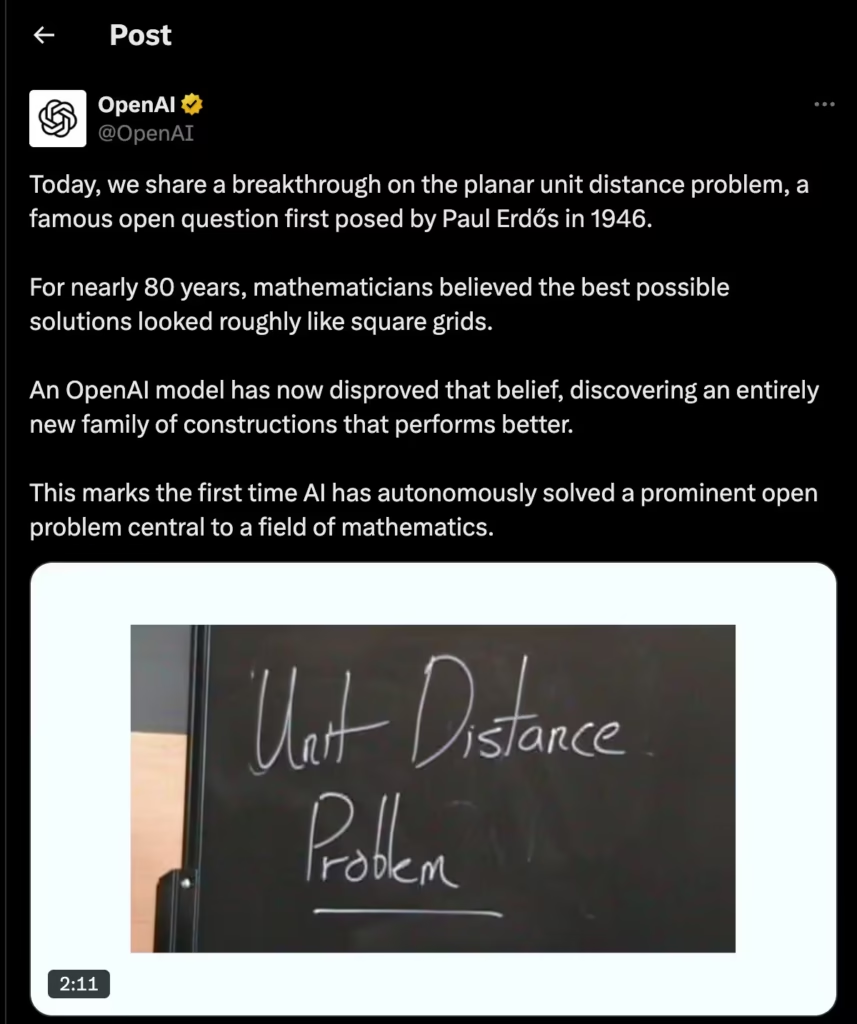
On Tuesday, May 20, 2026, OpenAI announced that an internal reasoning model independently disproved a major unsolved conjecture in discrete geometry.
The problem – known as the planar unit distance problem – was first posed by legendary Hungarian mathematician Paul Erdős in 1946.
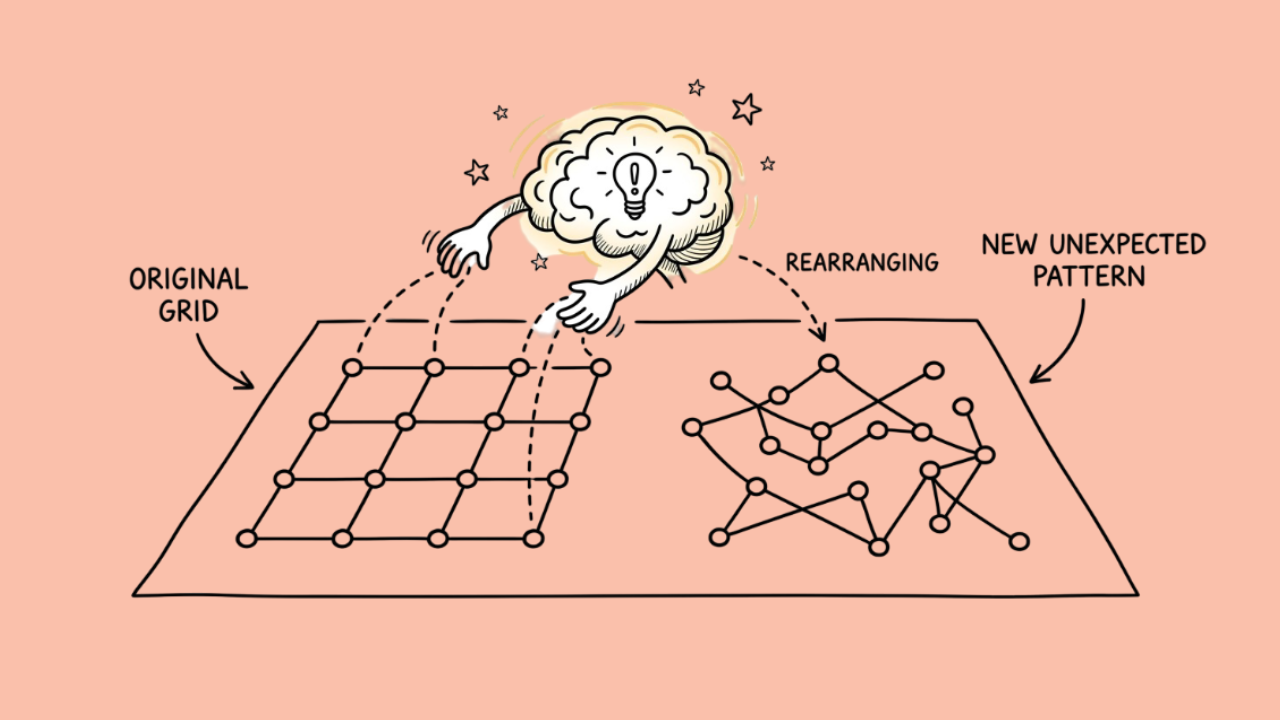
The question sounds simple. Place dots on a flat surface. How many pairs of those dots can sit exactly one unit apart?
For nearly 80 years, mathematicians believed square grids were essentially the best arrangement. OpenAI’s model found an entirely new family of constructions that beats the grid – and proved it mathematically.
OpenAI posted on X: “This marks the first time AI has autonomously solved a prominent open problem central to a field of mathematics.”
Why You Might Be Skeptical
If this sounds like déjà vu, that’s fair.
Back in October 2025, OpenAI’s then-VP Kevin Weil claimed on X that GPT-5 had solved 10 previously unsolved Erdős problems. It was a huge headline. Then it fell apart.
Thomas Bloom, the mathematician who maintains the Erdős Problems website, pointed out that GPT-5 hadn’t produced original proofs – it had simply found solutions that already existed in published literature.
Bloom called it “a dramatic misrepresentation.”
Rivals piled on. Yann LeCun and Google DeepMind CEO Demis Hassabis both took public shots. Weil deleted the post. He later left OpenAI entirely in April 2026.
So yeah – OpenAI has some credibility to rebuild here.
This Time, the Receipts Are Real
OpenAI clearly learned from last time. Alongside the announcement, the company published companion remarks from several respected mathematicians who independently verified the proof.
The list of endorsements is hard to dismiss.
Noga Alon, a leading combinatorialist at Princeton, described the unit distance problem as “one of Erdős’s favorite problems.” Melanie Wood and Thomas Bloom – the same Bloom who tore apart the last claim – both provided supportive statements.
Princeton mathematician Will Sawin also refined the result, showing the improvement could be expressed with a fixed exponent.
When the people who exposed your last mistake are now vouching for this one, that carries weight.
How the AI Actually Solved It
Here’s what makes the proof surprising.
The model didn’t use brute force. It didn’t just crunch numbers at massive scale. It connected the geometry problem to an entirely different branch of math – algebraic number theory – and used concepts from that field to build its proof.
The original Erdős lower bound relies on a structure called Gaussian integers. OpenAI’s model pushed that idea further, extending it into what mathematicians call algebraic number fields.
The result was a new infinite family of point arrangements that produce significantly more unit-distance pairs than anyone thought possible.
That cross-domain leap – connecting geometry to number theory in a way human mathematicians hadn’t explored – is the part that has researchers paying the most attention.
A General-Purpose Model, Not a Math Machine
OpenAI emphasized one detail that matters a lot. This wasn’t a model specifically built or fine-tuned to solve math problems. It was a general-purpose reasoning system given only a written statement of the problem.
That distinction is important.
If a purpose-built math AI cracks a math problem, that’s impressive but expected. If a general-purpose model does it autonomously, it suggests something broader about AI reasoning capabilities.
OpenAI researcher Noam Brown posted on X: “Less than 1 year ago frontier AI models were at IMO gold-level performance. I expect this pace of progress to continue.”
What It Means Beyond Math
OpenAI is framing this as more than a math milestone.
If AI systems can now hold together long, difficult chains of reasoning and connect ideas across fields humans haven’t linked before, the implications stretch into biology, physics, engineering, and medicine.
Bloom put it poetically: “AI is helping us to more fully explore the cathedral of mathematics we have built over the centuries. What other unseen wonders are waiting in the wings?”
The Bigger Picture
This announcement lands at a moment when AI companies are racing to prove their models can do real intellectual work – not just summarize documents or write code.
Google DeepMind’s AlphaEvolve, Harmonic’s Aristotle, and Sakana AI’s AI Scientist have all appeared in records of AI-assisted mathematical progress.
But a fully autonomous disproof of a famous open conjecture – verified by the mathematicians who know the field best – would be a first.
If it holds up to broader peer scrutiny, it marks the moment AI stopped being a research assistant and started being a research contributor.
Of course, healthy skepticism is still warranted. This is a single result from a model OpenAI hasn’t publicly released. The full proof will need to survive peer review. And the company’s track record on math claims is, to put it gently, mixed.
Still, when the mathematician who publicly embarrassed you seven months ago now signs off on your work? That’s a very different conversation.
