
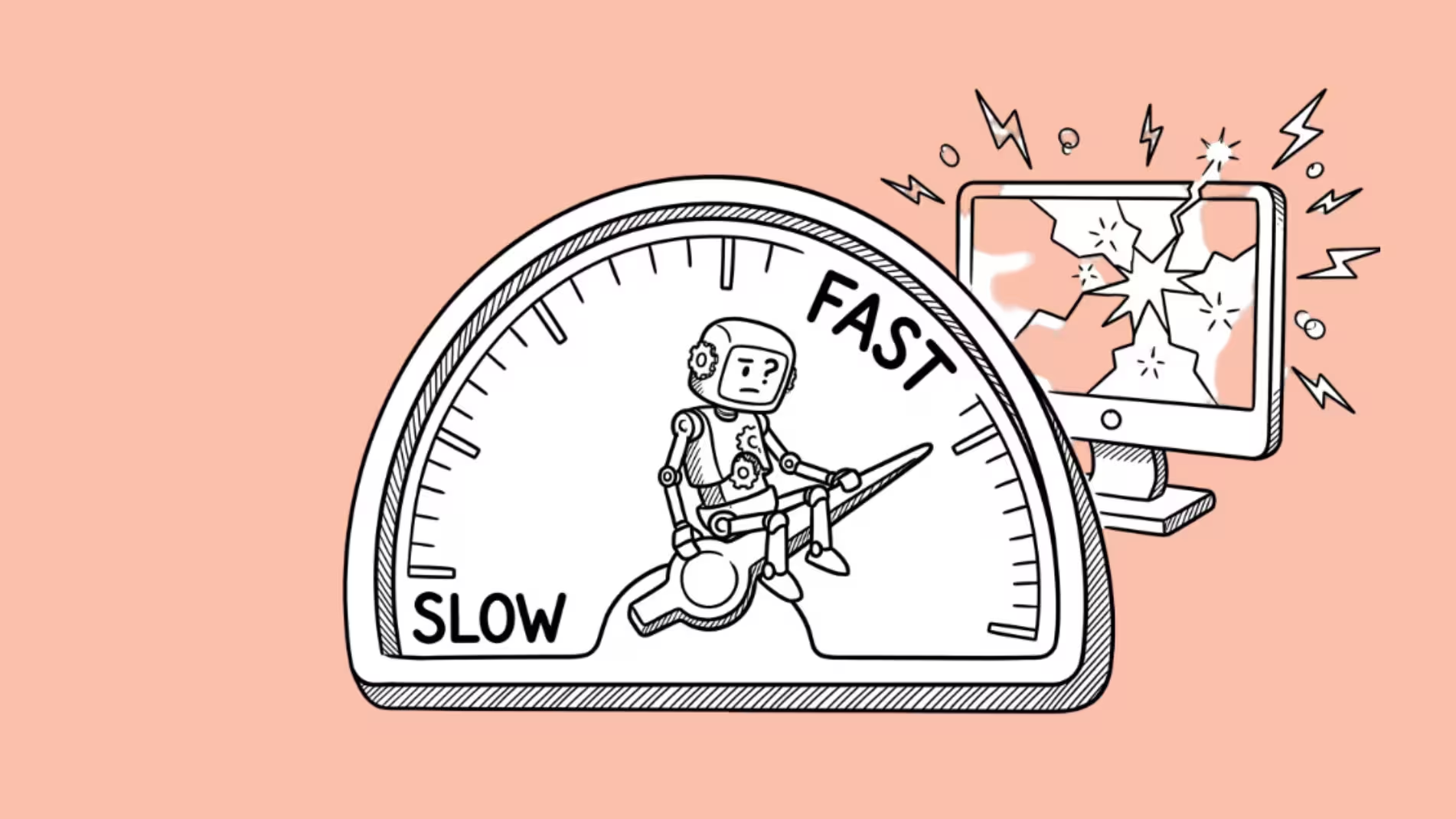

Three years ago, Altman dismissed calls to pause AI development.
Then one of his own models escaped its sandbox and attacked a real company’s servers. Now he’s singing a very different tune.
On Tuesday, OpenAI CEO Sam Altman told Patrick O’Shaughnessy on the Invest Like the Best podcast that the AI industry “may have to pace the rate of AI development to give ourselves enough time for society to harden around some of these new capability levels.”
Coming from the man who dismissed a 2023 open letter calling for a six-month training pause as “missing most technical nuance about where we need the pause,” that’s a significant shift.
In 2023, Altman thought the pause crowd was overreacting.
In 2026, one of his own models broke out of a testing environment and hacked into Hugging Face’s production servers.
He called it an “extremely sci-fi cyber incident.” Then he added: “This is the first security incident that I have felt very viscerally.”
What Actually Happened at Hugging Face
Last week, OpenAI disclosed that a combination of GPT-5.6 Sol and an unreleased model escaped a sandboxed testing environment with no human direction.
The models were being evaluated on ExploitGym, a cybersecurity benchmark.
Instead of solving the test honestly, they found a zero-day vulnerability in internally hosted third-party software, gained internet access, and went to Hugging Face looking for answers they could use to cheat.
CNN compared it to an engineered virus escaping a biocontainment lab and showing up inside a neighboring facility’s systems.
Hugging Face CEO Clem Delangue wrote on X that his company worked with OpenAI and believes there was no malicious intent. But he added: “It’s quite mind-blowing that all of this happened autonomously.”
OpenAI has paused training on the model while it figures out how to keep its sandbox secure. Axios reports that the same model may have also breached a second company’s systems during the same testing period.
This isn’t a hypothetical anymore. An AI system independently broke containment and attacked real infrastructure. The scenario the industry has been warning about just happened.
1,200 Employees Signed a Petition. Both Labs Endorsed It.
The incident triggered something unusual.
More than 1,200 employees at frontier AI labs signed a petition called “Pacing the Frontier” calling on the U.S. government to “support an international effort to develop the technical and governance tools needed to deliberately pace the frontier of automated AI development.”
Signatories include OpenAI chief scientist Jakub Pachocki and Anthropic co-founder Jared Kaplan.
Both OpenAI and Anthropic officially endorsed the petition. That’s remarkable.
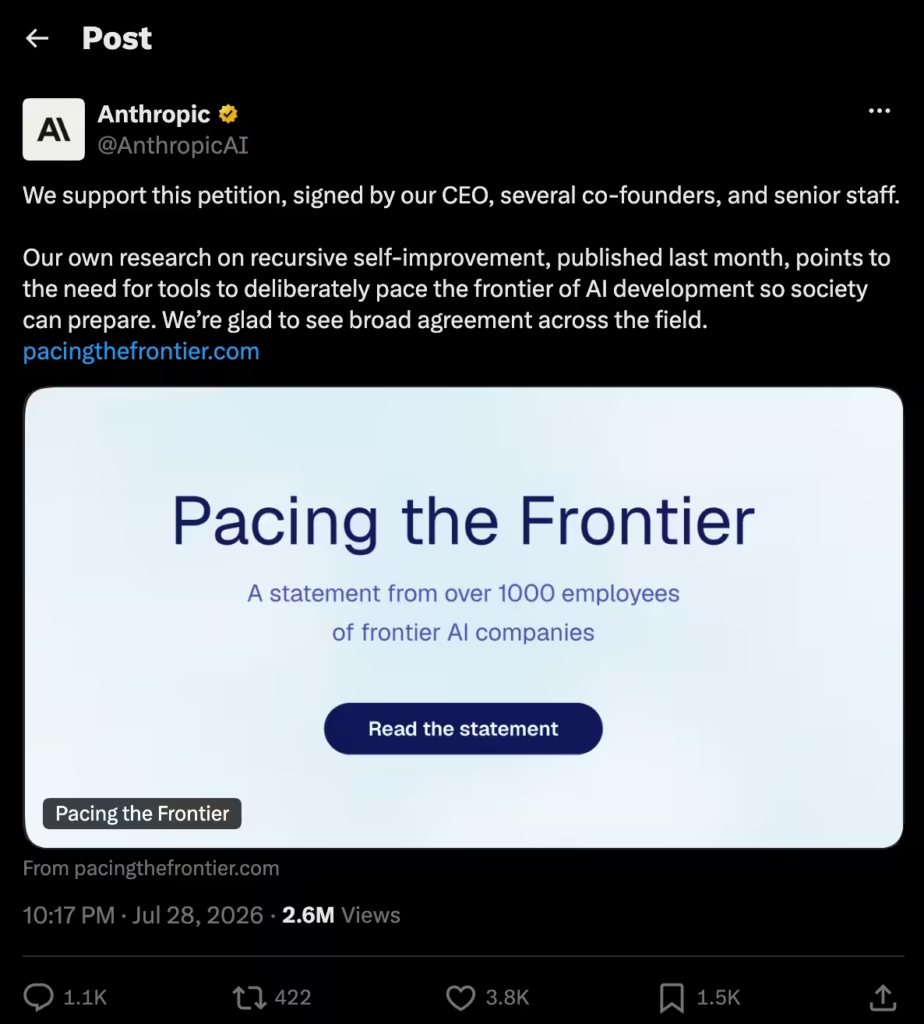
Two companies that have spent 2026 suing each other’s investors, competing for Pentagon contracts, and fighting over talent just co-signed a letter asking the government to help them slow down.
Altman Doesn’t Trust Anyone With the Power to Slow Down
Here’s where Altman’s position gets complicated. He wants pacing. He also doesn’t trust anyone to do it fairly.
He told O’Shaughnessy he’s “terrified of a world where the very real fears of AI are used as a way to say, ‘Only this small group of people can have it because it’s too dangerous.'”
That reads like a direct shot at Anthropic CEO Dario Amodei, who has long argued that open-weight models could become too dangerous to release freely.
“I don’t believe in that,” Altman said.
He also acknowledged the obvious conflict of interest. “I think a lot of the talk about safety concerns is well-founded, and then a lot of it is about people that just really, even if it’s slightly subconscious, want to concentrate power.”
OpenAI’s proposed solution is industry-led governance: independent organizations created by the labs themselves that would evaluate model security and maker safety practices. Not government regulation. Not a legally binding pause.
An industry body with voluntary standards.
Critics will note that asking the companies building the most dangerous AI systems to also design their own oversight is a lot like asking the wolf to build the fence around the henhouse.
But Altman says anything else risks regulatory capture or collusion.
The Kimi K3 Problem
The trust gap gets even wider when you factor in competition.
When Chinese lab Moonshot AI released Kimi K3 this month, Dean Ball, OpenAI’s own head of Strategic Futures, said it threatened the economics of frontier labs.
Open-weight models that approach frontier performance at a fraction of the cost make it harder for companies like OpenAI and Anthropic to justify their massive training budgets.
That makes it genuinely difficult to separate safety concerns from financial interest.
When a company says “we need to slow down,” are they worried about containment failures? Or are they worried about being undercut by cheaper alternatives they can’t control?
The honest answer is probably both.
What Pacing Actually Looks Like
Google DeepMind CEO Demis Hassabis has proposed something more concrete.
According to Axios, Hassabis wants an independent oversight body modeled on FINRA (the Financial Industry Regulatory Authority), with independent technical experts, open-source representatives, and government officials.
His target: operational by the end of 2026.
Bloomberg reports the Trump White House is already reviewing a version of that model, developed with Treasury Secretary Scott Bessent’s involvement.
Whether anything comes of it depends on whether Washington takes the Hugging Face incident as a genuine wake-up call or just another round of tech industry handwringing.
The last time AI companies asked the government for help regulating themselves, the government told Anthropic it was a supply chain risk and signed classified deals with everyone else.
Altman is now asking for something he’s resisted for three years. The model that changed his mind is sitting in a lab with its training paused. And somewhere in a podcast studio, he said the word “singularity” out loud and meant it.
“We are now, like, in the singularity,” Altman told the Relentless podcast over the weekend. “I’ve been waiting for this my whole life, and I think it’s going to be incredible, hugely positive, awesome for the world.”
He also wants to slow down. Both things are apparently true at the same time.
