


Tax season stresses millions of people every year. Long forms, confusing deductions, and the fear of making a costly mistake are a lot to handle. Now, AI is entering the picture. TaxGPT is one of the newest AI tools promising to make tax filing faster and easier. We tested it on real returns to find out if it delivers. Here’s what we found.
What Is TaxGPT?
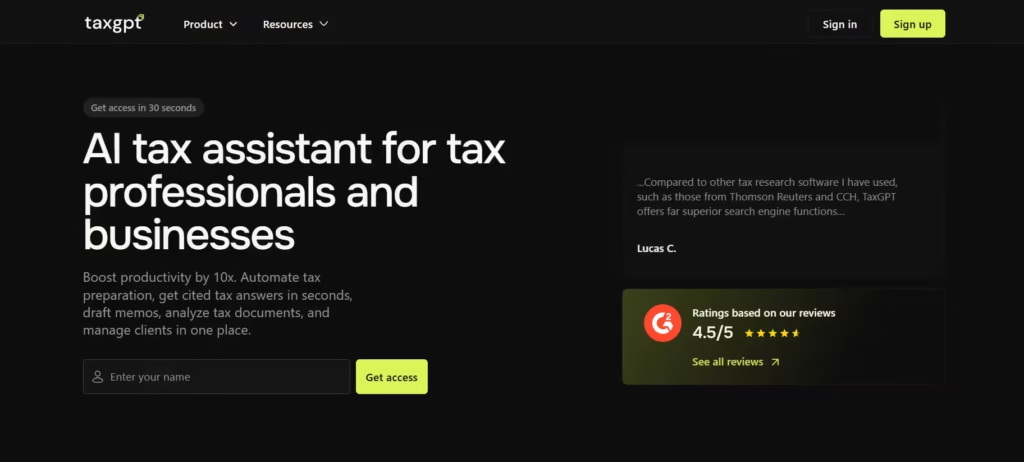
TaxGPT is an AI tax assistant. It uses large language model technology to help users navigate tax questions, identify deductions, and prepare tax returns; it’s like a knowledgeable chatbot that specializes exclusively in tax law.
TaxGPT is conversational. You ask questions in plain English; it answers in plain English. That alone makes it more accessible than flipping through IRS publications or decoding dense tax jargon on your own.
The platform serves both individual taxpayers and tax professionals. It handles a range of situations from simple W-2 filers to more complex cases involving freelance income, investment gains, or small business deductions.
How Does TaxGPT Work?
TaxGPT processes your tax-related inputs and generates responses based on the current tax code. You start by entering basic information: your filing status, income sources, and any deductions you want to claim. From there, TaxGPT cross-references your data against current IRS guidelines and flags anything unusual.
It then generates recommendations: deductions you may have missed, credits you qualify for, or potential errors that need attention. Finally, depending on your plan, it either guides you through filing directly or produces documents for your review.
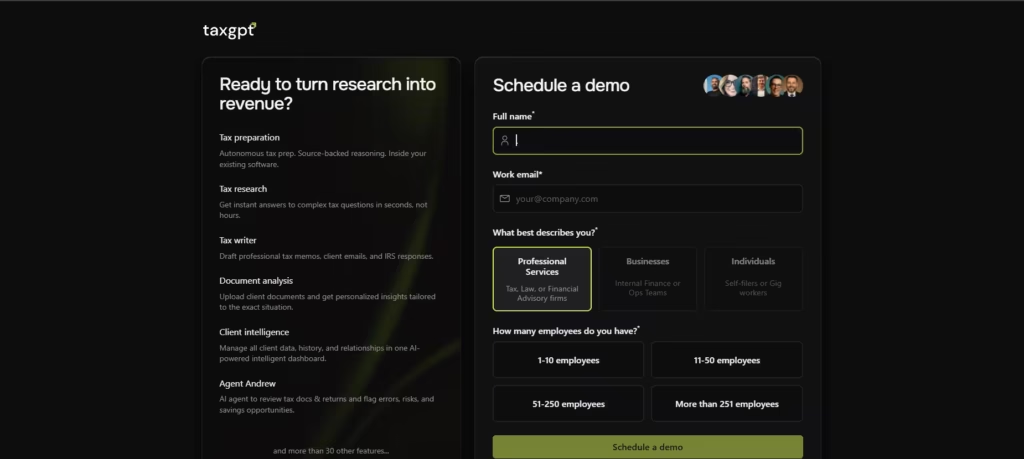
On that note, it’s worth mentioning that TaxGPT is targeted towards enterprise professionals rather than individuals. Yet, individuals are free to book a demo and gain access to the tool.
What Can TaxGPT Actually Do?
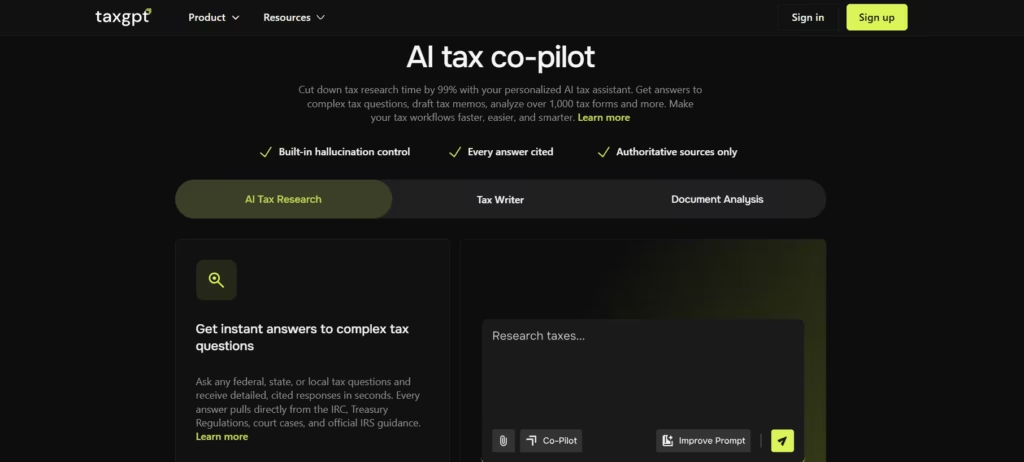
1. Answer tax questions in real time. You can ask TaxGPT anything from “What is the standard deduction for 2026?” to “Can I deduct my home office?” It provides instant, sourced answers. This alone saves hours of research time that most filers waste every spring.
2. Identify deductions and credits. TaxGPT actively scans your financial inputs for overlooked deductions. TaxGPT touts itself as being able to save its users significant amounts by identifying overlooked credits and write-offs that are easy to miss.
3. Assist with self-employment taxes. Freelancers and gig workers face a more complicated tax situation. TaxGPT handles Schedule C income, quarterly estimated taxes, and business expense deductions with relative ease. Of all its capabilities, this is one of the most impressive.
4. Support tax professionals. TaxGPT also offers a version built for CPAs and tax preparers. It speeds up research, helps draft client communications, and flags compliance issues early. For a solo practitioner managing dozens of clients during peak season, that efficiency is advantageous.
5. Explain complex tax concepts. Tax law is notoriously dense. TaxGPT breaks it down into plain language, which informs decisions rather than blindly following prompts.
What Are TaxGPT’s Limitations?
1. It is not a licensed CPA. TaxGPT is an AI assistant, not a certified public accountant. It cannot legally represent you before the IRS. If you face an audit, you will still need a human professional in your corner.
2. It can and does make mistakes. TaxGPT is AI; it can incorrectly categorize income deductions and wrongly identify overlooked credits. To remedy this, subject it to a final review by cross-checking against IRS Publication.
3. Complex situations may exceed its capabilities. If you have multiple income streams, foreign assets, business partnerships, or significant investment activity, TaxGPT works better as a research assistant than a primary filing tool.
4. It is not a substitute for professional advice. For major financial decisions, forming an LLC, handling an inheritance, or navigating an estate, a licensed tax professional is still the right call.
Also read: Best AI Tools for Accounting
Is TaxGPT Safe to Use?
Data security is a legitimate concern. You are sharing sensitive financial information, including income figures, Social Security numbers, and investment details. TaxGPT uses encryption to protect your data and follows standard privacy protocols to prevent unauthorized access.
That said, always read a platform’s privacy policy before uploading personal information. Understand how your data is stored, who can access it, and whether it is used to train future AI models. That applies to TaxGPT and every other digital tax tool.
TaxGPT vs Tax Software
1. Ease of Use
TaxGPT is the winner. I think its conversational interface is better for people who freeze up at form-based software. However, I would still trust TurboTax more for a complex multi-state return. That’s because its step-by-step structure catches edge cases that TaxGPT’s open-ended interface can sometimes miss.
2. Accuracy
Tax software has a longer track record. TaxGPT is improving rapidly, but legacy platforms still have an edge when unusual situations arise.
3. Cost
TaxGPT costs less than the premium tiers of regular software. It is a welcome benefit for self-employed users who typically pay the most.
4. Professional support: TaxGPT connects users with human professionals when needed, but its primary strength remains the AI interface, not human backup.
5. Innovation: TaxGPT is ahead on technology. Users who understand and can work around its benefits and limitations can find ways to cut down on taxes legally.
Who Should Use TaxGPT?
TaxGPT is an enterprise software tool for accounting firms and tax professionals. It helps deal with documentation and filings more efficiently. However, W-2 employees with a relatively clean return, freelancers managing 1099 income and business deductions, or small business owners hunting can also benefit.
But if your situation involves significant complexity. Parameters like foreign income, multi-state filings, or business partnerships complicate the filings. Therefore, treat TaxGPT as a supplement to professional advice, not a replacement for it. The tool is smart, but some returns still benefit from a human who has seen it all before.
Can TaxGPT Really Do Your Taxes?
Yes, it can. TaxGPT handles simple to moderately complex returns effectively. But it is not flawless either. It can miscategorize deductions under certain conditions, and it lacks the audit representation that a licensed CPA provides.
The smartest approach is to use TaxGPT to research, prepare, and organize. Then have a professional review the output if your return involves anything outside the ordinary.
