

People aren’t happy. And the numbers prove it.
When OpenAI signed a deal with the U.S. Department of Defense, now called the Department of War under the Trump administration, users responded fast.
They hit the delete button.
On Saturday, February 28, 2026, ChatGPT’s mobile app saw a 295% spike in U.S. uninstalls compared to the day before. Nearly four times the normal rate, gone in a single day.
To put that in perspective?
ChatGPT’s average daily uninstall rate over the past month was just 9%. This wasn’t a blip. It was a statement.
What Sparked the Backlash?
The trigger was simple. News broke that OpenAI had partnered with the Pentagon. For many everyday users, that crossed a line.
AI helping you write emails? Cool. AI working with the military? That’s a different conversation.
The deal raised concerns about how AI tools might be used in defense, particularly around surveillance of Americans and autonomous weapons. These aren’t small worries. They cut to the heart of how people feel about the technology they use every day.
The Numbers Tell a Clear Story
Here’s a snapshot of the fallout, based on data from Sensor Tower, a well-known market intelligence firm:
| Metric | Change | Timeframe |
|---|---|---|
| ChatGPT U.S. uninstalls | +295% day-over-day | Saturday, Feb. 28 |
| ChatGPT U.S. downloads | -13% day-over-day | Saturday, Feb. 28 |
| ChatGPT U.S. downloads | -5% day-over-day | Sunday, Mar. 1 |
| ChatGPT 1-star reviews | +775% | Saturday, Feb. 28 |
| ChatGPT 5-star reviews | -50% | Same weekend |
Before the deal went public, ChatGPT downloads had actually been growing — up 14% on Friday alone. Then everything flipped.
Anthropic’s Claude Became the Go-To Alternative
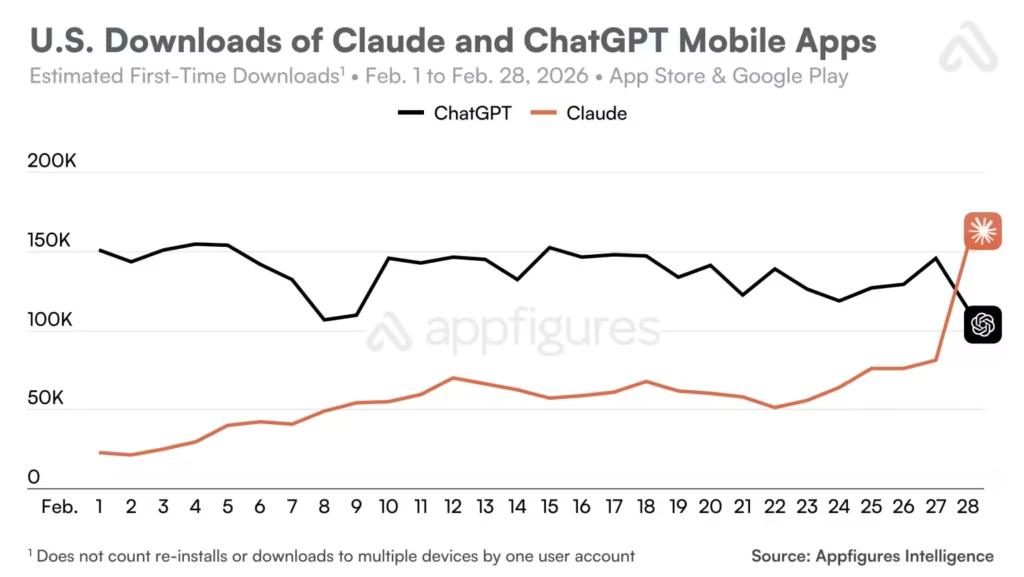
While ChatGPT took the hit, rival app Claude saw a massive boost.
Anthropic, the company behind Claude, publicly announced it would not partner with the defense department.
Why? Anthropic said it couldn’t agree on deal terms. The company cited real fears about AI being used to spy on Americans and power weapons that operate without human control.
In short, Anthropic drew a line in the sand, and users noticed.
Claude’s Download Surge
The timing of Claude’s rise matched ChatGPT’s fall almost perfectly:
- Friday, Feb. 27: Claude downloads jumped 37% day-over-day
- Saturday, Feb. 28: Downloads climbed another 51%
- Saturday onward: Claude hit #1 on the U.S. App Store and stayed there through Monday, March 2
That’s a leap of more than 20 spots in the App Store rankings in about a week.
Did Claude Actually Overtake ChatGPT?
Yes, at least for one day.
According to Appfigures, another analytics firm, Claude’s total daily U.S. downloads surpassed ChatGPT’s for the first time ever on Saturday.
Appfigures even estimated a higher download jump than Sensor Tower, putting Claude’s growth at 88% day-over-day.
And it wasn’t just a U.S. story. Claude became the #1 free iPhone app in six other countries:
- Belgium
- Canada
- Germany
- Luxembourg
- Norway
- Switzerland
That’s global momentum from a single ethical stance.
Other Data Backs This Up
A third analytics provider, Similarweb, added more context.
It found that Claude’s U.S. downloads over the past week were roughly 20 times higher than they were in January 2026.
However, Similarweb added an important caveat. Not all of that growth can be tied to the DoD controversy. Product updates, word-of-mouth buzz, and other factors likely played a role too.
Still, the timing is hard to ignore.
Why This Matters Beyond the Numbers
Think of it like this. If your favorite coffee shop suddenly partnered with a company you didn’t trust, you might start going somewhere else. That’s basically what happened here at scale.
This moment reveals something bigger about the AI industry right now:
- Users care about ethics. It’s not just about features or speed. People want to know how their AI tools are being used.
- Switching is easy. Unlike changing your phone or your bank, swapping one chatbot for another takes seconds. That makes consumer loyalty fragile.
- Reputation moves fast. A single partnership announcement can shift millions of downloads in a weekend.
What Happens Next?
The big question is whether this backlash sticks. Weekend protests, even digital ones, can fade quickly. But the damage to app store rankings, reviews, and brand perception is real.
For OpenAI, this is a trust problem. Once users start questioning your values, winning them back is hard.
For Anthropic, the challenge is different. Can Claude convert this wave of interest into long-term users? Getting someone to download an app is one thing. Keeping them is another.
One thing is clear, though. In the AI race, how you build matters just as much as what you build. Users are watching, and they’re not afraid to vote with the delete button.
