


CodeRabbit has earned its spot. Over two million repos connected, more than thirteen million PRs reviewed, and a $550 million valuation. The product works.
But I have used CodeRabbit alongside four other AI review tools across three different codebases (a TypeScript monorepo, Python microservices, and a Go API), and the pattern I kept running into was noise.
Roughly 40% of CodeRabbit’s comments on our PRs were stylistic suggestions we never asked for. Rename this variable. Add a docstring here. Wrap this line differently.
None of that catches bugs. And when your team starts ignoring AI review comments because most of them are cosmetic, you have a worse problem than no AI review at all.
So this is not a “CodeRabbit is bad” article.
It is a guide for developers and engineering leads who want to know what else exists, what each tool actually does differently, and which one fits the way your team already works..
The 7 Best CodeRabbit Alternatives
1. Qodo Merge (Formerly CodiumAI)
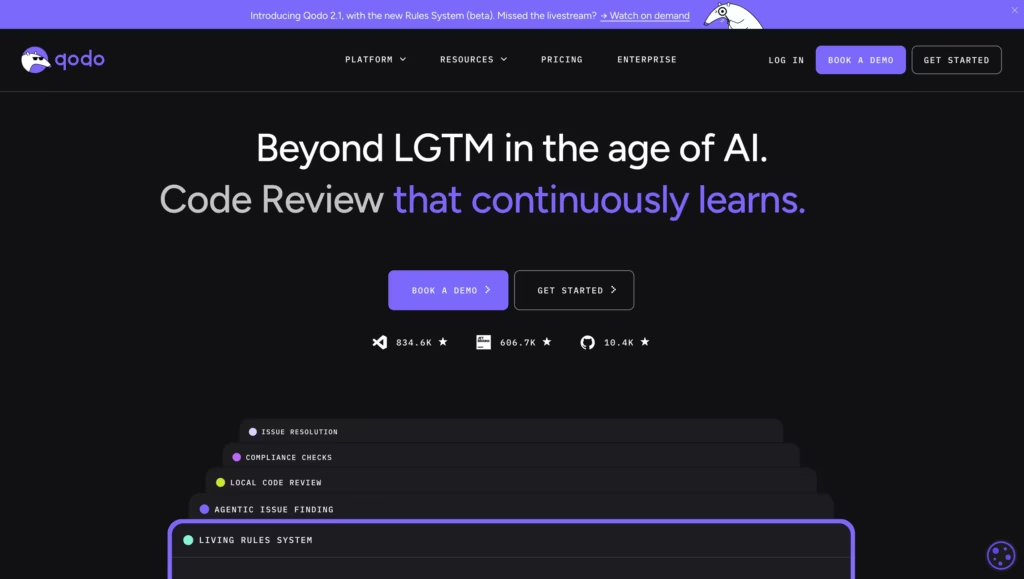
Qodo Merge started as an AI test generation tool and has since grown into a full code review platform. The standout feature is that it is open-source and self-hostable. Your code never leaves your infrastructure if you do not want it to.
It works with GitHub, GitLab, Bitbucket, and Gitea, which makes it the most platform-flexible option on this list.
Beyond surface-level style comments, Qodo focuses on test generation, logic bugs, and the kind of mistakes that actually break production. A recent independent evaluation ranked it as the strongest overall AI code review tool for depth and detail.
My take: If you are in a regulated industry (fintech, healthcare, government contracting), Qodo is probably the first tool you should evaluate.
The self-hosting option is not just a nice-to-have in those contexts. It is a requirement. The trade-off is real though.
Self-hosting means your DevOps team owns the infrastructure, and the credit-based pricing model can get tight if your team reviews a lot of code. Plan your credits before you commit.
Starting Price: Free for open-source. Pro plans use a credit-based model
2. Sourcery
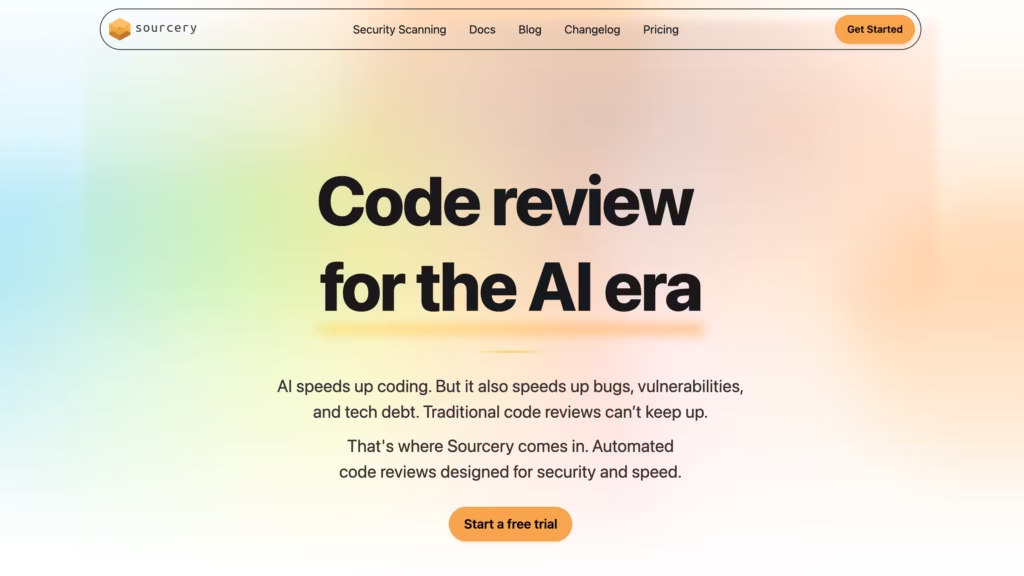
Sourcery has been around since the early wave of AI coding tools, and it has quietly become one of the more polished options in this space.
It reviews PRs on GitHub and GitLab, runs inside VS Code and JetBrains IDEs, and supports over 30 programming languages.
What sets Sourcery apart from CodeRabbit is how it handles noise. Sourcery learns from your feedback. Dismiss a comment type as unhelpful, and it adapts.
In my experience, noise dropped about 60% after two weeks of consistent feedback on a TypeScript monorepo. It also generates visual diagrams to explain code changes, which turned out to be surprisingly useful during onboarding.
My take: Sourcery is the tool I recommend to small teams that want to try AI code review without a big commitment. At $12 per developer per month (roughly half of CodeRabbit Pro’s $24 annual price), the risk is low.
The main weakness is that it reviews one file at a time, so it can miss cross-file dependencies. If your bugs tend to live at the seams between modules, that matters.
Starting Price: $12/month
3. GitHub Copilot Code
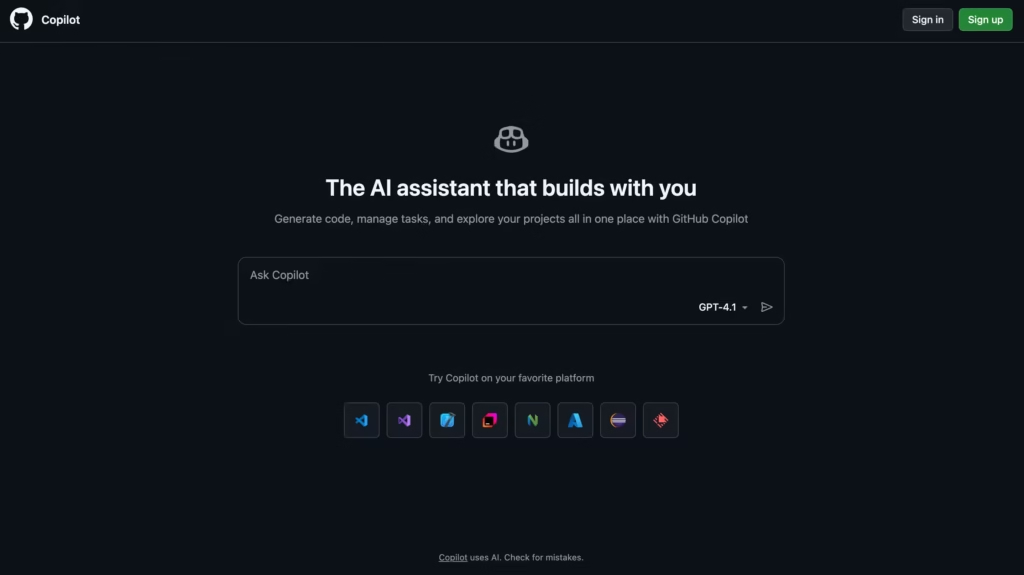
If your team already lives inside GitHub and pays for Copilot, this is the zero-friction option.
GitHub Copilot’s code review feature hit general availability in April 2025, and within a month it had over a million users.
You assign Copilot as a reviewer on your PR and it leaves inline comments with suggested fixes. The October 2025 update added the ability to read source files, explore directory structures, and integrate CodeQL and ESLint for security scanning.
My take: I tested Copilot Code Review on the same Go API where I was running CodeRabbit.
The comments were shorter and less frequent, which sounds like a downside but actually meant my team read every single one instead of skimming past a wall of suggestions.
The limitation is that it is diff-based, meaning it only sees what changed in the PR, not the broader codebase.
It will not catch architectural issues or cross-file regressions. There is also no analytics layer. You cannot set quality gates or track review impact over time.
Starting Price: $10/month
4. Greptile
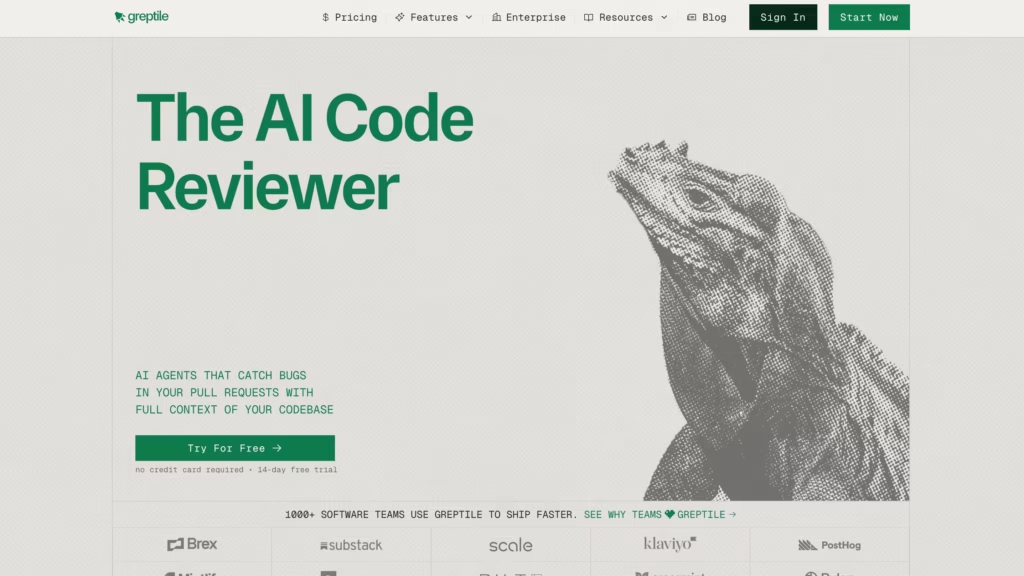
Greptile takes a fundamentally different approach. It indexes your entire codebase before it reviews a single line. That gives it a level of context awareness that most competitors do not have.
When Greptile flags an issue, it shows you evidence from across your repo, not just a suggestion based on the diff.
Version 3 (launched late 2025) uses the Anthropic Claude Agent SDK for autonomous investigation, meaning it can dig into your codebase to find the root cause of a problem instead of just flagging the symptom.
My take: Greptile caught an 82% rate of intentionally planted bugs in one benchmark I reviewed, compared to 44% for CodeRabbit on the same set. That is a significant gap.
But it comes with a cost: Greptile also has the highest false positive rate of any tool on this list. You will get more real bugs and more noise.
For teams where one missed cross-file bug costs thousands in production incidents, the math works out. For teams that already struggle with alert fatigue, it might make things worse.
Starting Price: $30/month
5. Codacy
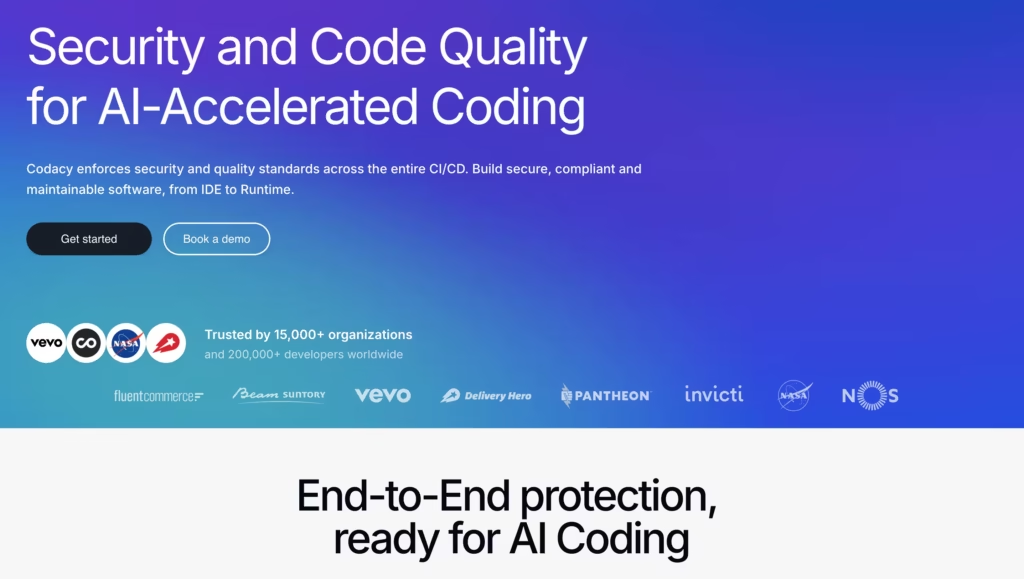
Codacy has been in the automated code review space since 2012, longer than any other tool on this list. It does not have the flashiest marketing, but it has something most AI-first tools lack: breadth.
It supports over 40 programming languages and includes built-in quality gates that can actually block a merge.
The platform combines traditional static analysis (SAST, secret detection, dependency scanning) with an AI layer that adds context to PR comments and offers one-click fixes.
It also integrates with Jira and Slack, which makes it straightforward to slot into existing engineering workflows.
My take: Codacy is the tool I point people toward when they ask “what gives me the most coverage for one subscription?”
The AI review features are not as cutting-edge as Greptile or Qodo.
But if you want code review, security scanning, and quality dashboards in one place without stitching three tools together, Codacy handles that. The $21/user/month price is reasonable for what you get.
Starting Price: $21/month
6. DeepSource
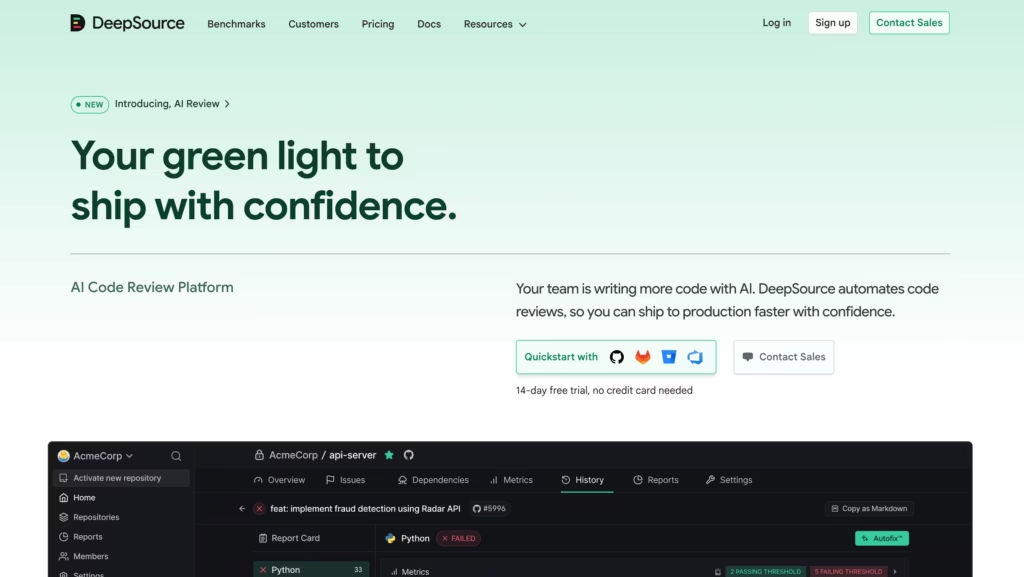
DeepSource focuses on something a lot of AI review tools talk about but few actually deliver: auto-fixing issues, not just flagging them.
Its Autofix feature detects problems and generates patches automatically, which means less back-and-forth between reviewer and developer.
The platform supports 20+ programming languages and integrates with GitHub, GitLab, and Bitbucket.
It also comes with enterprise-grade security compliance (HIPAA, SOC 2 Type II), making it a solid option for teams with strict regulatory requirements.
My take: The auto-fix capability is legitimately useful for straightforward issues like unused imports, formatting inconsistencies, and simple null checks.
Where I would be cautious is the pricing. DeepSource recently restructured its plans.
The base Team plan starts at $30/developer/month, but AI Review features carry additional usage-based costs of $8 per 100,000 lines of input code analyzed.
Teams with high code volume have reported bills running 3 to 4 times higher than the base subscription. Run the numbers on your actual codebase size before committing.
Starting Price: $30/month
7. Graphite
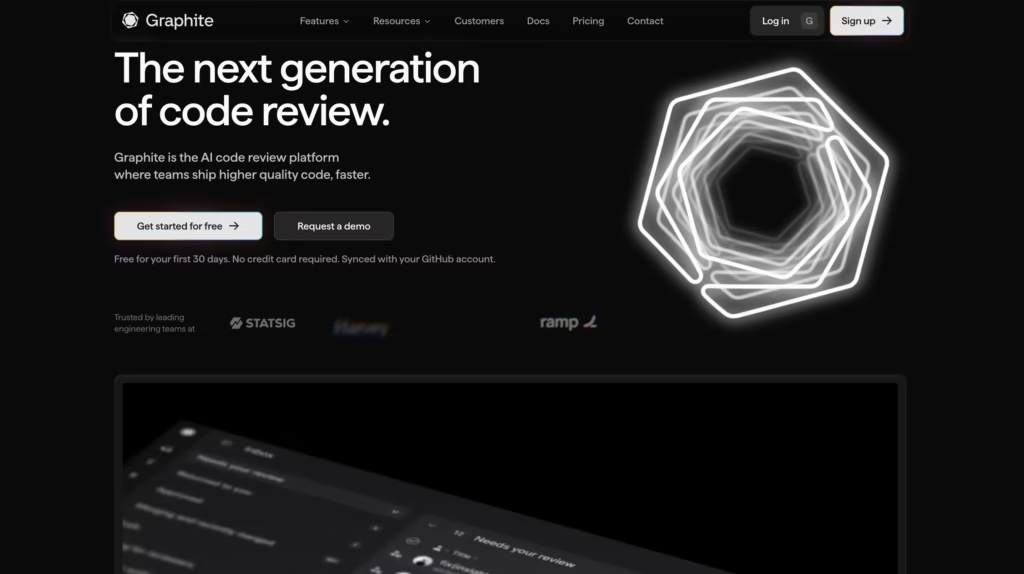
Graphite is not primarily an AI code review tool.
It is a developer workflow platform built around stacked pull requests and fast merge cycles. Think of it as what GitHub’s PR experience would look like if it were rebuilt from scratch for speed.
The AI review component is a layer on top of that workflow.
Graphite Agent understands your full codebase and reviews changes in the context of stacked PRs, which means it can catch issues that tools reviewing one PR in isolation would miss.
My take: If your team already uses stacked PRs (or wants to), Graphite is the only tool on this list that understands that workflow natively.
For teams that ship dozens of PRs a day and care about merge velocity, that is a real advantage.
But if you are not bought into the stacked-PR model, there is probably not enough here to justify switching your entire review workflow.
Starting Price: $25/month.
Which One Should You Actually Pick?
Instead of a feature matrix, here is how to match your biggest problem to a tool:
“Our code cannot leave our servers.” Qodo Merge. Self-host everything. Your code stays on your infrastructure.
“We are drowning in useless AI comments.” Sourcery. The adaptive feedback loop actually reduces noise over time. Give it two weeks.
“We already pay for GitHub Copilot.” Try Copilot Code Review first. It is included in your subscription and takes zero setup.
“Our bugs live in the gaps between services.” Greptile. Full-codebase indexing catches cross-file issues that diff-based tools miss entirely.
“We need review, security scanning, and dashboards in one tool.” Codacy. It covers the most ground for one subscription.
“We want fixes, not just flags.” DeepSource. But watch the usage-based pricing closely.
“We ship fast and use stacked PRs.” Graphite. It is the only tool that understands that workflow.
If you are still unsure, pick two from this list and run them in parallel on the same repo for two weeks.
Most offer free tiers or trials. Then ask your team one question: “Which one made reviews feel lighter?” The best AI code review tool is not the one with the most features. It is the one your team actually keeps turned on.
